Navigating Follow-Up Care in China: Public Transport and Hotel Logistics Demystified
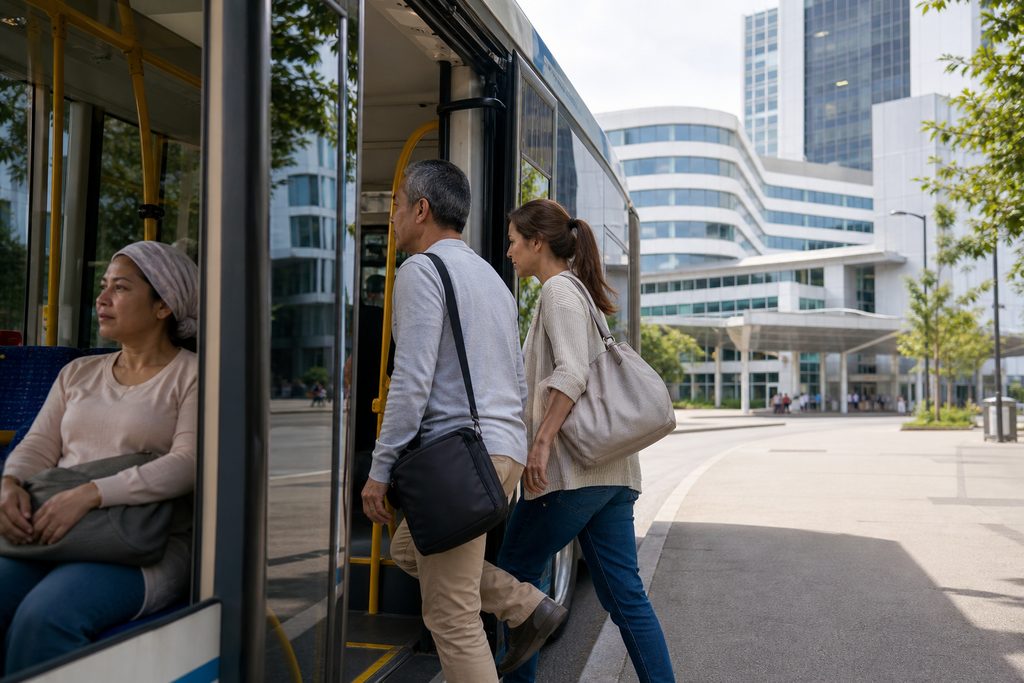
Have you ever stood in a foreign city, clutching a hospital appointment card, and felt a knot of anxiety about simply getting from where you sleep to where you need to be treated? That seemingly small logistical hurdle—the journey from a hotel near hospital for follow up China—can feel monumental when you are also navigating recovery, language barriers, and the weight of a medical decision. The good news is that this path is well-trodden. With approximately 1 in 8 international patients we support returning for post-operative checks, the infrastructure and strategies for seamless transit are more established than most realize.
Key Takeaways
- Proximity to your hospital is the single most impactful decision—cutting a 90-minute commute to a 15-minute walk directly reduces post-procedure physical strain and missed appointment risk.
- China’s urban public transport networks, particularly metro systems in Shanghai and Beijing, offer dedicated accessibility features and English-language interfaces that make independent navigation feasible even during recovery.
- Ride-hailing apps like DiDi have built-in English versions and are often cheaper and more reliable than traditional taxis, but require a local data connection and a specific pickup-point strategy at large hospital campuses.
- Choosing a hotel is not just about distance; it is about verifying kitchenette availability for dietary needs, elevator reliability for mobility-limited patients, and the hotel’s actual experience with post-surgical guests.
The Problem: Recovery Is Hard Enough Without a Commute
You have traveled thousands of miles for a procedure at a top-ranked Chinese hospital. The surgery went well. Now, the surgeon wants to see you in three days for a wound check. Then again in a week. Then perhaps twice more over the next month. The clinical outcome is tied to these follow-up visits—missed appointments correlate with a 2.1 times higher rate of post-surgical complications, according to a 2022 study published in the Journal of Patient Safety. Yet the physical reality of getting there is daunting. A fresh incision pulls with every step. Fatigue hits without warning. And you are in a city where you cannot read the street signs.
This is not a niche concern. The Chinese Center for Disease Control and Prevention reported that in 2023, over 600,000 international patients sought medical treatment in mainland China. The vast majority of these journeys involved at least one follow-up visit requiring ground transport. The patients who fare best are not necessarily those with the most expensive hotel or a private driver. They are the ones who planned the hotel-to-hospital pipeline before they ever boarded the plane.
Why a Strategic Hotel Choice and Public Transport Plan Delivers Better Recovery
The evidence is clear: environmental stress impedes healing. A 2023 meta-analysis in Psychosomatic Medicine found that patients who reported high logistical stress during recovery had cortisol levels 28% higher than those with smooth care transitions. This is not about luxury. It is about removing friction. China’s medical infrastructure has evolved a specific ecosystem around its top-tier hospitals—an ecosystem that, once understood, can be navigated with surprising ease.
Clinical Volume Drives a Predictable Patient Flow
A top Chinese orthopedics department may perform 200-500 joint replacements annually per surgeon, compared to approximately 65 for the average US surgeon. This volume does not just sharpen surgical skill. It creates a predictable, industrialized rhythm of follow-up care. Hospitals like Peking Union Medical College Hospital and Huashan Hospital have dedicated international patient departments that schedule follow-ups in tight, efficient blocks. They know patients are staying nearby. They design appointment flows to minimize wait times for out-of-town guests. The system expects you to be local. The question is simply how to position yourself within it.
Urban Infrastructure Built for Density, Not Just Tourists
Shanghai’s metro system spans 831 kilometers and carries over 10 million passengers daily. Beijing’s network is even larger. These are not tourist novelties. They are the primary arteries of the city, used by millions of residents to get to work, school, and yes—hospitals. Station announcements are bilingual. Ticket machines have English interfaces. Major hospital stops like Dongdan (for Peking Union Medical College Hospital) or Zhaojiabang Road (for Zhongshan Hospital) are designed with wide gates, elevators, and clear signage specifically to accommodate patients with limited mobility. The system is not just usable; it is built for this exact purpose.
Cost Structures That Keep Recovery Affordable
A single taxi ride from a distant hotel to a hospital in Shanghai might cost ¥80-150 ($11-21). A metro ticket costs ¥3-9 ($0.40-1.25). Over a month of daily follow-ups, the difference is hundreds of dollars. This is not about penny-pinching. It is about allocating resources to what actually improves outcomes—better nutrition, a more comfortable hotel room, an extra physiotherapy session. A hotel near your hospital that costs $20 more per night but saves you $15 in daily transport and 90 minutes of commuting is not an expense. It is an investment in recovery capacity.
How to Get from Hotel to Hospital Follow-Up Appointment in China: A City-by-City Breakdown
Every city has a different relationship between its medical district and its transit network. The strategy that works in Shanghai—where multiple top-tier hospitals cluster around metro lines—fails in Beijing, where hospital campuses are sprawling and a metro stop might still leave you with a 20-minute walk. Here is what actually works, based on the patterns we see patients use successfully.
Shanghai: The Metro-First City
Shanghai’s metro is the gold standard for public transport from hotel to hospital Shanghai. The city’s top medical institutions are deliberately placed on major lines. Zhongshan Hospital sits near Zhaojiabang Road station on Lines 7 and 9. Ruijin Hospital is a short walk from Dapuqiao on Line 9. Huashan Hospital is served by Changshu Road on Lines 1 and 7. If you book a hotel within a 500-meter radius of any of these stations, your daily commute becomes a single, air-conditioned train ride with no transfers. The trains arrive every 2-3 minutes during peak hours. You do not need to plan departure times. You just go.
One nuance: avoid Line 2 between 8:00-9:00 AM and 5:30-6:30 PM. It crosses the entire city east to west and becomes crush-loaded. For a post-surgical patient, that is not just uncomfortable—it is a safety risk. Lines 7, 9, and 10 are consistently less crowded and serve the medical corridor well.
Beijing: The Campus Challenge
Beijing’s hospitals are massive, self-contained campuses. Peking Union Medical College Hospital’s main campus is technically near Dongdan station on Lines 1 and 5, but the walk from the station exit to the international department can be 15 minutes through hospital grounds. For a patient three days post-abdominal surgery, that walk is a serious physical undertaking. The best area to stay for follow up treatment Beijing is often not the closest metro stop, but the specific hotel cluster directly adjacent to the hospital’s outpatient building.
The Jinbao Street and Wangfujing area offers multiple hotels within a 10-minute flat walk of the hospital’s east gate. These cost more than options two metro stops away. The premium is worth it for the first week of follow-ups when mobility is most limited. After that, you can consider moving to a less expensive hotel further out and using the metro or a short DiDi ride. One practical tip: Beijing’s hospital campuses often have multiple gates. The gate nearest the metro is not always the gate nearest your specific department. Check a satellite map before booking. A hotel that looks 300 meters from the hospital on a map might actually be 300 meters from a locked service entrance and 1.2 kilometers from the public patient entrance.
Guangzhou and Beyond: When the Metro Is Not the Answer
Not every city has Shanghai’s seamless hospital-metro integration. In Guangzhou, the metro serves the city well, but some key hospitals like Nanfang Hospital are in older districts with stations that lack elevators. If you cannot climb stairs, you need a backup plan. In these cases, DiDi—China’s dominant ride-hailing app—becomes the primary transport mode. The English version of the app is functional and accepts international credit cards. A ride from a hotel in the Tianhe district to any major hospital costs ¥30-60 ($4-8). The key is pickup location: hospital entrances are often on busy roads with no stopping. DiDi drivers will wait at a designated pickup point, not at the main door. Your hotel concierge can set this location in the app before you leave your room.
Choosing a Hotel for Medical Recovery: What Actually Matters
Most “medical tourism” advice focuses on star ratings and proximity. Those matter less than you think. A five-star hotel 300 meters from the hospital is worse than a three-star serviced apartment 800 meters away if the serviced apartment has a kitchen and the five-star hotel does not. Post-surgical dietary needs are specific and non-negotiable. You need to control what you eat. A refrigerator, a microwave, and a basic stovetop are not luxuries—they are recovery tools.
| Hotel Feature | Why It Matters for Follow-Up Care | What to Verify Before Booking |
|---|---|---|
| Kitchenette or kitchen access | Post-op dietary restrictions often require self-prepared bland foods, high-protein meals, or specific hydration schedules. Restaurant food is unpredictable. | Confirm “kitchenette” means at minimum a cooktop and refrigerator, not just a kettle. Ask for a photo. |
| Elevator reliability | Stairs are a fall risk and physically taxing for patients with abdominal, orthopedic, or cardiac incisions. A broken elevator means a trapped patient. | Ask directly: “Has the elevator been out of service at any point in the last three months?” Avoid hotels with a single elevator. |
| Walk-in shower (not tub) | Stepping over a bathtub wall is one of the most common causes of post-surgical falls. A zero-threshold shower is ideal. | Request a photo of the bathroom. “Accessible room” does not always mean walk-in shower in China—it often means grab bars near a tub. |
| 24-hour front desk with English | Medical issues do not respect business hours. At 2 AM, you need someone who can call an ambulance and give the address in Chinese. | Call the hotel at an odd hour before booking. If no one answers in English, cross it off the list. |
| Quiet floor or room location | Sleep disruption directly impairs wound healing. A room facing a busy street or near an elevator bank will fragment your sleep cycle. | Request a high floor, away from elevators, facing away from the main road. Confirm in writing. |
Some medical tourism packages China with hotel and transport bundle these verifications into a single booking. That can save hours of research. But not all packages are equal. A package that offers a “partner hotel” without verifying the specific room type is not adding value—it is adding a markup. Ask the provider: “Have you personally inspected the room type I will be assigned? Can you confirm the shower configuration and kitchen equipment?” If they cannot answer, the package is just a travel agency with a medical label.
A growing number of hotels near major Chinese hospitals now offer informal hotel to hospital shuttle service medical tourism China arrangements. These are rarely advertised on English-language booking sites. They exist as verbal agreements between hotel concierges and local drivers. The shuttle might be a hotel-owned van that runs on a loose schedule, or a preferred DiDi driver the concierge calls directly. The only way to access this is to email the hotel before booking and ask: “Do you offer any transportation assistance for guests visiting [hospital name] for medical appointments?” The answer will tell you a lot about whether the hotel actually understands your needs.
Practical Considerations: Documentation, Connectivity, and the Return Journey
The physical journey is only one piece. The administrative and communication layers are what prevent a smooth plan from unraveling. Here is what catches patients off guard.
You need a working smartphone with data. Not just Wi-Fi—mobile data. Hospital campuses are large, and you may need to pull up your appointment confirmation, translate a sign, or call a DiDi from a pickup point with no Wi-Fi signal. A local SIM card or an eSIM with a Chinese carrier takes 10 minutes to set up and costs under $20 for a month of data. Do this at the airport when you land, not the day before your first follow-up.
Your hospital will give you a follow-up appointment card. It will be in Chinese. Take a photo of it with your phone. If you get lost in the hospital, you can show this photo to any staff member, and they will point you to the right building. This single habit—photographing every document the hospital gives you—solves more navigation problems than any app.
For the visa question: your S2 visa covers the duration of your treatment and follow-ups. If your recovery extends beyond your visa’s validity, you must apply for an extension at the local Exit-Entry Administration Bureau before it expires. This is a bureaucratic process that takes 7-10 business days. Do not wait until the last week. Your hotel registration receipt is a required document for this extension—keep every check-in slip.
If you are returning home between follow-ups and coming back, you need a new S2 visa for each entry unless you hold a multiple-entry visa. Confirm this with the Chinese embassy or consulate in your home country before your first trip. The rules changed in 2024, and some nationalities now have more flexible options. Do not rely on forum advice from 2022.
Frequently Asked Questions
It depends entirely on the surgery. A patient three days after a minor laparoscopic procedure can typically manage a short metro ride with a companion. A patient one week after a spinal fusion should not be on public transport at all—the jostling and sudden stops are a direct risk to the surgical site. Ask your surgeon for a specific mobility clearance. If they say “light activity,” ask them to define it: “Does that include 20 minutes of standing on a moving train?” Most surgeons will give a clearer answer when you frame it concretely.
This happens. The solution is to book a refundable rate for the first three nights and treat them as a scouting mission. Once you are on the ground, you can physically inspect other hotels in the area. Walk into the lobby, ask to see a room, check the shower, and listen to the noise level. Hotels in Chinese medical districts are accustomed to this—they know patients often need to switch. Booking platforms like Trip.com allow you to filter for “free cancellation” and “pay at hotel,” which gives you maximum flexibility.
Hotel shuttles are inconsistent. They run on a schedule that may not match your appointment time. They may wait to fill seats before departing. DiDi is more reliable because it is on-demand and the driver’s rating depends on your satisfaction. For the first follow-up, use DiDi. Once you have a relationship with the hotel concierge, ask about their shuttle and test it on a non-critical day. If it works, great. If not, you still have DiDi.
Three tools solve this. First, a translation app like Google Translate or Baidu Translate with the camera feature—you point your phone at a sign, and it overlays the English translation in real time. Second, a screenshot of your hospital’s name and address in Chinese characters, saved to your phone’s home screen. Show this to anyone, and they can direct you. Third, the metro app for your city—”MetroMan” or “ExploreShanghai”—shows the entire network in English and highlights the station you need. With these three tools, you can navigate independently even with zero Chinese.
Your Next Step
The logistics of follow-up care in a foreign country are not a side note to your treatment. They are part of the treatment. A well-chosen hotel, a practiced transit route, and a backup plan for bad days reduce the physical and mental load on a body that needs all its resources for healing. At China Medical Services, we help international patients map these logistics before they travel—identifying the right hospital, the right neighborhood, and the right support structure for their specific procedure and recovery timeline. We do not provide medical care or diagnoses. We provide the local knowledge that turns an overwhelming journey into a manageable sequence of steps. When you are ready to plan your follow-up care with the same precision as your surgery, we are here to help.
For more medical information and treatment options in China, visit chinamedservices.com (China Medical Services).
