ICSI Explained: Do You Need It and What It Costs in China
ICSI: The Short Answer
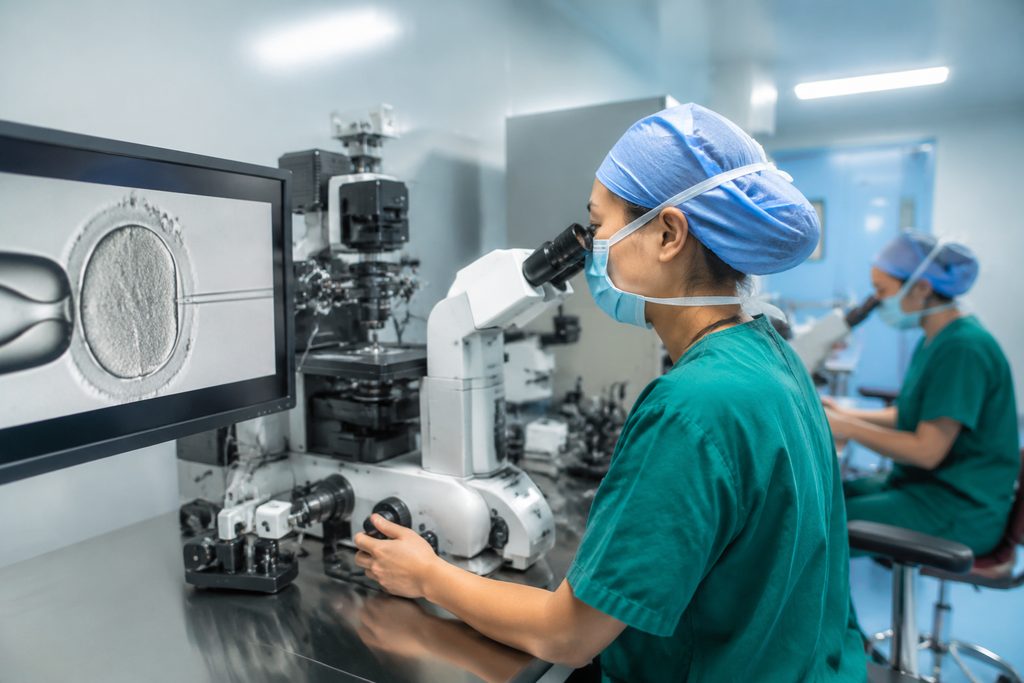
ICSI (intracytoplasmic sperm injection) is a laboratory technique where a single sperm is injected directly into an egg. It is used during IVF when male-factor infertility is present. You need it when sperm count, motility, or shape is significantly abnormal — or when previous IVF cycles failed to fertilize. The icsi treatment cost China typically runs $3,000–$7,000 per cycle, roughly one-third of what it costs in the United States.
But that number alone doesn’t tell you whether ICSI is right for your situation. The decision hinges on a semen analysis, your partner’s age, and whether you’ve had prior fertilization failure. Let’s break that down properly.
Who This Is Right For — and Who It Isn’t
ICSI is not a universal upgrade to IVF. It solves one specific problem: the sperm cannot penetrate the egg on its own. That’s it. If your sperm parameters are normal, ICSI adds cost without adding benefit.
Good candidates for ICSI include:
- Men with severe oligozoospermia (very low sperm count) — typically under 5 million per milliliter
- Men with poor sperm motility (asthenozoospermia) or abnormal morphology (teratozoospermia)
- Couples using surgically retrieved sperm (TESA, PESA, micro-TESE)
- Couples with a previous IVF cycle that resulted in zero or very low fertilization
- Cases requiring preimplantation genetic testing where conventional insemination risks contamination from residual cumulus cells
Who should not pursue ICSI:
- Couples with unexplained infertility and normal semen parameters — studies show no live-birth advantage over conventional IVF
- Women with tubal-factor infertility only, where sperm quality is normal
- Couples pursuing IVF purely for egg freezing or donor-egg cycles with normal sperm
- Patients who cannot produce any sperm even through surgical extraction — donor sperm would be the alternative
And if you’re asking “what is icsi and do i need it” before even having a semen analysis, hold on. Get the test first. The numbers will answer your question more reliably than any article can.
The Options, Compared
When you’re evaluating fertility treatment abroad, you’re really comparing three things: the technique, the clinic tier, and the country. Here’s how ICSI stacks up against conventional IVF at different price points in China.
| Option | Indication | Fertilization Rate (typical) | Cost per Cycle in China (USD) | Cost per Cycle in USA (USD) |
|---|---|---|---|---|
| Conventional IVF | Normal sperm parameters | 60–75% | $2,500–$5,000 | $12,000–$15,000 |
| ICSI | Male-factor infertility | 70–80% of mature eggs | $3,000–$7,000 | $13,000–$18,000 |
| ICSI with surgical sperm retrieval | Azoospermia (no sperm in ejaculate) | 55–70% | $5,000–$9,000 | $18,000–$25,000 |
| ICSI in private international clinic | Male-factor + English-speaking care | 70–80% | $6,000–$10,000 | $20,000–$28,000 |
The public hospital tier in China delivers the lowest icsi procedure price abroad — but you’ll be navigating a system built for Chinese speakers. Private international clinics cost more, yet provide English-speaking staff and direct insurance billing. Which column suits you depends on your budget and how much support you need on the ground.
ICSI vs IVF Success Rates in China: What the Data Actually Shows
Here’s the nuance most people miss. ICSI does not improve pregnancy rates when sperm is normal. It only improves fertilization rates when sperm is the problem. A 2018 Cochrane review of 30 randomized controlled trials found no difference in live-birth rates between ICSI and conventional IVF for couples with non-male-factor infertility.
For male-factor cases, however, ICSI is transformative. Without it, fertilization may be near zero. With it, clinics in China’s top reproductive medicine departments report fertilization rates of 70–80% of mature eggs injected. Clinical pregnancy rates per embryo transfer at leading centers run 45–60% for women under 35, dropping to 25–35% for women 38–40. These figures align with what you’d expect at good clinics in Spain, the Czech Republic, or Thailand.
So when you search “icsi vs ivf success rates China,” the honest answer is: for male-factor infertility, ICSI wins decisively. For everything else, it’s a wash — and you’d be paying extra for no measurable gain. The reproductive medicine department rankings on our site list the centers with the strongest published outcomes, so you can compare before committing.
What ICSI Actually Costs in China — and What Drives the Price
The icsi treatment cost China breaks down into several components. The base ICSI lab fee — the injection procedure itself — adds roughly $800–$1,500 on top of a standard IVF cycle. Then you have ovarian stimulation medications ($800–$2,000 depending on protocol and patient age), egg retrieval ($500–$1,000), embryo culture ($300–$600), and embryo transfer ($500–$1,000). Frozen embryo storage runs $300–$600 per year.
What drives variance:
- Hospital tier: Public tertiary-A hospitals charge less; private international hospitals charge 1.5–2 times more
- Medication needs: Women over 38 or with diminished ovarian reserve often require higher doses
- Genetic testing: PGT-A adds $2,000–$4,000 per cycle
- Surgical sperm retrieval: TESA or micro-TESE adds $1,500–$3,000
- Number of cycles: Most couples need 2–3 cycles for a live birth, so budget accordingly
Compare that to the United States, where a single ICSI cycle averages $15,000–$20,000 without medication. In the UK, private cycles run £5,000–£8,000. China’s public-sector pricing remains among the lowest globally for comparable laboratory standards.
Practical Considerations: Records, Visa, and Language
If you’re seriously considering ICSI in China, you need to prepare three things before you travel.
Medical records. Bring a recent semen analysis (within 3 months), your female partner’s AMH and antral follicle count, any previous IVF/ICSI cycle summaries, and both partners’ infectious disease screening results (HIV, hepatitis B and C, syphilis). Chinese clinics will likely repeat bloodwork, but having baseline records accelerates the initial consultation.
Visa. For medical treatment in China, the S2 visa is the applicable short-stay category. It covers private affairs including medical treatment, and requires supporting documents from the hospital — typically an invitation letter or treatment confirmation. Your accompanying partner also applies for an S2. The M visa is for commercial and trade activities and is not appropriate for medical travel.
Language. Public hospitals in China see thousands of patients daily. Very few front-desk staff speak English. Without Chinese language ability, you’ll struggle with registration, payment queues, and understanding lab instructions. This is where a bilingual medical companion becomes genuinely useful — not as a luxury, but as a practical necessity for navigating a system designed around Chinese-speaking patients.
Can ICSI Help Male Infertility in China? What to Expect
Yes — and this is where Chinese reproductive centers have particular depth. Several top hospitals in Beijing, Shanghai, and Guangzhou run high-volume andrology labs with extensive experience in surgically retrieved sperm. For men with azoospermia — zero sperm in the ejaculate — micro-TESE combined with ICSI offers a real chance at biological fatherhood. Success depends on whether sperm can be found in testicular tissue, which happens in roughly 50–60% of non-obstructive azoospermia cases.
The best fertility clinic Shanghai icsi options include both public hospital reproductive centers and JCI-accredited private hospitals. Shanghai is a logical starting point: it has the second-highest concentration of top-ranked hospitals in China, direct international flights, and more English-speaking medical staff than most other cities. Our top hospital database groups fertility centers by city so you can evaluate options without wading through Chinese-language directories.
One honest caveat: no clinic can guarantee a live birth. Anyone who promises that is lying to you. What good clinics do is give you a realistic probability based on your specific diagnosis, age, and prior history.
Frequently Asked Questions
Large registry studies show a slightly higher rate of congenital abnormalities with ICSI compared to natural conception — around 3–4% versus 2–3%. Most of this difference is attributable to underlying male infertility rather than the injection technique itself. The absolute risk remains low. Discuss this with your fertility specialist in the context of your own case.
For women under 35 with good ovarian reserve, one cycle produces enough embryos for 1–3 transfer attempts in many cases. Cumulative live-birth rates across three complete cycles reach 60–70% for younger patients. For women over 40, the per-cycle odds drop sharply, and you should plan for multiple cycles or consider donor eggs.
A failed cycle is data, not a verdict. The clinic will review embryo quality, endometrial thickness, and sperm parameters to adjust the protocol. Common changes include different stimulation medications, ICSI instead of conventional IVF, or PGT-A to screen for chromosomal abnormalities. Some couples are advised to stop after two or three failed cycles if the underlying prognosis is poor.
Embryo shipping across international borders is possible but heavily regulated. It requires agreements between the sending and receiving clinics, specialized cryogenic transport, and compliance with both countries’ import/export rules for human tissue. Many countries also restrict embryo import. Check with your home-country clinic before assuming this is feasible.
Yes, but not all of them. Large public hospital reproductive centers accept international patients, though English support is limited. Private international hospitals in Shanghai, Beijing, and Guangzhou routinely serve foreign patients with English-speaking coordinators. The S2 visa is required, and you’ll need a treatment confirmation letter from the hospital.
Your Next Step
ICSI is a precise tool for a specific problem. If your semen analysis shows significant abnormalities, it’s likely the right path. If it doesn’t, conventional IVF is probably sufficient — and cheaper. The icsi treatment cost China makes pursuing treatment here financially viable for many couples who cannot afford it at home.
We help international patients evaluate fertility clinics in China, understand pricing before committing, and coordinate the logistics of treatment abroad. We are not a hospital, and we do not provide medical advice or diagnoses. If you’d like help comparing clinics or understanding what your records say about your candidacy for ICSI, request a free consultation through our patient services page. We’ll review your case and point you toward the options that genuinely fit.
For more medical information and treatment options in China, visit chinamedservices.com (China Medical Services).
