Solo Mother Medical Tourism in China: Navigating Treatment with Young Children
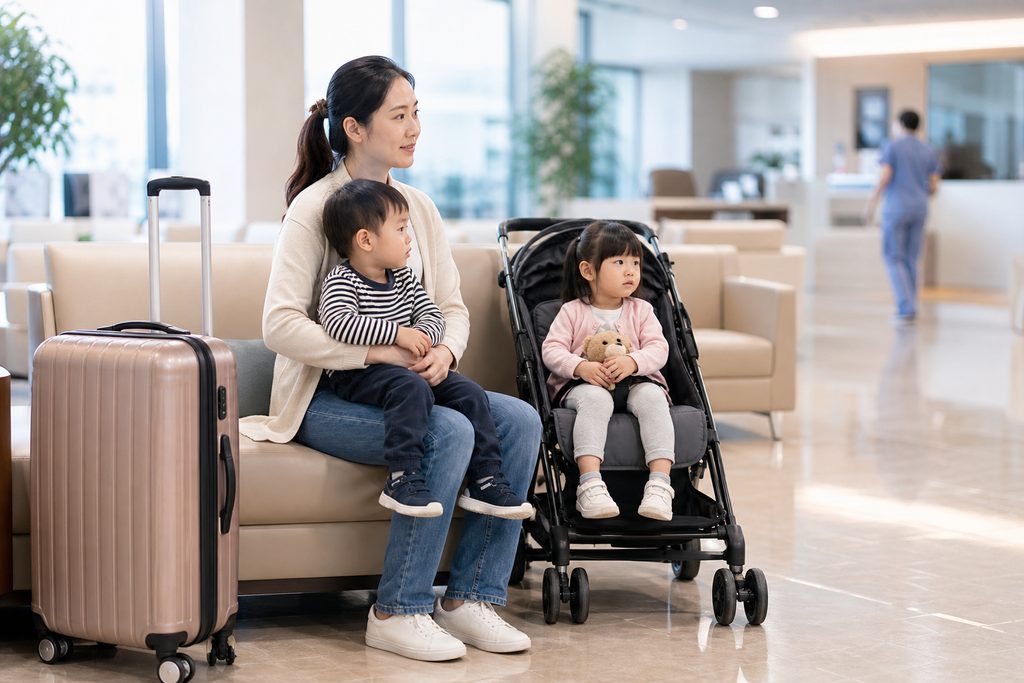
In the United Kingdom, a single woman seeking IVF with donor sperm can face a postcode lottery of funding, with some Clinical Commissioning Groups offering zero NHS cycles. In China, a single cycle of IVF at a top-tier hospital averages $4,000–$6,000. That gap isn’t just monetary. It represents a door that feels sealed shut in one place and cautiously ajar in another. But the question hanging in the air for any solo mother isn’t just about clinical success rates. It’s logistical. It’s visceral. Can you really navigate a foreign hospital system with a toddler gripping your hand?
Key Takeaways
- China’s top fertility centers, ranked among the best in Asia, offer IVF cycles at roughly 30-40% of the cost of comparable US clinics.
- Chinese public hospitals do not offer on-site childcare; a successful medical trip with young children requires a dedicated support plan, not just hope.
- Language barriers in public hospitals are absolute—even simple directions are in Mandarin, making a bilingual companion less a luxury and more a necessity.
- Visa logistics for a solo mother and child require precise documentation; an S2 visa is mandatory, and a standard tourist (L) visa will be rejected for medical purposes.
The Problem: The Arithmetic of Solo Parenting and Medical Deserts
Fertility treatment is a physically demanding process. Add a small child to the equation, and the complexity doesn’t double—it squares. You aren’t just tracking your own cycle. You are tracking nap schedules, unfamiliar food options, and the location of the nearest playground. For many solo mothers, the local options feel like a dead end. Wait times for donor gametes stretch past a year in parts of Canada. In Australia, out-of-pocket costs for IVF with donor sperm can easily exceed AUD $4,000 per cycle, even with Medicare rebates. Facing that, looking abroad isn’t a whim. It’s a rational pivot. But the mental image of managing a toddler in a sterile hospital corridor in a foreign country stops many women cold. We see this hesitation every day. The fear is real. The logistics are solvable.
Who We Are
We are not a hospital. We do not provide medical treatment, clinical diagnoses, or legal advice on parental rights. We are your logistical architects. Our team bridges the gap between you and China’s 340+ top-ranked hospitals. We handle the architecture of your trip: matching you with a fertility department that has experience with single women, scheduling appointments through official international channels, and placing a bilingual companion by your side who knows where to find a clean restroom for a child and how to translate a complex consent form. We exist because the distance between a great hospital and a foreign patient is filled with friction, and friction is the last thing a solo mother needs.
Why China Delivers Results for Solo Mothers
China’s reproductive medicine sector has scaled at a pace that few Western systems can match. This isn’t about experimental treatments. It’s about volume, technology, and a legal environment that, in practice, often proves more accessible for single women than many assume.
Clinical Volume Drives Refined Protocols
A top-tier Chinese fertility center might run more IVF cycles in a single month than a regional US clinic runs in a year. Peking University Third Hospital, for example, is one of the world’s largest reproductive medicine centers. This relentless volume means embryologists see edge cases routinely that might appear once a quarter elsewhere. For a solo mother using donor sperm, the lab’s experience with freezing, thawing, and culturing gametes is critical. The fertility treatment China single mother cost reflects this efficiency—the high throughput keeps per-cycle pricing lower without sacrificing lab quality. You aren’t paying for a boutique experience. You are paying for a factory of expertise, calibrated to deliver consistent results.
Technology Without the Gatekeeping
Time-lapse embryo imaging, preimplantation genetic testing (PGT), and advanced vitrification are standard in China’s best hospitals. These aren’t add-ons you have to fight for. They are integrated into standard workflows. For a woman who has already waited too long, this matters. The technology works quietly in the background, selecting the embryo with the highest probability of implantation, compressing a timeline that can otherwise stretch across multiple failed cycles. And because China’s medical system doesn’t have the same gatekeeping structures—where a GP referral is mandatory before seeing a specialist—the path from inquiry to treatment can be shorter.
Cost That Changes the Equation
The financial reality is the engine behind this entire conversation. A single IVF cycle in the United States averages $12,000 to $15,000, excluding medication. In China, at a public hospital’s international department, that same cycle falls between $4,000 and $6,000. Medication costs are separate but typically lower. For a solo mother, who is already carrying the full financial weight of parenthood, this delta is transformative. It means the difference between one attempt and three. It means having a financial buffer for the trip itself. The lower cost isn’t a signal of lower quality—it’s a structural reality of different labor markets and hospital economics. A senior embryologist in Beijing earns a fraction of their US counterpart, and that cost structure flows through to the patient invoice.
What You Need to Know Before Going Alone
This is where we speak plainly. The barriers are real. Ignoring them would be a disservice. A solo mother attempting to navigate this system independently will hit walls that aren’t documented in any guidebook.
- Visa Complexity for a Family Unit of Two: You need an S2 visa with a medical purpose annotation. Your child also needs an S2 visa. This requires an invitation letter from the hospital—a document that public hospitals do not issue casually to individuals. Without the right paperwork, your application sits in a pile. With it, the process is straightforward. The gap is knowing whom to ask and how to ask.
- The Language Barrier Is Absolute: In a Chinese public hospital, even the signs are in Mandarin. The pharmacy window, the blood draw station, the billing counter—none of them operate in English. You cannot rely on a translation app when a nurse is calling out a name and you need to respond immediately. Bringing a toddler into this environment adds a layer of sensory chaos. A child’s cry in a crowded waiting room doesn’t pause for Google Translate.
- Payment Systems That Reject Foreign Cards: Chinese hospitals operate on a prepaid balance system. You load money onto a hospital card, and each test or consultation deducts from it. The top-up machines often only accept UnionPay or WeChat Pay. Your Visa or Mastercard is useless at these terminals. International departments can process foreign cards, but navigating the cash-based public side alone is a genuine obstacle.
How We Help You Navigate This
These barriers exist for structural reasons, not because anyone is trying to exclude you. They are simply the byproducts of a system designed for a domestic population of 1.4 billion people. Our job is to route around them.
Before you travel, we secure the hospital invitation letter that unlocks your S2 visa. We match you with a fertility department that has confirmed experience working with single women—not all do, and it’s better to know that before you book a flight. We coordinate your initial consultation through the hospital’s international channel, which means a scheduled appointment rather than a dawn queue for a ticket that may not exist.
During your stay, a bilingual medical companion meets you at the hospital. This person handles registration, payment top-ups, and translation during your consultation. They also know the practical geography of the hospital: where to find a quiet corner for a restless child, which floor has the cleanest restroom, how to get from the ultrasound department to the phlebotomy lab without getting lost. For a solo mother, this companion becomes a second pair of hands and a calm voice in a loud environment.
After treatment, we remain your point of contact. If you need follow-up documentation translated for your home physician, we handle it. If a second cycle is needed, your records are already in the system, and the coordination clock resets faster. The goal is continuity, not just a single transaction.
Frequently Asked Questions
Yes, physically you can. But you should not plan to manage alone. Chinese hospitals do not have childcare facilities or play areas. The corridors are crowded, and wait times can stretch. A child who is hungry, tired, or overwhelmed will make an already stressful experience unmanageable. We strongly recommend traveling with a support person—a family member or a nanny—or having our bilingual companion assist, which frees you to focus on the medical interaction while your child is supervised. The question “can I bring my toddler to hospital in China” is common, and the honest answer is yes, but only with a clear support structure.
The legal landscape is nuanced. There is no national law explicitly prohibiting single women from accessing IVF with donor sperm China for single women, but hospital policies vary. Some public hospitals will not treat single women; others will, especially through their international departments. This is not a question you can resolve by emailing a general inquiries address. It requires a direct conversation with the right department head, in Mandarin, with an understanding of how to frame the request. We handle this pre-screening before you commit to anything.
The question of “how to manage medical trip with young children abroad” starts with accommodation. Book a serviced apartment with a kitchenette, not a hotel room. A tired child needs familiar food, and you need the option to cook. Choose a hospital that is near green space—a small park where a child can run between appointments makes a tangible difference. Schedule consultations for early morning to minimize waiting room time. And accept that the trip will move at your child’s pace, not yours. Build buffer days into your itinerary. A medical trip with a child is a marathon paced like a stroll.
The fertility treatment China single mother cost breaks into three buckets. Medical: $4,000–$6,000 per IVF cycle, plus $1,000–$2,000 for medications. Logistics: flights, accommodation, visa fees, and daily expenses—budget $3,000–$5,000 for a two-week stay. Support services: a bilingual companion from $200/day and appointment coordination from $300. A realistic total for one cycle, including travel, is $10,000–$15,000. That’s still roughly the cost of a single US cycle before travel. And if you need a second cycle, the medical cost repeats, but the logistics cost drops because you already know the system.
The phrase “best fertility clinic Beijing solo mother” implies a single answer, but the reality depends on your specific needs. Peking University Third Hospital has the highest volume and deep experience with complex cases. Beijing Obstetrics and Gynecology Hospital has a strong donor gamete program. For a medical tourism China child friendly hospital environment, some private international hospitals like Beijing United Family offer a more Western-style experience with English-speaking staff and direct insurance billing, though at a higher price point. The best clinic is the one that matches your medical profile and accepts your patient category—and that match is exactly what we determine during the initial consultation phase.
Your Next Step
Traveling to China for fertility treatment as a solo mother with a young child is not a simple decision. It sits at the intersection of medical need, financial calculation, and the raw logistics of parenting in a foreign environment. But for women who have exhausted their local options—or who refuse to wait any longer—it represents a viable, structured path forward. The hospitals exist. The technology is world-class. The missing piece is the layer of coordination that makes the experience navigable rather than overwhelming. That layer is what we provide. When you are ready to explore what this looks like for your specific situation, we are here to talk.
For more medical information and treatment options in China, visit chinamedservices.com (China Medical Services).
