Finding a Good Dentist in China: A Foreigner’s Practical Guide
How Do I Find a Good Dentist in China?
While a single dental implant in the United States averages between $3,000 and $6,000 per tooth, the same procedure at a top-tier dental hospital in Shanghai typically runs from $800 to $1,800. That price gap explains why more international patients now ask us how to find a good dentist in China without getting lost in a system built for 1.4 billion locals. The dental implant cost China offers is real, but so is the risk of walking into the wrong clinic. This guide walks through the practical path: where to look, what to verify, what to pay, and how to avoid the mistakes that cost foreigners time and money.
How This Actually Works, Step by Step
You are not going to fly to Beijing, walk into a random dental clinic, and get implants the same day. Here is the sequence that actually works for international patients.
First, decide what you need. A cleaning and whitening is one thing. A full-mouth restoration with implants and bone grafts is another. The complexity determines whether you need a private international clinic or a specialized public hospital department.
Second, gather your existing records. Recent X-rays, a treatment plan from your home dentist, and any relevant medical history. Chinese dentists will want to see these before quoting anything serious. If you do not have digital copies, ask your home clinic to email them.
Third, contact clinics directly or work with a coordinator who can reach the hospital’s international department. Public hospital dental departments rarely answer foreign emails quickly. Private international clinics do. You need to know which path fits your case.
Fourth, get a written treatment plan and cost estimate. Reputable clinics provide this before you travel. It should itemize the implant system, the abutment, the crown material, and the surgical fees. Vague quotes are a red flag.
Fifth, schedule the first appointment. For implants, expect at least two trips: one for the surgical placement, another months later for the final crown. Some clinics offer same-day temporary crowns, but osseointegration still takes three to six months.
How Do I Find a Good Dentist in China: The Three Types of Clinics
The answer depends on what “good” means for you. There are three distinct tiers, and they serve different needs.
Public hospital stomatology departments. The best-known are places like Peking University School of Stomatology in Beijing and Shanghai Ninth People’s Hospital. These are where the most complex cases go — jaw reconstruction, severe periodontal disease, full-arch implants. The clinical skill is excellent. The trade-off is language, wait time, and a system that assumes you speak Mandarin. You will queue, you will wait, and you will need someone to translate unless you get into the international VIP wing.
Private international dental clinics. Brands like United Family, Jiahui, and Raffles operate in major cities. They are built for foreigners. English-speaking staff, Western sterilization standards, direct insurance billing, and appointment-based scheduling. A dental implant here costs more than at a public hospital but still far less than in the US or Europe. For most expats and medical tourists, this is the right balance of safety and convenience.
Local private clinics. Thousands of small dental clinics dot every Chinese city. Some are excellent, run by dentists who trained abroad. Others cut corners on sterilization and use unverified implant brands. Without local knowledge, you cannot tell the difference. This is where foreigners get burned.
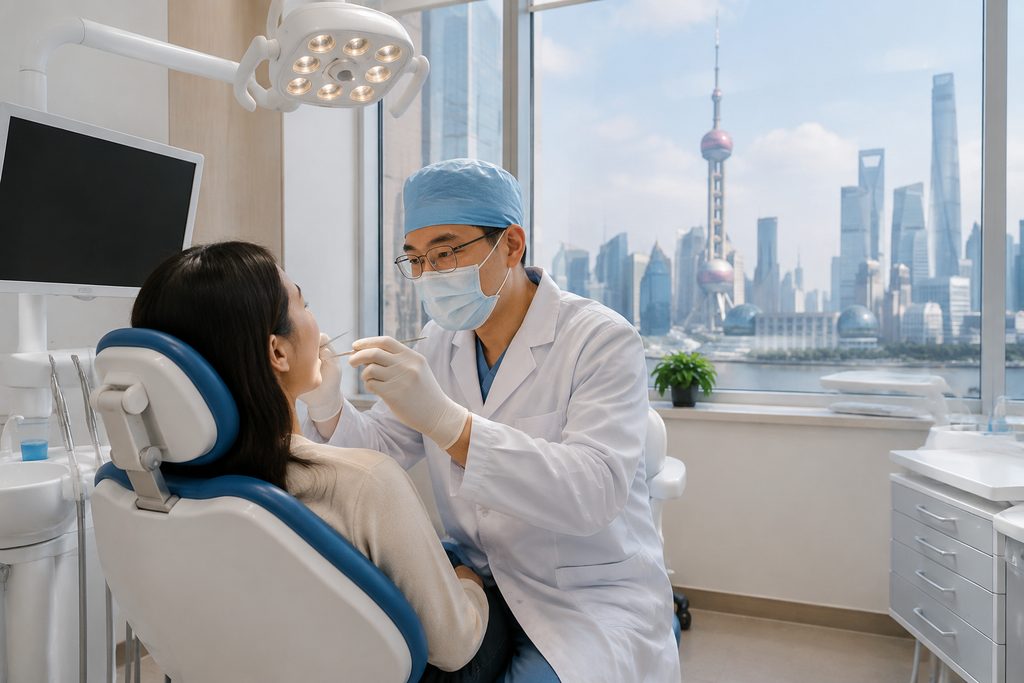
If your question is specifically about finding the best dentist in Shanghai for foreigners, the answer usually points to the international clinic tier. Shanghai has the deepest concentration of JCI-accredited dental facilities in China, and many of their dentists trained in the US, UK, or Japan. But “best” still depends on your procedure.
A Realistic Timeline
Dental work in China is not instant. Here is what a typical implant case looks like for an international patient.
| Stage | What Happens | Typical Duration |
|---|---|---|
| Week 1 | Send records, get initial consultation and cost estimate by email or video | 3–7 days |
| Week 2–3 | Apply for S2 visa, book flights and accommodation | 1–3 weeks depending on embassy |
| Week 3–4 | First in-person visit: exam, 3D scan, treatment plan confirmation | 1–2 days |
| Week 4 | Implant surgery (if no extractions or bone grafts needed) | 1 day |
| Month 3–6 | Healing period at home, follow-up by email | 3–6 months |
| Month 6–7 | Second trip: abutment placement and final crown | 3–5 days |
Add two to four weeks if you need extractions, bone grafting, or a sinus lift before the implant. Those procedures add cost and healing time. Many patients forget that the timeline splits across two trips, not one.
What Can Go Wrong — and What Happens Then
Let us be blunt. Things do go wrong, and you should know what recourse looks like before you pay.
Wrong implant brand. Some clinics quote a low price using a no-name implant system from a factory you have never heard of. Stick to internationally recognized systems: Straumann, Nobel Biocare, Osstem, Dentium, or Astra Tech. Ask for the exact brand and model in writing. If a clinic will not tell you, leave.
Sterilization shortcuts. This is the serious one. Reputable clinics use autoclave sterilization and single-use surgical kits. Ask to see the sterilization room. Any clinic that refuses is not worth the savings. This is the core of the question is dental work in China safe — the answer is yes at accredited international clinics and top public hospitals, and no at unvetted local shops.
Language breakdown. Even in international clinics, the front desk may speak English while the dental assistant does not. If you have a complex case, bring a bilingual companion or confirm that the treating dentist speaks your language. Miscommunication about medical history can be dangerous.
Complications after you fly home. If an implant fails or a crown cracks six months later, you cannot easily return. Ask the clinic about their warranty policy and whether they have partner clinics abroad. Some international chains offer cross-border follow-up. Most do not.
If something goes wrong, your recourse is the clinic’s patient complaint process, and in serious cases, the local health authority. But the practical answer is prevention: choose a clinic with international accreditation and a documented track record.
What the Numbers Actually Mean: Dental Implant Cost China vs. Home
The headline savings are real, but you need to read the fine print. Here is how costs compare for common procedures.
| Procedure | China (International Clinic) | China (Public Hospital) | US Average |
|---|---|---|---|
| Single implant (including crown) | $1,500–$2,500 | $800–$1,800 | $3,000–$6,000 |
| Full-arch restoration (All-on-4) | $12,000–$18,000 | $8,000–$14,000 | $24,000–$40,000 |
| Porcelain crown | $300–$600 | $200–$400 | $800–$2,000 |
| Root canal (molar) | $300–$500 | $150–$300 | $1,000–$1,800 |
| Professional cleaning | $80–$150 | $40–$80 | $150–$300 |
Prices vary by hospital and case complexity. A full-arch case with significant bone loss costs more. The affordable dental clinic Beijing prices you see advertised online usually refer to local clinics, not international ones. Beijing’s public hospital dental departments offer the lowest prices, but you will need a translator and patience.
One more thing: dental work is almost never covered by international health insurance for medical tourists. Some expat policies cover preventive care at international clinics. Check before you assume.
Practical Considerations: Records, Visa, Payment, and Follow-Up
The medical part is only half the trip. The logistics matter just as much.
Records. Bring digital and printed copies of everything: X-rays, treatment plans, allergy information, current medications. If your records are not in English or Chinese, get them translated. A dentist cannot safely treat what they cannot read.
Visa. For medical travel to China, the correct category is the S2 visa, annotated for medical treatment. It is a short-stay visa for private affairs, and you will need supporting documents from the hospital or clinic — typically an appointment confirmation and a treatment plan. The M visa is for commercial and trade activities, not medical care. Family members traveling with you also apply for S2. Approval is never guaranteed, and requirements change, so check with the nearest Chinese embassy or consulate before booking flights.
Payment. Public hospitals require prepayment, and you settle the balance after treatment. International clinics accept major credit cards and sometimes direct insurance billing. Carry enough liquidity for deposits. Cash is less common now; mobile payment dominates, but foreign cards work at international clinics.
Language. Even in Shanghai and Beijing, street-level Mandarin is the default. Your clinic may be English-friendly, but pharmacies, taxis, and hospital hallways are not. If you are doing this solo, a bilingual medical companion changes the experience entirely.
Follow-up at home. Before you leave China, get a written summary of what was done, what implant system was used, and what your home dentist needs to know. Ask for the implant’s serial number and warranty card. Your home dentist will need these records.
Frequently Asked Questions
At JCI-accredited international clinics and top public hospital dental departments, yes. Sterilization protocols meet international standards, and many dentists trained abroad. At unvetted local clinics, the risk is real. Verify accreditation, ask about the implant brand, and do not choose a clinic based on price alone.
Contact the clinic’s international department directly by email or phone. Send your records and ask for a written treatment plan. For public hospitals, expect slower responses and limited English. Some patients use a local coordinator to handle registration and scheduling, especially for complex cases. You cannot book most public hospital appointments online from overseas without a Chinese ID.
At an international clinic, a single implant with crown typically runs $1,500 to $2,500 all-in. At a public hospital, $800 to $1,800. Complex cases with bone grafting or full-arch work cost more. Always get an itemized quote before traveling.
Yes, and many patients do. But plan the dental work first, then the sightseeing. After implant surgery, you should avoid strenuous activity and alcohol for a few days. Schedule the procedure early in your trip, then recover while exploring.
Ask about warranty and follow-up policy before you commit. Some international chains have partner clinics abroad. Most require you to return to China for major corrections. For minor issues, your home dentist can often handle adjustments if you bring complete records.
Your Next Step
Finding a good dentist in China is not about picking the cheapest option. It is about matching your procedure to the right tier of clinic, verifying credentials, and planning the logistics so the savings do not evaporate in hassle. Our team at China Medical Services helps international patients navigate exactly this process — we do not perform dental work, and we do not promise outcomes. We help you identify appropriate clinics, coordinate appointments, and arrange bilingual support on the ground. If you want a realistic assessment of your dental case and what it would cost in China, start with a free consultation.
For more medical information and treatment options in China, visit chinamedservices.com (China Medical Services).
