Is a Mini Facelift Right for Me? Cost, Safety, and Realistic Expectations
Is a Mini Facelift Right for Me? The Short Answer
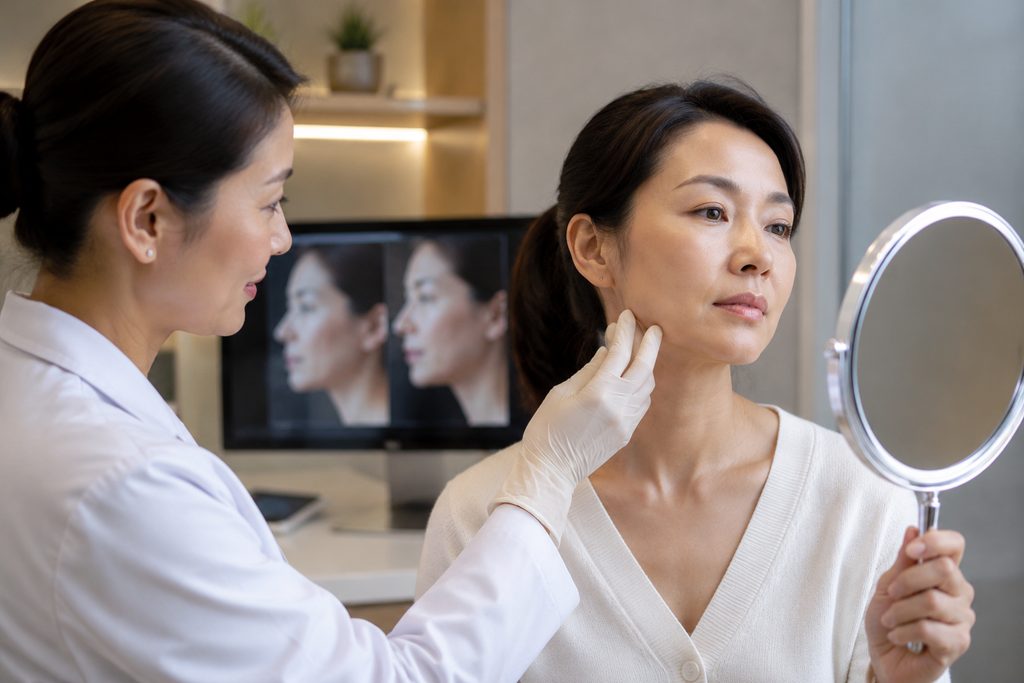
A mini facelift targets early jowling and mild skin laxity in the lower face and neck. If you’re in your late 30s to early 50s with good skin elasticity and want a subtle refresh rather than a dramatic transformation, the answer is often yes. But if you have significant sagging, deep nasolabial folds, or excess neck skin, a full facelift or neck lift will serve you better. The wrong procedure wastes money and recovery time.
According to the International Society of Aesthetic Plastic Surgery, facial rejuvenation procedures grew by 19.3% globally between 2019 and 2023. Patients are increasingly seeking shorter-scar options with faster recovery. The mini facelift fits that demand. Yet the term “mini” is misleading. It is still real surgery. It still requires anesthesia, incisions, and a surgeon who understands facial anatomy at a deep level.
Who This Is Right For — and Who It Isn’t
Candidate selection matters more than surgical technique. A skilled surgeon will tell you when a mini facelift won’t deliver what you want. That honesty protects you from a disappointing result and a second, costlier surgery later.
You are typically a good candidate if:
- You are between 38 and 55 years old with mild to moderate jowling
- Your skin still has reasonable elasticity — it snaps back when pinched
- You have early marionette lines but no deep neck banding
- You want a result that looks natural, not pulled or windswept
- You can take 7 to 10 days away from work and social obligations
- You are a nonsmoker or willing to quit for at least 4 weeks before and after surgery
You should not pursue a mini facelift if:
- You have significant midface descent or deep nasolabial folds — you need a full SMAS facelift or deep plane facelift
- You have substantial neck laxity, platysmal banding, or a heavy double chin — a neck lift or liposuction should be added
- You have uncontrolled hypertension, diabetes, or a bleeding disorder
- You expect the result to last 15 years — it will not
- You are looking for a nonsurgical option — threads and fillers cannot replicate the lift of surgically repositioned tissue
Here’s the honest math. If you’re 60 with significant laxity and choose a mini facelift to save money, you’ll likely need a revision within 3 years. That revision costs more than doing the correct procedure the first time. The cheapest option is the right option, not the smallest one.
What a Mini Facelift Actually Does — and What It Doesn’t
A mini facelift, sometimes called a short-scar facelift or S-lift, uses shorter incisions than a traditional facelift. The surgeon makes an incision in front of and around the ear, sometimes extending only to the earlobe rather than into the hairline behind the ear. Through this limited access, they tighten the superficial musculoaponeurotic system (SMAS) — the connective tissue layer that gives the face its structural support — and remove a small amount of excess skin.
What it does well:
- Lifts early jowls and restores definition to the jawline
- Softens early marionette lines at the corners of the mouth
- Provides a subtle, natural improvement that doesn’t announce itself
- Leaves a shorter scar that hides easily around the ear
What it cannot do:
- It cannot address the midface or under-eye area
- It cannot correct significant neck laxity or platysmal banding
- It cannot remove deep wrinkles — those require laser resurfacing or fat grafting
- It cannot lift the brows or forehead — that’s a brow lift
So when a patient asks “is a mini facelift safe in China,” the safety question is only half the picture. The more important question is whether it’s the correct procedure for your anatomy. A safe procedure performed on the wrong patient still produces a bad outcome.
Mini Facelift Cost China vs. the West
Cost is the primary reason international patients consider China for facial plastic surgery. The difference is substantial enough to cover flights, accommodation, and a companion service — and still leave significant savings.
| Procedure | United States | United Kingdom | China (Top Public Hospital) | China (Private International Hospital) |
|---|---|---|---|---|
| Mini facelift (surgeon fee + facility + anesthesia) | $8,000 – $15,000 | £6,000 – £12,000 ($7,600 – $15,200) | $3,500 – $6,500 | $5,000 – $9,000 |
| Full SMAS facelift | $15,000 – $30,000 | £10,000 – £20,000 ($12,700 – $25,400) | $6,000 – $10,000 | $8,000 – $14,000 |
| Neck lift (add-on) | $5,000 – $8,000 | £4,000 – £7,000 ($5,100 – $8,900) | $2,000 – $4,000 | $3,000 – $5,500 |
These ranges reflect the mini facelift price abroad compared with Chinese pricing. Figures vary by hospital and case complexity. The private international hospitals in China — such as United Family and Jiahui — charge more because they offer English-speaking staff, JCI accreditation, and direct insurance billing. Public top-tier hospitals offer lower prices but require navigating Chinese-language systems unless you use a coordination service.
What’s included in the Chinese price? Typically the surgeon’s fee, operating room time, anesthesia, and one night of observation if needed. What’s usually not included: preoperative lab work, compression garments, medications after discharge, and any revision surgery. Ask for a written breakdown before you commit. Vague quotes hide costs.
How Long Does a Mini Facelift Last?
Here’s the number most surgeons agree on: 5 to 8 years. Some patients see good results at 10 years, especially if they had excellent skin elasticity and protect their skin from sun damage. Others notice laxity returning at year 4. The range exists because aging continues after surgery. A mini facelift resets the clock; it does not stop it.
Factors that shorten the result:
- Smoking — reduces blood flow and accelerates skin aging
- Significant weight fluctuation after surgery
- Chronic sun exposure without SPF
- Choosing a mini facelift when a full facelift was indicated
Factors that extend the result:
- Good skin care with retinoids and sunscreen
- Stable weight
- Nonsmoking status
- Maintenance treatments like skin-tightening lasers at year 3 or 4
Some patients ask whether they can repeat a mini facelift. You can. But each surgery creates scar tissue, and the SMAS layer has limits. Most surgeons recommend one revision at most, then transitioning to a full facelift if further lifting is needed.
Choosing a Surgeon: What “Best Mini Facelift Surgeon Shanghai” Should Mean
Searching for the best mini facelift surgeon Shanghai is natural. But ranking surgeons is not like ranking restaurants. The best surgeon for one patient may be wrong for another. What you want is a surgeon who does a high volume of facial procedures, shows you before-and-after photos of patients with your facial structure, and tells you honestly when a different procedure would serve you better.
Questions to ask during a video consultation:
- How many facelifts do you perform per year? (Look for at least 50)
- Do you perform deep plane, SMAS, and mini facelifts — or only one technique?
- Can I see photos of patients at 1 year post-op, not just 3 months?
- What is your revision rate, and how do you handle complications?
- Will you be the one performing the surgery, or a junior surgeon under supervision?
In China’s top-tier public hospitals, facial plastic surgeons often perform 200 to 400 facial procedures annually. That volume matters. Surgical skill is built through repetition. The plastic surgery departments at leading hospitals in Shanghai and Beijing handle complex reconstructive and aesthetic cases daily, which means their surgeons see anatomy variations that lower-volume surgeons rarely encounter.
But volume alone is not enough. You need a surgeon who communicates clearly and understands the aesthetic you want. Western and Chinese beauty standards differ. Be explicit. Bring photos of results you like and results you fear. A good surgeon will tell you what’s achievable for your face, not just agree to everything.
Can I Book a Mini Facelift in Beijing? The Practical Reality
The mini facelift cost China ranges from $3,500 to $6,500 at top public hospitals, versus $8,000 to $15,000 in the United States. Private international hospitals in China charge $5,000 to $9,000. The savings are real, but remember that travel, accommodation, visa fees, and companion services add $2,000 to $4,000 to the total. Still, even with those costs, most patients save 30% to 50% compared with US pricing.
Most patients see results lasting 5 to 8 years. The range depends on skin quality, sun exposure, smoking status, and weight stability. A mini facelift does not stop aging — it resets it. Patients who protect their skin and maintain stable weight often reach the upper end of that range. Those who smoke or fluctuate in weight may see laxity return at year 4 or 5.
You cannot book surgery directly from abroad at a public hospital. You need an in-person consultation first. However, international departments and private hospitals may allow a preliminary video consultation to confirm candidacy, then schedule surgery for the same trip as your in-person evaluation. This is not guaranteed and depends on the surgeon’s schedule. Plan for flexibility.
Revisions are uncommon — most studies report rates under 5% — but they happen. If you need one, you’ll likely have it done by a local plastic surgeon in your home country. Chinese hospitals cannot manage post-operative complications remotely. Factor this into your decision. Medical travel works best when you have a local surgeon willing to provide follow-up care if needed.
Choosing a mini facelift is a personal decision with real trade-offs. The right surgeon, the right procedure, and honest expectations matter more than the country where
Frequently Asked Questions
Yes. The hospitals used for international patients are JCI-accredited and follow the same international safety standards as top hospitals in the US and Europe. Surgical teams perform high volumes of procedures — often more than their Western counterparts — which studies show leads to better outcomes.
Costs vary by procedure and hospital, but international patients typically save 40-80% compared to US prices — even when factoring in travel and accommodation. A consultation with our team will give you an exact, all-inclusive quote with no hidden fees.
Send us your existing medical reports to get started. We handle everything from hospital selection and appointment scheduling to visa assistance and post-operative recovery planning. Your medical records are reviewed by the specialist before you even book a flight.
For more medical information and treatment options in China, visit chinamedservices.com (China Medical Services).
