Thread Lift: What It Is, How Long It Lasts, and Real Costs in China
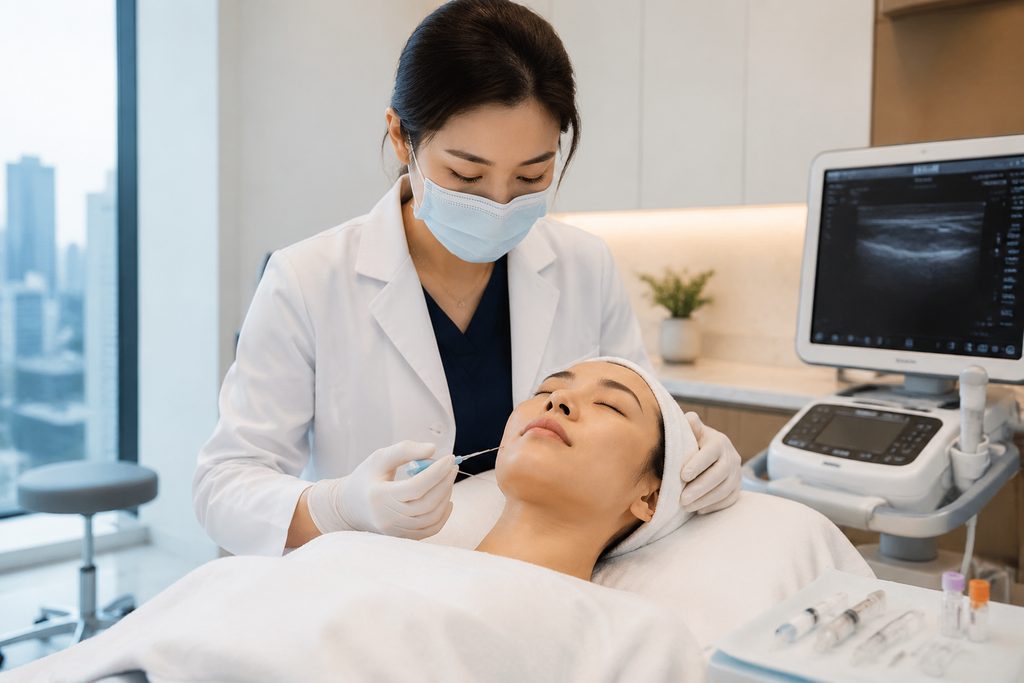
When 34-year-old Sarah from Manchester noticed her jawline softening in video calls, she started researching options. A surgical facelift felt too aggressive for her age. Fillers seemed temporary and expensive over time. Then a friend mentioned thread lifts she had seen on a trip to Asia. Sarah had no idea where to start comparing clinics, prices, or realistic outcomes. This guide breaks down exactly what a thread lift is, how long it actually lasts, and what a thread lift cost China looks like compared to Western prices.
Thread Lift: The Short Answer
A thread lift is a minimally invasive procedure where dissolvable sutures with tiny cones or barbs are inserted under the skin to physically lift sagging tissue and stimulate collagen production. Results are immediate, but modest. Most patients see visible improvement for 12 to 18 months, after which the threads dissolve and the lifting effect fades. Some newer PDO and PLLA threads claim up to 24 months of collagen support, but the mechanical lift itself weakens well before that.
The honest caveat: a thread lift will not produce facelift-level results. It tightens, refines, and delays. For someone in their late 30s to early 50s with mild to moderate laxity, it can be a good middle ground between injectables and surgery. For someone with significant jowling or neck skin excess, it will disappoint.
Who This Is Right For — and Who It Isn’t
Thread lifts work best within a specific window. Understanding that window prevents wasted money and bad outcomes.
Good candidates typically include:
- Adults aged 30 to 55 with mild to moderate skin laxity
- People who want subtle jawline definition or brow elevation without surgery
- Those who cannot afford 2-3 weeks of downtime for a surgical facelift
- Patients with good skin elasticity and realistic expectations
- People seeking a “preventative” lift before laxity becomes severe
You should not pursue a thread lift if:
- You have significant jowls, deep nasolabial folds, or substantial neck laxity — threads cannot reposition heavy tissue
- You have an active skin infection, autoimmune condition affecting skin, or bleeding disorder
- You are pregnant or breastfeeding
- You expect a result comparable to a surgical facelift or neck lift
- You have very thin skin where threads may be visible or palpable
Being explicit about who should not do this matters. Thread lifts fail when expectations outpace what the device can physically accomplish.
The Options, Compared
If you are considering a thread lift, you are really choosing between four approaches to facial rejuvenation. Each has a different cost curve, downtime profile, and longevity.
| Option | Typical Cost (US) | Typical Cost (China) | Downtime | Longevity |
|---|---|---|---|---|
| Dermal fillers | $700–1,200 per syringe | $250–500 per syringe | 1–2 days | 6–18 months |
| Thread lift (full face) | $2,500–5,000 | $800–2,000 | 3–7 days | 12–24 months |
| Ultherapy / HIFU | $2,000–4,500 | $600–1,800 | None to minimal | 12–18 months |
| Surgical facelift | $12,000–25,000 | $4,000–9,000 | 2–3 weeks | 7–12 years |
Fillers suit volume loss. HIFU suits early laxity with zero downtime. A surgical facelift remains the only option for dramatic, durable repositioning. The thread lift occupies the middle: more structural than fillers, less invasive than surgery, and priced accordingly. For international patients, the thread lift price Shanghai clinics quote often runs 50-60% below comparable US metropolitan pricing, even at accredited international departments.
How Long Does a Thread Lift Last: The Timeline Patients Actually Experience
This is the question every patient asks, and the answer is more nuanced than clinic marketing suggests.
The mechanical lift from the threads themselves is strongest in the first 2-3 months. During this period, the barbs or cones physically hold tissue in a more elevated position. Patients see the most dramatic difference immediately after the procedure, with some settling over the first few weeks.
From month 3 to month 6, the threads gradually stimulate collagen around their insertion tracks. This is when the skin quality improves — slightly firmer, slightly thicker. The visible lift may soften, but the overall appearance often holds steady.
From month 6 to month 12, the threads are dissolving. PDO threads typically dissolve fully within 6-9 months. PLLA and PCL threads can last 12-18 months before full absorption. The mechanical lift is largely gone by month 12, though residual collagen may maintain some improvement.
By month 18 to 24, most patients have returned to their baseline. Some report lasting improvement in skin texture, but the lifting effect is gone. This is why clinics often recommend a repeat procedure at the 12-18 month mark.
So when someone asks how long does a thread lift last, the honest answer is: visible lift for 6-12 months, subtle collagen benefit for up to 18-24 months, and nothing permanent.
Is Thread Lift Safe in China? What the Evidence Shows
Safety depends less on geography and more on three factors: the practitioner’s experience, the thread material used, and the facility’s sterility standards.
China’s cosmetic medicine market is large and competitive. Top-tier aesthetic departments in cities like Shanghai and Beijing perform high volumes of thread lift procedures — far more than a typical Western clinic. That volume matters. Complications like thread extrusion, dimpling, asymmetry, and infection correlate strongly with practitioner inexperience, not with the country where the procedure happens.
The threads themselves are usually imported. Korean PDO threads dominate the market, along with PLLA and PCL varieties from manufacturers in South Korea and Europe. The materials are the same ones used in Western clinics. What varies is who inserts them.
Reputable facilities use local anesthesia, perform the procedure in a sterile treatment room, and provide documented aftercare instructions. If a clinic cannot show you the thread packaging or refuses to name the thread brand, walk away.
What a Thread Lift Costs: China vs the West, and What the Price Includes
The thread lift cost China clinics advertise varies widely by city, facility tier, and thread count. Here is what international patients should expect.
In Shanghai and Beijing, at hospital-affiliated international departments or reputable private clinics, a full-face thread lift using 10-20 threads typically runs $800 to $2,000. A mid-face or jawline-only treatment with 4-8 threads may cost $400 to $900. Premium clinics targeting medical tourists sometimes quote thread lift packages China that bundle consultation, procedure, and one follow-up visit for $1,500 to $2,500.
By comparison, the same procedure in the US averages $2,500 to $5,000 at board-certified dermatology or plastic surgery practices. London and Sydney fall in a similar range. The savings in China are real, typically 50-60%, but they come with travel costs and coordination effort.
What is usually included in the price:
- The threads themselves (brand and quantity specified before treatment)
- Local anesthesia
- The procedure time, usually 45-90 minutes
- One immediate follow-up or check-in within the first week
What is often not included:
- Pre-procedure consultation fee (sometimes credited toward treatment)
- Antibiotic ointment or pain medication
- Any touch-up threads if asymmetry appears after swelling resolves
- Translation or coordination services if you do not speak Chinese
For patients seeking the best thread lift clinic Beijing has to offer, the cost tends toward the higher end of these ranges. That higher price usually reflects senior practitioners, imported premium threads, and English-speaking coordination staff — not necessarily better medical outcomes.
Practical Considerations: Records, Payment, and Follow-Up After Returning Home
If you are traveling to China for a thread lift, a few logistics deserve attention before you book a flight.
Medical records: bring photos of your face from multiple angles, a list of any allergies, and documentation of prior cosmetic procedures. If you have had fillers in the treatment area, tell the practitioner — threads and fillers in the same plane can interact poorly.
Payment: Chinese public hospital international departments and private clinics generally require upfront payment. Credit cards are accepted at most facilities that serve international patients, but confirm before arrival. Some clinics accept wire transfers for package bookings. Insurance rarely covers cosmetic thread lifts, so plan for out-of-pocket payment.
Language: even at top hospitals, front-desk staff may have limited English. The treating physician may speak some English, but detailed consent discussions often need a translator. This is where a bilingual medical companion becomes genuinely useful — not as a luxury, but as a safety measure for informed consent.
Follow-up: thread lift complications like infection, extrusion, or asymmetry typically appear within the first 2-4 weeks. If you return home immediately after the procedure, ensure you have a local provider willing to see you for a post-procedure check. A photo follow-up with the Chinese clinic is standard, but if a thread extrudes or an infection develops, you need someone local to treat it.
Visa: foreign nationals traveling to China for medical treatment generally apply for an S2 visa, which covers short-term private affairs including medical care. Supporting documents from the treating hospital or clinic help the application. Requirements vary by embassy, so confirm with your local Chinese consulate before booking.
Frequently Asked Questions
Most patients can fly within 24-48 hours. The procedure is done under local anesthesia, so there is no general anesthesia recovery period. Expect some swelling and bruising that peaks around day 2-3. Long-haul flights during peak swelling are uncomfortable but not medically dangerous. Some patients prefer to stay 3-5 days locally for the initial follow-up.
Thread extrusion — where the end of a thread pokes through the skin — occurs in a small percentage of cases, usually within the first month. It is more common with very thin skin or when threads are placed too superficially. The fix is simple: a practitioner trims the exposed end. It does not usually compromise the overall result, but it does require a visit to a clinic. If you are back home when it happens, any dermatologist can trim it.
The insertion itself is done under local anesthesia, so you feel pressure and movement but not sharp pain. The days after can be uncomfortable — soreness, tightness, and tenderness when chewing or smiling. Most patients manage with over-the-counter pain relief. If a clinic claims the procedure is completely painless with no recovery period, treat that as a red flag.
Yes, and many international patients do. Botox, fillers, and laser treatments are commonly scheduled alongside thread lifts. However, combining procedures increases swelling and complicates aftercare. A reputable clinic will space treatments appropriately rather than doing everything in one sitting to maximize the package price. Ask for a written treatment plan before committing.
Your Next Step
A thread lift can be a smart, low-downtime refresh when expectations are realistic and the practitioner is experienced. China offers genuine cost advantages for this procedure, but only when you choose an accredited facility and plan the logistics carefully. Our team at China Medical Services helps international patients identify reputable hospital-affiliated aesthetic departments, coordinate appointments, and arrange bilingual support throughout the visit. We are not a hospital, and we do not provide medical advice or diagnoses. If you want help comparing clinics or understanding what a realistic treatment plan looks like, request a free consultation and we will walk you through the options without pressure.
The core message: know what threads can and cannot do, choose your provider on credentials rather than price, and plan for follow-up care before you fly. That is how you get a result you are happy with — in China or anywhere else.
For more medical information and treatment options in China, visit chinamedservices.com (China Medical Services).
