Access Top Plastic Surgeons in China: Cosmetic & Post-Trauma Care
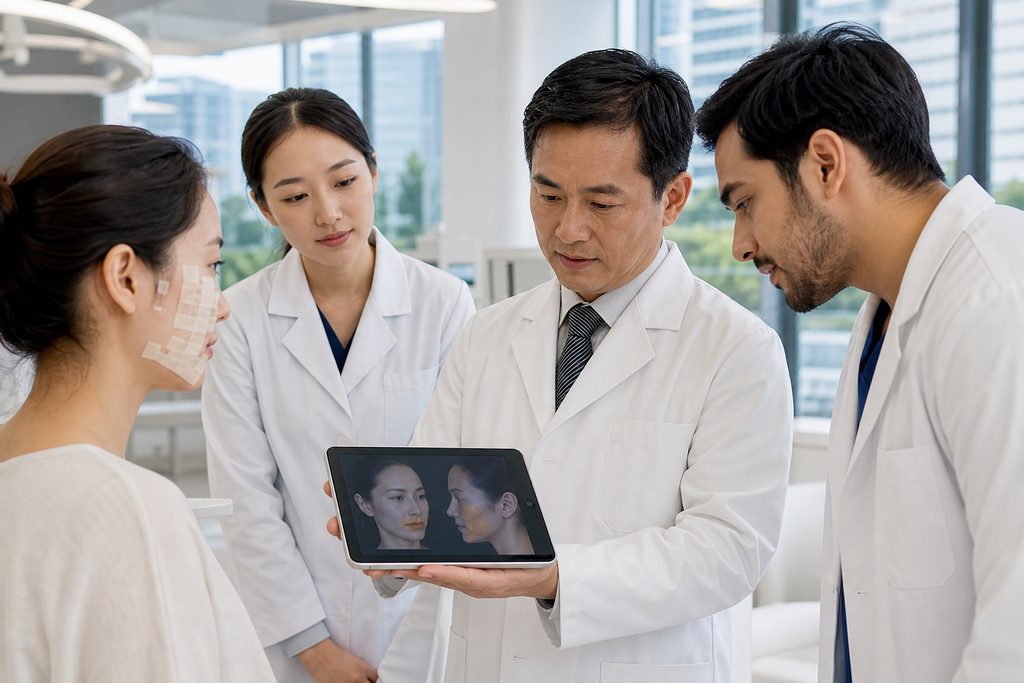
While a rhinoplasty in Beverly Hills can easily exceed $15,000, the same procedure at a top-tier Shanghai hospital often starts around $3,000—without sacrificing clinical quality. China’s leading plastic surgery departments now perform volumes that dwarf most Western centers. A single department might log over 70,000 cosmetic and reconstructive procedures annually. That volume breeds a specific, hard-won expertise. But accessing it as a foreigner requires navigating a system that was not built for you. Our team exists to bridge that gap.
Accessing Top Plastic and Reconstructive Surgeons in China: The Short Answer
You can access China’s best plastic and reconstructive surgeons through hospital international medical centers or VIP departments. The process starts with a remote consultation, where you send medical records and photos. A specialist then reviews your case and proposes a plan. You cannot simply book a top surgeon online from overseas. The public registration system requires in-person queuing. But the international pathway, which we coordinate, lets you lock in a surgical slot before you fly. The catch is cost. This route uses hospital VIP channels, and fees run 1.5 to 2 times higher than local rates. Still, the total plastic surgery cost in China remains a fraction of what you would pay in the US or Europe.
Who This Is Right For — and Who It Isn’t
Traveling for surgery is a serious decision. It suits certain patients perfectly. Others should stay close to home.
Good candidates typically:
- Need a complex post-trauma reconstruction that their home system has waitlisted for 12+ months.
- Want a high-volume cosmetic procedure—rhinoplasty, facelift, blepharoplasty—and are willing to travel for a surgeon who has performed thousands of them.
- Are medically stable and cleared for elective surgery with no uncontrolled comorbidities.
- Can commit to staying in one Chinese city for at least 2-3 weeks for surgery and initial follow-up.
This path is usually a poor fit if you:
- Expect a boutique, spa-like experience. Chinese top-tier public hospitals are efficient, high-volume machines. They are not luxury resorts. For a hotel-like stay, consider a JCI-accredited private hospital like United Family—but expect costs closer to Western private rates.
- Have a complex medical history requiring seamless coordination with your home physician. Language barriers and differing medical record systems make real-time collaboration difficult.
- Cannot tolerate ambiguity. Surgical plans are finalized after an in-person examination. The remote proposal is a starting point, not a binding contract.
The Options, Compared
Not all pathways into the Chinese system are equal. Here is how the three main routes stack up for an international patient seeking a procedure like a facelift.
| Factor | Public Hospital (Standard) | Public Hospital (VIP/International) | Private International Hospital |
|---|---|---|---|
| Surgeon Access | Unpredictable; junior or rotating staff possible | Guaranteed senior attending or department chief | Selected senior surgeons; smaller teams |
| Typical Facelift Cost | $2,500 – $4,000 | $4,500 – $8,000 | $10,000 – $20,000+ |
| English Support | None | Coordinator + bilingual nursing staff | Full English-speaking environment |
| Wait Time for Surgery | Weeks to months of queuing | Often scheduled within 2-4 weeks of consult | Flexible; typically within 2 weeks |
| Insurance | Pay upfront, claim later | Pay upfront, claim later | Direct billing often accepted |
For most of our patients, the VIP/International route inside a top public hospital hits the sweet spot. You get the surgeon whose reputation you researched, at a price that still makes the trip worthwhile. The private path works well if insurance covers it or if a fully Western-managed environment is non-negotiable for you.
Post-Trauma Reconstruction: Where Chinese Surgeons Excel
This is the niche that surprises many Western patients. We are not talking about a simple scar revision. We mean the complex, multi-stage rebuilds after car accidents, industrial injuries, or cancer resections. Chinese plastic surgery departments are integrated into massive general hospitals that see staggering volumes of trauma. A surgeon at Shanghai Ninth People’s Hospital, for instance, might perform free flap surgeries several times a week—procedures that a US surgeon does once a month. That repetition matters. A 2023 study in the Journal of Reconstructive Microsurgery noted that high-volume centers achieve significantly lower flap failure rates. When you search for the best reconstructive surgeon in Shanghai, you are often finding someone whose experience was forged in this high-caseload environment. Our role is to identify the specific surgeon whose sub-specialty—hand, craniofacial, microsurgery—matches your exact injury. We then arrange a video consultation where you can see their prior case photos and discuss a staged plan.
What It Costs: A Realistic Breakdown
The plastic surgery cost in China is the primary driver for most inquiries. Let’s be specific. For a standard primary rhinoplasty at a top Beijing public hospital’s international department, expect to pay between $3,500 and $6,000. This includes surgeon fees, anesthesia, a private room, and basic post-op medications. It does not include your flight, hotel for recovery, or the pre-operative medical clearance tests. Those tests—blood work, ECG, a CT scan of the nasal bones—add another $300 to $500. So, when you ask how much is rhinoplasty in Beijing, the all-in medical cost for a safe, high-quality procedure lands in that range.
More complex procedures scale up accordingly. A full facelift and neck lift package is typically $5,000 to $9,000. A major post-trauma reconstruction involving microsurgery can reach $15,000 to $25,000—still deeply competitive with US bills that can hit six figures. When you book face lift surgery China package through our coordination, we provide a line-item estimate before you commit. No hidden facility fees. No surprises.
Practical Considerations: Safety, Reviews, and Logistics
A question we hear constantly: is cosmetic surgery safe in China? The honest answer is that it depends entirely on where you go. A top-10 ranked department inside a Fudan-listed hospital operates to international standards. Infection control is rigorous. Anesthesiologists are board-certified. But the unregulated clinic down a side street with a shiny website? That is a different story. The disparity is real. This is why we only work with hospitals on our vetted list of 340+ institutions. You can browse our database of top-ranked hospitals to see the facilities we trust. When reading top plastic surgery clinics China reviews online, approach them with a critical eye. Many are fabricated. We encourage patients to ask for verifiable data during their video consultation: the surgeon’s annual case volume for your specific procedure, their revision rate, and their infection statistics. A legitimate department will share these numbers. One that will not is a red flag.
Visa logistics are straightforward but rigid. You will need an S2 visa, endorsed for private affairs or medical treatment. The hospital must provide an official invitation letter and a treatment plan summary. We guide you through this documentation. Do not attempt to enter on an M visa; that is for commercial trade and will be rejected for medical purposes. Also, plan your payments. Chinese hospitals require a deposit upfront, typically via credit card, cash, or wire transfer. Your home insurance is unlikely to provide direct billing in a public hospital, so you will pay and then seek reimbursement. For more on the private hospital alternative where insurance is often accepted directly, see our guide to private international hospitals.
Frequently Asked Questions
No. Individual surgeons in public hospitals do not handle international bookings. Their schedules are managed by the hospital’s international medical center. An unsolicited email will almost certainly go unanswered. You need a formal referral with translated records. That is the service we provide.
This is the hardest question. Chinese medical culture handles post-operative dissatisfaction differently than in the West. Revision policies are not standardized. You must negotiate a revision plan with the same surgical team, and while the surgeon’s fee might be waived, you will still pay hospital and anesthesia costs. The best protection is choosing a surgeon with a very low revision rate to begin with. Ask for that number during your consultation. Get it in writing.
Plan for a minimum of 14 days after surgery. Sutures are typically removed around day 7-10. Your surgeon will want to see you once more after that before clearing you to fly. Leaving earlier means managing complications alone at home, which is risky. Some patients stay three weeks to feel more human before a long-haul flight.
Some will. Many will not. Before you book anything in China, have an honest conversation with your local doctor. Tell them your plan. Some surgeons feel it is professionally risky to manage another surgeon’s complications. Secure a local follow-up commitment first. If you cannot, factor in the cost of an extended stay in China or a return visit.
Your Next Step
Choosing a surgeon is a high-stakes decision, and doing it across a language barrier and a continent adds layers of complexity. The data is clear: China’s top departments offer world-class technical skill at a compelling price. But access depends on navigating the system correctly. We are not a hospital. We do not offer medical advice or make diagnoses. We are your logistical and linguistic bridge—a bilingual team that translates your records, schedules consultations with vetted senior surgeons, and stands beside you in the hospital. If you want to explore whether this path is viable for your case, the next step is a free, no-pressure conversation. Tell us your goals, and we will tell you honestly if we can help. Start with a free consultation today.
For more medical information and treatment options in China, visit chinamedservices.com (China Medical Services).
