Can I See Before-and-After Photos First? What China’s Top Clinics Actually Show
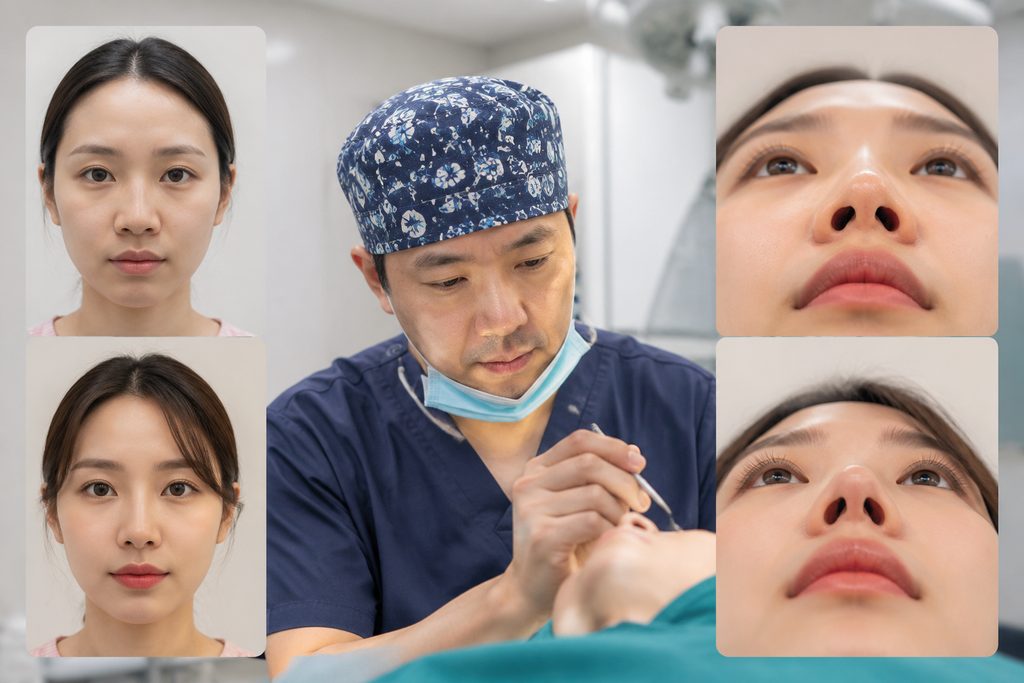
Have you ever stared at a gallery of flawless post-operative photos and wondered whether any of them reflect what you’d actually get? That doubt is healthy. It’s also exactly why this question keeps coming up: can I see before and after photos plastic surgery China patients actually received before I commit to a hospital or surgeon?
The short answer: sometimes, but rarely in the way Western patients expect. Chinese public hospitals — even top-tier ones — do not maintain polished, Instagram-ready result galleries. Private cosmetic clinics often do, but the photos vary wildly in quality, authenticity, and clinical usefulness. What you can get is more valuable: verified surgical volume data, specialist reputation rankings, and in many cases, a video consultation where you can ask the surgeon directly about outcomes for cases like yours.
Our team has coordinated medical journeys for international patients across 340+ top-ranked hospitals in 37 cities. We’ve learned what’s realistic to request, what’s a red flag, and how to evaluate a surgeon when glossy photos aren’t on the table.
How This Actually Works, Step by Step
You’re not going to get a PDF of 50 before-and-after photos in your inbox on day one. Here’s the real sequence.
First, you send us your existing medical records, photos of the area you want treated, and a clear description of your goals. We translate these into Chinese and route them to the appropriate department — plastic surgery, cosmetic dermatology, ophthalmology for eyelid procedures, or maxillofacial surgery for jaw contouring.
Second, the specialist reviews your case. For many international patients, the first formal step is a written second opinion, which costs $300–500 from top-tier hospital experts. This document tells you whether the surgeon considers you a good candidate, what technique they’d recommend, and what outcome range is realistic for your anatomy.
Third, you can request a video consultation. This is where the photo question gets answered properly. During a $500–800 top-specialist video consult, you can ask: “For patients with my nose shape and skin thickness, what have your results looked like at six months?” A senior surgeon can describe this. They may show anonymized clinical photos during the call — many do, especially in private international departments.
Fourth, if you proceed, you travel to China for the in-person consultation and surgery. Under Chinese public hospital rules, no surgeon will operate without examining you in person first. That’s non-negotiable and it protects you.
What Chinese Clinics Actually Show — and What They Don’t
The phrase “before and after pictures from Chinese cosmetic clinics” brings up a very mixed reality. Some private clinics in Shanghai and Beijing maintain extensive photo galleries. Others show stock images or heavily edited results. Public hospital departments rarely publish galleries at all.
Here’s the honest breakdown. Private international clinics — United Family, Jiahui, Parkway, Raffles — often have English-speaking staff and may share anonymized result photos during consultations. These facilities cater to expatriates and medical tourists, so they understand the Western expectation for visual evidence. But their photo policies still vary by surgeon and procedure.
Public top-tier hospitals — the ones on the Fudan ranking — operate differently. A plastic surgery department at a major public hospital may perform thousands of procedures annually, but the surgeons are too busy operating to curate photo galleries. They document results for medical records, not marketing. You can sometimes view these clinical photos during an in-person consultation, but they won’t be emailed to you beforehand.
Be cautious of any clinic that promises extensive before-and-after photo galleries before you’ve even had a consultation. Legitimate Chinese medical institutions are conservative about patient privacy. A wall of perfect photos is often a marketing tactic, not clinical evidence.
A Realistic Timeline
People underestimate how long the pre-photo, pre-decision phase takes. Here’s what a typical timeline looks like when you want to verify results before committing.
| Stage | What Happens | Typical Duration |
|---|---|---|
| Day 1–3 | You send records and photos; we translate and route them | 2–3 days |
| Week 1 | Specialist reviews your case; written second opinion delivered | 5–10 days |
| Week 2–3 | Video consultation scheduled; you ask about results, see any available clinical photos | 1–2 weeks lead time |
| Week 3–4 | You decide whether to proceed; we coordinate hospital appointment | 3–7 days |
| Month 1–2 | S2 visa application with hospital invitation letter | 2–6 weeks, varies by consulate |
| Month 2 | Arrive in China; in-person consultation; surgery scheduled | 3–10 days after arrival |
Notice the waiting steps people forget: document translation, specialist review queues, visa processing. None of these are skippable. The photo question gets answered during weeks 2–3, not day one.
What Can Go Wrong — and What Happens Then
Let’s be blunt about failure modes, because this is where trust gets built or broken.
You might receive photos that look nothing like your case. A clinic sends you rhinoplasty results on patients with thin skin and high bridges, but your nose has thick skin and a low bridge. The photos are real, but irrelevant. What then? You push back. Request examples matching your anatomy. If the clinic can’t provide any, that’s information — not necessarily a dealbreaker, but a signal to ask harder questions about experience with your specific case type.
You might discover the surgeon won’t share photos at all. This is common in public hospitals. The recourse is volume data. Ask how many of this specific procedure the surgeon performs annually. A surgeon doing 200 rhinoplasties a year without a photo gallery is a better bet than one doing 20 with a beautiful gallery.
You might see edited photos. Filters, lighting tricks, and even Photoshop exist in Chinese cosmetic marketing. The answer: request unedited clinical photos taken in the same room, same lighting, same angles. If they can’t provide that, lower your confidence.
And the visa gets delayed. S2 processing times vary by country. If your visa takes six weeks instead of two, your surgery date shifts. We handle this by building buffer time into every coordination plan.
Is It Safe to Trust Before and After Photos From China?
That’s not automatically a red flag. Many top-tier public hospital surgeons don’t maintain photo galleries for privacy and workload reasons. Ask instead about annual case volume for your specific procedure, revision rates, and how many international patients they’ve treated. If they can’t answer those questions, that’s a stronger warning sign.
Some are. Lighting, angles, and digital retouching exist in Chinese cosmetic marketing just as they do elsewhere. Request unedited photos taken in consistent clinical lighting. If a clinic only shows you flawless, magazine-quality images, treat that as marketing rather than medical documentation.
Ask for three things: the surgeon’s annual procedure volume, their ranking in the Fudan specialist reputation list for your procedure type, and a video consultation where you ask specific questions about outcomes for patients with your anatomy. Combined, these give you a clearer picture than any single photo.
You won’t pay for surgery before an in-person consultation — that’s a firm rule in Chinese hospitals. You may pay for a written second opinion ($300–500) or a video consultation ($500–800) before traveling. That’s the stage where you evaluate the surgeon’s experience and any available result documentation. If you later proceed with on-the-ground coordination through us, those consultation fees are credited in full toward the coordination service.
Your Next Step
The photo question is really a trust question. You want evidence that the surgeon can deliver what you’re hoping for. Photos are one form of evidence, but not the strongest one. Volume data, specialist rankings, and direct surgeon conversations matter more.
We help international patients navigate Chinese healthcare without the language barrier and guesswork. We don’t perform surgery and we don’t promise outcomes. What we do is connect you with specialists who can answer your questions honestly, coordinate the logistics, and stand beside you through the process. If you’re ready to start the conversation, request a free consultation and tell us what procedure you’re considering. We’ll tell you what’s realistic — including what photos you can and can’t expect to see.
Frequently Asked Questions
Yes. The hospitals used for international patients are JCI-accredited and follow the same international safety standards as top hospitals in the US and Europe. Surgical teams perform high volumes of procedures — often more than their Western counterparts — which studies show leads to better outcomes.
Costs vary by procedure and hospital, but international patients typically save 40-80% compared to US prices — even when factoring in travel and accommodation. A consultation with our team will give you an exact, all-inclusive quote with no hidden fees.
Send us your existing medical reports to get started. We handle everything from hospital selection and appointment scheduling to visa assistance and post-operative recovery planning. Your medical records are reviewed by the specialist before you even book a flight.
For more medical information and treatment options in China, visit chinamedservices.com (China Medical Services).
