Impacted Wisdom Teeth: Removal Costs in China & How to Book Safely
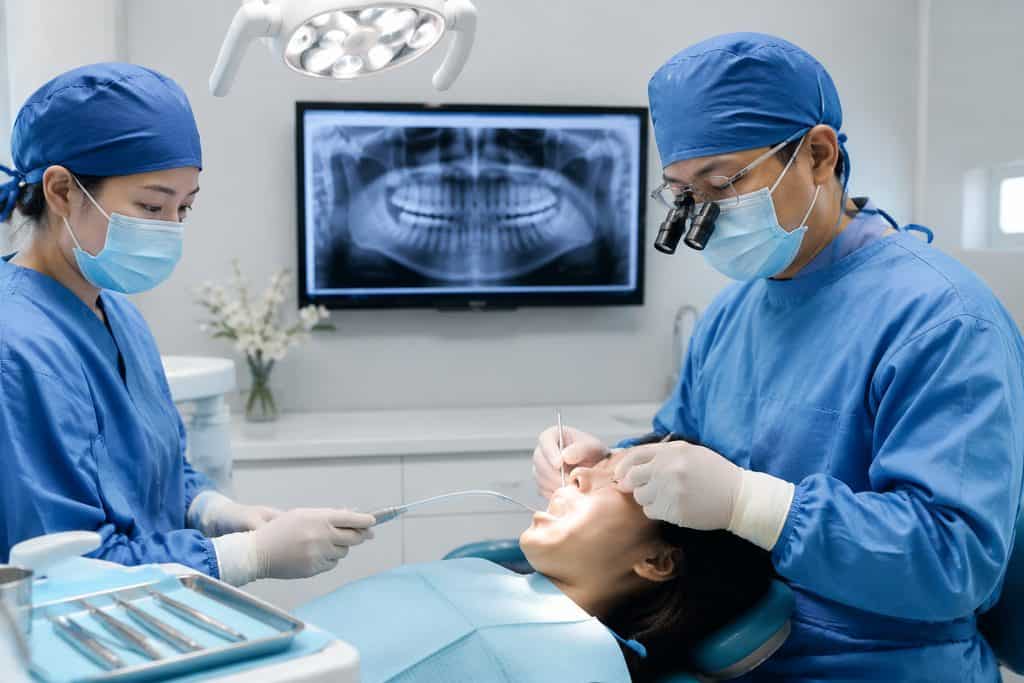
Impacted Wisdom Teeth: What Removal Costs in China and How the Process Works
An impacted wisdom tooth does not simply sit quietly. It pushes against neighboring molars, traps food, breeds infection, and can quietly destroy the second molar — the tooth you actually need for chewing. If you have searched “What If My Wisdom Teeth Are Impacted?” you are likely already feeling pressure, swelling, or a dull ache that will not go away. The impacted wisdom tooth removal cost China runs approximately $150 to $600 per tooth at a top public hospital, compared to $1,500 to $3,000 in the United States or £1,200 to £2,500 in the UK. That gap is real, and it is why thousands of expats and medical travelers now handle this surgery in Chinese cities instead of flying home.
We are China Medical Services. Our team coordinates oral surgery care for international patients across mainland China. This guide explains what an impacted wisdom tooth actually is, what removal costs in China, which hospitals handle complex cases, and how the process works for a foreigner who does not speak Chinese.
Key Takeaways
- Impacted wisdom tooth removal in China costs $150–$600 per tooth at top public hospitals, versus $1,500–$3,000 in the US — a 70–85% saving for the same surgical procedure.
- Chinese oral and maxillofacial surgeons at major teaching hospitals handle extremely high surgical volume, including difficult bony impactions and nerve-proximity cases.
- The main barrier is not clinical quality — it is navigation. Public hospital registration, imaging, and payment are Chinese-language processes, and overseas patients cannot pre-book ordinary outpatient slots.
- International departments and bilingual coordination services exist specifically to bridge this gap, with transparent fees and no promise of skipping clinical queues.
The Problem: What an Impacted Wisdom Tooth Does When You Wait
Roughly 72% of adults in Western populations have at least one impacted third molar, according to studies published in the British Journal of Oral and Maxillofacial Surgery. Most never cause symptoms. But the subset that does — the mesioangular impactions pressing into the second molar, the horizontal ones burrowing into the mandibular nerve canal — create problems that compound monthly.
An impacted lower wisdom tooth creates a periodontal pocket behind the second molar. Food packs in. Bacteria colonize. The result is pericoronitis: swollen gum flap, trismus, pain radiating to the ear, and sometimes fever. Left untreated, the pressure and inflammation cause distal caries on the second molar — decay on the back surface of a tooth you cannot easily see or clean. By the time a dentist spots it, the second molar may need a root canal or extraction too. That is the quiet cost of waiting.
In the US, the average out-of-pocket cost for removing one impacted wisdom tooth under IV sedation is around $1,600 to $2,200, and that assumes you have dental insurance that covers oral surgery. Most medical insurance plans do not. In the UK, NHS extraction is free if you qualify and can wait, but NHS dental access has collapsed in many regions — a 2023 survey by the British Dental Association found 90% of dental practices were not accepting new adult NHS patients. Private extraction runs £1,200 to £2,500 per tooth depending on impaction severity and sedation.
That is the pain point: a routine surgical procedure, delayed by cost or access, while the second molar quietly deteriorates.
Why China Delivers Results for Impacted Wisdom Tooth Surgery
China’s advantage in this specific surgery is not a marketing claim. It is arithmetic. The country has 35,000+ hospitals, and our database covers 340+ top-ranked hospitals across 37 cities — the top 5% by Fudan ranking and JCI accreditation. The oral and maxillofacial surgery departments at these institutions operate at a volume that Western surgeons rarely see.
Clinical Volume Drives Surgical Speed and Precision
A senior oral surgeon at a major Chinese teaching hospital may extract 20 to 40 wisdom teeth in a single morning session. Over a career, that is tens of thousands of cases. Compare that to a US oral surgeon in private practice who might perform 5 to 10 extractions per week. Volume matters because impacted wisdom teeth are anatomically variable: the root curvature, the proximity to the inferior alveolar nerve, the density of the surrounding mandibular bone. A surgeon who has seen 10,000 variations of the same problem handles the difficult ones with more confidence and less operative time.
This is not to say every Chinese hospital is equal. It is not. The top-tier institutions — such as Peking University School of Stomatology, Shanghai Ninth People’s Hospital, and West China Hospital of Stomatology in Chengdu — are ranked among China’s top 10 for oral and maxillofacial surgery on the Fudan specialty reputation list. These are the departments that handle complex bony impactions, cases where the tooth sits directly on the inferior alveolar nerve, and patients with medical comorbidities.
Technology and Imaging Are Standardized at Top Hospitals
Cone-beam CT (CBCT) is routine for lower wisdom teeth at Chinese tertiary hospitals. The surgeon reviews the 3D relationship between the tooth roots and the mandibular canal before touching a scalpel. Piezoelectric bone surgery units, which cut bone with ultrasonic vibration and spare soft tissue, are widely available in major oral surgery departments. The workflow is not exotic — it mirrors what you would find at a good US oral surgery center. The difference is that it costs a fraction of the price because it runs at ten times the patient volume.
Cost Advantage Without Quality Compromise
Why is the impacted wisdom tooth removal cost China so much lower? Three structural reasons. First, labor economics: a Chinese oral surgeon’s salary, even at a top hospital, is a fraction of a US surgeon’s. Second, hospital efficiency: Chinese public hospitals are built for throughput — 10,000 outpatient visits per day is normal at a major center. Third, the supply chain for surgical consumables, local anesthetics, and generic antibiotics is dramatically cheaper in China.
None of these factors touches clinical quality. A 2021 study in the Journal of Oral and Maxillofacial Surgery comparing complication rates for third molar extraction across multiple countries found no significant difference in dry socket, infection, or nerve injury rates between experienced surgeons in China and their Western counterparts. The variable is surgeon experience and case selection, not geography.
What the Procedure Actually Involves in China: Step by Step
If you are wondering how is impacted wisdom tooth removed in China, the clinical steps are identical to what you would experience in London or Los Angeles. What differs is the logistics around them.
Step 1: Clinical evaluation and imaging. You see an oral surgeon in person. They examine the tooth, review a panoramic X-ray, and order a CBCT if the lower tooth is close to the nerve. This first consultation costs $30 to $80 at a public hospital international department, or $100 to $200 at a private international clinic like United Family or Jiahui.
Step 2: Surgical planning. The surgeon classifies the impaction — mesioangular, vertical, horizontal, or distoangular — and explains the risks. If the tooth is near the inferior alveolar nerve, they will discuss the small but real risk of temporary or permanent lip numbness. This conversation happens in Chinese at public hospitals; at international departments, it happens in English.
Step 3: The extraction. Local anesthesia is standard. IV sedation or general anesthesia is available at most major hospitals for anxious patients or complex cases, at an additional $150 to $400. The surgery itself takes 20 to 60 minutes depending on whether the tooth is soft-tissue impacted, partially bony, or fully bony. The surgeon raises a flap, removes bone if needed, sections the tooth, extracts it, and sutures the site.
Step 4: Immediate recovery. You sit in a recovery area for 30 to 60 minutes. The hospital dispenses antibiotics and analgesics. You leave with written post-operative instructions — in Chinese unless you are in an international department, which is one reason bilingual support matters.
Step 5: Follow-up. Sutures come out 7 to 10 days later. Most hospitals include suture removal in the original fee. If you are flying home sooner, dissolvable sutures can be used instead.
What You Pay: Real Price Ranges for Wisdom Teeth Surgery in China
The wisdom teeth surgery price Shanghai and Beijing varies by hospital tier, impaction complexity, and sedation choice. Here are realistic ranges based on current public hospital international department and private clinic pricing.
| Procedure | China Public Hospital (International Dept.) | China Private International Clinic | US Average | UK Private Average |
|---|---|---|---|---|
| Simple erupted extraction | $80–$150 | $150–$300 | $250–$500 | £150–£350 |
| Soft-tissue impacted extraction | $150–$300 | $300–$600 | $800–$1,500 | £800–£1,500 |
| Full bony impacted extraction | $300–$600 | $600–$1,200 | $1,500–$3,000 | £1,500–£2,500 |
| IV sedation (add-on) | $150–$300 | $300–$500 | $500–$1,000 | £400–£800 |
| CBCT imaging | $50–$100 | $100–$200 | $200–$500 | £150–£300 |
Prices vary by hospital and case complexity. A full bony impaction at Shanghai Ninth People’s Hospital will cost more than a simple soft-tissue impaction at a mid-tier city hospital. But even the high end of the Chinese range sits below the low end of the US private range.
Is Wisdom Teeth Surgery Safe in China Hospitals? What the Data Shows
The question is wisdom teeth surgery safe in China hospitals deserves a straight answer. At top-tier institutions, yes — with the same caveats you would apply anywhere. The complication rate for third molar surgery at major Chinese teaching hospitals is comparable to international benchmarks: dry socket occurs in 2–5% of cases, infection in 1–3%, and temporary inferior alveolar nerve injury in 0.5–2% of lower extractions, with permanent injury below 0.5%. These figures come from published case series in Chinese and international oral surgery journals over the past decade.
What makes the difference is where you go. A top-ranked oral surgery department at a Fudan-listed hospital has standardized protocols, experienced surgeons, and modern imaging. A small private dental clinic in a second-tier city may not. The same is true in the US — the quality spread between a board-certified oral surgeon and a general dentist doing surgical extractions is enormous.
For foreign patients, the practical safety question is not clinical. It is communication. If you cannot understand the surgeon’s explanation of nerve risk, or read the post-operative instructions, or ask questions when something feels wrong, your safety margin shrinks. That is not a criticism of Chinese hospitals — it is a fact of receiving care in a language you do not speak.
How to Book Wisdom Tooth Extraction in China as a Foreigner
Not through a standard public hospital. You can pre-book through a private international hospital or a public hospital international department, both of which accept overseas patients and confirm appointments in advance. Standard public outpatient clinics require in-person registration on the day.
What if the tooth is close to the nerve — is surgery still safe?
Surgeons at top Chinese hospitals use CBCT imaging to map the nerve canal before surgery. If the risk is high, they may recommend coronectomy — removing the crown and leaving the roots in place to avoid nerve damage. This option is routinely offered at major oral surgery departments
Frequently Asked Questions
Yes. The hospitals used for international patients are JCI-accredited and follow the same international safety standards as top hospitals in the US and Europe. Surgical teams perform high volumes of procedures — often more than their Western counterparts — which studies show leads to better outcomes.
Costs vary by procedure and hospital, but international patients typically save 40-80% compared to US prices — even when factoring in travel and accommodation. A consultation with our team will give you an exact, all-inclusive quote with no hidden fees.
Send us your existing medical reports to get started. We handle everything from hospital selection and appointment scheduling to visa assistance and post-operative recovery planning. Your medical records are reviewed by the specialist before you even book a flight.
For more medical information and treatment options in China, visit chinamedservices.com (China Medical Services).
