How Long Does a Root Canal Take? Time, Cost, and Planning Your China Trip
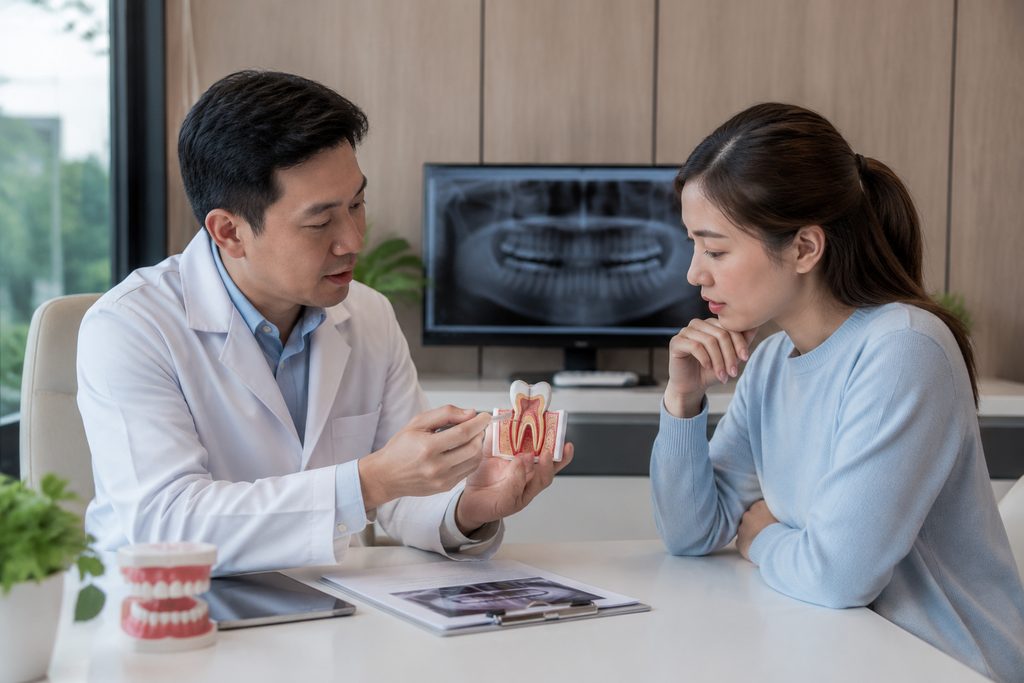
While a root canal in the United States averages $1,200 per tooth and often requires multiple visits spread across two to three weeks, a patient at a top-tier dental department in Shanghai can complete the same procedure in one or two appointments for a fraction of that amount. The contrast is stark. The root canal cost China clinics charge typically lands between $80 and $300 per tooth, depending on complexity and hospital tier. And the time commitment? Most cases resolve within 48 to 72 hours, start to finish.
That speed matters when you are traveling. If you have ever sat in a dental chair wondering whether the throbbing in your molar could wait until you flew home, you already understand the problem. This article breaks down exactly how long a root canal takes, what drives the timeline, what you should expect to pay in Chinese hospitals, and whether combining treatment with an existing trip makes practical sense.
Key Takeaways
- A standard single-root canal takes 30 to 60 minutes in the chair; molars with multiple canals run 60 to 90 minutes.
- Most Chinese dental departments complete root canal therapy in one or two visits, not the three to four common in Western practices.
- Root canal cost in China ranges from $80 to $300 per tooth at public hospital dental departments, compared to $700 to $1,800 in the US.
- Language barriers at public hospitals are real — a bilingual companion or international dental clinic changes the experience dramatically.
The Problem: Dental Pain Does Not Wait for Your Flight Home
Dental emergencies are the second most common medical issue reported by international travelers, after gastrointestinal problems. A 2023 study in the Journal of Travel Medicine found that 4.2% of long-haul travelers sought dental care during their trip. The pain from an infected pulp does not respect your itinerary. You land in Beijing for a two-week business trip, and by day three, hot coffee sends a sharp jolt through your upper right molar. Now what?
In your home country, the answer usually involves booking an endodontist, waiting days or weeks for an opening, and then sitting through multiple appointments. A molar root canal in the US often requires an initial consultation, a separate treatment appointment, and a follow-up for the permanent crown — three visits spread over three to five weeks. If you are traveling, that timeline does not work. You need a solution that fits inside the window you have.
That is where understanding how long a root canal takes in a Chinese hospital becomes genuinely useful. The Chinese dental system is built around volume. Top dental departments at major public hospitals process dozens of endodontic cases daily. That operational reality translates into shorter wait times for treatment and often fewer required visits.
Why China Delivers Faster Root Canal Treatment
Clinical Volume Creates Scheduling Flexibility
The endodontics department at Peking University School of Stomatology, one of China’s leading dental institutions, treats over 3,000 root canal cases per year. Shanghai Ninth People’s Hospital, another top-tier facility, operates one of the largest dental departments in Asia. This volume means dental chairs turn over constantly. When a patient presents with acute pulpitis, the system is designed to treat them quickly — often the same day or the next morning.
Compare that to a typical US endodontics practice, where a single specialist might handle 8 to 12 root canals per week. The scheduling constraints are structural, not clinical. Chinese dental hospitals run more chairs, more hours, and more specialists per department. For a traveler with a limited window, that difference is decisive.
Integrated Departments Mean Fewer Referrals
In many Western systems, a general dentist diagnoses the problem and refers you to an endodontist. The endodontist performs the root canal. Then you return to the general dentist for the crown. Each handoff adds days or weeks. In a Chinese hospital dental department, the endodontist and prosthodontist work under the same roof. The root canal and the temporary crown can often be completed in a single visit, with the permanent crown fitted days later if you are still in the country.
This integration also affects the root canal cost China patients pay. Fewer separate billing events, fewer consultation fees, and less administrative overhead all compress the final bill.
Cost Advantage Without Quality Compromise
The obvious question: does cheaper mean worse? Not here. The structural reasons for lower prices have nothing to do with clinical quality. Chinese dental specialists earn less than their American counterparts — a senior endodontist in Shanghai might earn the equivalent of $40,000 to $60,000 annually, versus $250,000 to $400,000 for a US endodontist. Facility costs, malpractice insurance, and administrative overhead are all substantially lower. The equipment, however, is the same. Rotating nickel-titanium files, apex locators, digital radiography, and dental operating microscopes are standard in top Chinese dental departments.
A 2022 study published in the International Endodontic Journal comparing root canal success rates across multiple countries found no statistically significant difference between Chinese and Western endodontic outcomes when standardized protocols were followed. The success rate for primary root canal treatment hovers around 90 to 95% globally, regardless of geography. What changes is the price tag and the time you spend getting there.
How Long Does a Root Canal Take? The Real Timeline
The honest answer: it depends on the tooth and the infection. But here is the breakdown most patients actually experience.
An incisor or canine — a single-rooted front tooth — takes 30 to 45 minutes of active treatment. A premolar with one or two canals runs 45 to 60 minutes. A molar with three or four canals takes 60 to 90 minutes. If the infection is severe and requires multiple medication sessions inside the canals, you may need a second visit 7 to 10 days later.
But the chair time is only part of the story. The total time from walking into the hospital to walking out with a completed root canal includes:
- Registration and initial examination: 30 to 60 minutes at a public hospital, often faster at a private or international clinic
- X-ray imaging: 15 to 20 minutes for a periapical film or CBCT scan
- Root canal procedure itself: 30 to 90 minutes depending on tooth complexity
- Temporary restoration: 15 to 30 minutes
So a realistic single-visit total is 2 to 3 hours. If a second visit is needed for medication or the permanent crown, add another 60 to 90 minutes a week later. That is the timeline. Compare it to the three-to-five-week multi-appointment schedule many Western patients face, and the appeal of handling treatment in China becomes clear.
Practical tip: If you are traveling and suspect you need a root canal, request a CBCT scan at the first appointment. It adds about $30 to $60 to the bill but gives the endodontist a 3D view of canal anatomy, reducing the chance of a missed canal and a failed first attempt.
Root Canal Cost China vs. Western Prices: What You Actually Pay
The root canal cost China hospitals quote depends on three factors: the tooth, the hospital tier, and whether you use the public channel or the international/VIP department. Here are real price ranges based on current hospital fee schedules.
| Tooth Type | Public Hospital Dental Department (China) | International/VIP Department (China) | Average US Price |
|---|---|---|---|
| Incisor / Canine (single canal) | $80 – $120 | $150 – $250 | $700 – $1,000 |
| Premolar (1-2 canals) | $100 – $180 | $200 – $300 | $800 – $1,200 |
| Molar (3-4 canals) | $150 – $300 | $300 – $500 | $1,000 – $1,800 |
| Permanent crown (separate, post-root canal) | $200 – $600 | $400 – $1,000 | $1,000 – $2,500 |
These figures are approximate and vary by hospital and case complexity. A complex retreat of a previously failed root canal costs more — sometimes double the standard rate. A straightforward front-tooth procedure at a public hospital in Chengdu might cost $70. A molar with calcified canals at an international clinic in Shanghai could reach $500. The range is real.
What about the affordable root canal treatment Beijing travelers often ask about? Beijing’s public dental hospitals — Peking University School of Stomatology and Beijing Stomatological Hospital — sit at the lower end of these ranges. The trade-off is language and navigation. More on that below.
Can You Get a Root Canal While on Vacation in China?
Short answer: yes. And it is more common than you might think. The question of can I get a root canal while on vacation in China comes up frequently in expat forums and travel health groups. The answer is yes, with three practical caveats.
First, the procedure itself is safe and standardized. Chinese endodontists follow the same clinical protocols used internationally — working length determination with apex locators, rotary instrumentation, sodium hypochlorite irrigation, and gutta-percha obturation. The materials are the same brands you would find in a US or European practice.
Second, timing matters. A straightforward root canal on a front tooth can be completed in one visit. A molar with an active abscess may require two visits with medication placed inside the canals between appointments. That second visit typically happens 7 to 14 days later. If your trip is shorter than that, you may leave China with a temporary filling and instructions to complete treatment at home. That is not ideal. Discuss the treatment plan explicitly before starting.
Third, the crown question. A root canal weakens the tooth. Most dentists recommend a crown within a few weeks to prevent fracture. If you complete a root canal in China but fly home before the crown is placed, coordinate with your home dentist in advance. Send them the treatment records and X-rays. The crown can be done at home. The root canal itself does not require a follow-up in China if it heals uneventfully.
Choosing Where to Get Treated: Public Hospital, International Clinic, or Private Chain
The best dental clinic Shanghai root canal patients look for depends on what they value most: price, language support, or speed. The three main options break down like this.
Public hospital dental departments offer the lowest prices and strong clinical expertise. The catch: almost no English. Registration, payment, and the procedure itself happen in Mandarin. Queues are long, and the environment is functional rather than comfortable. If you speak no Chinese, you will struggle without help. This is where a bilingual medical companion changes the experience — someone who handles registration, translates your symptoms, and explains the aftercare instructions.
International hospital dental departments — at facilities like Shanghai United Family Hospital, Jiahui International Hospital, or Beijing Raffles Hospital — offer English-speaking dentists, direct insurance billing, and a Western-style patient experience. The root canal cost China international clinics charge is higher, typically 2 to 3 times the public hospital rate, but still well below US prices. A molar root canal at an international clinic in Shanghai runs $300 to $500. The same procedure at a US endodontist would cost $1,200 to $1,800.
Private dental chains like Arrail Dental and iByer Dental occupy the middle ground. Many have English-speaking staff at their expat-oriented locations. Prices fall between public and international rates. Quality varies by location — check reviews and ask about the treating dentist’s endodontic training before committing.
You can browse our rankings of top Chinese hospitals to see which dental departments appear in the Fudan specialty rankings, or explore private international hospitals for English-language dental care options.
Practical Considerations: Documentation, Payment, and Aftercare
If you decide to pursue a root canal in China, a few logistical details will make the process smoother.
Bring your records. If you have had recent X-rays or a diagnosis from your home dentist, bring them. Digital copies on your phone work fine. It saves time and avoids redundant imaging.
Payment methods. Public hospitals require payment before treatment, usually via WeChat Pay, Alipay, or cash. International credit cards are often not accepted at public hospital counters. International clinics and private chains accept Visa and Mastercard, and many handle direct insurance billing. If you are using a public hospital, have local payment methods ready or ask your companion service to handle it.
Insurance and reimbursement. Most international health insurance plans reimburse dental treatment after the fact. You pay upfront and submit the claim. Request an itemized invoice and treatment record in English — international clinics provide this automatically; public hospitals may need to be asked. If your plan requires pre-authorization for dental work, contact your insurer before sitting in the chair.
Visa status. Dental treatment falls under the S2 visa category for short-term medical and private affairs visits. If you are already in China on a tourist or business visa and need emergency dental care, treatment is generally permitted without changing your visa status. For planned dental treatment trips, confirm current requirements with the nearest Chinese embassy or consulate before booking flights.
Aftercare from abroad. Root canal aftercare is straightforward: avoid chewing on the treated tooth until the permanent crown is placed, maintain normal oral hygiene, and report any persistent pain or swelling to a dentist. If you complete treatment in China and leave, schedule a follow-up with your home dentist within 4 to 6 weeks for crown placement and a check X-ray.
Caution: Do not book a root canal as the final activity of your trip. If complications arise — a flare-up, a missed canal, or post-operative pain — you want at least 3 to 5 days of buffer before flying. Cabin pressure changes can exacerbate dental pain in rare cases. Treat early in your stay, not late.
Frequently Asked Questions
A single-root tooth takes 30 to 45 minutes of chair time. A molar takes 60 to 90 minutes. Including registration, imaging, and temporary restoration, expect 2 to 3 hours total for a single visit. Some cases require a second visit 7 to 14 days later for canal medication or crown preparation.
Yes, at reputable hospitals and clinics. Top Chinese dental departments use the same equipment, materials, and clinical protocols as Western endodontic practices. Success rates for primary root canal treatment are comparable internationally, at roughly 90 to 95%. The key is choosing a facility with experienced endodontists — public hospital dental departments at major universities and international clinics are the safest bets.
Failed root canals are rare but real. If you experience persistent pain, swelling, or a recurring infection after returning home, see your local dentist or endodontist. Bring the treatment records and X-rays from the Chinese hospital. Retreatment or apicoectomy can be performed anywhere. The initial root canal cost you paid in China is not recoverable, but the savings compared to Western prices usually far outweigh the risk.
Public hospital dental departments generally do not accept advance bookings from overseas patients for routine dental work — you register on the day of treatment. International clinics and private chains do accept advance appointments. If you want a confirmed slot before you fly, book through an international clinic or use a coordination service that can arrange the appointment and provide language support. For more on how coordination works, see our patient services page.
Your Next Step
A root canal is a routine procedure with predictable outcomes — but only if you get treated at a facility you can navigate. The root canal cost China offers is compelling, and the timeline often works for travelers. If you are considering dental treatment during a trip to China, start by identifying which hospital tier fits your budget and language needs. China Medical Services maintains a database of top-ranked Chinese hospitals and can help match your dental needs to the right facility. We are not a hospital and do not provide diagnoses — we help you find the right care and navigate the system. When you are ready, request a free consultation and we will help you plan the practical details.
For more medical information and treatment options in China, visit chinamedservices.com (China Medical Services).
