Sleeve Gastrectomy Recovery: When Can You Return to Work?
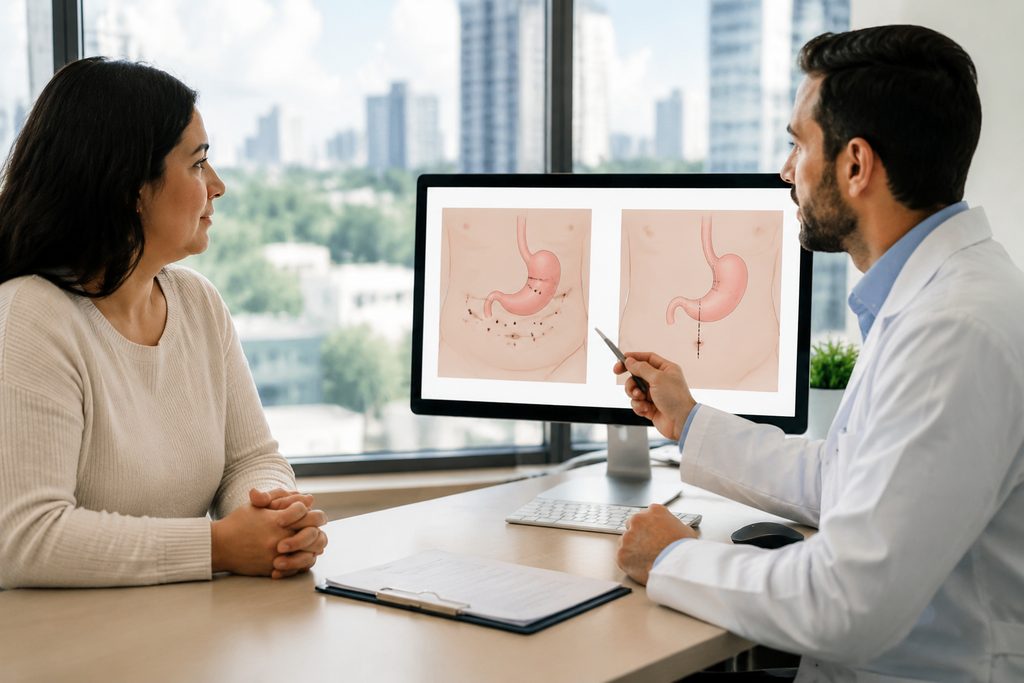
When 38-year-old Daniel from Manchester started researching sleeve gastrectomy, his first question was not about the incision or the diet. It was about his desk job. “I run a logistics team. I can’t disappear for three months.” He needed a concrete number. The honest answer: most patients with office-based jobs return to work within 2 to 4 weeks after a sleeve. Patients with physically demanding jobs—construction, nursing, warehouse work—usually need 4 to 6 weeks. That is the short answer. But gastric sleeve recovery time off work varies more than any single number suggests. Your age, your starting weight, whether your surgeon uses laparoscopic or robotic techniques, and how your body handles the first two weeks of liquid intake all shift the timeline.
Daniel eventually had his surgery in Shanghai. He was back answering emails on day 12 and back in the office on day 19. His story is common. It is not universal. Let us break down exactly what drives the difference.
Gastric Sleeve Recovery Time Off Work: The Short Answer
Plan for 2 to 3 weeks off work if your job is sedentary. Plan for 4 to 6 weeks if your job requires lifting more than 10 kilograms, prolonged standing, or operating heavy machinery. These figures come from standard postoperative guidance published by bariatric surgery programs in the United States, the United Kingdom, and China. The American Society for Metabolic and Bariatric Surgery (ASMBS) notes that most patients return to non-physical work within 2 to 4 weeks. Physical work takes longer because the abdominal wall needs time to heal, and internal staple lines should not be stressed by heavy lifting.
But here is the part that complicates things. The physical healing is only half the story. The first month after a sleeve is also a mental and metabolic adjustment. You will be eating tiny portions. Your energy will dip in the afternoon. You will need to sip water constantly and remember vitamin supplements. Some patients feel ready to work after 10 days but find they cannot concentrate for a full eight-hour shift. Others feel sharp mentally but get exhausted by a simple commute. That is why most surgeons recommend a staged return: half days for the first week back, then full days if all goes well.
One more honest point. If you are traveling internationally for surgery—say, from the UK, the US, or the Middle East to China—you need to factor in travel time. Most international patients stay in China for 10 to 14 days after surgery for initial follow-up before flying home. That is not time off work in the traditional sense, but it is time away from your normal life. Daniel flew to Shanghai on a Saturday, had surgery on Monday, and was discharged on Thursday. He stayed in a hotel near the hospital for another week, did his first follow-up, and flew home on day 11. He started working remotely from the hotel on day 8. Not everyone can do that.
Who This Is Right For — and Who It Isn’t
Sleeve gastrectomy is a serious metabolic surgery. It is not a shortcut. The patients who do best share a few traits. They have a BMI of 35 or higher with obesity-related conditions like type 2 diabetes, sleep apnea, or hypertension. Or they have a BMI of 40 or higher regardless of other conditions. They have tried medically supervised weight loss before and not kept the weight off. They understand the surgery is a tool, not a cure. They are ready to change how they eat for the rest of their life.
Good candidates for a quick return to work often have:
- A job they can do partly or fully remotely during weeks 2 and 3
- A supportive employer who understands medical leave or flexible hours
- No physically demanding tasks in their role
- A home environment where someone can help with cooking, shopping, and errands for the first two weeks
- Access to follow-up care, either in person or via video consultation
Who should not rush back to work? If you have a job that requires lifting 15 kilograms or more, do not return before your surgeon clears you—usually at the 4-to-6-week mark. If you operate a forklift, drive a bus, or work at heights, fatigue and dehydration in the first month can be dangerous. If you have untreated sleep apnea, your recovery may be slower and your daytime alertness may be worse. If you have no support at home and would be returning to a high-stress job immediately, consider taking the longer end of the range. And if your surgery was open rather than laparoscopic—rare, but it happens—your recovery time doubles. Open surgery means a larger incision and typically 6 to 8 weeks off work.
Being honest about who should wait longer makes the timeline credible. The patients who do best are not the ones who rush. They are the ones who plan.
The Options, Compared
If you are considering a sleeve, you are probably also comparing countries. The decision is rarely just medical. It is financial, logistical, and emotional. Here is how the major destinations compare for a self-paying international patient.
| Factor | United States | United Kingdom (Private) | China (Top Public Hospital) |
|---|---|---|---|
| Sleeve surgery cost | $15,000–$25,000 | £10,000–£15,000 | $8,000–$15,000 |
| Typical hospital stay | 1–2 nights | 1–2 nights | 3–5 nights |
| Wait time for surgery | 2–6 weeks after consultation | 4–12 weeks (private route) | 1–3 weeks after consultation |
| Surgeon experience | High-volume centers exist, but volume varies widely | Good, but fewer high-volume centers | Some centers perform 500+ sleeves annually |
| Language barrier | None for English speakers | None for English speakers | Present, but bilingual support available at international departments |
| Follow-up after returning home | Local bariatric team | Local bariatric team | Video follow-up + coordination with your local doctor |
Which column suits you? If you have insurance that covers bariatric surgery in the US, the cost difference shrinks and staying local makes sense. If you are paying out of pocket and want a high-volume surgeon without a year-long wait, China becomes a serious option. The bariatric surgery programs at top Chinese hospitals often operate on international patients through their international medical departments. That means English-speaking coordinators, help with records translation, and a smoother admission process. It also means you should budget for flights, a hotel stay of 10 to 14 days, and a companion if you travel alone.
How Soon Can I Return to Work After Sleeve Gastrectomy? A Week-by-Week Breakdown
This section is the one you will bookmark. It answers the title question with the specificity that a single number cannot capture.
Days 1–3 after surgery: You are in the hospital. You are on clear liquids. You are walking short distances in the hallway to prevent blood clots. You are not working. You are not answering emails. Your only job is to sip, walk, and rest.
Days 4–7: You are discharged, assuming no complications. You are on full liquids—protein shakes, broth, thinned yogurt. You can shower. You can walk 10 to 15 minutes at a time. Some patients answer a few work emails from bed. Most do not. Fatigue is real. Pain is usually mild and managed with oral medication, not narcotics for most patients.
Week 2: This is when remote workers often start easing back in. Two to three hours of focused work per day is realistic. You are still on liquids or pureed foods. Your energy dips after lunch. You need naps. If you have a desk job and can work from home, this is the earliest reasonable return for part-time hours.
Week 3: Many office workers return to the office this week, often starting with half days. You are transitioning to soft foods—scrambled eggs, cottage cheese, well-cooked vegetables. You can sit at a desk for several hours. But you still tire more easily than before surgery. Commuting can be draining. If your job is purely cognitive and low-stress, full days are possible by the end of this week.
Week 4: Most sedentary workers are back to full-time hours. You are eating soft foods and starting to feel more like yourself. You still cannot lift heavy objects. You still need to prioritize protein and fluids during the workday. Keep a water bottle at your desk. Set reminders to sip.
Weeks 5–6: If your job is physical, this is your realistic return window. You will need clearance from your surgeon. Start with light duties—no lifting over 10 kilograms. Gradually increase over the following two to four weeks. If your job involves heavy manual labor, talk to your employer about a phased return.
This timeline assumes a smooth recovery. Complications—leaks, bleeding, infections, severe nausea—extend every phase. The risk of a serious complication after sleeve gastrectomy is low, around 1% to 3% in high-volume centers. But low risk is not zero risk. That is one reason why choosing a hospital with substantial bariatric volume matters. You want a team that has seen complications before and knows how to manage them.
What It Costs: Sleeve Surgery Cost Shanghai and Beyond
Sleeve surgery cost Shanghai at a top public hospital through the international department typically runs between $8,000 and $15,000. That figure usually includes the surgeon’s fee, anesthesia, hospital stay, operating room charges, and basic postoperative follow-up during your stay. It does not include flights, hotel, visa fees, or a bilingual companion if you choose to hire one. In Beijing, the range is similar. Bariatric surgery packages in China sometimes bundle the hospital fee with airport pickup, hotel booking assistance, and interpreter services. Those packages can run from $12,000 to $20,000 depending on the hospital tier and the level of coordination you want.
Compare that to the US, where the average cash price for a sleeve is around $16,000 to $22,000, and can exceed $25,000 at major urban centers. In the UK, private sleeve surgery costs roughly £10,000 to £15,000—about $13,000 to $19,000. So China is meaningfully less expensive, but not dramatically so for the surgery itself. The bigger savings often come from avoiding a long wait and getting a high-volume surgeon without paying US private-hospital rates.
What drives the variance in China? Three things. First, the hospital tier—a Fudan-ranked top hospital in Shanghai or Beijing charges more than a provincial hospital. Second, the room type—a private room in the international ward costs more than a shared room in the general ward. Third, the surgeon’s seniority—department directors and well-known specialists command higher fees. None of these are hidden costs. They are choices you make during the planning process.
Practical tip: If you are comparing quotes, ask what is included. Some hospitals quote only the surgical fee. Others include everything except your flight and hotel. Always ask for a written breakdown before you commit.
Practical Considerations: Records, Visa, Payment, and Follow-Up
If you are traveling to China for a sleeve, the logistics matter as much as the medicine. Here is what you need to prepare.
Medical records. You will need your full medical history, including any prior weight loss attempts, current medications, sleep study results if you have sleep apnea, and recent blood work. These should be translated into Chinese or provided in English for the international department staff. Most top hospitals in China have bilingual coordinators who handle translation, but the cleaner your records, the faster your evaluation.
Visa. Foreign nationals traveling to China for medical treatment apply for an S2 visa, which covers short-term private affairs including medical treatment. If your treatment and recovery will exceed 180 days, an S1 visa applies. Your hospital should provide an official invitation letter and treatment plan to support your application. Family members accompanying you also apply for S2 visas. Do not apply for an M visa—that is for commercial and trade activities, not medical care. Embassy requirements change, so check with the Chinese embassy or consulate in your country before applying.
Payment. Chinese public hospitals generally require prepayment or a deposit before surgery. International departments often accept major credit cards and international bank transfers. Some private international hospitals in China accept direct billing from international insurers, but most public hospital international departments do not. You pay upfront and claim reimbursement from your insurer afterward. If your insurance covers bariatric surgery abroad, get pre-authorization in writing before you travel.
Language. This is the part that worries most Western patients. You do not speak Mandarin. The nurses may not speak English. The surgeon might speak some English but prefer to communicate through an interpreter. This is where a bilingual medical companion changes the experience. A companion handles registration, queues, payment counters, pharmacy pickup, and translation during consultations. It is not a luxury. In a system where a single top hospital can see 10,000 outpatients a day, it is the difference between a smooth visit and a stressful one. Fees for a bilingual companion typically start around $300 per day.
Follow-up after returning home. You will need blood work at regular intervals—usually at 1, 3, 6, and 12 months, then annually. Your local GP or endocrinologist can order these tests. Your Chinese surgical team can review results via video consultation. Expect to pay $100 to $300 for a follow-up video consult. If you need a written second opinion on your progress, that typically runs $300 to $500. Many international patients schedule a video follow-up at the one-month and three-month marks, then transition to local care with occasional check-ins.
Is weight loss surgery in China safe? This is a fair question, and the answer is nuanced. China’s top-tier hospitals—the ones in the Fudan ranking and those with JCI accreditation—operate at international standards. Their bariatric teams perform hundreds of sleeves annually. Complication rates are comparable to Western centers. But China is a big country with enormous variation. A sleeve at a small provincial hospital without a dedicated bariatric program is not the same as a sleeve at a top teaching hospital in Shanghai or Beijing. The safety question is less about the country and more about the specific hospital and surgeon. That is why we maintain a database of 340+ top-ranked hospitals across 37 cities, filtered by Fudan rankings and international accreditation. You should not choose a hospital for bariatric surgery based on a website banner. You should choose based on volume, outcomes data where available, and the quality of the international department.
Frequently Asked Questions
Most patients can handle short bursts of remote work—checking email, joining a brief call—by day 5 or 6. But do not plan on full workdays. Your energy will be low, your focus will be inconsistent, and you will need to prioritize hydration and walking. If your job allows flexible hours, a gradual return starting in week 2 is realistic. If your employer expects 8 focused hours from day one, take the full time off instead.
You need 4 to 6 weeks off, and possibly longer. The internal staple line and abdominal wall need time to heal before you stress them with heavy lifting. Standing for 8-hour shifts in the first month is exhausting and increases your risk of dehydration. Ask your surgeon for a written return-to-work clearance letter that specifies weight limits and phased return recommendations. Most employers will accommodate a gradual return if the medical documentation is clear.
Most international patients fly home 10 to 14 days after surgery. The main concern is the risk of blood clots on long flights. Your surgeon will typically advise walking every 2 hours during the flight, wearing compression stockings, and staying well hydrated. Some surgeons prescribe a short course of blood thinners for the flight home. Do not book a flight departing less than 7 days after surgery. Your surgeon needs to see you at least once for a postoperative check before clearing you to travel.
What is the best hospital for gastric sleeve in Beijing?
Beijing has several
For more medical information and treatment options in China, visit chinamedservices.com (China Medical Services).
