IVF Tests Cost China: What to Expect Before Your Cycle
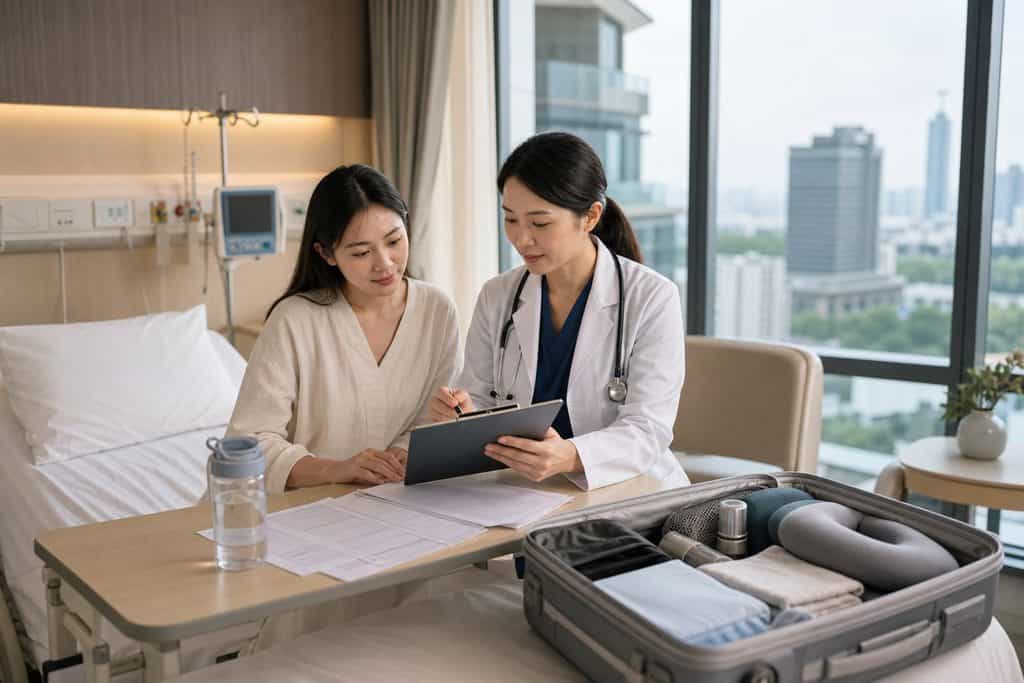
When 34-year-old Sarah from Manchester started researching IVF abroad, she kept hitting the same wall. Every clinic website listed treatment packages. Almost none explained what happens before the package begins. She needed to know which tests she’d need, how much they’d cost, and whether she could do them at home before flying to Shanghai. That gap between “considering IVF” and “starting IVF” is where most confusion lives.
The pre-IVF testing phase is not a formality. It determines your protocol, your medication doses, and sometimes whether IVF is the right path at all. And for international patients, the question of IVF tests cost China matters twice over — because you’ll likely split testing between your home country and your destination clinic.
This guide walks through the full pre-IVF testing picture: which tests matter, what they cost in China, what you can do before you travel, and what must happen on the ground.
How This Actually Works, Step by Step
The sequence is more predictable than most patients expect. Here’s what happens from where you are now to a confirmed IVF start date.
You begin by sending your existing medical records to the reproductive medicine department at your target hospital. That means any prior fertility workups, surgical reports, cycle tracking data, and your partner’s semen analysis if one exists. The department reviews these remotely and responds with a written assessment: what they see, what’s missing, and whether they recommend proceeding.
Next comes the gap analysis. The clinic tells you exactly which tests they require and which ones you can complete at home. Blood work is usually transferable. Imaging sometimes isn’t — many Chinese hospitals prefer their own ultrasound equipment for baseline antral follicle counts because the machine and the technician’s measurement protocol affect the number.
You complete what you can locally. Then you travel. On arrival, you do the remaining tests at the hospital, usually over one to three days. Results come back within a few days for most panels. Your doctor reviews everything and confirms your stimulation protocol. Only then does your cycle actually begin.
That’s the honest sequence. The timeline below puts real durations on it.
What Tests Are Needed Before IVF: The Core Panel
Chinese reproductive medicine departments follow protocols that closely mirror international standards. The core panel is familiar if you’ve done any fertility workup before, but the emphasis differs slightly. Chinese clinics tend to be thorough about infectious disease screening and baseline ovarian reserve — partly for clinical reasons, partly for regulatory compliance.
For the female partner, expect these categories:
- Ovarian reserve testing: AMH (anti-Müllerian hormone), FSH, LH, estradiol, and an antral follicle count via transvaginal ultrasound. AMH is the headline number. A result below 1.0 ng/mL signals diminished reserve and changes your protocol.
- Infectious disease panel: HIV, hepatitis B and C, syphilis. This is mandatory at every licensed IVF center in China. No exceptions.
- General health labs: complete blood count, liver and kidney function, thyroid panel (TSH, free T4), blood type and Rh factor, and prolactin.
- Reproductive anatomy: transvaginal ultrasound to evaluate the uterus and ovaries, plus a hysterosalpingogram (HSG) or saline infusion sonogram if tubal patency hasn’t been confirmed.
- Genetic carrier screening: optional but increasingly recommended. Many Chinese hospitals offer expanded carrier panels covering conditions more common in Asian populations.
For the male partner, the panel is shorter but non-negotiable:
- Semen analysis — volume, concentration, motility, morphology. If abnormal, a repeat test 4 to 6 weeks later.
- Infectious disease panel — same as the female panel.
- Blood type and Rh factor.
- Karyotype or Y-chromosome microdeletion testing if the semen analysis shows severe abnormalities.
The question “what tests are needed before IVF” gets asked constantly, and the answer is stable across most reputable clinics. What varies is where you do them and what they cost.
IVF Tests Cost China: Real Numbers
Here’s where the financial picture gets interesting. The cost of pre-IVF testing in China is substantially lower than in the United States or Western Europe — often by 60% to 80% for comparable panels. But the exact figure depends on which hospital tier you choose and whether you use the international department.
| Test Category | China Public Hospital (International Dept.) | China Private International Clinic | US Average |
|---|---|---|---|
| Female full panel (blood + ultrasound) | $250–$450 | $400–$700 | $1,200–$2,000 |
| Male panel (semen + blood) | $80–$150 | $150–$250 | $400–$800 |
| AMH alone | $40–$70 | $70–$120 | $150–$300 |
| HSG (if needed) | $100–$200 | $200–$350 | $800–$1,500 |
| Genetic carrier screening (expanded) | $300–$500 | $500–$800 | $1,000–$2,500 |
These ranges reflect what our team observes across partner hospitals in Beijing, Shanghai, and Guangzhou. They shift with hospital grade and case complexity. The key takeaway: a complete pre-IVF workup for both partners in China typically lands between $350 and $1,200, depending on whether genetic screening is included. The same workup in the US runs $2,000 to $5,000.
One nuance worth flagging: “IVF package with tests Beijing” is a search phrase we see often, and it reflects a real offering at some private international clinics. These bundles wrap baseline testing, initial consultation, and sometimes the first monitoring ultrasound into one price. They’re convenient, but read the fine print. Package prices usually assume normal results. If your AMH comes back low or your partner’s semen analysis is abnormal, additional testing gets billed separately.
A Realistic Timeline
People underestimate how long the pre-IVF phase takes. Here’s a realistic sequence with ranges, not optimistic numbers.
| Stage | What Happens | Duration |
|---|---|---|
| Week 1–2 | You send existing records to the reproductive medicine department for remote review | 7–14 days for written response |
| Week 2–4 | Clinic confirms required tests; you complete what you can at home | 1–3 weeks depending on local lab availability |
| Week 4–6 | Document translation (if records aren’t in English or Chinese) | 3–7 days |
| Week 5–7 | Visa application (S2 for short-stay medical treatment) | 5–15 business days depending on embassy |
| Week 6–8 | Travel to China; complete remaining tests at hospital | 1–3 days of testing |
| Week 7–9 | Results review; protocol confirmation | 3–5 days after last test |
| Week 8–10 | Cycle begins | — |
Two things catch people off guard. First, document translation. If your prior records are in a language other than English or Chinese, you need certified translation before the Chinese medical team can review them. That adds days, not hours. Second, the S2 visa. It’s the correct category for short-term medical treatment in China, but processing times vary by embassy. Apply early.
Also worth knowing: many patients choose to do their pre IVF blood work Shanghai or Beijing rather than at home, precisely because the timeline compresses. If you arrive with incomplete labs, the hospital can complete the full panel in two to three days. Some patients find that faster than coordinating multiple appointments back home.
What Can Go Wrong — and What Happens Then
Things do go wrong. Here are the honest failure modes and what actually happens next.
Your AMH comes back lower than expected. This is the most common surprise. The clinic may adjust your protocol to a higher-stimulation approach, or recommend proceeding sooner rather than later. It does not usually mean IVF is off the table. But it changes the conversation.
Your partner’s semen analysis is abnormal. The standard response is a repeat test. If the second result confirms the problem, the clinic typically recommends ICSI (intracytoplasmic sperm injection) rather than conventional IVF. That’s a different procedure with a different cost structure.
An infectious disease marker is positive. This is rare but serious. Chinese law requires specific handling for patients with hepatitis B or C, HIV, or syphilis. The hospital can still treat you, but you’ll be routed to designated facilities with appropriate protocols. This is not discrimination — it’s national regulation.
Your records are incomplete or unreadable. If the clinic can’t verify a prior surgery or diagnosis, they’ll order the test again in China. That adds cost and time. The fix is to gather everything before you send the first email.
The hospital won’t accept your home-country ultrasound. Some departments insist on their own baseline scan. You can’t argue your way out of this one. Budget for one extra ultrasound appointment on arrival.
None of these are dead ends. But each one changes your timeline or your budget, and knowing that in advance prevents the panic that comes from surprise.
Can I Do IVF Tests Abroad? What Transfers and What Doesn’t
The short answer: yes, you can do most IVF tests abroad. The longer answer is that “most” is doing heavy lifting.
Blood work transfers well. AMH, FSH, thyroid panels, infectious disease screening — these are standardized assays with internationally comparable reference ranges. A reputable clinic in London or Toronto produces results a Shanghai reproductive endocrinologist can read without hesitation. If you’re asking “can I do IVF tests abroad” because you want to minimize time in China, the answer is genuinely yes for the blood component.
Imaging is trickier. The antral follicle count depends on the ultrasound machine’s resolution and the sonographer’s technique. Chinese reproductive departments are particular about this number because it directly informs your stimulation dosing. Many will accept a foreign AFC if the report is detailed and recent — within 30 days. Some won’t. Expect to possibly repeat this one scan.
The HSG is another gray zone. If you’ve had one within the past 12 months and the images are available, most clinics will accept it. If the images are lost or the report is vague, you’ll repeat it in China. It’s uncomfortable and costs money. Gather your actual image files, not just the written report.
Genetic carrier screening is the easiest to do abroad — the major commercial labs all ship internationally and results are portable. If you’re considering expanded carrier screening, doing it before you travel saves time.
One more consideration: how to prepare for IVF in China starts at home. Stop smoking. Reduce alcohol. Start folic acid if you haven’t. These aren’t tests, but they affect your results and your cycle outcome. The preparation window is 90 days for sperm quality and about the same for egg quality improvements. Use the testing phase as your preparation phase.
Practical Considerations: Records, Visa, Payment, and Follow-Up
Records come first. Gather every fertility-related document you have: prior cycle summaries, surgical reports, imaging files, lab results. Scan them at high resolution. If they’re not in English or Chinese, get them translated before you contact the hospital. This single step saves more time than any other.
Visa category matters. For short-term medical treatment in China, the S2 visa is the applicable category, typically issued for stays up to 180 days. Your partner or accompanying family member applies for the same category. You’ll need supporting documents from the hospital — usually an invitation letter or treatment confirmation. No hospital document means no visa. Start the hospital conversation before you apply.
Payment is straightforward but worth planning. Public hospital international departments and private international clinics both accept major credit cards and international bank transfers. Public hospitals require prepayment for testing and treatment; private clinics sometimes bill after the fact. Insurance reimbursement is your responsibility — Chinese hospitals don’t do direct billing with foreign insurers except at a few private international facilities.
Language is the quiet obstacle. Even at top-tier hospitals, the lab technicians and ultrasound sonographers may not speak English. The international department staff usually do, but the moment you step outside that bubble, communication gets hard. This is where a bilingual medical companion earns their fee — not for the medical decisions, but for the queueing, the form-filling, the “which floor is phlebotomy” questions that eat entire mornings when you can’t read the signs.
Follow-up at home matters too. If your cycle succeeds and you return home pregnant, your home obstetrician will want all your Chinese records translated and summarized. Ask the hospital for a discharge summary in English before you leave. It’s much easier to get this while you’re still there than to request it by email later.
How to Choose Where to Do Your Testing
Yes. Most blood work — AMH, FSH, thyroid panel, infectious disease screening — transfers between accredited labs. Complete these at home to save time in China. Imaging like the antral follicle count may need to be repeated at the Chinese hospital, since some departments require their own equipment and protocol.
Abnormal results change your protocol, not your eligibility. Low AMH means a different stimulation approach. Abnormal semen analysis usually means ICSI instead of conventional IVF. Positive infectious disease markers route you to designated facilities that meet Chinese regulatory requirements. Each of these has a path forward.
Most clinics want blood work and imaging completed within 30 to 90 days before your cycle starts. Older results may require repetition. Plan to finish testing no more than two months before your intended start date.
No. Genetic carrier screening is optional at most clinics, though it’s increasingly recommended for patients over 35 or those with a family history of inherited conditions. If you want it, doing it before you travel saves time and allows informed decision-making before your cycle begins.
Your Next Step
The pre-IVF testing phase is where clarity comes from. The right tests, done at the right time, in the right place, turn a confusing international process into a predictable sequence. China Medical Services helps international patients navigate this exact phase — from remote record review to on-the-ground
Frequently Asked Questions
Yes. The hospitals used for international patients are JCI-accredited and follow the same international safety standards as top hospitals in the US and Europe. Surgical teams perform high volumes of procedures — often more than their Western counterparts — which studies show leads to better outcomes.
Costs vary by procedure and hospital, but international patients typically save 40-80% compared to US prices — even when factoring in travel and accommodation. A consultation with our team will give you an exact, all-inclusive quote with no hidden fees.
Send us your existing medical reports to get started. We handle everything from hospital selection and appointment scheduling to visa assistance and post-operative recovery planning. Your medical records are reviewed by the specialist before you even book a flight.
For more medical information and treatment options in China, visit chinamedservices.com (China Medical Services).
