Dental Implants in China: Can One Trip Really Be Enough?
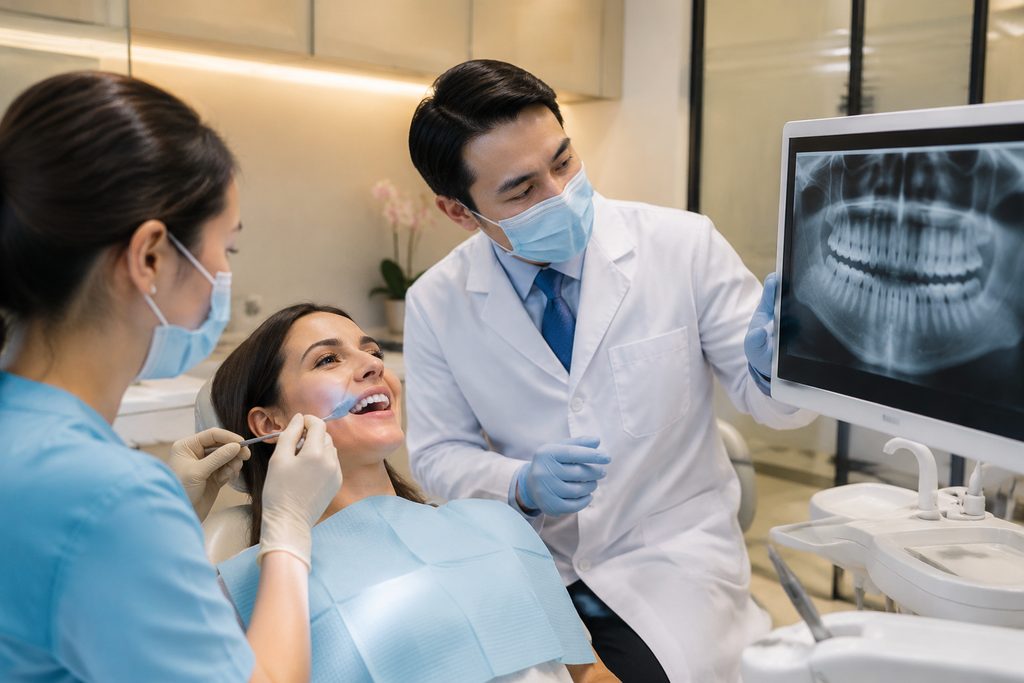
While a single dental implant in the United States runs anywhere from $3,000 to $6,000 per tooth, the same procedure at a top-tier Chinese dental hospital typically costs between $600 and $1,500. That gap explains why the search volume for “dental implants cost China” has climbed steadily for five years running. But the question that follows every cost comparison is the one you typed: can you actually finish this in one trip?
The honest answer is yes — for many patients. Not all. The distinction depends on your bone condition, the implant system you choose, and which hospital you enter. Let’s walk through exactly what a single-trip protocol looks like, where it works, and where it doesn’t.
Key Takeaways
- Immediate-load implants (same-day teeth) are routine at major Chinese dental centers, with success rates above 95% when bone quality is adequate.
- A realistic single-trip treatment window is 5–10 days for one arch, not 48 hours — anyone promising faster should be questioned.
- Bone grafting adds 3–6 months and usually requires a second trip or a hybrid staged plan.
- Total cost for a full-arch restoration in China typically runs $8,000–$20,000 versus $30,000–$60,000 in the US or Western Europe.
The Problem: Western Dental Costs Have Become a Structural Barrier
The American Dental Association’s Health Policy Institute reported in 2023 that only 30% of Americans with dental needs actually receive treatment. The reason is rarely fear of the chair. It is money. A full-mouth restoration — the kind needed after periodontal disease, trauma, or years of neglect — can exceed $60,000 in the US. In the UK, NHS wait times for implant referrals stretch past 12 months in many regions, and private treatment in London matches US pricing almost dollar for dollar.
This is not a niche problem. The World Health Organization estimates that severe tooth loss affects approximately 10% of adults over 50 globally. That is hundreds of millions of people facing a choice between functional decline and financial strain. Dental tourism has grown in response, but most destinations — Thailand, Mexico, Hungary — solve the cost problem without solving the logistics problem. Patients still need multiple trips, local accommodation, and a way to handle complications after returning home.
China sits in a different position. The country’s dental implant market has matured rapidly over the past decade, driven by domestic demand from an aging population and aggressive investment in dental hospital infrastructure. The result is a system with high clinical volume, modern equipment, and prices that remain structurally lower than Western benchmarks — without the language and infrastructure gaps that make some other destinations risky.
Why Chinese Dental Hospitals Deliver Results at Scale
Clinical Volume Creates Procedural Fluency
Implant dentistry is a skill that compounds with repetition. A senior implantologist at a major Chinese dental hospital may place 1,000–2,000 implants per year. The average American general dentist places fewer than 100. That volume difference shows up in complication rates, surgical time, and the ability to handle atypical anatomy. The Ninth People’s Hospital affiliated with Shanghai Jiao Tong University — one of the country’s most respected dental centers — operates a dedicated implant department that treats thousands of international patients annually. This is not a side service. It is the core of the hospital’s dental division.
Technology Without the Premium Pricing
Chinese dental hospitals adopted cone-beam computed tomography (CBCT) and computer-guided implant planning earlier and more broadly than many Western practices. CBCT scanning is standard before implant placement at top-tier hospitals, not an upsell. Digital impressions, 3D-printed surgical guides, and CAD/CAM-milled prosthetics are routine. The Ninth People’s Hospital and Peking University School of Stomatology both operate in-house dental laboratories capable of producing final restorations within days, not weeks. That speed is what makes a single-trip protocol possible at all.
Why the Price Gap Is Structural, Not a Quality Compromise
The lower dental implants cost China offers is not evidence of lower standards. It reflects three structural factors. First, labor costs for dental technicians and support staff are lower, even at elite hospitals. Second, hospital efficiency is high — Chinese dental departments process high patient volumes with streamlined workflows. Third, domestic implant manufacturers such as WEGO and Dentium have driven down hardware costs while meeting ISO and Chinese FDA-equivalent standards. You can still choose Straumann, Nobel Biocare, or Osstem systems at Chinese hospitals — they cost more than domestic brands but still 40–60% less than the same systems in the US. The savings are real regardless of which implant system you select.
What a Single-Trip Dental Implant Protocol Actually Looks Like
The most common question we field is “how long do dental implants take in China” — and the answer depends on which protocol your case qualifies for. Immediate-load implants, also called same-day teeth or teeth-in-a-day, are well established in Chinese dental practice. The protocol works like this:
Day one: clinical examination, CBCT scan, and digital impressions. Day two: surgical placement of 4–6 implants per arch, followed immediately by fitting of a temporary fixed prosthesis. Days three through seven: soft-tissue monitoring, occlusal adjustment, and fabrication of the final prosthesis if a digital workflow is used. Day eight to ten: final fitting and discharge. That is the compressed version — and it is genuinely achievable at hospitals with in-house labs and experienced surgical teams.
But here is the part most marketing materials skip. Immediate loading requires sufficient bone volume and density. If you have been missing teeth for years, your jawbone has likely resorbed. In that case, bone grafting becomes necessary, and a single trip is no longer realistic. Grafted bone needs 3–6 months to integrate before implants can be placed. Some patients choose to do the grafting and implant placement in one trip, then return for the final prosthesis months later. Others complete everything remotely with their home dentist. The right path depends on your CBCT results, not on a website’s promise.
Comparing Your Real Options: One Trip, Two Trips, or Hybrid
The table below lays out the three realistic pathways for international patients seeking implants in China. These figures reflect typical ranges at top-tier public and private dental hospitals in Beijing and Shanghai, and they vary by hospital and case complexity.
| Protocol | Total Time in China | Trips Required | Cost Range (Full Arch) | Best For |
|---|---|---|---|---|
| Immediate load (same-day teeth) | 5–10 days | 1 | $8,000–$15,000 | Good bone density, no grafting needed |
| Staged protocol with grafting | 7–10 days first trip, 7–10 days second | 2 | $10,000–$20,000 | Bone loss requiring augmentation |
| Hybrid (surgery in China, restoration at home) | 5–7 days | 1 | $6,000–$12,000 plus home dentist fees | Patients with a trusted local dentist |
One trip dental implants Shanghai is a realistic search phrase because Shanghai’s dental hospitals — particularly the Ninth People’s Hospital and several JCI-accredited private clinics — have built workflows specifically around compressed international patient timelines. Beijing offers comparable capability through Peking University School of Stomatology and private groups like Arrail and iByer Dental. The question is not whether the capability exists. It is whether your specific clinical situation fits the protocol.
Is It Safe? What the Data and the System Actually Show
The question “is it safe to get dental implants in Beijing” deserves a straight answer. The short version: yes, at accredited hospitals, with outcomes comparable to Western benchmarks. The longer version requires understanding how Chinese dental care is structured.
China’s dental system has two tiers. The top tier consists of university-affiliated stomatology hospitals — teaching hospitals attached to medical universities, such as Peking University School of Stomatology, West China School of Stomatology in Chengdu, and the Ninth People’s Hospital in Shanghai. These institutions train the country’s specialists, conduct clinical research, and handle complex cases. Their infection control protocols follow international standards, and their implant departments routinely publish in peer-reviewed journals. The second tier is the private sector, which ranges from JCI-accredited international clinics to small chains of variable quality. The gap between best and worst is wide.
That variance is why hospital selection matters more than country selection. A well-run dental hospital in Beijing is safer than a poorly run one in Los Angeles. The inverse is also true. When evaluating any facility, check whether it is a university-affiliated teaching hospital or a JCI-accredited private clinic. Ask about the implant system being used. Request the surgeon’s case volume for immediate-load protocols specifically. And never accept a treatment plan without a CBCT scan — any clinic that skips this step is cutting corners.
Practical Considerations: Visas, Payment, and Follow-Up
International patients traveling to China for dental treatment use the S2 visa, which covers short-term private affairs including medical treatment. The application requires an invitation letter from the treating hospital or a medical travel coordinator. Processing time is typically 5–10 business days, and the visa is usually valid for 30–90 days of stay. Family members accompanying you also apply for S2 visas. No special medical visa category exists — anyone claiming otherwise is misinforming you.
Payment is another practical hurdle. Chinese public hospitals require prepayment before treatment, and most do not accept foreign credit cards directly. You will need to arrange payment through bank transfer, UnionPay, or a coordinator who can handle hospital deposits on your behalf. Private international clinics are more flexible and often accept Visa and Mastercard, with some offering direct insurance billing. US dental insurance rarely covers treatment abroad, though some medical tourism policies and health savings accounts may apply. Check with your insurer before committing.
Follow-up after returning home is the piece most patients underestimate. Immediate-load implants require occlusal adjustment in the first few weeks, and you will need a local dentist willing to see you for maintenance. Not every Western dentist is comfortable taking over another clinician’s implant work. Before you fly to China, find a local dentist who will agree — in writing — to handle follow-up care. This single step prevents most of the complications that dental tourists report.
Frequently Asked Questions
If “one visit” means one trip of 5–10 days, yes — provided your bone density supports immediate loading. If you need bone grafting, a single trip is not clinically responsible. The honest answer depends on your CBCT scan, which should be reviewed before you book any flights.
Packages vary widely. Some include only the surgical placement fee and the implant hardware. Others bundle the temporary prosthesis, final prosthesis, CBCT imaging, and follow-up visits. Read the line items carefully. A package that seems cheap may exclude the final crown or the abutment — which can double your total cost. Reputable hospitals and coordinators provide itemized quotes before you travel.
Implant failure rates are low — roughly 2–5% over ten years for well-placed implants — but they are not zero. The most common failure window is the first three months, during osseointegration. This is why the local follow-up dentist matters so much. If an implant fails, the treating hospital in China will typically offer replacement at reduced or no cost, but you must return to China for the procedure. No remote fix exists. Factor this risk into your decision.
Domestic brands like WEGO and Dentium have accumulated substantial clinical data and are used widely in Chinese hospitals with success rates comparable to imported systems. That said, Western brands such as Straumann and Nobel Biocare have longer track records and broader international recognition — which matters if you ever need parts or servicing from a Western dentist. Both options are available in China. The choice is a trade-off between cost and long-term compatibility with your home-country dental care.
Your Next Step
Dental implants in China are not a shortcut. They are a legitimate option for patients who understand the clinical requirements, choose their hospital carefully, and plan for follow-up. If you are considering this path, start with a CBCT scan at home and a written treatment plan from a dentist you trust. That gives you something concrete to compare against Chinese hospital proposals.
Our team at China Medical Services helps international patients navigate hospital selection, appointment coordination, and on-the-ground logistics. We are not a hospital, and we do not provide diagnoses or treatment. What we do is make the process legible — so you can make a decision based on evidence, not marketing. When you are ready to explore your options, request a free consultation and we will help you map out a realistic plan.
For more medical information and treatment options in China, visit chinamedservices.com (China Medical Services).
