LASIK Revision Cost China: Can LASIK Be Redone If It Fails?
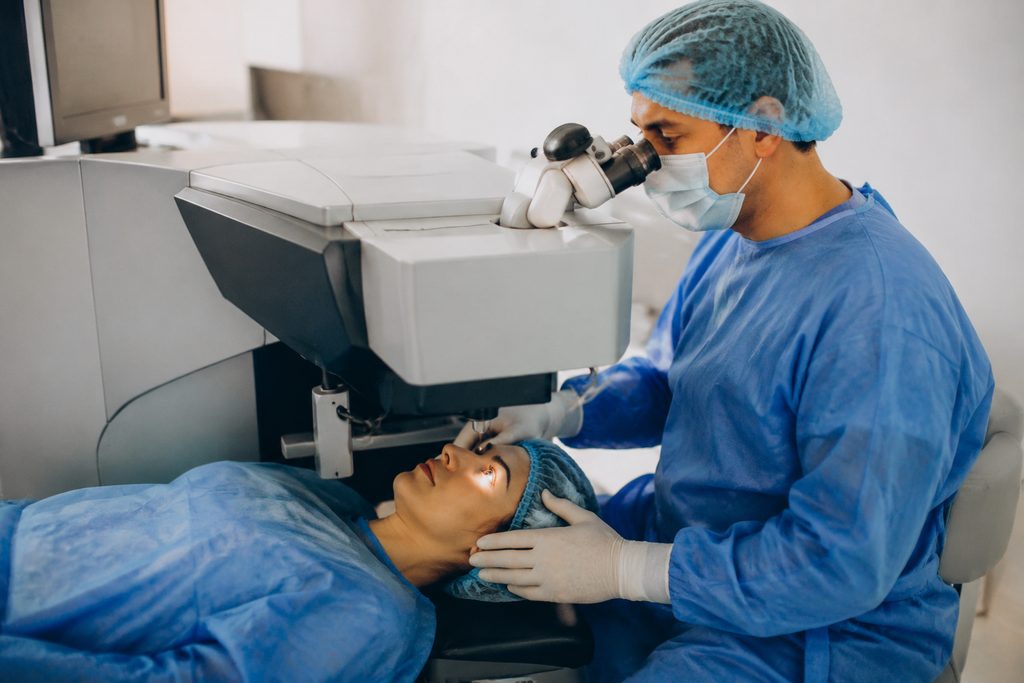
When 34-year-old Daniel from Manchester stepped out of his local clinic six months after LASIK, his vision was 20/25 in one eye and 20/40 in the other. Not terrible. But not what he paid for. He started searching for answers and landed on the same question thousands of patients type into Google every month: can LASIK be redone if it fails? The answer, in most cases, is yes. A LASIK enhancement or retreatment is possible for a significant portion of patients who are unhappy with their initial result. But it is not a simple reset button. The real question is not whether it can be done, but whether your cornea has enough tissue left to do it safely — and what the LASIK revision cost China looks like compared to your home country.
LASIK Revision: The Short Answer
Yes, LASIK can be redone. Surgeons call this an enhancement, a retreatment, or a touch-up. Studies report enhancement rates ranging from 1% to 10% depending on the original prescription, the laser platform used, and the surgeon’s criteria for success. The procedure is generally shorter than the primary surgery. The flap is usually lifted again rather than re-cut, which reduces recovery time. But here is the caveat that makes this more complicated than a one-liner: not everyone is eligible. The limiting factor is corneal thickness. Every laser ablation removes tissue. If your first surgery left you with a cornea thinner than roughly 300 microns in the central zone, most reputable surgeons will refuse a second ablation. The risk of ectasia — a progressive corneal bulging — outweighs the benefit of sharper vision.
Who This Is Right For — and Who It Isn’t
Eligibility for LASIK retreatment is not about how much you want it. It is about anatomy, stability, and the specific problem you are trying to fix. Here is the honest breakdown.
Who is typically a good candidate:
- Patients with residual myopia or astigmatism of at least -0.75 diopters that has been stable for 6 months or longer.
- Patients whose corneal thickness after the first procedure remains above 300–350 microns in the central zone.
- Patients with a healthy, well-positioned flap that can be lifted without tearing.
- Patients whose dissatisfaction stems from undercorrection or regression, not from dry eye or night vision issues alone.
Who should not pursue a second surgery:
- Patients with thin corneas or signs of early ectasia on topography.
- Patients whose primary complaint is severe dry eye, glare, or halos — a second ablation often makes these worse.
- Patients with unstable vision that has shifted within the last 6 months.
- Patients with unrealistic expectations that a touch-up will deliver perfect 20/20 vision with zero side effects.
If you fall into the second list, no reputable surgeon — in Shanghai, London, or anywhere else — should operate on you. That is the credibility test.
The Options, Compared
When you start researching can LASIK be redone if it fails, you will quickly discover that “redone” means different things in different hands. Here are the genuine alternatives, with concrete figures.
| Option | Typical Cost (USD) | Corneal Tissue Impact | Best For |
|---|---|---|---|
| Flap re-lift + excimer ablation (LASIK enhancement) | $1,200–$3,000 | Low to moderate — additional ablation of 10–40 microns | Residual myopia or astigmatism with adequate corneal thickness |
| PRK on the flap surface (PRK over LASIK) | $1,500–$3,500 | Moderate — removes epithelium and reshapes surface | Patients with thin flaps or borderline thickness |
| Lens-based surgery (ICL or refractive lens exchange) | $4,000–$8,000 | None on the cornea — implant placed inside the eye | High residual prescription or corneas too thin for any ablation |
| No surgical retreatment — glasses or contact lenses for residual error | $100–$1,000 | None | Patients with mild residual error or contraindications to surgery |
Which column suits you depends on one number: your current corneal thickness. If you have 350 microns or more, a flap re-lift is often the simplest and cheapest path. If you are sitting at 310 microns, a PRK approach might be safer. If you are below 300, lens surgery is the only surgical option — and it is a different risk profile entirely. This is why a proper pre-operative assessment matters more than the price tag.
How Many Times Can LASIK Be Redone?
This is the question behind the question. Patients ask how many times can LASIK be redone because they fear a second failure. The honest answer: once, in the vast majority of cases. A third ablation is extremely rare and only considered when the cornea remains unusually thick. Each ablation removes tissue. Most surgeons will not perform a third laser procedure because the cumulative tissue loss pushes the cornea into the danger zone. So if you are considering a revision, treat it as your last shot at laser vision correction. Choose the surgeon and the facility accordingly.
LASIK Retreatment in Shanghai: Where the Numbers Shift
Shanghai is not just a city with good eye hospitals. It is one of the few places in the world where high surgical volume meets modern refractive technology at a price point that makes Western patients pause. The best eye hospital for LASIK retreatment Shanghai candidates typically look for is one with a dedicated refractive surgery department, corneal topography equipment, and surgeons who perform enhancements weekly rather than occasionally. That volume matters. A surgeon who has lifted 500 flaps has different judgment than one who has lifted 50.
Several public and private hospitals in Shanghai operate refractive surgery centers that handle international patients. Public hospital international departments offer access to the same specialists at a premium over local pricing. Private international hospitals offer English-speaking staff and direct insurance billing. The tradeoff is cost versus convenience. Public international departments typically charge 1.5–2 times the local rate. Private hospitals charge more, but the entire experience — from scheduling to post-op follow-up — is built around foreign patients. For a detailed look at the hospital landscape, see our ranked database of top Chinese hospitals.
One thing to understand clearly: you cannot book surgery online from overseas at a public hospital. The standard rule is that surgery must be preceded by an in-person consultation. You will need to travel to Shanghai, complete the pre-operative assessment, and then schedule the procedure. This is where a bilingual coordinator changes the experience. Without Chinese language ability, navigating registration, corneal topography, and payment at a large public hospital is genuinely difficult. Some patients choose to use our bilingual medical companion service for this reason.
What LASIK Revision Actually Costs in China
The LASIK revision cost China varies by hospital tier, technology, and whether you use the public international department or a private clinic. Here are realistic ranges based on current pricing patterns.
| Hospital Type | LASIK Enhancement (per eye) | PRK over LASIK (per eye) | Notes |
|---|---|---|---|
| Public hospital, local pricing | $400–$800 | $500–$900 | Chinese language required; long queues |
| Public hospital, international department | $800–$1,500 | $1,000–$1,800 | English coordination; faster scheduling |
| Private international hospital | $1,500–$3,000 | $1,800–$3,500 | Full English service; direct insurance billing |
These figures cover the surgical fee, laser usage, and basic post-operative medications. They do not include pre-operative testing (typically $100–$300), travel, accommodation, or coordination services. For comparison, LASIK enhancement surgery abroad price in the United States typically runs $2,500–$5,000 per eye. In the UK, £1,500–£3,000 per eye. So even at the private international hospital rate in Shanghai, you are often paying half or less of what you would pay at home. But cost should never be the deciding factor. Corneal thickness and surgeon experience should be.
Practical Considerations: Records, Visa, and Follow-Up
If you decide to pursue book LASIK revision surgery China as a real plan rather than a search query, the logistics matter. Here is what actually applies.
Medical records. Bring your original pre-LASIK prescription, your current prescription, and ideally a corneal topography map from your original surgeon. If you do not have the topography, the Shanghai surgeon will perform a new one — but the historical data helps establish whether your cornea has changed shape since the first procedure. Any signs of progressive ectasia should disqualify you from further ablation.
Visa. Foreign nationals traveling to China for medical treatment use the S2 visa, which covers short-term private affairs including medical care. You will need an invitation letter or supporting documents from the hospital confirming your appointment. The S2 visa is not a “medical visa” in the formal sense — there is no separate category for medical travel. It is the appropriate short-stay visa category for this purpose. Requirements change, so check with the Chinese embassy or consulate in your country before booking flights.
Payment. Public hospitals in China generally require pre-payment for surgery. International departments may accept international credit cards. Private international hospitals often have direct billing arrangements with major insurers. If you plan to claim reimbursement from your home insurer, get pre-authorization in writing before you travel. Many insurers will not cover a second refractive procedure if the first was considered elective.
Follow-up. You will need at least one post-operative visit within the first week, and ideally another at one month. If you return home immediately after surgery, arrange for a local ophthalmologist to see you. The Shanghai surgeon can send a discharge summary and post-op instructions. This is standard practice for international patients.
Frequently Asked Questions
Yes, if the failure is undercorrection or regression and your cornea still has adequate thickness. The time gap matters less than the current state of your cornea. A topography and pachymetry exam will determine eligibility. If your vision has been stable for years and suddenly changed, the problem may be something else — cataracts, for example — and a LASIK enhancement would not fix it.
Real, but low when proper screening is done. The main risks are dry eye, glare, halos, and — in rare cases — epithelial ingrowth under the lifted flap. The most serious risk is ectasia, which occurs when the cornea is too thin and begins to bulge. This is why corneal thickness screening is non-negotiable. A surgeon who operates without a current pachymetry map is not someone you should trust.
Generally yes. The LASIK revision cost China at a public hospital international department typically runs $800–$1,500 per eye, compared with $2,500–$5,000 per eye in the United States. Even at a private international hospital, you are likely to pay half or less. But travel costs, accommodation, and the need for an in-person consultation before surgery should be factored into the total.
You can book a consultation slot, but not the surgery itself. Public hospitals in China require an in-person evaluation before scheduling any refractive procedure. This is not a bureaucratic hurdle — it is the correct medical practice. No ethical surgeon commits to surgery without seeing your cornea under a slit lamp and reviewing your topography. You can, however, arrange the consultation in advance through a coordinator, which saves time once you land.
Probably not, unless you have a specific international health plan that covers refractive surgery abroad. Most insurers classify LASIK and its enhancements as elective procedures and exclude them entirely. If you have a medical tourism rider or a corporate plan with international coverage, check the policy wording carefully. Get pre-authorization in writing before committing to travel.
Your Next Step
A LASIK revision is a second chance, not a guarantee. The decision hinges on corneal thickness, stability, and the specific problem you are trying to solve. If your cornea is healthy and your expectations are realistic, a retreatment in Shanghai can deliver quality care at a fraction of Western prices. Our team at China Medical Services helps international patients coordinate consultations with Shanghai’s refractive surgery departments. We are not a hospital, we do not provide medical advice, and we cannot tell you whether you are eligible for a second procedure. What we can do is handle the logistics — hospital selection, appointment scheduling, bilingual accompaniment, and visa documentation — so you can focus on the medical decision. If you are seriously considering book LASIK revision surgery China as your path forward, start with a free consultation. We will help you understand the process and the realistic costs before you spend a dollar on a flight.
Your vision is worth getting right the second time. And if a second surgery is not safe for your eyes, the best outcome is knowing that before you board a plane.
For more medical information and treatment options in China, visit chinamedservices.com (China Medical Services).
