Is Dental Work in China Safe and Sterile? A Complete 2026 Guide
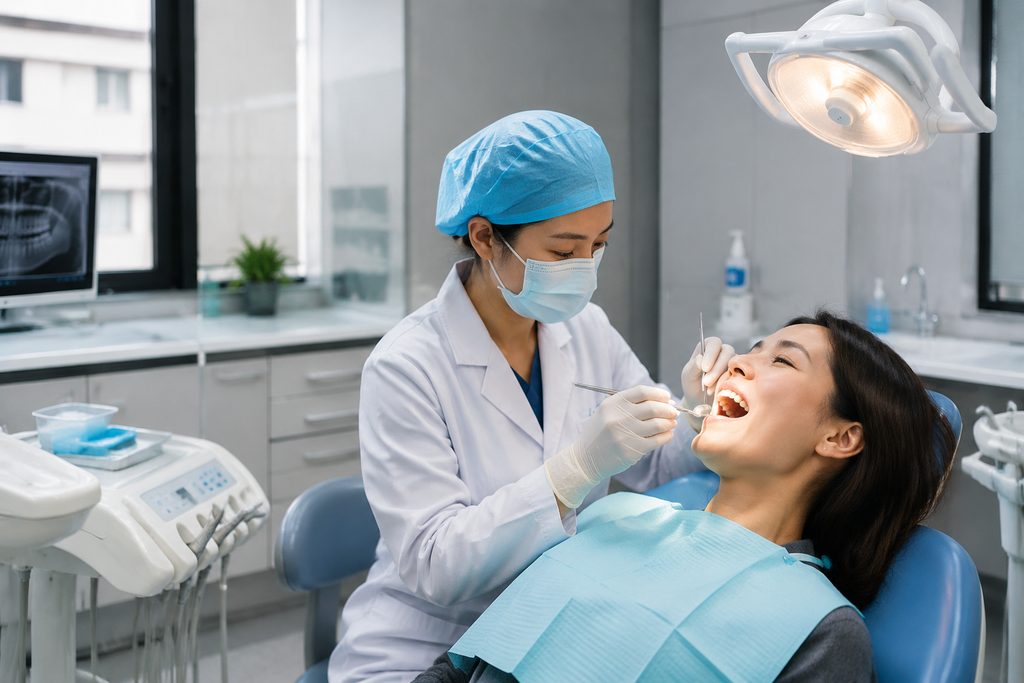
You’ve probably heard that getting dental work abroad means gambling with hygiene standards. The image of a back-alley clinic with questionable instruments is hard to shake. But here’s what most people don’t realize: China’s top-tier dental hospitals now operate under sterilization protocols that match or exceed what you’d find in Frankfurt, Toronto, or Sydney. The real question isn’t whether sterile dentistry exists in China. It’s whether you know how to find it — and avoid the clinics that don’t meet the bar.
The dental implant cost China comparison tells part of the story. A single titanium implant with abutment and crown runs $900–$1,800 at a top Chinese public hospital’s international department. The same procedure in the United States averages $3,500–$6,000. In London, you’re looking at £2,500–£4,000. That gap exists partly because of lower labor and facility costs. It also exists because China’s dental sector has industrialized high-volume implant placement over the past decade. Volume, when paired with rigorous sterilization, improves outcomes. When it isn’t, you get the horror stories that make people ask whether dental work in China is safe in the first place.
Our team has coordinated dental care for international patients across 340+ top-ranked hospitals in 37 Chinese cities. We’ve seen the full spectrum: JCI-accredited private clinics with Western-trained dentists, university-affiliated teaching hospitals with research-grade infection control, and — yes — budget clinics we would never send a patient to. This guide explains what actually determines safety and sterility, what a realistic treatment journey looks like, and how to evaluate any clinic before you book a flight.
How This Actually Works, Step by Step
You don’t just land in Shanghai and walk into a dental chair. The sequence matters, and skipping steps is how patients end up in trouble. Here’s the real process we walk clients through.
First, you send us your existing dental records. Panoramic X-rays, CBCT scans if you have them, a list of current medications, and any notes from your home dentist about the proposed treatment plan. If you don’t have recent imaging, we’ll tell you what to get before you travel — or arrange it on arrival. A written second opinion from a Chinese specialist costs $300–$500 and gives you a concrete treatment plan before you commit to anything.
Next, we match your case to a hospital or clinic. For complex implant cases — full-arch restoration, sinus lifts, bone grafting — we typically recommend a university-affiliated public hospital’s international department or a JCI-accredited private clinic. For routine fillings and crowns, a well-vetted private clinic often works fine and costs less. The dental specialty rankings we maintain help narrow this down by city.
Then comes the in-person consultation. Chinese public hospitals still require a face-to-face visit before any surgical procedure. No exceptions for foreign patients, even through international departments. You’ll meet the treating dentist, review the plan, and sign consent forms. Surgery is usually scheduled 3–10 days after this first visit, depending on the hospital’s surgical calendar.
After the procedure, you’ll have follow-up appointments before flying home. For implants, the initial surgery and crown placement are typically separated by 3–6 months of osseointegration. Many patients do the surgery in China, return home, and come back for the crown later. Some clinics offer same-day implants with immediate loading, but that’s only appropriate for specific bone conditions.
Is Dental Work in China Safe? What the Evidence Shows
The short answer: yes, at accredited hospitals and clinics. The longer answer requires looking at what “safe” actually means in dentistry — infection control, material quality, clinician training, and complication management.
Infection control is the biggest concern for most patients asking is dental work in China safe. Chinese tertiary hospitals follow national standards that mandate autoclave sterilization for all reusable instruments, single-use disposables for needles and suction tips, and biological indicator testing at least weekly. The top institutions go further. JCI-accredited facilities — there are over 100 in China — undergo unannounced inspections and must document sterilization cycles for every instrument pack. That’s the same standard as JCI hospitals in Singapore or Dubai.
Material quality is the second pillar. China manufactures dental implants domestically, but top hospitals overwhelmingly use imported systems: Straumann (Switzerland), Nobel Biocare (Sweden), Osstem (South Korea), and Dentsply Sirona (USA). Counterfeit implants do exist in the gray market, which is why we only work with hospitals that source directly from authorized distributors and provide implant passport documentation with batch numbers. You should receive that documentation without asking.
Clinician training varies more than anything else. A dentist at Peking University School of Stomatology or Shanghai Ninth People’s Hospital has completed 8+ years of specialized training and places hundreds of implants annually. A dentist at a strip-mall clinic in a tier-3 city might have a 3-year vocational degree and minimal surgical experience. Both are “Chinese dentists.” The facility you choose determines which one you get.
A Realistic Timeline
Here’s what a typical dental implant journey looks like for an international patient. This assumes a single implant with standard healing time.
| Stage | What Happens | Duration |
|---|---|---|
| Week 1 | Send records, video consultation with Chinese dentist, receive written plan and cost estimate | 3–7 days |
| Week 2–4 | S2 visa application, flight booking, hotel arrangement | 1–3 weeks (visa processing varies by embassy) |
| Day 1 in China | In-person consultation, CBCT scan if needed, treatment plan finalized | 1 day |
| Day 2–5 | Implant surgery (if no bone grafting needed) | 1–2 hours surgical time |
| Day 6–10 | Post-op check, suture removal, fly home | 3–5 days |
| Month 3–6 | Osseointegration healing at home | 12–20 weeks |
| Second trip | Crown placement, final adjustments | 3–5 days |
Bone grafting adds 3–6 months before implant placement. Full-arch restoration (All-on-4 or All-on-6) typically requires 2–3 trips over 6–12 months. Same-day implant protocols can compress the timeline but aren’t suitable for everyone.
The step people forget is document translation. If your home dental records aren’t in English or Chinese, they need translation before the video consultation. We handle this as part of case management, but it adds 2–3 days.
What Can Go Wrong — and What Happens Then
Dental complications happen everywhere. What separates good systems from bad ones is how they respond. Here’s the honest picture for China.
Implant failure — where the implant fails to integrate with bone — occurs in 2–5% of cases globally. Chinese top hospitals report similar rates. If it happens, the standard recourse is implant removal, a healing period, and re-placement at reduced or no additional surgical cost. This should be written into your treatment agreement before surgery. If a clinic won’t put complication coverage in writing, that’s a red flag.
Nerve damage is rarer but more serious. Inferior alveolar nerve injury during lower-jaw implant placement can cause temporary or permanent numbness. Experienced surgeons use CBCT-guided planning to avoid this. Ask whether your surgeon uses surgical guides or freehand placement. Guided surgery reduces risk significantly.
Post-operative infection is the complication most directly tied to sterilization. It’s also the easiest to prevent. At accredited hospitals, infection rates after implant surgery run below 1%. If you develop an infection after returning home, the Chinese hospital should provide your home dentist with complete operative notes — we coordinate this handoff as part of our service. Most home dentists will manage straightforward post-op care once they have the records.
Language breakdown is a real risk. Even in international departments, not every nurse speaks fluent English. A bilingual medical companion (from $300/day) eliminates this by handling registration, translation, and post-op instructions. It’s not a luxury — it’s the difference between understanding your aftercare and guessing.
Dental Tourism China Prices: What You’ll Actually Pay
Let’s talk numbers. Dental tourism China prices vary by city, hospital tier, and implant system. Here’s what we see in 2026 for international patients.
| Procedure | Top Public Hospital (International Dept) | Private JCI Clinic | US Average |
|---|---|---|---|
| Single implant (Straumann/Nobel) + crown | $1,200–$1,800 | $1,500–$2,500 | $3,500–$6,000 |
| All-on-4 full arch | $8,000–$12,000 | $10,000–$15,000 | $24,000–$35,000 |
| Porcelain crown (no implant) | $200–$400 | $300–$600 | $800–$1,500 |
| Root canal (molar) | $150–$300 | $250–$500 | $1,000–$1,800 |
| Professional cleaning + exam | $50–$100 | $80–$150 | $150–$300 |
These are from prices. Final quotes vary by hospital and case complexity. A sinus lift adds $800–$1,500. Bone grafting adds $500–$1,200 per site. Premium implant brands cost 20–40% more than mid-range Korean systems.
If you’re looking for the best dental clinic Shanghai for foreigners, expect to pay at the upper end of these ranges. Shanghai’s private international clinics — Jiahui, United Family, Parkway — charge Western-level prices for Western-level amenities. The public hospital international departments in Shanghai (Ninth People’s Hospital, Zhongshan) offer comparable clinical quality at 30–40% less, but with less hand-holding. That’s where a companion service earns its fee.
How Sterile Are Dental Clinics in China? A Closer Look
How sterile are dental clinics in China depends entirely on which tier of facility you enter. The gap between top and bottom is wider than in most Western countries.
At the top: Class A tertiary hospitals and JCI-accredited private clinics. These facilities run centralized sterilization departments with steam autoclaves operating at 134°C for 3+ minutes, chemical and biological indicators on every load, and tracking systems that log each instrument pack to a specific patient. Handpieces are sterilized between every patient. Water lines are treated with disinfectant protocols. Surface barriers are changed per patient. This is the standard you should demand.
At the bottom: small private clinics in residential areas, often advertising heavily on Chinese social media. Some are perfectly competent. Others cut corners — reusing disposable items, skipping biological indicator testing, or hiring underqualified staff. Price is a rough signal: if an implant is quoted below $600 in a Chinese clinic, someone is cutting costs somewhere. It might be on materials, sterilization, or clinician time. None of those are corners you want cut.
The Chinese government has tightened dental clinic licensing since 2020, with unannounced inspections now standard in major cities. Beijing, Shanghai, Guangzhou, and Shenzhen have the strictest enforcement. Smaller cities vary. For international patients, sticking to hospitals in the Fudan-ranked Top 100 or JCI-accredited private facilities eliminates most of this variance.
Practical Considerations: Records, Visa, Payment, and Follow-Up
Before you book anything, sort out the logistics. These are the things that actually derail dental trips.
Records: Bring everything. Panoramic X-rays from the last 12 months, any CBCT scans on a USB drive, a written treatment plan from your home dentist, and a medication list. Chinese dentists will want their own imaging — expect a new panoramic or CBCT on arrival — but your existing records speed up the initial consultation and help the video consultation be productive.
Visa: Dental treatment falls under the S2 visa category, which covers short-term private affairs including medical treatment. You’ll need an invitation letter from the hospital or clinic confirming your appointment. Processing takes 1–3 weeks depending on your home country’s Chinese embassy. We provide the document checklist and coordinate with the hospital to issue the letter. S2 is not a “medical visa” — that term doesn’t exist in Chinese immigration law — but S2 with a treatment annotation is the correct category for dental work.
Payment: Public hospitals require prepayment for surgical procedures. Most accept international credit cards at their international departments, but not always. Wire transfer is more reliable for large amounts. Private JCI clinics often bill international insurance directly. If you have dental insurance, check whether it covers treatment abroad — most don’t, but some expat policies do.
Follow-up at home: Your Chinese dentist should provide a complete discharge summary in English, including implant system, batch numbers, and post-op instructions. Your home dentist can handle routine follow-up. If complications arise, video follow-up with the Chinese clinic is usually possible. We coordinate this for our clients at no additional cost within the first year.
Frequently Asked Questions
At accredited hospitals and JCI-certified clinics, yes. These facilities follow the same autoclave sterilization standards and biological monitoring requirements as hospitals in the US, Europe, and Australia. The risk isn’t at the top tier — it’s in unvetted budget clinics. Choose facilities with verifiable accreditation and you’re operating under Western-equivalent infection control.
For a single implant with crown, most patients save 60–70% compared to US prices after factoring in travel costs. The dental implant cost China comparison — $1,200–$1,800 versus $3,500–$6,000 — holds up even with flights and accommodation for a 7–10 day trip. Savings increase with larger cases like full-arch restoration.
You can book the consultation, imaging, and treatment planning in advance. You cannot book surgery without an in-person visit — Chinese hospitals require face-to-face evaluation before any surgical procedure. What you can do is coordinate the entire journey in advance: hospital matching, appointment scheduling, visa document preparation, and companion services. That’s the realistic version of a “package.”
Your Chinese dentist remains responsible for the treatment outcome. Reputable hospitals provide written complication policies and will handle implant failure or infection management, including video follow-up and re-treatment coordination. We help clients navigate this process, including transferring records to home dentists and arranging follow-up video consultations when needed.
At international departments and JCI clinics, the treating dentists usually speak functional to fluent English. Nurses and administrative staff vary more. Don’t assume fluency throughout the process — a bilingual companion eliminates the gaps in registration, payment, and post-op instructions. For complex cases, we arrange a companion who stays with you through every appointment.
Your Next Step
China’s top dental hospitals offer world-class sterilization, experienced implant surgeons, and prices that make comprehensive treatment accessible. The catch is that finding the right facility — and navigating it without Chinese language skills — is genuinely difficult. That’s where we come in. China Medical Services maintains a vetted network of 340+ top-ranked hospitals and JCI-accredited clinics across 37 cities, and we coordinate the entire journey: record review, hospital matching, appointment scheduling, visa guidance, and on-the-ground bilingual support. We don’t perform dental work. We make sure you get it from the right people.
Start with a free consultation. Tell us what you need done, send your records, and we’ll tell you honestly whether China makes sense for your case — and what it would cost. No pressure, no obligation. Just a
For more medical information and treatment options in China, visit chinamedservices.com (China Medical Services).
