Can Peripheral Nerve Surgery Fix My Pain? Costs, Hospitals & Real Timelines
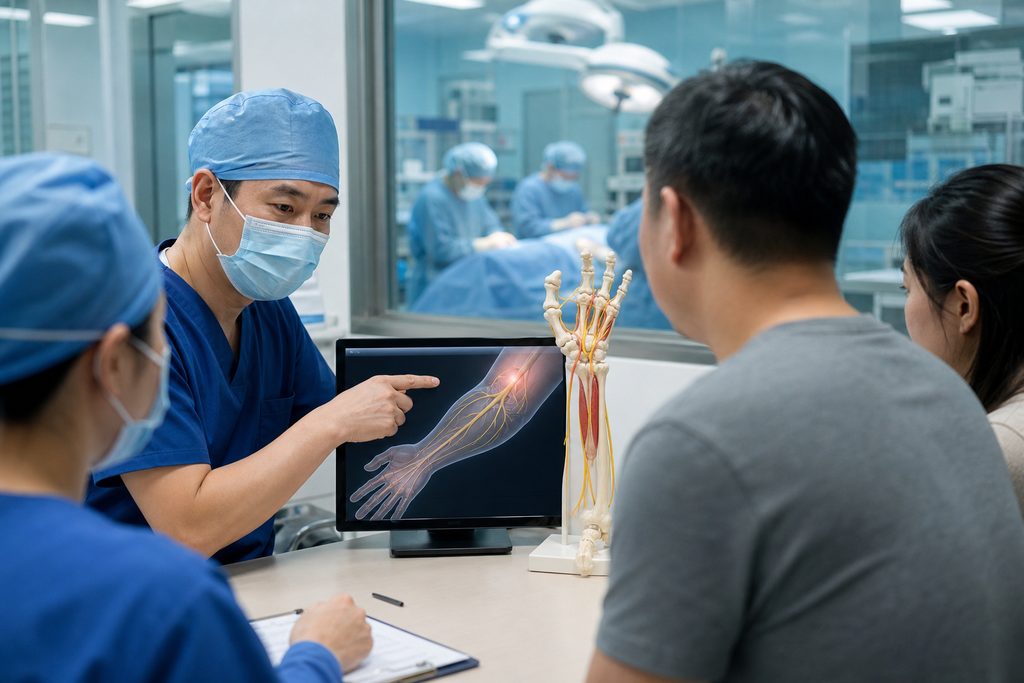
Can Peripheral Nerve Surgery Fix My Pain? A Straight Answer on Costs, Hospitals, and What Actually Happens
Have you been living with burning, tingling, or electric-shock pain that pills barely touch? You are not alone. Chronic nerve pain affects roughly 1 in 12 adults, and when medications, injections, and physical therapy stop working, surgery becomes the question. The honest answer: yes, peripheral nerve surgery can fix certain types of pain — but only when the pain has a specific, surgically correctable cause. Not all nerve pain qualifies. And if you are weighing peripheral nerve surgery cost China against options at home, you need to understand what you are actually paying for, which hospitals do this well, and what the real timeline looks like. This guide walks through all of it without the sugarcoating.
We coordinate care for international patients at China Medical Services. Our team has seen enough nerve surgery cases to know where patients get misled. The goal here is to give you the framework to evaluate your own situation before you spend a dollar on flights or deposits.
How This Actually Works, Step by Step
The path from “my hand is numb and burning” to “I am recovering from nerve decompression surgery” is longer than most people expect. Here is the real sequence.
Step 1: You need a precise diagnosis first. Peripheral nerve surgery does not treat “neuropathy” as a vague category. It treats specific problems: carpal tunnel syndrome, cubital tunnel syndrome, peroneal nerve entrapment at the knee, meralgia paresthetica, thoracic outlet syndrome, nerve tumors like schwannomas, or traumatic nerve injuries. If you do not know which nerve is compressed and where, surgery is premature.
Step 2: Send your existing records for a written second opinion. This is where remote evaluation helps. You upload your EMG/nerve conduction studies, MRI or ultrasound reports, and a summary of your symptoms. A Chinese peripheral nerve specialist reviews them and tells you whether surgery is indicated, what procedure they would recommend, and whether they would accept you as a surgical candidate. This costs $300–500 and takes 5–10 business days.
Step 3: Video consultation with the surgical team. If the written opinion is favorable, you speak directly with the specialist. You describe your pain, your functional limitations, what you have tried. The surgeon explains the procedure, expected recovery, and realistic outcomes. This step costs $100–300 for a standard international department consultation or $500–800 for a top-specialist video consultation.
Step 4: You decide whether to travel. Only after steps 2 and 3 do you commit to flights, visa, and hospital scheduling. Nothing is booked before you and the surgeon agree on the plan.
Step 5: On-the-ground coordination. Once in China, our bilingual medical companion handles registration, queueing, payment, translation, and navigation. You are not wandering a hospital with 10,000 daily outpatients alone.
That sequence exists for a reason. It filters out patients who would fly across the world for a surgery they do not need.
Can Surgery Actually Fix Peripheral Nerve Pain? The Evidence Base
The short answer: for compression neuropathies, yes — often dramatically. The longer answer depends on how long the nerve has been compressed and whether permanent damage has already occurred.
Carpal tunnel release, the most common peripheral nerve surgery, has success rates of 75–90% for symptom improvement when performed before muscle wasting sets in. Cubital tunnel transposition shows good-to-excellent outcomes in 70–85% of cases. Decompression for meralgia paresthetica resolves or significantly improves symptoms in 60–80% of properly selected patients. Those numbers come from peer-reviewed surgical literature, not marketing brochures.
But here is the uncomfortable truth. If you have had constant numbness for five years, with muscle atrophy in your hand, surgery may stop the progression — but it may not restore normal sensation. Nerves regenerate slowly, about 1 millimeter per day under ideal conditions. A nerve compressed for a decade has often undergone irreversible fibrotic changes. Surgery can fix the mechanical problem. It cannot always undo the biological damage.
So when a patient asks can surgery fix peripheral nerve pain, our honest answer is: it depends on the diagnosis, the duration of compression, your age, and whether the nerve is still viable. That is why the written second opinion matters. A good surgeon will tell you when surgery is unlikely to help. You want that honesty before you spend $8,000 on a procedure.
A Realistic Timeline
People underestimate how long this takes. Here is what we tell patients to expect, from first contact to recovery.
| Stage | What Happens | Realistic Duration |
|---|---|---|
| Day 1–7 | You gather records: EMG/NCS, MRI or ultrasound, symptom summary, list of prior treatments | 1 week (often the longest step because records are scattered) |
| Day 8–12 | Records translated into Chinese (if needed) and submitted for written second opinion | 3–5 business days for translation |
| Day 13–22 | Specialist reviews records and issues written opinion | 5–10 business days |
| Day 23–30 | Video consultation scheduled and completed | 3–7 days lead time for top specialists |
| Week 5–8 | S2 visa application with hospital invitation letter; flight booking | 1–3 weeks depending on your embassy |
| Week 8–9 | Arrival in China, in-person consultation, pre-op testing (blood work, ECG, imaging review) | 2–4 days before surgery is typically scheduled |
| Week 9 | Surgery performed | 1–3 hours for most decompression procedures |
| Week 9–11 | Initial recovery, wound check, suture removal, first follow-up | 7–14 days in China before flying home |
| Month 3–6 | Nerve regeneration and symptom improvement at home | Ongoing; some improvement continues for 12–18 months |
That is the honest timeline. Two to three months from first contact to surgery, then months of recovery. Anyone promising you surgery within a week of landing is skipping steps you cannot afford to skip.
What Can Go Wrong — and What Happens Then
We would rather you hear this from us than discover it in a hospital corridor.
Wrong diagnosis. Peripheral nerve pain mimics other conditions: cervical radiculopathy, small fiber neuropathy, complex regional pain syndrome, even vascular insufficiency. If your pain is actually coming from your spine, a peripheral nerve decompression will do nothing. This is the most common failure mode we see. The fix: insist on EMG/NCS done by an experienced neurophysiologist, and consider a second opinion before surgery — which is exactly what the written second opinion step is for.
Surgery happens, but pain persists. Even with correct patient selection, 10–25% of patients see limited improvement. Scar tissue can tether the nerve post-operatively. The nerve may have been damaged beyond recovery. What happens then? You return to conservative management, possibly with a pain specialist. Some patients benefit from revision surgery, but outcomes are less predictable. No surgeon guarantees results. Run from anyone who does.
Post-operative complications. Infection, hematoma, wound dehiscence, and — rarely — nerve injury during surgery. Infection rates for clean peripheral nerve procedures are under 2%. Nerve injury during decompression is uncommon but not zero. A competent surgical team will discuss these risks explicitly before you sign consent.
Logistical failures. Your visa is delayed. Your translated records are incomplete. The surgeon you wanted is on academic leave. These are not medical failures, but they derail plans. The recourse: build buffer time into your schedule and work with a coordinator who can pivot to another qualified specialist if needed.
None of this means you should avoid surgery. It means you should enter it with clear eyes.
How to Evaluate a Hospital for Nerve Pain Surgery — Shanghai, Beijing, and Beyond
If you search best hospital for nerve pain surgery Shanghai, you will get a list of names. But a hospital name tells you less than you think. What matters is the specific department and the specific surgeon’s volume for your exact procedure.
China’s top hospitals are ranked by the Fudan University Hospital Rankings, which evaluate clinical reputation and research output across 45 specialties. For peripheral nerve surgery, you want a hospital with a dedicated hand surgery or peripheral nerve department, not a general orthopedics ward that occasionally does carpal tunnel releases. Look for these signals:
- Surgical volume: A department doing 500+ nerve decompressions per year has seen the complications and learned from them. Ask for numbers.
- Subspecialty focus: Does the department have a peripheral nerve team, or is nerve surgery a side interest? Dedicated teams exist at major centers in Shanghai and Beijing.
- Microsurgical capability: For nerve tumors or traumatic nerve repair, you need microsurgical expertise and intraoperative nerve monitoring. Not every hospital has this.
- International patient infrastructure: If you do not speak Chinese, you need a hospital international department or a coordination service. Public hospital general outpatient clinics will not hold your hand.
Our specialty department rankings page lists top-ranked hospitals by specialty, including orthopedics and neurosurgery, which is where peripheral nerve surgery usually sits. The Fudan rankings give tiers for overall hospital quality and specific top-10 lists for specialties. That is a better starting point than a Google search.
When patients ask how much is nerve decompression surgery abroad, the answer varies wildly by country and hospital tier. In the United States, carpal tunnel release runs $5,000–$10,000 without insurance; cubital tunnel transposition can hit $15,000–$25,000. In Western Europe, similar ranges. In China, the same procedures at top public hospitals typically cost $2,000–$6,000 depending on complexity and whether you go through the standard or international/VIP channel. That is the honest cost gap, and it is real.
But cost is not the only variable. You are also buying surgical volume. A Chinese hand surgery department at a major center may perform more nerve decompressions in a month than a Western community hospital does in a year. Volume correlates with outcomes in peripheral nerve surgery, as it does in most surgical fields.
Practical Considerations: Records, Visa, Payment, and Follow-Up
Here is what actually matters when you are planning peripheral nerve surgery cost China and logistics together.
Medical records. You need EMG/nerve conduction studies dated within the last 6–12 months. Older studies are often rejected because nerve function changes. You also need any MRI or high-resolution ultrasound of the affected nerve, a medication list, prior surgical reports if applicable, and a one-page symptom summary in English. Translation into Chinese is usually required for the surgical team. Budget $50–150 for professional medical translation.
Visa. Foreign nationals traveling to China for medical treatment apply for an S2 visa, which covers short-term private affairs including medical treatment. Your hospital or coordination service provides an invitation letter and treatment confirmation. Processing takes 1–3 weeks depending on your embassy. Family members accompanying you also apply for S2 visas. Do not apply for an M visa — that is for commercial and trade activities, not medical care.
Payment. Public hospitals in China require pre-payment before surgery. International departments may accept international credit cards or bank transfers. Private international hospitals like United Family or Jiahui often bill insurance directly. If you have international health insurance, check whether your policy covers treatment in China and whether the hospital is in-network. Most patients pay out of pocket and seek reimbursement later.
Language. Even at top public hospitals, nursing staff and junior doctors may not speak English fluently. The surgeon may, but the people drawing your blood and scheduling your CT scan probably will not. A bilingual medical companion from $300 per day handles this. It is not a luxury; it is the difference between a smooth admission and a four-hour queue at the wrong window.
Follow-up at home. After you fly back, you need a local physician to manage wound care, remove sutures if needed, and monitor recovery. Your Chinese surgeon will provide a discharge summary and recommendations. Video follow-up consultations are available for $100–300. Nerve recovery takes months, and you will want continuity of communication.
Frequently Asked Questions
The decisive test is an EMG/nerve conduction study showing a focal compression or conduction block at a specific anatomical site. If the study shows diffuse neuropathy without a focal lesion, surgery is unlikely to help. A written second opinion from a peripheral nerve specialist is the most efficient way to get an honest answer.
For common decompression procedures like carpal tunnel release or cubital tunnel transposition, expect $2,000–$6,000 for the surgery itself at a top public hospital, plus $300–$500 for written second opinion, $100–$800 for consultations, and $300 per day for bilingual accompaniment. International/VIP channels cost 1.5–2 times the standard rate. Final pricing varies by hospital and case complexity.
It is possible, but we do not recommend it. You will need someone to help with post-operative logistics, medication pickup, and translation. At minimum, bring a family member and use a bilingual medical companion during hospital visits. The hospital itself is safe; the challenge is navigating it without language support.
This happens in 10–25% of cases even with correct patient selection. If symptoms persist, you return to conservative management, possibly with a pain specialist or neurologist. Revision surgery is sometimes an option, but outcomes are less predictable. This is why the pre-surgical evaluation matters so much — it minimizes the chance of a failed surgery.
No reputable public hospital will schedule surgery without an in-person consultation first. You can complete the written second opinion and video consultation remotely, but the final surgical plan is confirmed only after you arrive and meet the surgeon. Anyone offering to book a surgical date sight-unseen is not operating through legitimate hospital channels.
Your Next Step
Peripheral nerve surgery is not a lottery ticket. It is a specific intervention for specific problems, and it works best when patient selection is rigorous. If your pain has a surgically correctable cause, the procedure can change your life. If it does not, no amount of money or travel will fix it.
We help international patients evaluate their cases honestly. Our team at China Medical Services coordinates written second opinions, video consultations, and on-the-ground support — but we do not make medical decisions for you, and we do not promise surgical outcomes. If you want a clear-eyed assessment of whether peripheral nerve surgery in China makes sense for your specific case, start with a free consultation. Bring your records. We will tell you what we see.
For more medical information and treatment options in China, visit chinamedservices.com (China Medical Services).
