Cancer Staging Explained: What Your Diagnosis Actually Means and What It Costs to Confirm in China
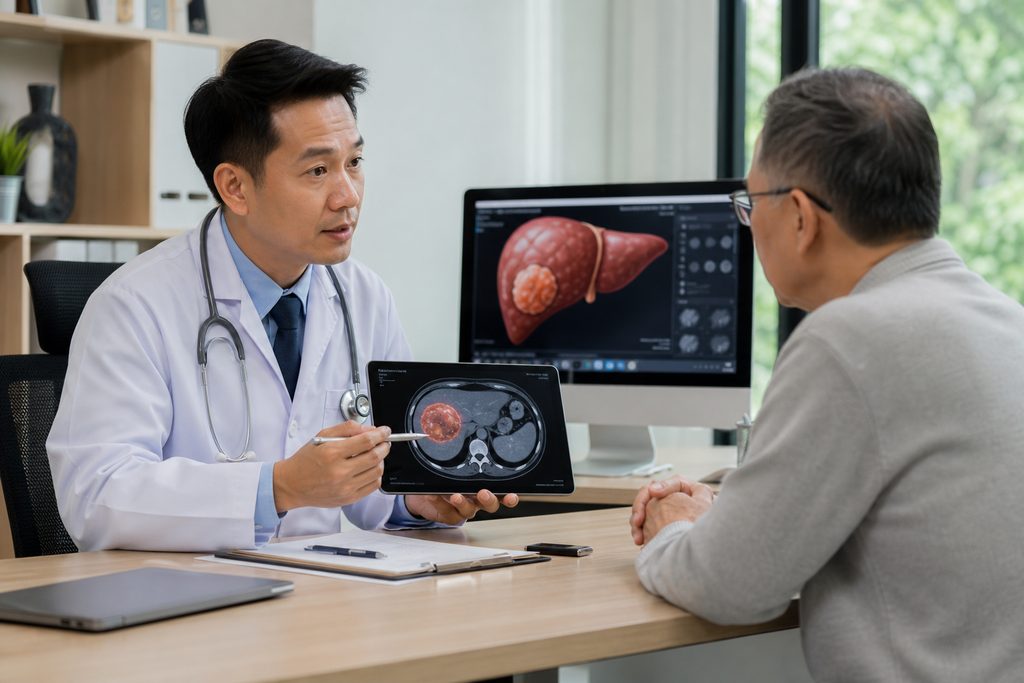
A cancer diagnosis arrives with a number attached. Stage 1. Stage 3B. Stage 4. Those digits shape everything that follows—treatment options, survival odds, and yes, the cancer staging cost China patients often ask us about. But here is what most people do not realize: staging is not a single test. It is a process. A careful assembly of imaging, pathology, and sometimes surgical findings that tells your medical team how far the disease has traveled and how aggressive it appears.
Understanding your stage gives you back some control. You learn the language. You ask sharper questions. You compare treatment plans across hospitals—including top-tier centers in Shanghai, Beijing, and Guangzhou—with confidence instead of confusion.
We help international patients navigate Chinese oncology care every day. This guide explains staging in plain terms, what each stage actually means, how doctors determine it, and what you should expect to pay if you pursue staging or a second opinion in China.
How This Actually Works, Step by Step
You have a biopsy result. Maybe you have a CT scan from a local hospital. The staging process builds on those pieces. Here is the real sequence:
Step 1: Pathology confirms the cancer type. A pathologist examines tissue under a microscope. They identify the cell type—adenocarcinoma, squamous cell, lymphoma. They also grade the tumor: how abnormal the cells look compared to normal tissue. Grade is not stage, but it feeds into the picture.
Step 2: Imaging maps the extent. CT scans of the chest, abdomen, and pelvis are standard. PET-CT adds metabolic information—cancer cells consume glucose differently than healthy tissue. MRI works better for brain, spinal cord, and certain liver lesions. Ultrasound helps with lymph nodes and some abdominal organs.
Step 3: The TNM system assigns letters and numbers. T describes the primary tumor size and invasion depth. N describes lymph node involvement. M describes distant metastasis. Each letter gets a number or category. T2N1M0, for example, means a moderately sized tumor, one regional lymph node group involved, no distant spread.
Step 4: The TNM combination converts to a stage group. Stage 0 through Stage 4, sometimes with subcategories like 3A or 3B. This grouped stage is what treatment guidelines reference.
Step 5: Your oncology team discusses treatment intent. Curative versus palliative. Surgery first or chemotherapy first. The stage drives that conversation. So does your overall health, organ function, and personal preferences.
What you send us: existing scans, pathology reports, blood work. What our partner hospitals review: those same documents, often through a formal written second opinion or video consultation. What comes back: a staging confirmation or revision, plus treatment recommendations tied to that stage.
How Do Doctors Determine Cancer Stage: The Tests Behind the Number
No single machine spits out a stage. Doctors assemble it from multiple sources. Understanding this helps you evaluate whether your staging was thorough.
Biopsy and surgical pathology. The foundation. Without tissue, there is no confirmed diagnosis, and staging remains provisional. A core needle biopsy or surgical excision gives pathologists enough material to determine cancer type, grade, and sometimes molecular markers.
Cross-sectional imaging. CT remains the workhorse. A contrast-enhanced CT of the chest, abdomen, and pelvis can identify the primary tumor, measure it, and flag suspicious lymph nodes or organ lesions. PET-CT adds functional data—areas of high glucose metabolism light up. That helps distinguish scar tissue from active tumor and catches metastases CT alone might miss. MRI provides superior soft-tissue contrast for brain, liver, and bone marrow evaluation.
Bone scans and targeted imaging. For cancers that commonly spread to bone—breast, prostate, lung—a technetium bone scan or PET-CT with a bone-seeking tracer may be ordered. Some cancers get specialized imaging: PSMA PET for prostate, DOTATATE PET for neuroendocrine tumors.
Tumor markers. Blood levels of proteins like CEA, CA 19-9, CA-125, or PSA provide supporting evidence. They are not diagnostic alone. But rising levels after treatment can signal recurrence, and very high levels at diagnosis sometimes correlate with advanced disease.
Surgical staging. Sometimes the operating room provides the final answer. A surgeon removes lymph nodes and the pathologist examines them. What looked like stage 2 on imaging becomes stage 3 after surgical pathology finds microscopic nodal spread. This is common in lung, gastric, and gynecologic cancers.
The sequence matters. Imaging before biopsy can guide the needle. Biopsy before treatment confirms what you are treating. Skipping steps leads to misclassification—and misclassification leads to the wrong treatment intensity.
What Does Stage 3 Cancer Mean Survival Rate: Reading the Numbers Honestly
Stage 3 means regional spread. The cancer has moved beyond the primary organ into nearby lymph nodes or adjacent structures, but has not yet reached distant organs. Treatment intent is still often curative, but the approach intensifies.
Survival rates vary enormously by cancer type. A stage 3 colon cancer carries a five-year survival rate around 65–70% with modern treatment. Stage 3 pancreatic cancer: below 15%. Stage 3 breast cancer: roughly 70–85% depending on subtype and response to neoadjuvant therapy. Those numbers come from large population databases—SEER in the United States, similar registries elsewhere. They reflect patients treated five or more years ago. Contemporary outcomes often run better because of immunotherapy, targeted agents, and better surgical technique.
Here is what the numbers do not tell you: your age, your performance status, your tumor’s molecular profile, your response to initial treatment. A 55-year-old with HER2-positive stage 3 breast cancer who achieves a pathologic complete response after chemotherapy faces very different odds than the population average suggests.
When patients ask us about what does stage 3 cancer mean survival rate, we tell them to treat statistics as a starting point, not a verdict. Then we help them get a precise, individualized assessment from a major oncology center.
A Realistic Timeline
International patients often underestimate how long staging and treatment planning take. Here is a realistic sequence if you pursue staging or a second opinion in China:
| Phase | What Happens | Realistic Duration |
|---|---|---|
| Week 1 | You send existing records: pathology slides, imaging CDs, blood work, clinical notes. We arrange certified translation into Chinese or English as needed. | 3–7 days for document collection and translation |
| Week 2 | The oncology department reviews your file. A written second opinion or video consultation is scheduled. | 5–10 days for written opinion; 7–14 days for video consultation slot |
| Week 3–4 | If the reviewing team recommends additional imaging—a PET-CT, a specialized MRI, a repeat biopsy—we coordinate scheduling at the hospital. | 3–10 days for imaging appointments at major centers |
| Week 4–6 | If you travel to China for in-person evaluation, S2 visa processing applies. Hospital international departments assist with invitation letters. | 2–4 weeks for visa processing, depending on your consulate |
| Month 2 | In-person consultation, additional testing, and multidisciplinary discussion. A final stage and treatment plan are confirmed. | 3–7 days on the ground for a focused staging workup |
| Month 3 | Treatment begins—surgery, chemotherapy, radiation, or combination—if you choose to proceed in China. | Varies by cancer type and stage |
People forget the document translation step. They forget that pathology slides sometimes need to be re-read. They forget visa processing time. Build those into your planning and the process feels far less chaotic.
What Can Go Wrong — and What Happens Then
Staging is not immune to error. Honest failure modes exist, and you should know them before spending money on a second opinion.
Incomplete initial staging. A local hospital without PET-CT may stage you as 2 when you are actually 4. The fix: request a full imaging review at a comprehensive cancer center. In China, the top oncology hospitals run PET-CT, 3T MRI, and molecular pathology in-house. A second read often revises the stage—sometimes up, sometimes down.
Discordant pathology. Two pathologists can disagree on tumor grade or subtype. The fix: send your pathology slides for a second opinion. Major Chinese oncology departments do this routinely for international patients. It costs a few hundred dollars and can change the entire treatment plan.
Language and record gaps. A report written in a language the reviewing team cannot read delays everything. The fix: use certified medical translation. Our team handles this before submission. Missing imaging sequences—no arterial phase on a liver CT, for example—can also limit interpretation. The fix: request the complete DICOM files, not just the printed report.
Over-staging from inflammation. PET-CT lights up infection and inflammation, not just cancer. A reactive lymph node can look like metastasis. The fix: experienced nuclear medicine physicians and oncologists review images in clinical context. This is where high-volume centers earn their reputation. They see thousands of these cases annually and know the pitfalls.
Under-staging from limited surgery. If too few lymph nodes were removed or examined, nodal status remains uncertain. The fix: a surgical oncologist may recommend re-resection or sentinel node mapping. Not always necessary, but worth discussing.
Best Oncology Hospital Shanghai for Staging: What to Look For
Shanghai hosts several of China’s strongest oncology programs. Fudan University Shanghai Cancer Center consistently ranks among the top institutions for cancer care nationwide. It handles enormous patient volumes—over 15,000 new cancer cases annually—which translates to deep experience with rare and complex presentations. The hospital runs dedicated multidisciplinary teams for lung, breast, gastrointestinal, and hematologic malignancies.
Zhongshan Hospital, affiliated with Fudan University, excels in liver cancer and interventional oncology. Ruijin Hospital, affiliated with Shanghai Jiao Tong University, carries particular strength in hematologic cancers and precision oncology. Each of these centers offers PET-CT, advanced molecular profiling, and international patient services.
When patients search for the best oncology hospital Shanghai for staging, we ask what cancer type they have. A liver cancer patient and a lymphoma patient may be better served by different centers. Our specialty rankings by department help match cancer type to hospital strength. The Fudan-ranked hospital database provides the underlying evidence.
What distinguishes a strong staging program: same-week access to PET-CT and MRI, in-house molecular pathology, multidisciplinary tumor boards that review every new case, and radiologists who specialize in oncologic imaging rather than reading everything. Ask about these specifics. They matter more than a hospital’s overall reputation.
Cancer Treatment Price by Stage China: What the Numbers Look Like
Costs vary by stage because treatment intensity varies. Early-stage cancers often need surgery alone. Locally advanced cancers need surgery plus chemotherapy and radiation. Metastatic cancers need systemic therapy, sometimes for years. Here is what international patients should expect at top Chinese public hospitals, based on current self-pay rates:
| Stage | Typical Treatment Approach | Estimated Cost Range in China (USD) | US Comparison (Approximate) |
|---|---|---|---|
| Stage 1 | Surgery alone; sometimes adjuvant therapy | $8,000–$25,000 | $60,000–$150,000 |
| Stage 2 | Surgery plus adjuvant chemo or radiation | $15,000–$40,000 | $100,000–$250,000 |
| Stage 3 | Multimodal: chemo, radiation, surgery, immunotherapy | $25,000–$60,000 | $150,000–$400,000+ |
| Stage 4 | Systemic therapy, targeted agents, palliative procedures | $30,000–$80,000 per year of therapy | $150,000–$300,000+ per year |
These figures are ranges, not quotes. Cancer treatment price by stage China depends on the hospital tier, the specific drugs used, whether you go through the international department or standard public channel, and your individual case complexity. Imported targeted therapies and immunotherapies cost more than domestically manufactured equivalents. Some Chinese hospitals now use domestic PD-1 inhibitors that cost a fraction of pembrolizumab or nivolumab while showing comparable efficacy in several cancer types.
The public hospital system requires prepayment. Private international hospitals like United Family or Jiahui bill differently and often work directly with insurers. We explain these mechanics before you commit to anything.
Can I Get a Second Opinion on Cancer Stage in Beijing: Yes, and Here Is How
Beijing offers the deepest concentration of top-tier oncology expertise in China. Peking Union Medical College Hospital (PUMCH), Cancer Hospital Chinese Academy of Medical Sciences, and Peking University Cancer Hospital all provide second opinion services for international patients. The question can I get a second opinion on cancer stage in Beijing comes up constantly from patients who received a diagnosis elsewhere and want confirmation before starting treatment.
The process works like this: you submit your existing records—pathology reports, imaging files, clinical summaries. We translate them into Chinese for the reviewing team. A specialist in your cancer type reviews everything. You receive a written report confirming or revising the stage, with treatment recommendations. If you want to speak with the specialist directly, a video consultation is arranged. Written second opinions from top Beijing specialists typically cost $300–500. Video consultations with senior specialists run $500–800. Multidisciplinary team reviews cost $1,500–2,000.
One thing worth knowing: any consultation fee you pay is credited in full toward on-the-ground coordination services if you later travel to China for treatment within 90 days. That credit applies to our coordination fee, never to hospital treatment charges. It makes the second opinion a low-risk first step.
Beijing’s advantage is depth. PUMCH alone sees over 2.2 million outpatient visits annually. Its oncology department handles rare cancers that smaller centers see once a year. When the stakes are high, that volume matters.
Practical Considerations: Records, Visas, Payment, and Follow-Up
Staging in China requires preparation. Here is what actually applies:
Medical records. Bring everything. Pathology slides, not just reports. Imaging on CD or DICOM files, not just printed summaries. Blood work trends. Prior treatment details. Chinese hospitals want primary data, not interpretations. If slides are unavailable, a repeat biopsy may be required—that adds time and cost.
Visa category. Medical travel to China uses the S2 visa, annotated for medical treatment purposes. Accompanying family members also apply for S2. The hospital’s international department provides an invitation letter and treatment confirmation to support your application. Processing takes two to four weeks at most consulates. M visas are for commercial trade, not medical care. Do not apply under the wrong category.
Payment. Public hospitals require prepayment for scheduled procedures and imaging. Insurance reimbursement happens after the fact—you pay first, then claim. Private international hospitals may bill insurers directly. We help you understand which model applies to your chosen hospital before you arrive.
Language. Top Chinese hospitals have international departments with English-speaking coordinators. But radiology, pathology, and nursing staff often speak Mandarin only. A bilingual medical companion—from $300 per day—handles registration, queue management, payment, and translation throughout your visit. It removes the single biggest practical barrier foreign patients face.
Follow-up at home. If you return home after staging or treatment, your Chinese oncology team provides a written summary and treatment plan. Your local oncologist implements it. Some patients return to China for periodic reassessment. Others continue entirely at home. The plan should be portable.
Frequently Asked Questions
Imaging is accurate for detecting distant metastases in most cases, but it can under-stage or over-stage regional disease. Surgical pathology often revises the stage. That is why multidisciplinary review matters. A radiologist, pathologist, and surgical oncologist should all weigh in before treatment begins.
Will a Chinese hospital accept my existing scans and pathology slides?
Yes, with conditions. The reviewing team needs original DICOM imaging files or high-quality CDs, not printed films. Pathology slides should be sent as formalin-fixed
For more medical information and treatment options in China, visit chinamedservices.com (China Medical Services).
