Acupuncture for Pain in China: How We Match You to a TCM Specialist
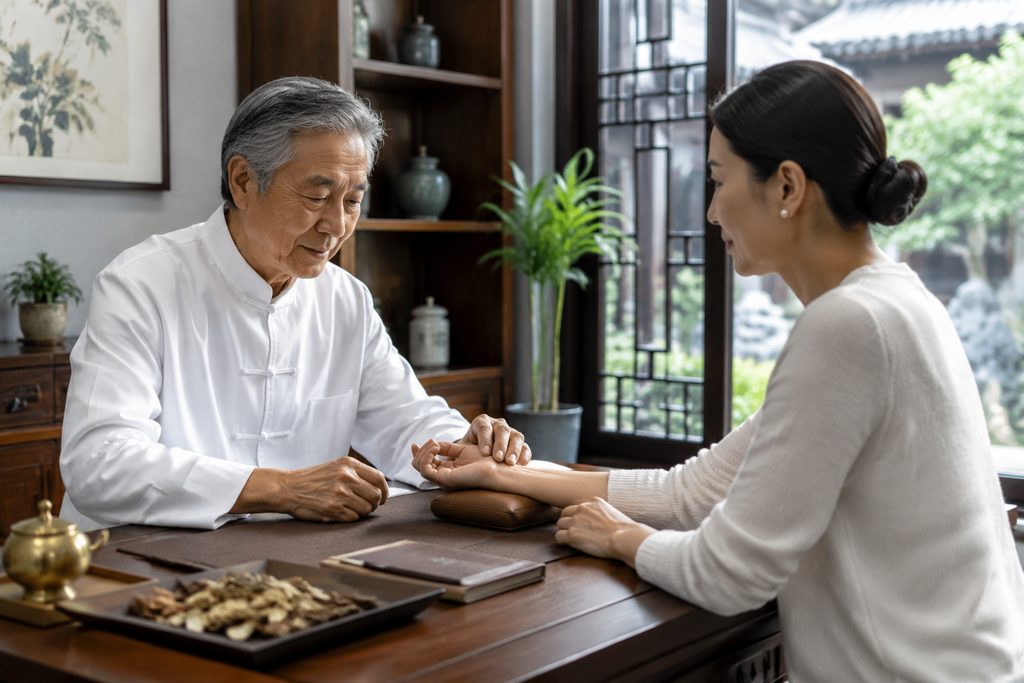
Have you ever wondered whether the acupuncture you can get at home is the same as what you would receive in a Chinese hospital? The short answer is no. The training standards, treatment frequency, and clinical integration differ sharply. And for many international patients, the acupuncture for pain cost China is a fraction of what they pay in the United States or Western Europe — often $30 to $80 per session at a public hospital, versus $75 to $150 in the U.S. But the real question is not just price. It is whether you can find a specialist who understands your specific pain condition and whether the logistics of booking treatment from abroad actually work.
This article explains how we match patients with accredited TCM pain specialists, what you can expect to pay, and how to think about safety and quality as a foreigner. We are not a hospital. We do not diagnose. We help you navigate a system that is excellent but not designed for English-speaking visitors.
Acupuncture for Pain in China: The Short Answer
Yes, acupuncture for chronic pain is widely available in China, and it is integrated into mainstream hospital care in a way that surprises many Western patients. You can book treatment at public TCM hospitals, private international clinics, or specialized pain departments. A typical session costs between $30 and $80 at a public hospital and $80 to $200 at a private international clinic. Treatment frequency is usually higher than in the West — often 3 to 5 sessions per week for acute flare-ups, then tapering.
The caveat: you cannot simply walk into a top-tier public hospital and request a specific senior specialist on day one. Public hospital outpatient clinics operate on a same-day registration system. You register, you queue, you see whoever is on duty that day. If you want a specific named specialist, or you want English-language coordination, you need to go through the hospital’s international department or use a coordination service. That is where the real value of planning ahead comes in.
Who This Is Right For — and Who It Isn’t
Acupuncture in China is best suited for patients with chronic pain conditions that have not fully responded to conventional treatment at home. We see the strongest interest from people with lower back pain, neck and shoulder tension, knee osteoarthritis, migraine, and fibromyalgia. The evidence base is not uniform — some conditions show stronger responses than others — but the clinical experience in Chinese hospitals is deep, simply because of volume.
Good candidates typically include:
- Adults with chronic musculoskeletal pain lasting more than three months
- Patients who have tried physical therapy or medication and want an adjunctive approach
- People already planning to be in China for work or family reasons who want to add treatment
- Those with realistic expectations about what acupuncture can and cannot do
Who should not pursue this:
- Anyone with an undiagnosed pain condition — you need a proper diagnostic workup first
- Patients with bleeding disorders or those on high-dose anticoagulants without medical clearance
- People with active skin infections at the needle sites
- Those seeking a guaranteed cure — no ethical practitioner will promise one
- Patients whose pain is a symptom of an untreated underlying disease, such as cancer or infection
If you are in the second list, staying home and getting a proper diagnosis first is the right call. Acupuncture is a treatment, not a diagnostic tool.
The Options, Compared
Where you get acupuncture in China matters as much as the treatment itself. The three main settings differ in cost, language support, and clinical environment.
| Setting | Typical Cost per Session | Language Support | Best For |
|---|---|---|---|
| Public TCM Hospital (Outpatient) | $30–$80 | Minimal English; bring a translator or companion | Cost-conscious patients comfortable with a busy clinical environment |
| Public Hospital International Department | $80–$150 | English-speaking coordinators | Patients who want senior specialists and smoother logistics |
| Private International Clinic (e.g., United Family, Jiahui) | $100–$200 | English-speaking staff, Western-style care | Patients who prioritize comfort, privacy, and direct insurance billing |
Public TCM hospitals offer the most authentic experience and the lowest prices. But the environment can be overwhelming — large crowds, fast-paced consultations, and almost no English signage. Private international clinics are more expensive but far easier to navigate. The international department of a public hospital sits in between: you get the clinical depth of a major institution with a layer of language support. Which one suits you depends on your budget, your tolerance for chaos, and how much hand-holding you want.
How We Match You to a TCM Pain Specialist
This is the part most people get wrong. They assume “best TCM pain clinic Shanghai” means one single place. It does not. The right clinic depends on your specific pain condition, your medical history, and your preferences for environment and language support. Our matching process works in three stages.
First, we ask you to send your existing medical records — imaging reports, blood work, any prior treatment notes. We translate and summarize these for the TCM department. This matters because Chinese physicians will want to see what has already been ruled out. If you have not had a proper Western medical workup, we will recommend you get one before traveling.
Second, we identify departments with documented expertise in your pain category. For example, a patient with knee osteoarthritis might be matched with the acupuncture and moxibustion department at a hospital known for orthopedic rehabilitation, while a patient with chronic migraine might go to a neurology-integrated TCM pain clinic. The TCM hospital directory on our site lists institutions by specialty focus, which helps narrow this down.
Third, we coordinate the appointment through the hospital’s international department or official booking channel. You get a named specialist, a confirmed time slot, and a bilingual companion if you want one. We never promise a specific outcome. We promise that the logistics will be handled properly.
What It Costs: Acupuncture for Pain Cost China, Explained
Let’s be concrete. At a public TCM hospital in Beijing, a standard acupuncture session for pain typically costs between 150 and 300 RMB, which is roughly $20 to $45. Add in cupping or moxibustion, and you might pay $40 to $70 total. The acupuncture price per session Beijing varies by hospital tier and whether you see a junior physician or a senior specialist. Senior specialists at top institutions can charge $60 to $100 per session, even in the public system.
Shanghai is similar. A best TCM pain clinic Shanghai search will surface institutions like Shuguang Hospital and Longhua Hospital, both affiliated with Shanghai University of Traditional Chinese Medicine. Sessions there run $30 to $70 for standard acupuncture. Private clinics in Shanghai, such as Parkway or Jiahui, charge $120 to $200 per session, but you get English-speaking staff, longer appointment times, and direct insurance billing.
What is not included in the session fee: initial consultation charges (often $20 to $50), any herbal medicine prescribed alongside acupuncture (typically $30 to $100 per week), and imaging if the doctor orders new scans. If you use our coordination service, that is a separate fee starting at $300 for appointment coordination, with bilingual companion support from $300 per day.
Compare this to the U.S., where a single acupuncture session averages $75 to $150, and a course of 10 to 12 sessions is standard. In China, the same course might cost $300 to $800. The savings are real, but they come with travel costs and the effort of navigating a foreign system. For some patients, the math works. For others, it does not.
Practical Considerations: Records, Visa, Payment, and Follow-Up
If you are serious about booking acupuncture treatment in China, here is what actually matters.
Medical records. Bring everything. Imaging CDs, written reports, medication lists, and any prior acupuncture or physical therapy notes. Chinese physicians will want to see the full picture. If your records are not in English, have them translated before you travel. We can handle this as part of our coordination service.
Visa. For medical treatment in China, the applicable short-stay visa category is S2, which covers private affairs including medical treatment. Family members accompanying you also apply for S2. You will need supporting documents from the hospital, such as an appointment confirmation or treatment invitation letter. Visa requirements change, so check with the Chinese embassy or consulate in your country before booking flights. We provide guidance, but we cannot guarantee visa approval.
Payment. Public hospitals in China require upfront payment. Most accept international credit cards at their international department counters, but not always at regular outpatient windows. Carry some cash or set up Alipay or WeChat Pay if you can. Private international clinics generally accept major credit cards and often bill insurance directly. If you have insurance, confirm whether acupuncture is covered and whether the clinic is in-network before you commit.
Language. Outside of international departments and private clinics, English is rare. Even in top-tier public hospitals, the acupuncture department staff may speak no English at all. If you go alone, bring a translation app and be prepared for frustration. If you want a smoother experience, a bilingual companion is worth the cost.
Follow-up after returning home. Acupuncture for chronic pain is rarely a one-and-done treatment. Most patients need a course of sessions, then maintenance. If you return home after two weeks of intensive treatment, you will need a plan for continuing care. Ask your Chinese physician for a written summary of the treatment protocol, including points used and frequency, so your local acupuncturist can continue the work.
Frequently Asked Questions
Yes, when performed by licensed practitioners in accredited hospitals. Chinese TCM doctors complete five to eight years of formal training, and acupuncture is regulated as a medical procedure, not a spa treatment. The main risks are minor — bruising, soreness, occasional dizziness. Serious complications like pneumothorax are rare but not zero. Choose a hospital-affiliated department rather than a storefront clinic, and disclose all medications, especially blood thinners.
The honest answer is that the mechanism is not fully understood. The dominant theory is that needle insertion modulates pain signaling in the central nervous system, possibly by triggering the release of endogenous opioids and altering activity in pain-processing brain regions. Clinical trials show modest but real benefits for conditions like chronic low back pain, knee osteoarthritis, and tension headache. It is not a placebo, but it is also not a cure. Expect symptom reduction, not resolution.
Yes, but the term “medical tourism” overstates what most patients actually do. You are not checking into a resort. You are attending outpatient appointments at a hospital, often daily or every other day for one to three weeks. That means you need accommodation near the hospital, a visa that covers medical treatment, and a realistic schedule. Some patients combine treatment with sightseeing, but the treatment itself is the priority. Our coordination service helps with the logistics, but you should plan for a working trip, not a vacation.
Most Chinese TCM physicians recommend an initial course of 8 to 12 sessions, delivered 3 to 5 times per week. Some patients report improvement after 3 to 5 sessions. Others need the full course before noticing any change. A minority do not respond at all. If there is no meaningful improvement after 10 sessions, a good practitioner will reassess rather than simply continuing. Be wary of anyone who promises results after a fixed number of sessions.
Your Next Step
Acupuncture in China is not magic, and it is not a bargain if you do not plan properly. It is a legitimate, evidence-supported treatment for certain chronic pain conditions, delivered by highly trained specialists at prices that remain far below Western equivalents. Our role is to make the process navigable. We are not a hospital, we do not diagnose, and we do not promise outcomes. We help you identify the right department, coordinate appointments, and get through the day with someone who speaks both languages.
If you are considering treatment, start by sending us your medical records and a short description of your pain condition. We will tell you honestly whether this is worth pursuing. Request a free consultation and we will respond within one business day.
For more medical information and treatment options in China, visit chinamedservices.com (China Medical Services).
