Is My Cancer Too Advanced to Travel? A Practical Guide to Seeking Treatment in China
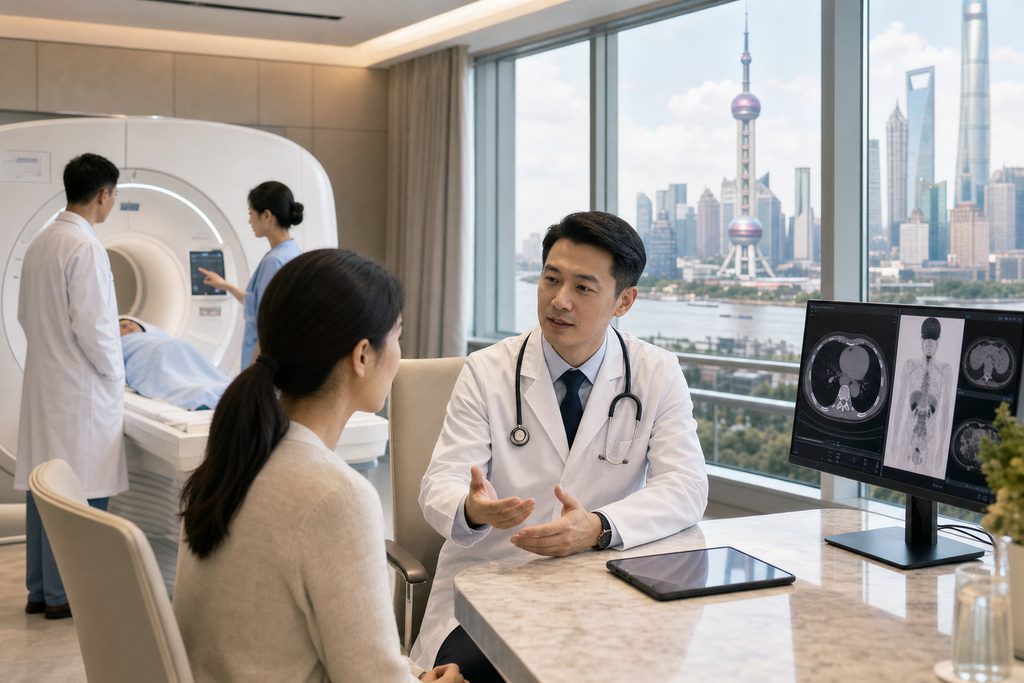
While a patient in the United States might wait three weeks for a PET-CT scan and an initial oncology consultation, a patient arriving at Fudan University Shanghai Cancer Center can often complete both within 48 hours. The cost difference is just as stark. Stage 4 cancer treatment cost China typically lands between 60% and 80% below comparable protocols in the US, UK, or Australia — even at the country’s top-ranked oncology centers. But cost and speed mean nothing if you cannot physically make the journey.
The question “Is my cancer too advanced to travel?” has no universal answer. It depends on your functional status, your current treatment cycle, your organ function, and the specific logistics of long-haul flight. Some patients with metastatic disease fly comfortably in business class with oxygen support. Others with the same diagnosis should not leave their local hospital. This guide walks through the real decision points — not the marketing version.
How This Actually Works, Step by Step
You do not book a flight, land in Shanghai, and walk into a hospital. The process starts weeks before any travel. Here is the real sequence our team uses with patients every month.
First, you send your existing medical records — pathology reports, imaging studies, blood work, current medication list, and a brief treatment history. We translate these into Chinese and route them to the oncology department at one or more hospitals from our network of 340+ top-ranked institutions. A specialist reviews the file. This is a written second opinion, priced from $300 to $500. It tells you whether a Chinese oncology team sees a meaningful treatment opportunity that your home team has not exhausted.
If the written review is encouraging, the next step is usually a video consultation with the treating department. You speak directly with the specialists. They explain their proposed approach, ask about your current symptoms, and assess whether travel is medically reasonable. This costs $500 to $800 for a top-specialist video consultation.
Only after this remote evaluation do you make a travel decision. If both sides agree that coming to China makes sense, we coordinate the S2 visa application, hospital registration, and on-the-ground logistics. The remote phase typically takes 10 to 14 days. The travel phase takes another 7 to 10 days for visa processing.
Is My Cancer Too Advanced to Travel? The Medical Criteria That Actually Matter
Oncologists do not use “advanced” as a travel disqualifier. They use functional status. The Eastern Cooperative Oncology Group (ECOG) performance scale is the standard tool. An ECOG score of 0 or 1 — fully active or restricted only in strenuous activity — generally permits air travel with precautions. An ECOG score of 3 or 4 — capable of only limited self-care or fully bedridden — usually rules out long-haul travel.
Specific complications matter more than the stage number. Uncontrolled pleural effusion makes cabin pressure changes unsafe. A hemoglobin below 8 g/dL means you may need a transfusion before flying. Recent brain metastases with edema require a neurologist’s clearance. Active infection, recent surgery within 10 to 14 days, or a platelet count below 50,000 all raise red flags.
But here is what surprises many patients: a stage 4 diagnosis alone rarely disqualifies you. What disqualifies you is instability. If your disease is progressing but your organ function is stable, you can often fly. If your disease is stable but your respiratory function is failing, you cannot.
So the honest answer to “can I fly with advanced cancer” is: probably yes, if your treating oncologist confirms that your oxygen saturation stays above 90% at rest, your pain is controlled, and you have no active bleeding or infection. You need a medical clearance letter. Most airlines also require one for passengers with visible illness or oxygen needs.
A Realistic Timeline
People consistently underestimate two things: document preparation and visa processing. Here is what a typical timeline actually looks like for an international patient seeking late stage cancer second opinion abroad and then traveling to China.
| Phase | What Happens | Realistic Duration |
|---|---|---|
| Days 1–3 | Collect and organize medical records, imaging files, pathology slides | 2–3 days (longer if requesting archived slides) |
| Days 4–7 | Professional translation of records into Chinese | 3–5 days |
| Days 8–14 | Written second opinion from Chinese oncology department | 5–7 days |
| Days 15–21 | Video consultation with treating team | 3–7 days (depends on specialist availability) |
| Days 22–28 | S2 visa application with hospital invitation letter | 5–10 business days |
| Days 29–35 | Flight booking, medical clearance letter, travel insurance | 3–5 days |
| Day 36+ | Arrival, hospital registration, initial face-to-face consultation | 1–2 days after landing |
Total realistic timeline from first contact to hospital arrival: 5 to 7 weeks. If you need to move faster, the written second opinion can be expedited to 3 days in some departments. But the visa timeline is fixed by the Chinese embassy or consulate in your country. No hospital can override that.
What Can Go Wrong — and What Happens Then
The most common failure point is incomplete medical records. If your pathology report is missing receptor status or molecular markers, the Chinese team cannot assess whether targeted therapy or immunotherapy is appropriate. They will ask for more information. That adds a week. The fix: request a complete medical record release from your home hospital before you contact anyone in China. Include every page, even the ones that seem irrelevant.
The second failure point is medical instability during travel. A patient may be cleared to fly on Monday and develop a fever on Wednesday. If you arrive in China and the admitting team finds uncontrolled infection or rapid clinical deterioration, they may decline to proceed with the planned treatment until you stabilize. That means an unplanned hospital stay — and unplanned costs.
The third failure point is expectation mismatch. Chinese oncology departments, even at the best oncology hospitals in China for international patients, do not promise cures. They offer protocols that may not be available or affordable in your home country. If your disease has exhausted all standard lines of therapy, a Chinese team will likely say so honestly. That is not a failure of the system. It is the system working correctly.
And if the written second opinion says there is no meaningful option in China? Then you have paid $300 to $500 to avoid a $15,000 trip that would not have helped. That is the cheapest insurance you can buy in this situation.
How Sick Is Too Sick to Travel for Cancer Treatment? Decision Criteria That Prevent Disasters
Ask yourself five questions before you book anything. Answer honestly.
Can you sit upright for six hours? Long-haul flights to China run 10 to 14 hours from Europe, 14 to 16 from North America. If you cannot sit upright for six hours at home, you cannot do it at 35,000 feet. Cabin pressure drops to the equivalent of 8,000 feet altitude. That reduces blood oxygen by 5 to 10 percentage points in healthy people. In a patient with lung metastases or anemia, the drop is worse.
Do you need oxygen at home? If yes, you need airline approval for in-flight oxygen. Most carriers require 48 to 72 hours’ notice and a medical form. Some charge for it. Some do not allow personal oxygen concentrators on certain aircraft. This must be arranged before ticketing.
Are you currently on intravenous therapy? If you are receiving daily IV chemotherapy or antibiotics, interrupting that schedule for travel requires your oncologist’s explicit plan. You cannot simply skip a week and resume in China. The new team needs to know exactly what you were receiving, at what doses, and when the last cycle ended.
What is your platelet count? Below 50,000, you are at risk for spontaneous bleeding. Cabin pressure changes do not cause bleeding, but turbulence, lifting luggage, and even walking through long airport terminals can. Below 30,000, most airlines will refuse boarding without a medical escort.
Who is traveling with you? A stage 4 patient should not fly alone. You need someone to manage medications, communicate with airline staff, and advocate for you if something goes wrong at 3 a.m. in a transit airport. If no one can travel with you, our bilingual medical companion service provides ground support in China — but it does not replace a family member or friend on the flight itself.
Practical Considerations: Records, Visa, Payment, and Follow-Up
That is a real possibility. The written second opinion is exactly that — an opinion. If the reviewing specialist concludes that your disease has exhausted the available protocols or that travel would be unsafe, you receive that conclusion in writing. The fee is not refundable, but it is significantly less than the cost of flying to China and discovering the same thing in person. This is the strongest argument for completing the remote evaluation before booking any travel.
Stage 4 cancer treatment cost China at a top public oncology hospital typically runs 60% to 80% below US prices for comparable protocols. Immunotherapy drugs, targeted therapies, and chemotherapy regimens are priced differently in China due to national drug procurement programs and local manufacturing. A course of PD-1 inhibitor therapy that costs $120,000 per year in the US may cost $20,000 to $35,000 in China. But prices vary by hospital, drug, and case complexity. Get a written quote after your records have been reviewed — never before.
Yes. If your ECOG performance status is 3 or 4, if you require intensive care, or if your treating team in your home country has documented that no further active treatment is indicated, a Chinese oncology department will almost certainly decline admission for active treatment. Some patients in this situation pursue integrative or palliative care through private international hospitals or traditional Chinese medicine programs. That is a different conversation with different expectations.
Public top-ranked hospitals — those on the Fudan ranking for oncology, such as Fudan University Shanghai Cancer Center, Peking Union Medical College Hospital, and Sun Yat-sen University Cancer Center — offer the deepest clinical expertise and the lowest prices. But they operate in Chinese and move at high volume. Private international hospitals offer English-speaking care, direct insurance billing, and a more familiar patient experience, at roughly 2 to 3 times the price. Some patients choose a hybrid: initial evaluation and treatment planning at a public hospital, then ongoing care at a private facility. We can help you compare both options based on your specific situation.
Your Next Step
The decision to travel for cancer treatment is not made in a single moment. It is made through a sequence of smaller decisions — and the first one costs nothing. Send us your medical records. We route them to the appropriate oncology department for a written review. If the review is favorable, we proceed step by step. If it is not, you have an honest answer from a top-ranked Chinese oncology team for the cost of a few hundred dollars.
China Medical Services has spent years building relationships with the oncology departments at China’s top-ranked hospitals. We do not treat cancer. We do not promise outcomes. We handle the logistics — translation, hospital matching, appointment coordination, visa guidance, and on-the-ground support — so you can focus on the medical decision in front of you. Start with a free consultation at our patient services page. Tell us your diagnosis, your current treatment status, and what you are hoping to find in China. We will tell you honestly whether it is worth pursuing.
The worst outcome is not being told no. The worst outcome is never asking the question.
Frequently Asked Questions
Yes. The hospitals used for international patients are JCI-accredited and follow the same international safety standards as top hospitals in the US and Europe. Surgical teams perform high volumes of procedures — often more than their Western counterparts — which studies show leads to better outcomes.
Costs vary by procedure and hospital, but international patients typically save 40-80% compared to US prices — even when factoring in travel and accommodation. A consultation with our team will give you an exact, all-inclusive quote with no hidden fees.
Send us your existing medical reports to get started. We handle everything from hospital selection and appointment scheduling to visa assistance and post-operative recovery planning. Your medical records are reviewed by the specialist before you even book a flight.
For more medical information and treatment options in China, visit chinamedservices.com (China Medical Services).
