Lung Cancer Surgery Recovery: A Real Timeline for International Patients
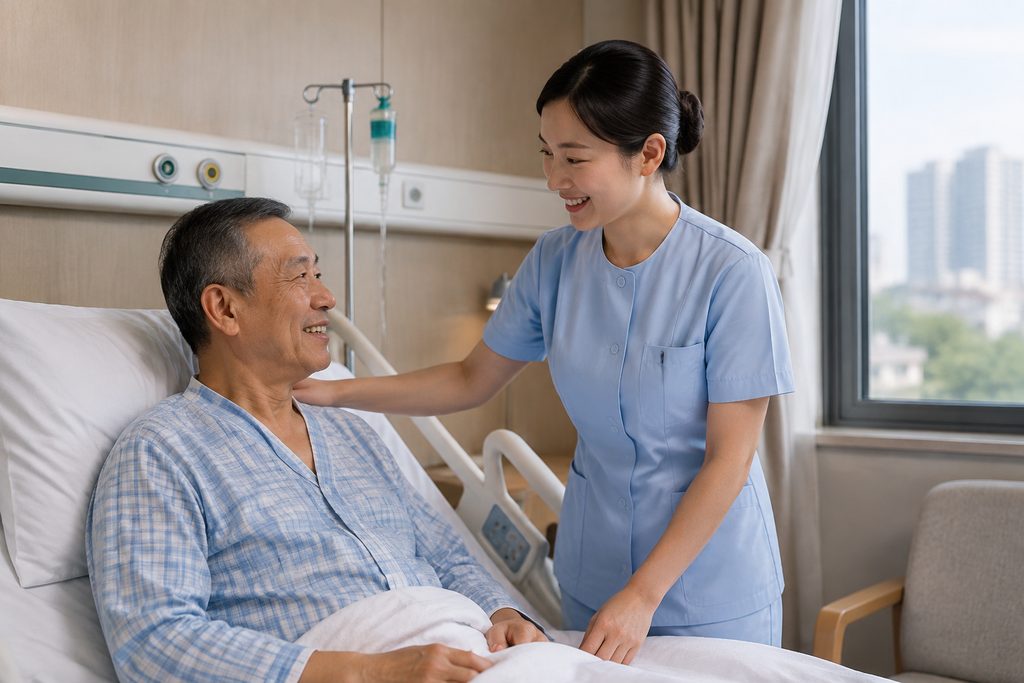
You have probably heard that recovering from lung cancer surgery abroad means navigating a foreign system alone, with no clear picture of what happens after you wake up. The reality is more structured than you might expect—if you know what to ask and where to look. For many international patients, the decision to have a lobectomy or segmentectomy in China comes down to two questions: what will it cost, and how long before I feel like myself again. The answer to the second question is rarely a single number. Recovery moves in stages, and those stages are remarkably consistent whether you have surgery in Houston, Berlin, or Shanghai. What differs is the system around you—the follow-up cadence, the cost of each phase, and the practical support available when you are 7,000 miles from home.
Key Takeaways
- Lung cancer surgery in China typically costs $12,000–$25,000 for a lobectomy at a top-tier public hospital, compared to $80,000–$150,000 in the United States.
- Most patients stay in the hospital for 5–10 days after open thoracotomy and 3–5 days after VATS (video-assisted thoracoscopic surgery).
- Full physical recovery takes 6–12 weeks; returning to desk work is often possible at 4–6 weeks, but heavy lifting must wait.
- International patients need an S2 visa for medical treatment, and recovery support in China requires planning for language barriers and follow-up logistics.
The Problem: Recovery Is Predictable, but the System Around It Is Not
Lung cancer remains the leading cause of cancer death worldwide, with approximately 2.2 million new cases diagnosed annually according to the World Health Organization. For the roughly 20–25% of patients diagnosed at an early enough stage to qualify for surgery, resection offers the best chance of long-term survival. But surgery is only the first chapter. The weeks after discharge—managing pain, rebuilding lung capacity, watching for complications—are where recovery actually happens. And for patients who travel internationally for surgery, that chapter gets complicated.
An American patient who flies to Shanghai for a lobectomy does not have the luxury of calling their local pulmonologist three days after discharge. A patient from Dubai considering surgery in Guangzhou needs to know whether their insurance will reimburse a hospital that requires prepayment. These are not hypothetical concerns. They are the daily reality of cross-border surgical care. The clinical recovery timeline is well documented. The logistical timeline—visas, follow-up imaging, medication refills, translation of discharge summaries—is where patients get lost.
Why China Delivers Comparable Surgical Outcomes at a Fraction of the Cost
The surgical treatment of lung cancer in China’s top-tier hospitals follows the same evidence-based protocols used in North America, Europe, and Japan. The National Comprehensive Cancer Network (NCCN) guidelines are widely referenced. Minimally invasive VATS and robotic-assisted techniques are standard at major thoracic surgery centers. What differs is volume, cost structure, and the concentration of expertise in a small number of very large hospitals.
Clinical Volume Drives Technical Proficiency
Thoracic surgeons at China’s busiest centers perform hundreds of lung resections annually. A surgeon at a major cancer hospital in Shanghai or Beijing may complete more lobectomies in a single year than a typical Western thoracic surgeon performs in five. That volume matters. Multiple studies, including a 2017 analysis in the Journal of Thoracic Oncology, have linked higher surgeon and hospital case volume to lower perioperative mortality and fewer complications in lung resection. Volume is not a guarantee of quality. But it is a structural advantage that is hard to replicate in lower-volume settings.
Minimally Invasive Surgery Is the Default, Not the Exception
At leading Chinese thoracic surgery departments, VATS lobectomy has been the standard approach for early-stage non-small cell lung cancer for over a decade. The technique uses three small incisions instead of a large thoracotomy, which means less postoperative pain, shorter chest tube duration, and faster discharge. Some centers now perform uniportal VATS—a single 3–4 cm incision. The recovery difference is significant: patients who undergo VATS typically leave the hospital 2–4 days sooner than those who have open surgery, and they return to normal activity approximately 2 weeks earlier. For an international patient, that difference also means a shorter stay in a foreign country and lower lodging costs.
Lung Cancer Surgery Cost China: Why the Price Gap Exists
The lung cancer surgery cost China hospitals charge is not lower because of lower standards. It is lower because of structural economics. Physician salaries in China are a fraction of those in the United States. Hospital administrative overhead is leaner. Malpractice insurance costs are dramatically lower. And the sheer scale of patient volume allows fixed costs to be spread across far more procedures. A lobectomy at a top-tier Chinese public hospital typically ranges from $12,000 to $25,000, depending on the hospital, the surgeon’s seniority, and whether the case is handled through the international or VIP department. The same procedure in the United States averages $80,000 to $150,000 before insurance. Even accounting for international travel and lodging, the total cost of surgery in China is often one-fifth to one-tenth of the US price. The savings are structural, not a reflection of compromised care.
Week-by-Week Recovery After Lung Cancer Surgery
Recovery from lung resection is not linear. Some days feel better than the previous one; some weeks plateau. What follows is a realistic timeline based on typical recovery after VATS lobectomy—the most common procedure for early-stage lung cancer—with notes on where open thoracotomy recovery diverges. Individual timelines vary by age, preoperative lung function, and the extent of resection.
Days 1–3: In the Hospital
You will wake up with a chest tube in place to drain fluid and air from the pleural space. Pain is managed with a combination of regional anesthesia (often an epidural or paravertebral block) and oral or intravenous medication. A respiratory therapist or nurse will start you on incentive spirometry—a device that encourages deep breathing—within hours of surgery. Walking begins on day one or two, even if it is just a few steps around the bed. The chest tube is usually removed on day 2 or 3, once drainage slows and there is no air leak. Most patients are eating a normal diet by day 2.
Days 4–7: Discharge and the First Days Out
For VATS patients, discharge typically happens on day 3 to 5. Open thoracotomy patients stay 5 to 10 days. Before leaving, you should receive a written discharge summary, a medication list, and clear instructions on wound care and activity restrictions. The first days at home—or in a hotel, for international patients—are the hardest. Fatigue is profound. Sleep is fragmented. Pain is manageable but persistent. You will need help with cooking, laundry, and transportation. Most patients are walking 10–15 minutes twice a day by the end of the first week. That walking is not optional. It is the single most important thing you can do to prevent pneumonia and rebuild lung capacity.
Weeks 2–4: The Frustrating Middle
This is the phase where patients often feel they are not progressing fast enough. Incision pain has improved but is still present, especially with deep breaths, coughing, or reaching. Some patients describe a strange sensation of “air hunger” or tightness in the chest. That is normal as the remaining lung tissue expands to fill the space left by the removed lobe. By week 3, many patients can walk 30 minutes at a time. Desk work may be possible at week 3 or 4 for VATS patients, though concentration and stamina are reduced. Driving is usually permitted once you are off narcotic pain medication and can move comfortably—typically around week 3 or 4. But check with your surgeon.
Weeks 5–8: Returning to Normal Activity
By week 6, most VATS patients are back to most non-strenuous daily activities. Pain is intermittent rather than constant. Lung capacity continues to improve, though it may not return to 100% of preoperative levels—a lobectomy removes roughly 15–20% of total lung volume, and the remaining tissue compensates over time. Light exercise such as swimming, cycling, or jogging can often resume at 6–8 weeks with surgical clearance. Heavy lifting, contact sports, and strenuous manual labor should wait until at least week 8–12, and only after your surgeon confirms the incision and chest wall have healed adequately.
Weeks 9–12 and Beyond: The Long Tail
Full physical recovery takes 3 to 6 months for most patients. Fatigue may linger for that entire period. Some patients report that they feel “80% back to normal” at 3 months and “95%” at 6 months. The final 5%—the occasional twinge at the incision site, a slight reduction in high-intensity exercise tolerance—can take a year or more. For patients who had open thoracotomy rather than VATS, every phase of this timeline shifts later by approximately 2–3 weeks, and post-thoracotomy pain syndrome (persistent nerve pain) affects roughly 30–50% of patients to some degree.
Is Lung Cancer Surgery Safe in China? What the Data Shows
The question “is lung cancer surgery safe in China” deserves a direct answer. At top-tier hospitals—those ranked in the Fudan University Hospital Rankings or accredited by JCI—perioperative mortality rates for lung resection are comparable to those reported in Western centers, typically below 1–2% for lobectomy in appropriately selected patients. The key qualifier is “top-tier.” China has over 35,000 hospitals, and the quality gap between the best and the average is wider than in most Western countries. The top 5% of hospitals—those in the Fudan top 100 or with international accreditation—perform at a level that meets or exceeds international benchmarks. Below that tier, outcomes are more variable.
For international patients, the practical implication is simple: hospital selection matters more than country selection. A lobectomy at a high-volume thoracic surgery center in Shanghai is a different experience from the same procedure at a lower-tier provincial hospital. Our team maintains a database of 340+ top-ranked hospitals across 37 Chinese cities, filtered by specialty reputation and international patient experience. The safety question is not really about China. It is about which hospital in China.
How Long Does It Take to Recover from Lung Cancer Surgery? Planning Your Stay Abroad
If you are traveling to China for surgery, the recovery timeline has a second layer: how long you need to stay in the country before flying home. Most thoracic surgeons recommend that international patients remain in the same city as the hospital for at least 2–3 weeks after discharge. That allows for early follow-up, chest X-ray, and management of any early complications such as persistent air leak, wound infection, or arrhythmia. Flying is generally safe after 2–3 weeks for uncomplicated VATS cases, but you should get explicit clearance from your surgeon before booking a return flight. Long-haul flights increase the risk of deep vein thrombosis, and cabin pressure changes can be uncomfortable in the early recovery period.
For patients who want to combine surgery with a structured recovery period, some international departments offer packages that include hospital care, hotel accommodation, and scheduled follow-up visits. The phrase “book lung cancer surgery package China” reflects a real option, but it is important to understand what a package includes. Most packages cover hospital fees, surgeon fees, and basic coordination. They do not typically cover complications, extended stays, or rehabilitation services. Read the fine print. Ask what happens if you need to stay an extra week. Get the answer in writing.
Practical Considerations: Visas, Payment, and Follow-Up After You Fly Home
International patients traveling to China for medical treatment apply for an S2 visa, which covers short-term private affairs including medical treatment. The S2 visa is typically issued for stays of up to 180 days. Accompanying family members also apply for S2 visas. You will need supporting documents from the treating hospital, including an invitation letter or treatment confirmation, to include with your application. Requirements vary by embassy and consulate, so check with the Chinese diplomatic mission in your country before applying. The M visa is for commercial and trade activities and is not appropriate for medical travel.
Payment is another practical hurdle. Chinese public hospitals generally require prepayment or staged payment during treatment. Most do not bill international insurance directly—you pay out of pocket and submit claims for reimbursement afterward. Private international hospitals in China, such as those in the JCI-accredited private hospital network, often have direct billing arrangements with major international insurers. That convenience comes at a price premium, typically 1.5 to 2 times the cost of a public hospital’s international department. The trade-off is real: lower cost with more paperwork, or higher cost with smoother insurance handling.
After you return home, continuity of care becomes the challenge. You need a local physician who can review your Chinese discharge summary, manage ongoing pain medication, and order follow-up imaging on the recommended schedule. Most Chinese hospitals will provide discharge documents in English upon request, especially through their international departments. But the quality of translation varies. Having a bilingual medical companion review your discharge summary before you leave can prevent confusion later. The same applies to pathology reports, which are critical for determining whether adjuvant chemotherapy is needed.
Frequently Asked Questions
For a VATS lobectomy at a top-tier public hospital’s international department, expect to pay $12,000 to $25,000. That typically covers the surgeon’s fee, anesthesia, operating room, hospital stay, and routine pathology. It does not include travel, lodging, or extended rehabilitation. Private international hospitals charge more—typically 1.5 to 2 times the public international department rate—but offer direct insurance billing and fully English-speaking staff. Final pricing always varies by hospital and case complexity.
Most thoracic surgeons recommend waiting at least 2 to 3 weeks after an uncomplicated VATS lobectomy before flying. For open thoracotomy, the recommended wait is longer—often 4 to 6 weeks. The concern is not just comfort; it is the risk of deep vein thrombosis on long flights and the possibility of a delayed complication such as a persistent air leak. Get written clearance from your surgeon before booking a return flight, and consider compression stockings and mobility during the flight.
This is the hardest question for any international patient. The honest answer is that cross-border surgical care carries a real coordination risk. If a complication arises after you leave China, you will need a local physician who is willing to take over your care. That physician will need access to your operative report, pathology results, and discharge summary. Before you leave China, request a complete copy of your medical records in English. Some patients also arrange a video consultation with their Chinese surgeon at the 4–6 week mark to review recovery progress remotely. It is not a substitute for local care, but it helps bridge the gap.
For lung cancer surgery, the strongest centers are concentrated in Beijing, Shanghai, and Guangzhou. Several hospitals in these cities are ranked among China’s top 10 for thoracic surgery or oncology in the Fudan specialty reputation rankings. The thoracic surgery department rankings on our site provide a starting point. Beyond rankings, consider case volume, the availability of VATS and robotic surgery, and whether the hospital has a dedicated international patient department. A hospital that performs 1,000 lung resections a year is a different experience from one that performs 100.
In most public hospitals, surgery cannot be booked sight unseen. The standard pathway is: remote review of your imaging and records, a video consultation with the thoracic surgery team, then travel to China for an in-person evaluation. If the surgeon confirms that surgery is indicated and you are a suitable candidate, the procedure is scheduled. Some hospitals and coordination services offer packages that bundle hospital fees, lodging, and follow-up, but the clinical evaluation always comes first. Be wary of any arrangement that promises a surgery date without a prior medical review.
Your Next Step
Recovery from lung cancer surgery follows a predictable path—what varies is the system around you. If you are weighing surgery in China, the most useful thing you can do right now is get an honest assessment of whether your case is suitable for treatment here, and what the full timeline would look like from first contact to final follow-up. We are not a hospital and we do not provide diagnoses or medical advice. What we do is help international patients navigate the Chinese healthcare system—from hospital matching to bilingual support on the ground. If you would like to discuss your specific situation, request a free consultation and our team will help you understand your options without obligation.
The decision to have major surgery abroad is never simple. But it becomes much clearer when you have accurate information about cost, recovery, and the practical steps in between. That is what we aim to provide—no pressure, just clarity.
For more medical information and treatment options in China, visit chinamedservices.com (China Medical Services).
