Chemotherapy After Surgery: Will You Need It and What It Costs in China
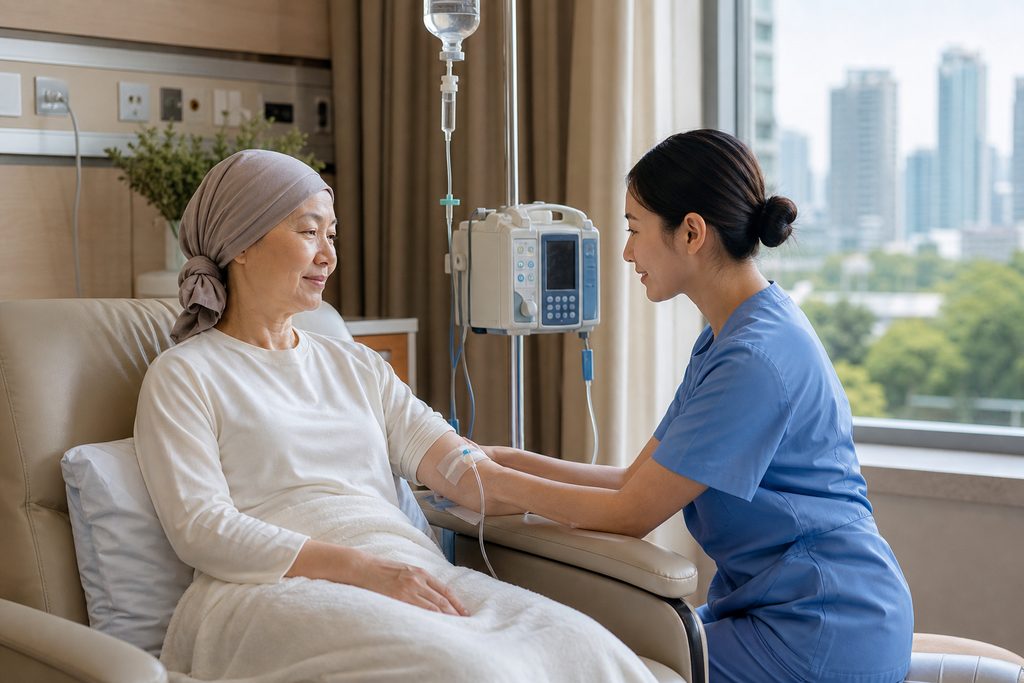
You have just come through surgery. The tumor is out. The pathology report sits on the table. And the question you cannot shake is: will I need chemotherapy after my surgery? The honest answer is that for many solid tumors, roughly 30% to 60% of patients will be recommended some form of post-operative systemic therapy. But that number swings wildly depending on what the pathologist found under the microscope. The decision is rarely a coin flip. It is driven by specific biological markers, lymph node status, tumor grade, and the surgical margins. That is the short version.
But here is what makes this question so difficult: “adjuvant chemotherapy” is not one thing. It can mean four cycles of a well-tolerated doublet. It can mean a year of targeted therapy. It can mean hormonal treatment instead of chemo. And the recommendation you receive in one country may differ from what an oncologist in another country would say. That is not because one doctor is wrong. It is because oncology guidelines are interpreted through local drug availability, cost structures, and clinical culture. Patients who understand this nuance make better decisions. Patients who treat chemo as a yes-or-no question often end up regretting how they framed it.
Will I Need Chemotherapy After My Surgery? The Short Answer
No, not automatically. Surgery alone cures a large share of early-stage cancers. If your tumor was small, low-grade, node-negative, and removed with clear margins, your oncologist may recommend observation only. That means scans and bloodwork on a schedule, no chemo. For stage I breast cancer without high-risk features, the chance of being spared chemo is high. For stage II colon cancer without lymph node involvement, many patients avoid it too. So the first thing to know is that “surgery then chemo” is not a default sequence. It is a treatment decision made after pathology review.
But when the pathology shows aggressive features — positive lymph nodes, lymphovascular invasion, high Ki-67, HER2 positivity, or a high Oncotype DX score — the recommendation usually shifts. In those cases, chemotherapy after surgery is offered to reduce the risk of distant recurrence. The benefit is real but often modest in absolute terms. A regimen might lower ten-year recurrence risk from 20% to 12%. That is an 8 percentage point absolute benefit. Whether that justifies months of treatment is a conversation you need to have with a medical oncologist who knows your full case.
And that is where a second opinion becomes valuable. Not because your first doctor is wrong. Because the stakes are high and the guidelines have gray zones. A written second opinion from a top oncology team can confirm the recommendation, refine the regimen, or occasionally change the plan entirely. We have seen all three outcomes. The point is not to shop for a “no chemo” answer. The point is to know, with evidence, why chemo is or is not being recommended for your specific tumor biology.
Who This Is Right For — and Who It Isn’t
Adjuvant chemotherapy is most clearly indicated for patients whose cancer has a meaningful risk of recurrence that chemo can actually reduce. That risk is calculated from pathology, not from how you feel. You may feel completely fine after surgery. The pathology may still show a tumor that shed cells into lymph nodes or blood vessels.
Typically good candidates for post-surgery chemo include:
- Patients with positive lymph nodes in breast, colon, gastric, or lung cancer
- Patients with triple-negative breast cancer larger than 5 mm, regardless of node status
- Patients with HER2-positive breast cancer larger than 5 mm
- Patients with stage III colon cancer
- Patients with high-grade, large, or node-positive tumors where chemo has proven survival benefit
Who should not rush into chemo? Patients with very low-risk tumors where the absolute benefit is under 2% or 3%. Patients with significant organ dysfunction where chemo toxicity may outweigh benefit. Patients with stage I hormone-positive breast cancer and a low genomic recurrence score. And patients who have not yet had a full pathology review. No one should start chemo based on a verbal summary of the pathology report. You need the full written report, ideally reviewed by two independent oncologists.
Also worth saying: some patients seek chemo because they want to “do everything possible.” That instinct is understandable. But doing everything is not always the same as doing the right thing. Toxicity is real. Neuropathy, cardiac damage, secondary leukemia, cognitive impairment — these are not rare footnotes. They are the price of some regimens. A good oncologist will tell you when that price is too high for the expected benefit.
How to Know If You Need Chemo After Operation: The Decision Factors
So how do oncologists actually decide? The answer is a checklist of pathology and clinical factors. None of them alone decides the question. Together they paint a picture of recurrence risk.
The factors that matter most:
- Lymph node status: Node-positive disease usually means chemo is recommended. Node-negative disease often means further testing is needed.
- Tumor size: Larger tumors carry higher risk. The cutoff varies by cancer type.
- Grade: High-grade tumors divide faster and spread more readily.
- Hormone receptor status: ER-positive tumors may respond to endocrine therapy alone. ER-negative tumors often need chemo.
- HER2 status: HER2-positive tumors almost always warrant targeted therapy plus chemo.
- Genomic assays: Tests like Oncotype DX or MammaPrint for breast cancer, or ctDNA testing for colon cancer, can refine the risk estimate.
- Surgical margins: Positive margins mean residual disease. Chemo may be part of the salvage plan.
- Patient age and performance status: Chemo is harder on frail patients. The same pathology may lead to different recommendations in an 80-year-old versus a 50-year-old.
If you are asking “how to know if I need chemo after operation” without a full pathology report, the answer is you cannot. Not reliably. Anyone who gives you a definitive answer without seeing your receptor status, node count, and margin report is guessing. That is why the first step after surgery is always the same: get the complete pathology. Then get an oncologist to interpret it. Then, if the recommendation is borderline, get a second interpretation.
Do I Need Chemo After Mastectomy in China? Context Matters
This is a question we hear often from international patients considering treatment in China. The short answer: the biology of your tumor does not change when you cross a border. A triple-negative breast cancer in Chicago is still triple-negative in Shanghai. The indications for chemotherapy after mastectomy are based on the same international guidelines — NCCN, ASCO, ESMO — that oncologists in China use.
But the application of those guidelines can differ. Chinese oncology departments at top-tier hospitals treat enormous volumes of breast cancer. A single breast surgery department at a major Shanghai hospital may perform more mastectomies in a year than many Western centers do in five. That volume creates clinical confidence. It also means the oncologists have seen the full spectrum of recurrence patterns. In borderline cases, a high-volume Chinese oncologist may lean toward chemo more readily than a Western oncologist who sees fewer cases. Or they may lean away from it, depending on the tumor subtype and the genomic data.
The practical question for international patients is not “do I need chemo after mastectomy China” as if China has different rules. The question is whether you can get a high-quality, evidence-based recommendation from a Chinese oncology team that has reviewed your pathology. And the answer is yes. A medical oncology second opinion from a top Chinese hospital can be obtained remotely. You send your pathology report, surgical notes, and imaging. The oncology team reviews them and issues a written opinion. That opinion will tell you whether they would recommend chemo, which regimen, and why. It is not a prescription. It is a documented clinical judgment you can take back to your local oncologist.
Chemotherapy After Surgery Cost in China: What to Expect
Now the practical part. If you are considering adjuvant chemotherapy in China, what does it cost? The honest answer is that it depends heavily on the regimen. Generic regimens based on older drugs cost far less than regimens built around newer targeted agents or immunotherapies. But as a reference point, a standard four-cycle adjuvant regimen for breast or colon cancer at a top-tier Chinese public hospital typically ranges from $6,000 to $20,000 for the full course. That includes drug costs, administration fees, and basic supportive care. It does not include hospitalization if complications arise, and it does not include the cost of genomic testing if that has not already been done.
| Adjuvant Chemotherapy Regimen | Typical Duration | Estimated Cost in China (USD) | Estimated Cost in the USA (USD) |
|---|---|---|---|
| AC-T (breast, standard) | 8 cycles / ~20 weeks | $8,000 – $15,000 | $40,000 – $80,000 |
| FOLFOX (colon) | 12 cycles / ~24 weeks | $10,000 – $20,000 | $60,000 – $120,000 |
| TC (breast, low-risk) | 4 cycles / ~12 weeks | $6,000 – $10,000 | $25,000 – $50,000 |
| Carboplatin + Paclitaxel (lung/ovarian) | 4–6 cycles | $7,000 – $14,000 | $35,000 – $70,000 |
These are ballpark figures, not quotes. The final number depends on the hospital tier, whether you use the international department or the standard public channel, and whether your regimen includes targeted therapy. Adding trastuzumab for HER2-positive breast cancer, for example, can add $15,000 to $30,000 to the total. Adding immunotherapy for certain colon or lung cancers adds far more. The point of the table is not to promise a specific price. It is to show the structural difference. The same drugs, the same protocols, the same monitoring — at a fraction of the Western price.
If you want a more precise estimate for your specific regimen, the first step is a remote consultation with an oncology team. They can review your pathology, propose a regimen, and provide a written cost estimate based on current drug prices at their hospital. That estimate will be far more useful than any number in this article.
Post Surgery Chemotherapy Price in Shanghai: What Drives the Variance
Shanghai is often the first city international patients consider. It has excellent hospitals, direct flights from most major hubs, and a large expatriate community. The post surgery chemotherapy price in Shanghai varies more by hospital type than by anything else.
At a public top-tier hospital like Fudan University Shanghai Cancer Center or Zhongshan Hospital, the international department will charge 1.5 to 2 times the standard public rate. That premium buys you English-speaking coordination, faster scheduling, and a more comfortable infusion environment. The drug costs are the same. The markup is on the service layer. A full adjuvant course that costs $10,000 in the public channel might run $15,000 to $20,000 in the international department. Still dramatically cheaper than the United States.
At a private international hospital like Jiahui or Parkway, the price rises again. Those facilities offer Western-style care, direct insurance billing, and English-speaking staff throughout. A four-cycle adjuvant regimen there might range from $20,000 to $40,000. That is still below typical U.S. prices, but the gap narrows. The choice between public international departments and private international hospitals depends on your insurance, your comfort needs, and how much coordination support you require.
What is not included in any of these numbers: accommodation, flights, visa fees, and the cost of a bilingual medical companion if you need one. Those logistics add up. But even with them, the total cost of receiving adjuvant chemotherapy in China typically lands at 30% to 50% of the U.S. equivalent. That is why some patients choose to have surgery at home and fly to China for the chemo phase. The pathology is done. The regimen is known. The only question is where to sit in the infusion chair.
Medical Oncologist Second Opinion Cost Abroad: Is It Worth It?
A medical oncologist second opinion cost abroad is one of the lowest-cost, highest-value interventions in oncology. We are talking about $300 to $800 for a written second opinion from a top Chinese oncology department. That is less than the cost of one infusion of almost any chemo drug. Yet it can change the entire treatment plan.
What do you get for that money? You send your complete records — pathology report, surgical summary, imaging discs, lab results. The oncology team reviews them in a formal process. You receive a written document that addresses the specific question: is adjuvant chemotherapy indicated for this patient? If yes, which regimen and why? If no, what is the evidence for observation? The document is signed by the reviewing oncologist and stamped by the hospital’s international department. It is not a prescription. It is a professional medical opinion, documented and deliverable.
Some patients worry that a Chinese oncologist will simply rubber-stamp whatever the Western doctor said. In our experience, that is not what happens. Chinese oncologists at Fudan-ranked hospitals are trained on the same international literature. They attend the same conferences. They publish in the same journals. What they bring is a different clinical volume and a different cost environment. That means they are sometimes more willing to recommend a standard regimen that a Western oncologist might skip due to cost concerns. Or they may recommend a shorter course based on Asian clinical trial data that Western doctors are less familiar with. The second opinion is not about finding a doctor who agrees with you. It is about finding out what another highly qualified team would do with the same facts.
We have seen second opinions change regimens, change durations, and occasionally change the verdict from “chemo recommended” to “observation reasonable.” We have also seen them confirm the original plan, which is valuable in its own way. Peace of mind has a price. In this case, it is a few hundred dollars.
Practical Considerations: Records, Visas, and Follow-Up
If you are seriously considering chemotherapy in China, the logistics are manageable but not trivial. The first requirement is a complete medical record. That means the full pathology report with receptor status and node count, the operative note, discharge summary, and all imaging on CD or cloud link. Without these, no Chinese hospital will schedule you for anything. The records must be translated into Chinese for the public channel, though international departments often accept English-language records.
Visa is the next step. For medical treatment in China, the applicable short-stay category is the S2 visa, annotated for medical purposes. Family members accompanying you also apply for S2. The hospital’s international department will issue an invitation letter and treatment confirmation that you submit with your visa application. The process takes a few weeks in most countries. We handle the coordination between the hospital and the embassy, but the embassy makes the final decision. No one can guarantee visa approval. What we can do is make sure the documentation is complete and correctly formatted, which is where most applications fail.
Payment is another consideration. Chinese public hospitals generally require prepayment for each chemo cycle. You deposit funds at admission, and the hospital deducts as treatment proceeds. Private international hospitals may bill your insurance directly, but public international departments typically do not. You pay, then claim reimbursement from your insurer. Some insurers are familiar with this model. Others are not. Check before you commit.
Follow-up after returning home is also part of the plan. Chemo is not a single event. It is a course lasting three to six months. You need bloodwork before each cycle, imaging at the midpoint, and a final assessment at the end. If you do the full course in China, plan to stay for the duration. If you split it — start at home, continue in China — coordinate the regimen transfer carefully. The drugs must match. The schedule must match. A bilingual medical companion can help bridge the language gap during infusion days, but the clinical continuity is your responsibility.
Frequently Asked Questions
No. Whether chemo is needed after tumor removal depends entirely on the pathology. Early-stage, low-grade, node-negative tumors are often treated with surgery alone. The decision hinges on recurrence risk, and that risk is calculated from specific tumor features, not from the fact that surgery happened. Many patients never need chemo. Many others do. The only way to know is a full pathology review by a medical oncologist.
A standard adjuvant course typically ranges from $6,000 to $20,000 at top-tier public hospitals, depending on the regimen and whether you use the international department. Adding targeted therapy increases the total significantly. Private international hospitals charge more, usually $20,000 to $40,000 for the same course. These are estimates, not quotes. The final number depends on your specific regimen and hospital choice.
Can I get a second opinion from a Chinese oncologist without traveling?
Yes. You can send your pathology report, surgical summary,
For more medical information and treatment options in China, visit chinamedservices.com (China Medical Services).
