Remote Scan Review for Treatment in China: How the Upload Process Works
How This Actually Works, Step by Step
When 42-year-old Michael first heard the word “glioblastoma,” he froze. Then he did what most people do: he started searching. Within days he had folders of DICOM files from his MRI, a stack of pathology reports, and a list of questions no one at his local hospital had time to answer fully. His oncologist mentioned that some patients seek a second opinion abroad. Michael wanted to know one thing: can I actually send these scans somewhere and have a Chinese specialist look at them without flying to Shanghai first?
The short answer is yes. You can send MRI scan for second opinion online through structured remote review programs at major Chinese hospitals. The process is more organized than emailing a file to a random address. It involves uploading imaging data, translating key documents, and having a specialist from a relevant department review everything before writing a formal opinion. Here is the actual sequence.
Step 1: Gather your imaging files. Most hospitals will want the original DICOM data, not JPEG screenshots. DICOM files contain the full slice-by-slice information a radiologist needs. If you only have a CD from your imaging center, that is usually fine. You can copy the contents to a secure upload folder. A typical brain MRI produces 200 to 600 MB of data. A chest CT might be 100 to 300 MB. These file sizes are manageable for most upload portals.
Step 2: Prepare your clinical summary. The reviewing specialist needs context. That means your diagnosis, current symptoms, prior treatments, and the specific questions you want answered. If your records are in English, French, German, Arabic, or Russian, they will need translation into Chinese. This translation step is often where patients get stuck. Medical terminology does not translate cleanly through automated tools. A professional medical translator or a coordination service handles this.
Step 3: Choose the right department. You do not send scans to “a hospital.” You send them to a department. A lung nodule goes to thoracic surgery or pulmonology. A knee injury goes to orthopedics. A brain tumor goes to neurosurgery or neuro-oncology. The hospital’s international office routes your file to the correct team. If you are unsure which specialty fits, a coordinator can help you decide before you pay anything.
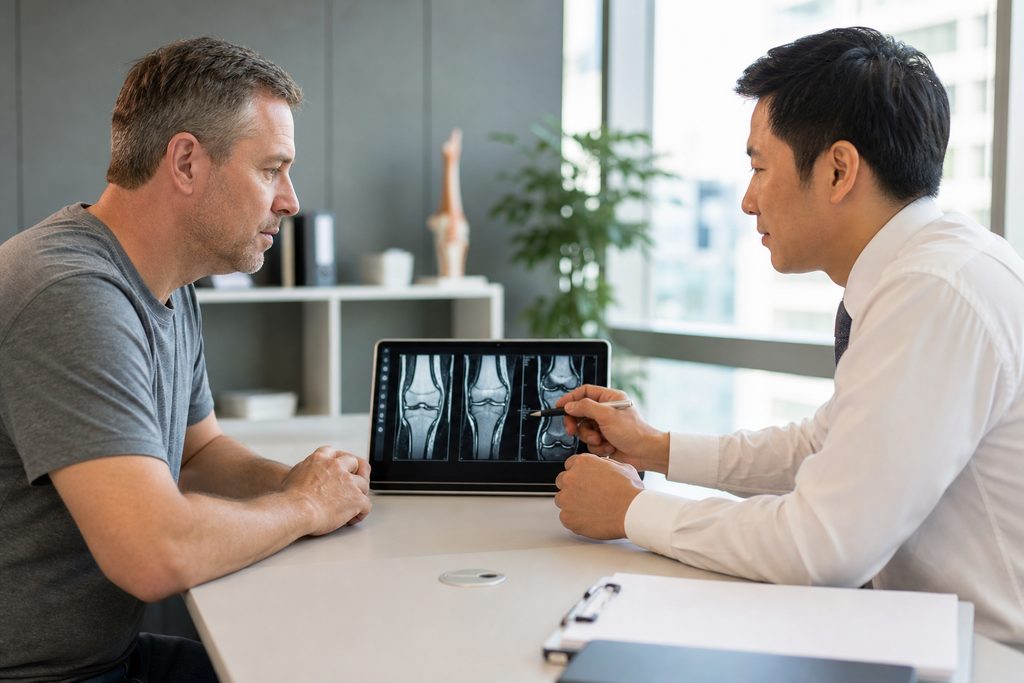
Step 4: The review itself. A specialist reviews your images and reports. For a written second opinion, this typically takes 3 to 7 business days after all documents are received and translated. The output is a written analysis in English (or your preferred language, depending on the service). It covers what the specialist sees, whether they agree with your current diagnosis, what treatment options they would consider, and what additional tests might be useful.
Step 5: Decide what to do next. The written opinion is informational. It is not a prescription and it is not a treatment plan you can execute without further steps. But it gives you something concrete: a Chinese specialist’s view on your case. From there you can decide whether a video consultation makes sense, or whether you want to plan a visit to China for treatment.
That is the full loop. You do not need to fly anywhere to start. But you do need organized files, translated documents, and a clear question.
Sending Scans to a Chinese Hospital: What Formats and Files They Actually Need
No. It is a specialist’s analysis based on the images and documents you provided. It is for reference only, not a prescription. Treatment decisions should be made with your local doctor. If you later travel to China for treatment, the hospital will conduct its own evaluation before any procedure.
Ask the hospital or coordination service what upload method they use. Reputable international departments use secure hospital portals or encrypted transfer services. Avoid sending medical data through unencrypted personal email. If you use a consumer cloud service, set the link to expire after download and require a password.
What if the Chinese specialist disagrees with my local diagnosis?
That happens, and it is one reason people seek a remote review. If the opinion differs, share it with your local doctor. The two specialists may be looking at the same images with different clinical frameworks. A video consultation can help clarify the reasoning
Frequently Asked Questions
Yes. The hospitals used for international patients are JCI-accredited and follow the same international safety standards as top hospitals in the US and Europe. Surgical teams perform high volumes of procedures — often more than their Western counterparts — which studies show leads to better outcomes.
Costs vary by procedure and hospital, but international patients typically save 40-80% compared to US prices — even when factoring in travel and accommodation. A consultation with our team will give you an exact, all-inclusive quote with no hidden fees.
Send us your existing medical reports to get started. We handle everything from hospital selection and appointment scheduling to visa assistance and post-operative recovery planning. Your medical records are reviewed by the specialist before you even book a flight.
For more medical information and treatment options in China, visit chinamedservices.com (China Medical Services).
