Lumpectomy Radiation: When It’s Needed and What It Costs in China
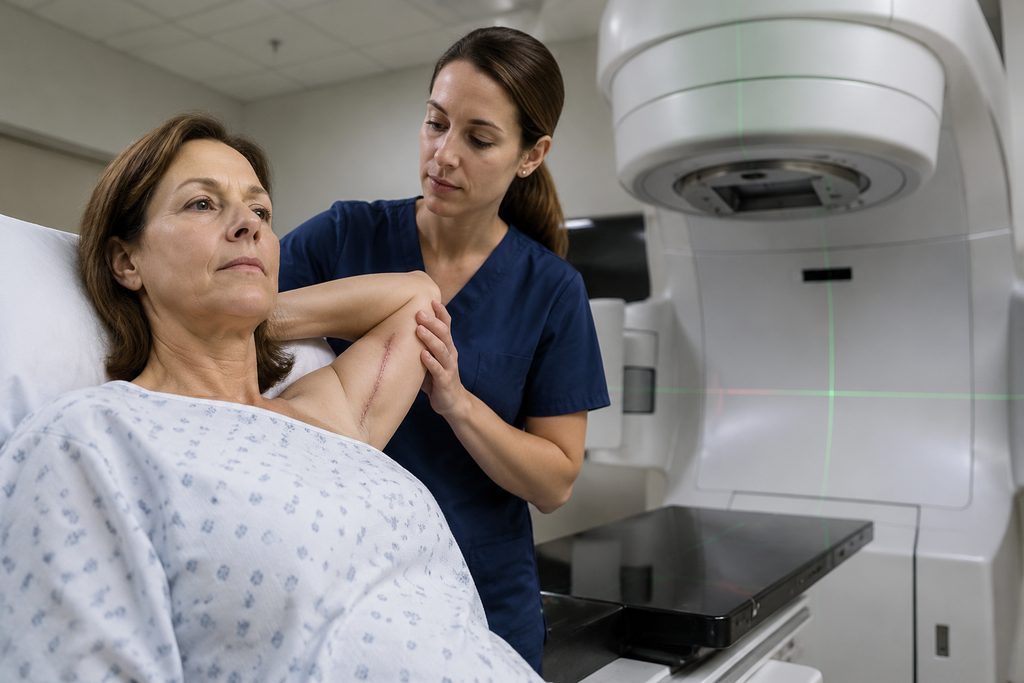
A lumpectomy removes the tumor and a small rim of healthy breast tissue around it. The goal is to keep the breast intact while getting clear margins. But surgery alone leaves behind microscopic cancer cells in roughly 20–30% of cases, depending on tumor biology and margin status. That is where radiation comes in. So will you need radiation after a lumpectomy? For the vast majority of women with early-stage invasive breast cancer, the answer is yes — and the evidence supporting that recommendation is stronger than almost anything else in oncology.
Our team regularly helps international patients evaluate treatment plans that include surgery plus adjuvant therapy. When patients ask about lumpectomy radiation cost China, they are usually comparing a complete treatment package against what they were quoted at home. The numbers often surprise them. But cost is only one part of the decision. Let us walk through the clinical reasoning first, then the practical side of receiving care in China.
How This Actually Works, Step by Step
You have been diagnosed with breast cancer. Your biopsy confirms the tumor type, grade, hormone receptor status, and HER2 status. A surgeon has recommended lumpectomy. Here is the typical sequence from that point:
First, you send us your existing pathology report, imaging (mammogram, ultrasound, MRI if done), and any surgical notes if you have already had the lumpectomy. We translate these documents into Chinese and forward them to the breast oncology department at one of the hospitals in our network — often a center ranked among China’s top 10 for oncology by the Fudan specialty reputation rankings. A surgical oncologist and a radiation oncologist review the case together. They return a written assessment: whether they agree with the lumpectomy recommendation, what margin status they would require, and whether radiation is indicated based on your specific tumor characteristics.
If you have not yet had surgery, the next step is typically a video consultation. You speak directly with the oncology team. They explain what they would do differently, if anything, and what the full treatment arc looks like — surgery, then pathology review, then radiation planning. After that, if you decide to proceed, we coordinate the hospital appointment, your S2 visa documentation, and on-the-ground logistics. Surgery happens first. Radiation typically begins 4–6 weeks after surgery, once the incision has healed and final pathology is available.
Radiation itself is usually delivered daily, Monday through Friday, for 3–4 weeks. Some patients qualify for hypofractionated regimens that compress treatment to 3 weeks or even 5 days in select cases using advanced techniques. Each session takes about 15–20 minutes on the treatment table. Most patients stay in China for the full radiation course, then return home for endocrine therapy if prescribed.
Do You Actually Need Radiation After a Lumpectomy?
For invasive breast cancer, the landmark NSABP B-06 trial and the subsequent EBCTCG meta-analyses settled this question decades ago. Lumpectomy plus whole-breast radiation reduces the 10-year local recurrence rate from roughly 35% to under 10%. It also produces a small but real survival benefit. Current guidelines from the NCCN and the American Society for Radiation Oncology recommend radiation for essentially all patients with invasive breast cancer treated with lumpectomy, regardless of age.
There are exceptions. Women 70 and older with small, hormone-receptor-positive, node-negative tumors may reasonably omit radiation and proceed with endocrine therapy alone after lumpectomy. The CALGB 9343 trial showed that omitting radiation in this specific subgroup increased local recurrence from 2% to 9% at 10 years, but did not affect overall survival or distant metastasis rates. Some patients choose to accept that trade-off.
For ductal carcinoma in situ, the picture is more nuanced. Radiation after lumpectomy for DCIS reduces the risk of any local recurrence by about 50%, but does not improve survival. The decision depends on tumor size, grade, margin width, and patient age. This is exactly the kind of case where a formal second opinion from a high-volume breast oncology center can clarify whether radiation is worth the time, cost, and side effects for your specific situation.
So is radiation necessary after breast lumpectomy? In most cases, yes — but the strength of that recommendation varies by tumor biology and patient age. A good radiation oncologist will show you the absolute risk reduction numbers for your case, not just quote guidelines.
A Realistic Timeline
Here is what a typical lumpectomy-plus-radiation pathway looks like for an international patient coming to China. This assumes you have a confirmed diagnosis and are ready to proceed.
| Stage | What Happens | Typical Duration |
|---|---|---|
| Week 1–2 | Document collection, translation, hospital department review | 5–10 business days |
| Week 2–3 | Video consultation with surgical and radiation oncology team | Scheduled within 7 days of review |
| Week 3–6 | S2 visa application with hospital invitation letter | 2–4 weeks, varies by consulate |
| Week 6–7 | Arrival, in-person surgical consultation, pre-op testing | 2–3 days |
| Week 7 | Lumpectomy with sentinel lymph node biopsy | Outpatient or 1–2 night stay |
| Week 7–11 | Recovery, final pathology, radiation planning (CT simulation, dosimetry) | 4–6 weeks |
| Week 11–15 | Daily radiation therapy, 5 days per week | 3–4 weeks |
| Week 15 | Completion, follow-up plan, return home | 1–2 days |
People forget about the waiting periods. Pathology after surgery takes 5–7 days. Radiation planning — the CT simulation, contouring, and physics check — adds another week. Visa processing can stretch to a month at some consulates. If you want to minimize total time away from home, start the document review and visa process before you travel. That is where early coordination pays off.
What Can Go Wrong — and What Happens Then
Positive margins are the most common complication. After lumpectomy, the pathologist checks whether cancer cells touch the edge of the removed tissue. If margins are positive or close, the standard next step is a re-excision — a second surgery to remove more tissue. This happens in roughly 15–20% of lumpectomies. It delays radiation by another 2–3 weeks but does not usually change the long-term prognosis.
Radiation side effects can also derail the schedule. Most patients develop skin redness, fatigue, and breast swelling by week 3. A small percentage develop moist desquamation — skin breakdown that requires a treatment break. Chinese radiation oncology departments manage this with topical agents and close weekly monitoring. Treatment breaks of 3–5 days are common and do not meaningfully affect outcomes.
What if the final pathology shows more aggressive disease than expected — more positive nodes, or a higher Oncotype score? The treatment plan changes. You might need chemotherapy before radiation, which extends your stay by months. Or the team may recommend mastectomy instead. This is rare, but it happens. The recourse is the same: the multidisciplinary team reconvenes, revises the plan, and explains the new timeline and costs before anything proceeds. You are never locked into a package that no longer fits your diagnosis.
Insurance is another failure point. Chinese public hospitals require prepayment. If your international insurance requires pre-authorization for each phase — surgery, then radiation — the gaps between approvals can add weeks. We have seen patients stuck waiting for an insurer to approve the radiation planning CT while the hospital was ready to proceed. Start insurance conversations before you travel. Know exactly what your policy covers for overseas cancer treatment.
What Determines the Cost of Lumpectomy and Radiation in China
Let us talk numbers. The lumpectomy radiation cost China varies by hospital tier, radiation technique, and whether you use the public hospital international department or a private facility. At a top-tier public hospital in Shanghai or Beijing, a lumpectomy with sentinel node biopsy typically runs $6,000–$12,000 including operating room, anesthesia, pathology, and a short hospital stay. Whole-breast radiation using modern linear accelerators adds $8,000–$15,000 for a standard 3–4 week course, including planning, dosimetry, and daily treatment.
That means a complete breast cancer surgery package Shanghai with lumpectomy plus radiation lands in the $14,000–$27,000 range at a public hospital international department. Private international hospitals in China — which offer English-speaking staff and direct insurance billing — run higher, typically $30,000–$50,000 for the same treatment arc. Compare that to the United States, where lumpectomy plus radiation commonly totals $50,000–$100,000 for insured patients and more for the uninsured. Even at the high end of the Chinese range, you are often paying half or less.
Technique matters. Intensity-modulated radiation therapy costs more than 3D conformal radiation, but reduces dose to the heart and lung — important for left-sided breast cancers. Some centers offer deep inspiration breath hold at no additional charge. Proton therapy, available at a few Chinese centers, is significantly more expensive and rarely indicated for standard breast cancer. A good radiation oncologist will tell you when the cheaper technique is just as good.
Choosing a Hospital: What the Numbers Actually Tell You
When patients search for the best oncology hospital Beijing breast cancer, they are usually looking at reputation rankings. The Fudan University hospital rankings are the most authoritative in China. They publish a specialty reputation list for oncology that ranks the top 10 hospitals in the country. Several Beijing hospitals appear consistently: Peking Union Medical College Hospital, Cancer Hospital Chinese Academy of Medical Sciences, and Beijing Cancer Hospital. Shanghai has Fudan University Shanghai Cancer Center and Ruijin Hospital. Guangzhou has Sun Yat-sen University Cancer Center.
But rankings only tell you so much. A hospital that excels in pancreatic cancer may be average for breast cancer. What you want is case volume and multidisciplinary infrastructure. Ask these questions: How many breast cancer surgeries does the department perform annually? Is there a dedicated breast tumor board that reviews every case? Does the radiation oncology department use modern linear accelerators with IMRT and respiratory gating? How many breast radiation cases per year? High-volume centers simply have better outcomes — the volume-outcome relationship is well documented in surgical oncology.
Our oncology department rankings page shows which hospitals rank in the Fudan top 10 for oncology, and our top hospital database lets you filter by city and specialty. If you are deciding between Beijing and Shanghai, our Beijing hospital guide and Shanghai hospital guide break down the differences in cost, language support, and logistics.
Practical Considerations: Records, Visa, Payment, and Follow-Up
You can book the initial surgical consultation and reserve a treatment slot through the hospital’s international department, but no reputable hospital will schedule surgery before the surgeon examines you in person. The sequence is: remote review of your records, video consultation, then travel for in-person evaluation and surgery. Radiation is scheduled after surgery once final pathology is available. Anyone promising a fixed surgery date before seeing you is not following standard practice.
You will need a re-excision, typically 2–4 weeks after the first surgery once the pathologist has completed margin assessment. The re-excision is a smaller procedure. It delays radiation but does not change the overall treatment plan in most cases. Rarely, if margins remain positive after re-excision, the team will recommend mastectomy. This is a clinical decision, not a financial one — you will be told the medical reasoning before any additional costs are incurred.
Modern techniques have made it much safer. Deep inspiration breath hold moves the heart out of the radiation field. IMRT shapes the dose to avoid the heart and lung. Chinese top-tier radiation oncology departments routinely use both. The long-term cardiac risk from whole-breast radiation has fallen substantially over the past two decades. Discuss your specific cardiac risk factors with the radiation oncologist during the planning consultation.
Budget 8–12 weeks total. That includes the pre-surgery consultation, the lumpectomy itself, 4–6 weeks of recovery and radiation planning, and 3–4 weeks of daily radiation. Some patients return home between surgery and radiation and come back for the radiation course, but that means two trips and two visa applications. Most find it simpler to stay for the full course.
Your Next Step
Radiation after lumpectomy is not a bureaucratic checkbox. It is the difference between a 35% local recurrence risk and a sub-10% risk for most women. The decision to pursue treatment in China usually comes down to cost, access to high-volume oncology centers, and the ability to complete the full treatment arc without waiting months between surgery and radiation. Our team at China Medical Services handles the document review, hospital matching, visa documentation, and on-the-ground coordination so you can focus on treatment. We do not provide medical advice and we do not promise outcomes — we connect you with ranked oncology departments and make the logistics manageable. If you want a written second opinion on whether radiation is indicated in your case, or a cost estimate for a specific hospital, request a free consultation and we will walk you through the options.
Frequently Asked Questions
Yes. The hospitals used for international patients are JCI-accredited and follow the same international safety standards as top hospitals in the US and Europe. Surgical teams perform high volumes of procedures — often more than their Western counterparts — which studies show leads to better outcomes.
Costs vary by procedure and hospital, but international patients typically save 40-80% compared to US prices — even when factoring in travel and accommodation. A consultation with our team will give you an exact, all-inclusive quote with no hidden fees.
Send us your existing medical reports to get started. We handle everything from hospital selection and appointment scheduling to visa assistance and post-operative recovery planning. Your medical records are reviewed by the specialist before you even book a flight.
For more medical information and treatment options in China, visit chinamedservices.com (China Medical Services).
