Sleeve Gastrectomy Weight Loss: Realistic Results, Costs, and China Options
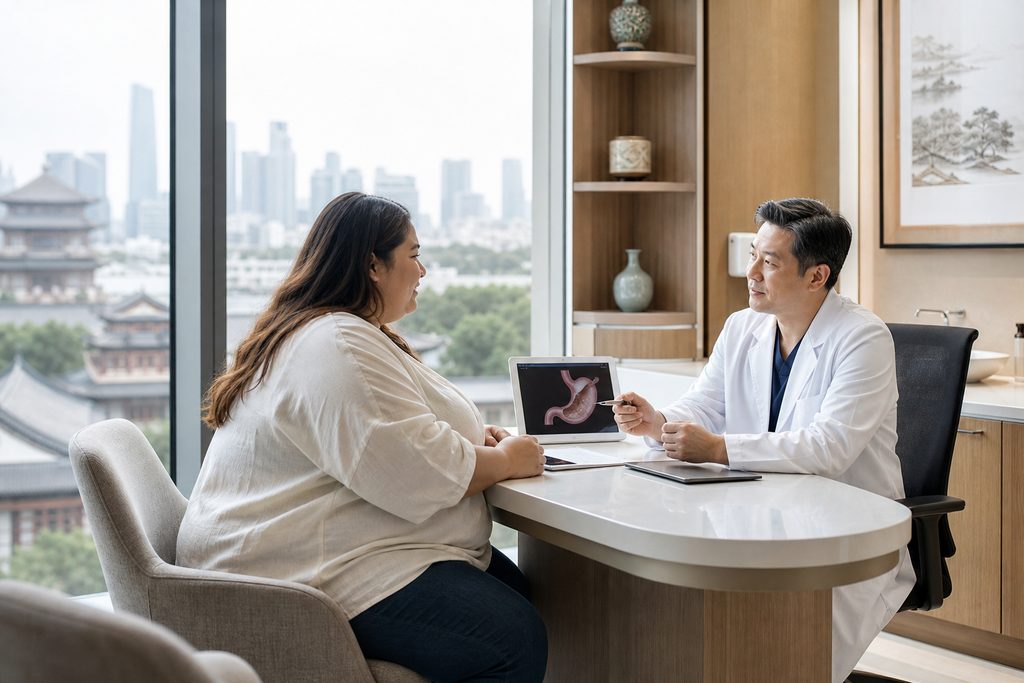
Have you ever stood in front of a mirror and wondered whether the number on the scale will ever actually move — and stay moved? If you are researching the gastric sleeve, you have probably already tried the diets, the gym memberships, the meal plans. The question that lingers is simple: how much weight will I actually lose, and is it worth the cost and the risk?
For many patients, the answer to the first question is more encouraging than they expect. Clinical data shows that most sleeve gastrectomy patients lose between 50% and 70% of their excess body weight within 12 to 18 months. That number holds up across multiple long-term studies, including a 2020 meta-analysis published in Annals of Surgery covering over 19,000 patients. But the second question — about cost — is where the math gets interesting, especially when comparing weight loss surgery cost China against Western benchmarks.
Key Takeaways
- Average excess weight loss after sleeve gastrectomy ranges from 50% to 70% within 12–18 months, with most loss occurring in the first 6–9 months.
- Weight loss surgery cost China typically runs $8,000–$15,000 for a sleeve gastrectomy at a top-tier public hospital, compared to $18,000–$35,000 in the US and $12,000–$25,000 in Western Europe.
- Gastric sleeve surgery in China is performed at high-volume centers, but foreign patients must navigate language barriers, visa requirements, and hospital selection carefully.
- Realistic expectations matter: the sleeve is a powerful tool, not a cure. Long-term success depends on permanent dietary and lifestyle changes.
The Problem: Obesity Rates Are Rising, and So Are Surgical Costs
The World Health Organization reports that global obesity rates have nearly tripled since 1975. In the United States alone, the CDC estimates that 41.9% of adults are obese. That is roughly 100 million people. For a significant portion of them, bariatric surgery is the most effective long-term intervention available — yet cost remains the single biggest barrier.
A sleeve gastrectomy in the United States typically costs between $18,000 and $35,000 without insurance. Even with coverage, patients often face high deductibles, strict eligibility requirements, and months of mandated pre-operative programs. In the UK, NHS waiting lists for bariatric surgery can stretch beyond two years in some regions. Canada reports similar delays. The result: patients who need help now are told to wait, or to pay a price that feels out of reach.
That pressure is real. And it pushes many people to ask a harder question: is there a safe, high-quality alternative that does not require remortgaging a home?
Why China Delivers Results for Bariatric Patients
High Surgical Volume Builds Specialist Expertise
Chinese top-tier hospitals operate at a scale that is difficult to comprehend from a Western perspective. A single major public hospital in Shanghai or Beijing may handle over 10,000 outpatient visits per day. Bariatric surgery departments at leading centers routinely perform hundreds of sleeve gastrectomies annually. That repetition matters.
Research consistently links higher surgical volume to lower complication rates. A 2019 study in JAMA Surgery found that bariatric patients treated at high-volume centers had significantly lower rates of serious complications and mortality compared to low-volume facilities. When you are choosing where to have surgery, you want a team that has seen your exact procedure hundreds of times — not dozens.
Structural Cost Advantages Without Quality Compromise
The lower weight loss surgery cost China offers is not a signal of lower quality. It reflects structural economics: lower labor costs, hospital efficiency at scale, and a healthcare system designed to move large patient volumes through standardized protocols. A sleeve gastrectomy at a top-ranked Chinese public hospital typically costs between $8,000 and $15,000, depending on the hospital tier and whether you use the international VIP department.
Compare that to the $18,000–$35,000 US range, or the $12,000–$25,000 common in Western Europe. The savings are substantial — often 60% to 70% — even after factoring in flights, accommodation, and a bilingual medical companion. And the clinical infrastructure at China’s leading hospitals is world-class. Many are JCI-accredited or ranked in the Fudan University hospital rankings, which cover the top 5% of China’s 35,000+ hospitals.
International Patient Pathways Are Maturing
China’s top hospitals have invested heavily in international patient services over the past decade. English-speaking staff, dedicated international departments, and streamlined admission processes are now standard at major centers in Beijing, Shanghai, and Guangzhou. That does not mean the process is effortless — language barriers and administrative complexity remain real — but the infrastructure exists. Patients who prepare properly can access genuinely excellent care at a fraction of Western prices.
How Much Weight Can You Actually Expect to Lose After a Sleeve?
The honest answer: it depends on your starting weight, your adherence to post-operative guidelines, and your long-term habits. But the data gives us a clear picture.
Most patients lose the majority of their weight in the first 6 to 9 months after surgery. By 12 months, the average patient has lost 60% to 70% of their excess body weight. By 5 years, studies show an average excess weight loss of 50% to 60% — some regain is common, but the net loss remains substantial for most patients.
Here is what that looks like in practical terms. If you are 5’7″ and weigh 280 pounds, your ideal body weight is roughly 160 pounds. Your excess weight is 120 pounds. Losing 60% of that means a loss of about 72 pounds, bringing you to around 208 pounds within 12 to 18 months. Some patients lose more. Some lose less. But the average outcome is dramatic.
| Time After Surgery | Average Excess Weight Loss | Typical Total Weight Loss |
|---|---|---|
| 3 months | 25%–35% | 30–45 lbs |
| 6 months | 40%–55% | 50–70 lbs |
| 12 months | 60%–70% | 70–90 lbs |
| 5 years | 50%–60% | 60–80 lbs (net, after typical regain) |
These figures come from multiple long-term cohort studies, including the Swedish Obese Subjects study and the Longitudinal Assessment of Bariatric Surgery (LABS) consortium. They represent averages — your individual outcome will vary based on your starting BMI, age, metabolic health, and commitment to post-operative protocols.
What Determines Your Individual Sleeve Gastrectomy Results?
Starting BMI and Excess Weight
Patients with higher starting BMIs tend to lose more total pounds but a slightly lower percentage of excess weight. Patients with lower BMIs often achieve a higher percentage of excess weight loss. Neither group is “better” — the math simply works differently. A patient starting at BMI 45 might lose 65% of excess weight. A patient starting at BMI 55 might lose 55%. Both outcomes are clinically excellent.
Adherence to Dietary Protocols
The sleeve works by restricting stomach capacity and altering hunger hormones — particularly ghrelin. But it does not override your choices. Patients who follow the staged post-operative diet, prioritize protein, avoid liquid calories, and resist grazing between meals consistently achieve better results. The surgery creates the conditions for success. You still have to do the work.
Physical Activity and Muscle Preservation
Rapid weight loss always includes some muscle loss. Patients who incorporate resistance training and adequate protein intake lose a higher proportion of fat and preserve more lean mass. This matters for long-term metabolic health and for maintaining your weight loss after the first year.
Psychological Readiness and Support Systems
Bariatric surgery changes your relationship with food — sometimes in ways that are emotionally challenging. Patients with strong support systems, whether through family, counseling, or structured follow-up programs, tend to fare better over the long term. This is one reason why choosing a provider with robust post-operative follow-up matters as much as choosing a skilled surgeon.
Evaluating Bariatric Hospitals in China: What to Look For
If you are considering sleeve gastrectomy price Shanghai or exploring options in Beijing, Guangzhou, or Chengdu, the hospital selection process is critical. Not every facility that offers bariatric surgery is equipped to handle international patients safely and effectively.
Start with accreditation. Look for JCI certification or inclusion in China’s Fudan University hospital rankings. The top-ranked hospitals on our platform are drawn from the top 5% of China’s 35,000+ hospitals, ranked by Fudan and JCI standards. For bariatric surgery specifically, you want a hospital with a dedicated metabolic and bariatric surgery department, not a general surgery unit that occasionally performs sleeves.
Practical tip: Ask any hospital you are considering how many sleeve gastrectomies they perform annually. A high-volume bariatric center should perform at least 100–200 per year. If they cannot answer that question clearly, that is a red flag.
Also consider the international patient infrastructure. Does the hospital have an English-speaking international department? Can they provide translated medical records and discharge summaries? Do they have experience managing post-operative follow-up for patients who return home after surgery? These operational details matter as much as surgical skill.
For foreign patients seeking the best bariatric hospital in China for foreigners, the answer is rarely a single institution. It depends on your clinical profile, your budget, and whether you need the full international VIP pathway or are comfortable navigating the standard public system with a bilingual companion. Our department rankings can help you compare bariatric surgery programs across cities.
Practical Considerations: Visa, Payments, and Follow-Up for Sleeve Surgery in China
Foreign patients traveling to China for medical treatment use the S2 visa, which covers short-term private affairs including medical treatment. If your treatment and recovery will exceed 180 days, the S1 visa applies. Accompanying family members also apply for S2 visas. You will need supporting documentation from the hospital, including a treatment invitation letter and medical records confirming the purpose of your visit. Visa requirements change periodically, so verify current rules with the Chinese embassy or consulate in your country before booking anything.
Payment is another practical hurdle. Chinese public hospitals operate on a pre-payment model. You pay a deposit before admission, and the hospital deducts charges as services are provided. International credit cards are accepted at major hospitals’ international departments, but cash and Chinese mobile payment platforms like WeChat Pay and Alipay are more universally accepted. If you use the standard public pathway, expect to navigate the system in Chinese or with a bilingual companion. The international VIP departments offer English-speaking staff and streamlined processes, at roughly 1.5 to 2 times the standard price.
Insurance is typically reimbursement-based. Chinese public hospitals do not bill Western insurers directly in most cases. You pay out of pocket, then submit claims to your insurer. Private international hospitals in China — including United Family, Jiahui, and Parkway — do offer direct insurance billing, and some have bariatric surgery programs. The trade-off is cost: private international hospitals charge more, though still often less than Western prices.
Important: Bariatric surgery requires lifelong follow-up, including nutritional monitoring and vitamin supplementation. Before committing to surgery abroad, confirm that your home healthcare provider will manage your post-operative care. Some Western bariatric programs will not accept patients who had surgery overseas. Check this before you book.
For a complete overview of the process, from hospital selection to visa paperwork to on-the-ground support, our patient coordination service provides case management for international patients — including medical record translation, hospital appointment coordination, and bilingual medical companions who handle registration, queuing, payment, and interpretation throughout your hospital visits.
Frequently Asked Questions
Most patients lose 15 to 25 pounds in the first month, driven primarily by the mandatory liquid diet and the immediate caloric restriction. The rate of loss slows after the first 6 to 8 weeks as your body adapts and you transition to soft and solid foods. The first month is dramatic, but it is not representative of the full trajectory.
Yes, provided you choose a high-volume, accredited hospital and plan your logistics carefully. China’s top-tier hospitals perform bariatric surgery at scale with complication rates comparable to Western centers. The main risks are not clinical but operational: language barriers, visa complications, and inadequate post-operative follow-up if you return home without a plan. These are manageable with proper preparation.
Some weight regain after the first 18 months is common and does not mean the surgery failed. Most patients keep off 50% to 60% of their excess weight at 5 years, even after some regain. If regain becomes significant, options include revisional surgery, endoscopic procedures, or intensified lifestyle intervention. The key is early intervention — do not wait until you have regained 30 or 40 pounds before seeking help.
You cannot book surgery directly from overseas through the standard public hospital pathway. Chinese public hospitals require an in-person consultation before scheduling surgery. The international VIP departments at some hospitals do offer pre-arranged packages that include consultation, surgery, and recovery support, but these are coordinated through the hospital’s international office or a third-party coordinator. Expect to pay 1.5 to 2 times the standard public price for this pathway. If you are researching how to book gastric sleeve surgery China package, start by contacting the hospital’s international department directly or working with a patient coordinator who can arrange the initial video consultation and document review.
The sleeve is highly effective for type 2 diabetes remission, but “cure” is too strong a word. Studies show that 60% to 80% of patients achieve remission of type 2 diabetes within the first year after sleeve gastrectomy, meaning normal blood sugar without medication. However, remission is not permanent for everyone. Some patients experience diabetes recurrence after 5 to 10 years, particularly if significant weight regain occurs. The sleeve is best understood as a powerful metabolic intervention, not a permanent cure.
Your Next Step
The decision to pursue bariatric surgery is deeply personal. The data on expected weight loss after sleeve gastrectomy is clear: most patients lose 50% to 70% of their excess weight and keep off the majority of it long-term. The question is not whether the surgery works, but where you can access it safely and affordably, and whether you are ready for the permanent lifestyle changes it requires.
At China Medical Services, we help international patients evaluate their options across China’s top-ranked hospitals. We are not a hospital and we do not provide medical advice or diagnoses. What we do is handle the logistics: hospital matching, appointment coordination, bilingual medical companions, and visa guidance. If you are weighing the weight loss surgery cost China offers against Western prices, the first step is a conversation. Reach out for a free consultation and we will help you understand your options — no pressure, no commitment. Just clear information.
For more medical information and treatment options in China, visit chinamedservices.com (China Medical Services).
