Video Consultation in Shanghai: How to Set It Up and What It Costs
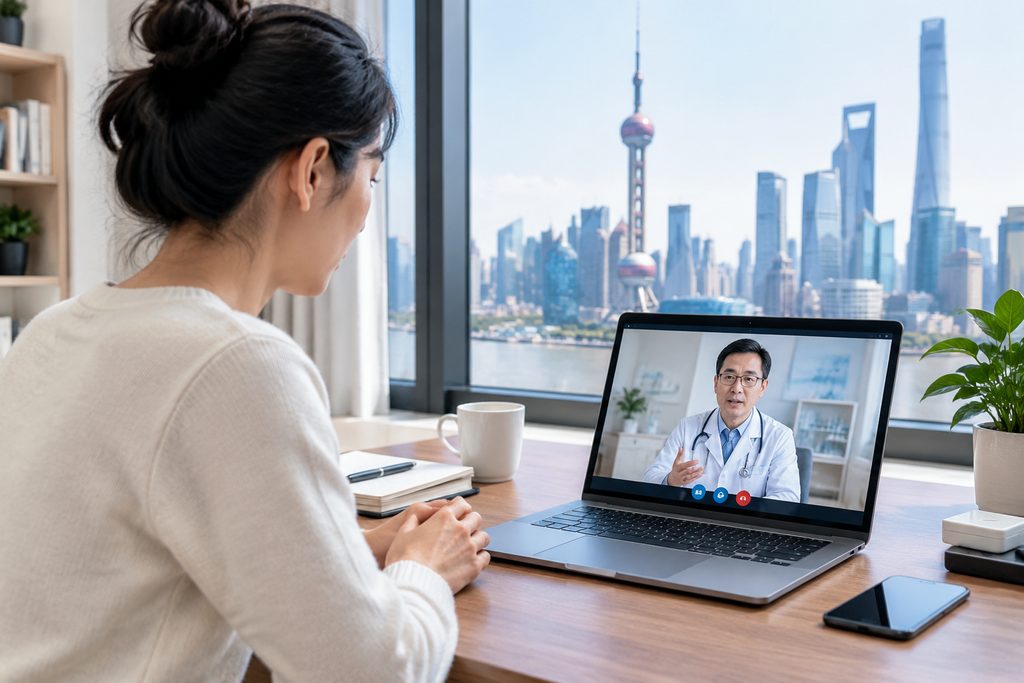
Key Takeaways
- A video consultation in Shanghai typically costs $100–300 at a public hospital international department, or $500–800 with a top-ranked specialist — a fraction of the cost of flying in blind.
- Shanghai holds 18 of China’s Fudan Top 100 hospitals, second only to Beijing, making it one of the densest concentrations of clinical expertise in the country.
- Public hospital outpatient registration generally cannot be booked from overseas in advance. A remote consultation is the realistic first step before any in-person visit.
- Any consultation fee you pay can be credited in full toward on-the-ground coordination if you travel to China within 90 days.
While patients in the United Kingdom wait a median of 18.3 weeks for elective surgery, according to NHS England referral-to-treatment data, surgeons at Shanghai’s top-ranked hospitals often complete that same volume in a single month. The gap is not about talent. It is about access — and for international patients, the first real access point is a video consultation in Shanghai.
Here is the practical reality most people discover too late: you cannot simply book a specialist at a Chinese public hospital from your laptop in Toronto or Dubai and expect a confirmed appointment. The system does not work that way. What you can do is get a Chinese specialty team to review your records, speak with you directly, and tell you whether traveling makes sense at all.
Why a Video Consultation in Shanghai Beats Flying Blind
International patients arrive in China every week without a confirmed plan. They land, they queue, they discover the department they need is fully booked for three weeks. That is an expensive mistake.
A remote consultation flips the sequence. You get clinical input first. Then you decide whether to book flights.
You reach specialists who normally require an in-person referral
China’s top hospitals operate international departments and VIP channels designed partly for overseas patients. These are the same institutions that appear in the Fudan Hospital Rankings — a system that evaluates hospitals across 45 specialties. Shanghai alone has 18 hospitals in the Fudan Top 100, including Fudan University Shanghai Cancer Center and Zhongshan Hospital. A video consultation routes your case to that tier of expertise without a plane ticket.
The cost gap is real, and it starts at the consultation stage
Compare the entry point. A specialist consultation in the United States can run $300–600 out of pocket before any imaging. In Shanghai, a video consultation with a public hospital international department runs $100–300. With a top-ranked specialist, $500–800. A multidisciplinary team review — several departments weighing in on one complex case — sits at $1,500–2,000.
That is the front door. The bigger numbers come later, and they are where China’s cost structure becomes genuinely relevant.
| Service | Typical Cost (USD) | What It Includes |
|---|---|---|
| Video consultation, public hospital international dept. | $100–300 | Record review, live discussion, treatment direction |
| Written second opinion, top hospital specialist | $300–500 | Written analysis and suggestions, for reference only |
| Top-specialist video consultation | $500–800 | Senior specialist, direct discussion of your case |
| Multidisciplinary team (MDT) video consultation | $1,500–2,000 | Multiple specialties reviewing one complex case |
| In-person top-specialist consultation coordination | $800–1,200 | Arranging the face-to-face visit in China |
All figures vary by hospital and case complexity. Final quotes are confirmed case by case.
How the Setup Actually Works, Step by Step
No two cases are identical, but the sequence is consistent. Here is what a typical remote consultation looks like from first message to written summary.
Step 1 — Records go out. You send existing examination reports: imaging files, lab results, pathology, discharge summaries, and any prior treatment history. DICOM files for scans, PDFs for everything else. Translation into Chinese is handled on our side where needed.
Step 2 — Specialty matching. The records go to the relevant department. If your case sits between two specialties — say, orthopedic oncology — the matching step determines which team leads. This is where knowing the Fudan specialty rankings matters, because a hospital strong in cardiac surgery may be mid-tier in neurology.
Step 3 — The consultation itself. A scheduled video session, usually 30–60 minutes, with interpretation if you do not speak Mandarin. You describe symptoms, history, and goals. The Chinese team gives its assessment and recommended direction.
Step 4 — Written summary. You receive the team’s analysis in writing. This document matters. It is what you take to your local physician, and it is what any future in-person plan gets built on.
Step 5 — Decide what comes next. Sometimes the answer is “no travel needed.” Sometimes it is “come for imaging first.” Sometimes it is a surgical plan with a realistic timeline. All three are useful outcomes.
What a Video Consultation Cannot Do
This is where honesty matters more than marketing.
A video consultation is not a diagnosis. It is a specialist review of records you already have, plus a conversation. No Chinese hospital will schedule surgery based on a video call alone. In-person examination is required first — that is standard practice at public hospitals, and it protects you.
You also cannot use a consultation to jump a queue or lock in a specific surgeon for a specific date. What we do is case management: records translation, appointment coordination through official hospital international departments, and bilingual support on the ground. We are not a hospital. We do not provide diagnoses. We do not sell access.
And if your case is straightforward and well-handled where you live, a consultation may simply confirm that. That is a legitimate result, not a wasted fee.
Practical Considerations Before You Book
Visa category. If your consultation leads to travel, the applicable short-stay category for medical treatment is the S2 visa, with accompanying family members applying under the same category. The M visa is for commercial and trade activities and has nothing to do with medical travel. Requirements are set by the latest embassy and consulate guidance, and supporting hospital documents are part of the application. Approval is never guaranteed.
Payment. Consultation fees are paid upfront. Public hospitals in China require prepayment for services, with insurance reimbursement handled afterward by you. Private international hospitals — United Family, Jiahui, Parkway, Raffles — often bill insurance directly, and their consultation fees sit at the higher end of the ranges above.
Language. Top Chinese hospitals see tens of thousands of outpatients daily. Signage is in Chinese. Interpretation during the video call is included in most consultation packages; if it is not, ask before booking.
Follow-up. The written summary is designed to travel with you. Your physician at home can use it, and it forms the baseline if you later come to China for treatment.
Crediting. Any consultation fee is credited in full toward on-the-ground coordination if you travel within 90 days. It is a one-time credit applied to the coordination fee only, never to hospital treatment charges.
Frequently Asked Questions
Yes. You can designate a city, hospital, department, or specialist. We assist with registration and coordination through official channels. We cannot guarantee a specific doctor or date — no one can — but if the requested appointment cannot be arranged, the coordination fee is refunded in full.
Then you have saved the cost of a flight, a hotel, and a week of your time. A clear answer either way is the point. The consultation fee is modest precisely because the goal is clarity, not commitment.
No. It is a staged process by design. Records review, then conversation, then a written summary. Travel, admission, and treatment are separate decisions made later, and any admission remains subject to hospital rules.
Your Next Step
Shanghai’s concentration of top-tier hospitals — 18 in the Fudan Top 100 — makes it a reasonable starting point for international patients exploring treatment in China. A video consultation is the lowest-risk way to find out whether that path is right for your case. Our team connects international patients with Chinese hospitals, handles records translation and appointment coordination, and provides bilingual support on the ground. We are not a hospital and we do not provide medical advice. If you want to understand your options before booking anything, start with a free consultation at our patient services page, or browse China’s top-ranked hospitals by city to see what is available in Shanghai and beyond.
This article is for informational purposes only and does not constitute medical advice. Treatment decisions should be made with a qualified physician who has reviewed your individual case.
For more medical information and treatment options in China, visit chinamedservices.com (China Medical Services).
