Radiation Therapy Side Effects: What to Expect and How to Manage Them
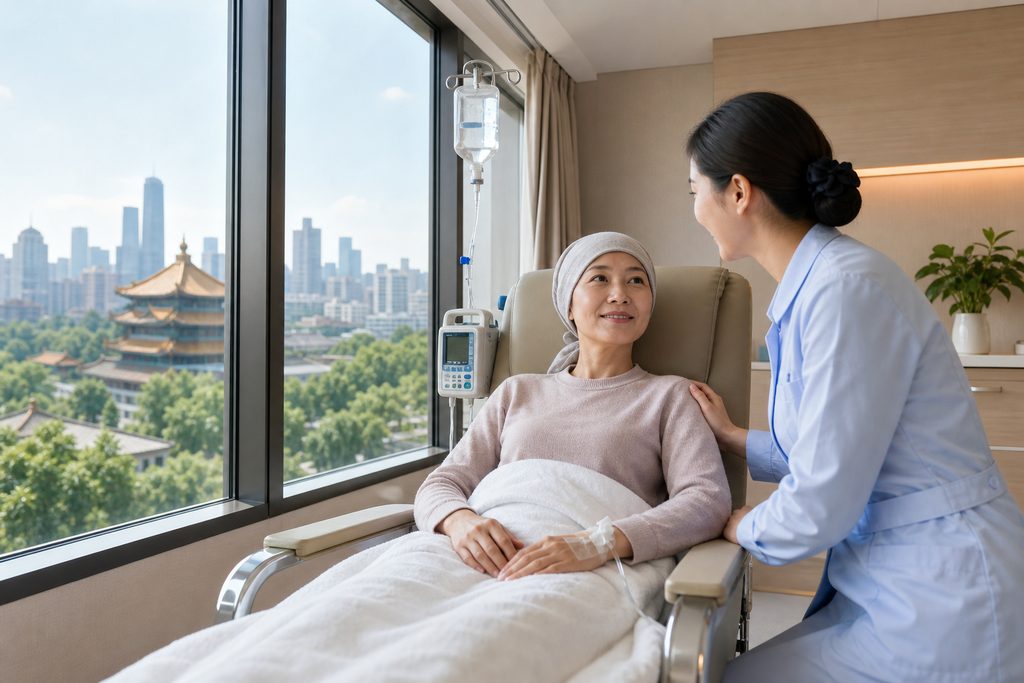
When 54-year-old Elena finished her first week of radiation for breast cancer, she called our coordination desk in a panic. “I’m so tired I can’t lift my arm to brush my hair. Is this normal?” It was. And nobody had prepared her for it. That gap between clinical consent forms and daily reality is where fear breeds. This article closes that gap. We’ll walk through the actual side effects of radiation therapy, how long they last, what makes them worse, and what patients traveling to China for treatment should plan for—including radiation therapy side effects China oncologists manage differently than Western centers sometimes do.
Radiation Therapy Side Effects: The Short Answer
Most patients experience fatigue, skin irritation at the treatment site, and localized tissue changes. Fatigue affects roughly 80% of patients during treatment. Skin reactions—redness, dryness, peeling—show up in nearly all patients receiving external beam radiation. The severity depends on the dose, the body area treated, your baseline health, and whether you’re also getting chemotherapy.
But here’s the complication. Side effects are not one-size-fits-all. Radiation to the pelvis causes diarrhea. Radiation to the head and neck causes mouth sores and dry mouth. Radiation to the chest can cause a sore throat or cough. The location dictates the side effect profile. So when patients ask “what are the side effects of radiation therapy,” the honest answer starts with another question: where is the tumor?
Who This Is Right For — and Who It Isn’t
Radiation therapy is a standard, evidence-based treatment for many solid tumors. It works by damaging cancer cell DNA so those cells stop dividing and die. It can be curative, palliative, or adjuvant—meaning used after surgery to clean up residual disease.
Typically good candidates include patients with localized tumors that are radiosensitive, those who cannot tolerate surgery due to age or comorbidities, and those needing symptom relief from bone metastases or brain metastases. Also patients who want organ preservation—like avoiding a laryngectomy for throat cancer by using radiation instead.
Patients who should not pursue radiation include those with certain genetic syndromes that heighten radiation sensitivity, such as ataxia-telangiectasia. Pregnant women generally should not receive radiation except in very rare, carefully planned circumstances. Patients with active connective tissue diseases like scleroderma or lupus may experience exaggerated fibrosis and poor tissue healing after radiation. And patients who cannot lie still or follow positioning instructions for 15–30 minutes per session may struggle with precise delivery.
The Options, Compared
Radiation delivery has evolved dramatically. The side effect profile differs by technique. Here’s a direct comparison of what patients typically encounter.
| Technique | Typical Session Count | Most Common Side Effects | Relative Cost in China |
|---|---|---|---|
| 3D Conformal (3D-CRT) | 25–35 sessions | Skin redness, fatigue, localized swelling | Lowest |
| Intensity-Modulated (IMRT) | 25–33 sessions | Fatigue, mild skin changes, tissue-specific effects | Moderate |
| Volumetric Arc (VMAT) | 20–30 sessions | Fatigue, dry mouth (head/neck), skin irritation | Moderate |
| Stereotactic Body (SBRT) | 1–5 sessions | Fatigue, localized pain flare, minimal skin change | Higher per session |
| Proton Therapy | 20–35 sessions | Reduced dose to healthy tissue, lower long-term toxicity | Highest |
SBRT suits patients with small, well-defined tumors—lung, liver, spine—who want fewer visits. IMRT and VMAT are the workhorses for most cancers because they sculpt dose around tumors while sparing nearby organs. Proton therapy, available at select centers in China, offers the best healthy-tissue sparing, particularly for pediatric cancers, skull base tumors, and left-sided breast cancer where cardiac dose matters.
How Bad Is Radiation Therapy Fatigue?
This is the question patients ask most often, usually in week two or three. How bad is radiation therapy fatigue? For most people, it’s not the dramatic collapse of chemotherapy fatigue. It’s a creeping, cumulative exhaustion. You feel okay in the morning, then hit a wall by mid-afternoon. By week four of a six-week course, walking up one flight of stairs can feel like a workout.
The mechanism isn’t fully understood. Your body is spending energy repairing healthy tissue damaged by the beam. There’s also a systemic inflammatory response. And the daily logistics—driving to the hospital, waiting, positioning, driving home—add up.
But here’s what surprises many patients: fatigue from radiation is usually more predictable than chemo fatigue. It follows a pattern. It peaks toward the end of treatment and improves within 4–6 weeks after finishing. Some patients continue working during radiation therapy, especially those receiving SBRT or treatment to a small field. Others need to reduce hours. There’s no shame in either path.
Radiation Therapy Cost Shanghai: What You’re Actually Paying For
Radiation therapy cost Shanghai varies by technique, hospital tier, and whether you’re paying out-of-pocket or through an international insurance arrangement. Public hospital international departments typically charge $8,000–$18,000 for a full IMRT course. VMAT runs $10,000–$22,000. SBRT, because it uses advanced imaging and fewer fractions, often lands between $6,000 and $12,000 per course. Proton therapy is the outlier at $30,000–$50,000.
Compare that to the United States, where a full IMRT course commonly exceeds $50,000–$100,000 before insurance. Even with insurance, many American patients face deductibles and coinsurance that exceed the total cash price in Shanghai.
What’s included? The treatment planning CT, dosimetry, the radiation sessions themselves, and weekly on-treatment visits with the radiation oncologist. What’s typically not included? Anesthesia (rarely needed for radiation), inpatient admission if complications arise, and medications for side effect management. Prices also shift based on whether you need concurrent chemotherapy, which many protocols include.
Best Radiation Oncology Hospital China: Where Patients Actually Go
When international patients ask about the best radiation oncology hospital China can offer, the answer depends on the tumor type. Cancer Hospital Chinese Academy of Medical Sciences in Beijing is ranked among China’s top 10 for oncology and operates one of the highest-volume radiation departments in the country. Fudan University Shanghai Cancer Center has comparable standing for head and neck, breast, and gastrointestinal cancers. Sun Yat-sen University Cancer Center in Guangzhou leads for nasopharyngeal carcinoma, a disease where radiation is the primary curative treatment.
For proton therapy, fewer centers exist. Shanghai Proton and Heavy Ion Center and the Hefei Ion Medical Center treat international patients, though slots are limited and scheduling runs months ahead for non-urgent cases.
What matters more than the hospital’s name is whether the department has the specific technology your case requires and whether the radiation oncologist specializes in your tumor site. A top cardiac surgeon doesn’t treat brain tumors. Radiation oncology works the same way. Our team at China Medical Services helps patients match to departments based on tumor type, not just hospital reputation.
Practical Considerations: Records, Visas, and Follow-Up
Radiation therapy isn’t a walk-in procedure. You need a confirmed diagnosis, complete imaging, and usually a multidisciplinary treatment plan before a radiation oncologist will accept you.
What to bring: pathology slides and report, CT/PET/MRI images in DICOM format on a disc or uploaded to a secure portal, prior surgery notes, current medication list, and a letter from your home oncologist summarizing the case. Chinese hospitals will not rely on a translated summary alone—they’ll want the original images.
Visa: Foreign patients coming to China for medical treatment use an S2 visa, not an M visa. The M visa is for commercial and trade activities. For treatment stays, the S2 short-stay category applies, and you’ll need an invitation letter or treatment confirmation from the hospital. Bringing a family member? They also apply for an S2. Requirements shift by embassy, so confirm with the consulate before booking flights.
Payment: Public hospitals in China require prepayment for treatment courses. International departments accept bank transfer, major credit cards, and sometimes direct insurance billing through arrangements with specific insurers. Private international hospitals like United Family or Jiahui offer direct insurance billing more broadly but charge higher self-pay rates.
Language: Even at international departments, the radiation technologists who position you daily may speak limited English. That’s where a bilingual medical companion earns their fee—translating positioning instructions, clarifying side effect questions, and handling pharmacy runs for supportive medications. From $300 per day.
Follow-up after returning home: Radiation side effects peak 1–3 weeks after the final session. You need a local oncologist willing to manage post-radiation issues. Arrange this before you travel. Chinese radiation oncologists will provide a written treatment summary—dose, fractions, technique, expected toxicity timeline—that your home doctor can use.
Can I Work During Radiation Therapy?
The honest answer: some patients do, some don’t. Can I work during radiation therapy depends on your job, your commute, and your fatigue trajectory.
Desk workers receiving radiation to a small field—say, a lung nodule treated with SBRT—often work through treatment with minor schedule adjustments. A nurse or warehouse worker receiving pelvic radiation faces a different reality. The physical demands plus daily treatment visits make full-time work unrealistic for many.
If you’re traveling to China for treatment, working during radiation is rarely feasible anyway. You’re in a foreign country, adjusting to jet lag, navigating a new hospital system. Most international patients plan for a 6–9 week stay for a standard 5–6 week course. That includes pre-treatment planning and post-treatment recovery before flying home.
Frequently Asked Questions
Acute side effects—fatigue, skin irritation, mucositis—peak 1–3 weeks after the final session, then improve over 4–8 weeks. Late effects, like fibrosis or lymphedema, can emerge months to years later. Most patients are back to baseline energy within 2–3 months. Some take six months. The treatment site and total dose drive this timeline.
Only in the area being treated. Whole-brain radiation causes scalp hair loss, usually temporary but sometimes patchy and permanent at higher doses. Radiation to the breast, lung, or prostate does not cause hair loss elsewhere on the body. If you’re receiving concurrent chemotherapy, that’s a different story—chemo causes systemic hair loss.
Tell your radiation team immediately. They’ll assess the grade of the reaction and adjust care. Mild reactions need moisturizing with approved creams—no petroleum-based products within four hours of treatment. Moist desquamation, where the skin weeps, requires specialized dressings and sometimes a treatment pause. Radiation oncology nurses manage this daily; it’s not a rare event. But it must be caught early.
Yes, in most cases. Concurrent chemoradiation intensifies fatigue, lowers blood counts, and worsens mucosal side effects in the treatment field. The chemotherapy sensitizes cancer cells to radiation, but it also sensitizes healthy tissue. Your oncologist weighs this trade-off carefully. The combined approach is standard for cervical, head and neck, and some lung cancers because it improves cure rates.
Technically yes, but it’s unwise. You need someone at home to manage side effects that emerge after you return—skin breakdowns, fatigue that doesn’t improve, new pain. Chinese hospitals will provide a treatment summary and are generally responsive to email follow-up, but they cannot examine you across borders. A local oncologist who accepts the treatment plan before you travel is non-negotiable for safe care.
Your Next Step
Radiation therapy side effects are real, predictable, and manageable—when someone explains them before treatment starts. That’s the difference between fear and preparedness. Our team at China Medical Services helps international patients navigate hospital selection, appointment coordination, and bilingual support throughout treatment in China. We are not a hospital. We do not diagnose or treat. We connect you with departments that match your tumor type and walk with you through the logistics. If you’re weighing radiation oncology options in China or comparing top-ranked cancer centers, start with a conversation. Request a free consultation and we’ll help you think through whether treatment in China makes sense for your situation.
Radiation therapy is a marathon measured in weeks, not a sprint. Knowing what to expect—the fatigue timeline, the skin changes, the cost structure—turns a frightening unknown into a manageable plan. Wherever you receive treatment, ask questions early and often. The side effects are temporary. The information you gather now lasts far longer.
For more medical information and treatment options in China, visit chinamedservices.com (China Medical Services).
