Nasopharyngeal Carcinoma Treatment China: The Guangzhou Sun Yat-sen University Cancer Center Program
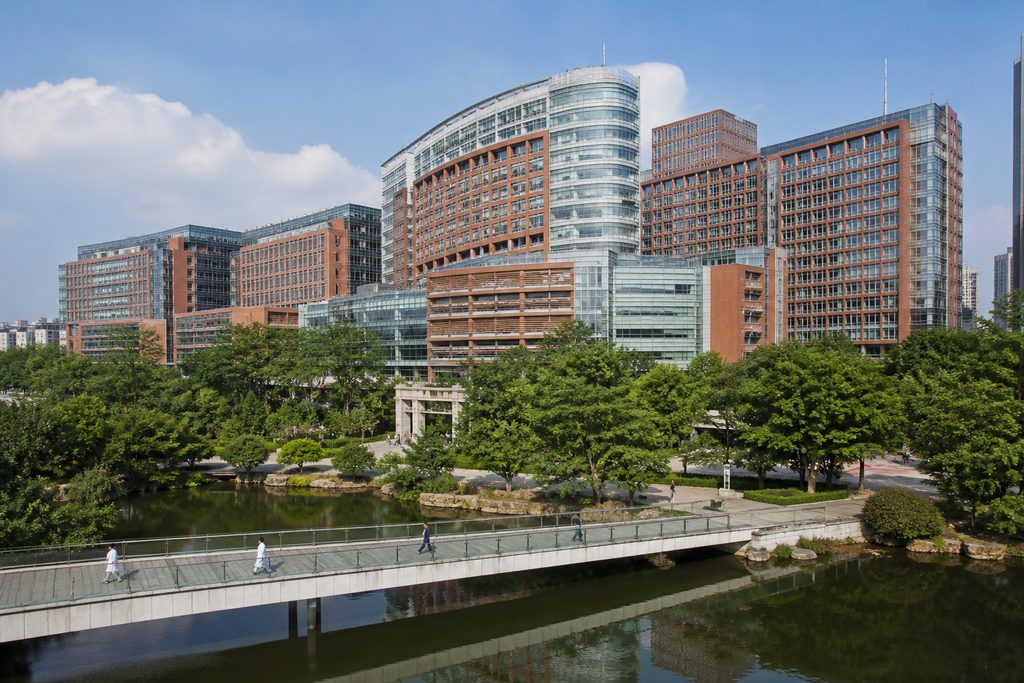
Key Takeaways
- Sun Yat-sen University Cancer Center in Guangzhou treats over 5,000 new NPC cases annually — likely the highest single-center volume worldwide for this disease.
- Total nasopharyngeal carcinoma treatment cost China averages $15,000–$35,000 at this center, roughly one-fifth to one-tenth of comparable care in the United States.
- International patients cannot simply book treatment online. The hospital requires an in-person consultation first, and navigating this process without Mandarin fluency is genuinely difficult.
- Five-year survival rates for NPC at this center exceed 80% for non-metastatic disease, reflecting decades of concentrated clinical experience with a cancer that is relatively rare in the West.
The Problem: A Rare Cancer With Few Western Experts
Nasopharyngeal carcinoma affects approximately 1 in 100,000 people in the United States and Europe. It is rare enough that many oncologists in London or Los Angeles might see a handful of cases across their entire careers. But in southern China, the incidence rate jumps to 25–50 per 100,000 in endemic regions. That epidemiological reality has produced a striking asymmetry: the world’s deepest expertise in NPC lives in Guangzhou, not at MD Anderson or Memorial Sloan Kettering.
For a patient in Chicago or Manchester receiving this diagnosis, the first shock is the unfamiliar name. The second is discovering how few local specialists truly know this disease. Clinical trials are sparse. Treatment protocols can lag behind what is standard in high-volume Asian centers. And the cost of radiation oncology alone in the US can exceed $100,000 before chemotherapy even begins.
This is not a hypothetical scenario. A 2023 analysis in The Lancet Oncology highlighted significant outcome disparities for rare head and neck cancers treated at low-volume versus high-volume centers. The difference was not marginal — it was measured in years of survival.
Who We Are
We are not a hospital. We do not provide medical treatment or clinical diagnoses. We are your logistical architects — we bridge the gap between you and China’s top-tier medical expertise. Our team coordinates the practical realities of international medical travel: hospital matching based on your specific diagnosis, appointment scheduling through official channels, bilingual medical companion services on the ground, and visa guidance for the S2 medical visa process. Think of us as the people who make sure you are in the right room with the right specialist, with someone by your side who speaks both languages fluently.
Why Sun Yat-sen University Cancer Center Delivers Results for Nasopharyngeal Carcinoma Treatment China
Volume Creates Expertise No Textbook Can Match
The numbers are difficult to comprehend until you see them in context. Sun Yat-sen University Cancer Center diagnoses and treats more than 5,000 new NPC patients each year. A major US cancer center might treat 50. That is not a criticism of American medicine — it is simply a function of epidemiology. NPC is endemic to Guangdong province and surrounding regions. The hospital’s radiation oncologists see more complex NPC presentations in a single month than most Western specialists encounter in a decade.
This volume translates into refined clinical judgment. When a radiation oncologist has contoured thousands of nasopharyngeal target volumes, they develop an intuitive grasp of how to spare the temporal lobes, optic nerves, and cochleae while delivering curative doses to the tumor. That muscle memory matters. A 2022 study published in Radiotherapy and Oncology demonstrated that treatment at high-volume centers was independently associated with improved overall survival for head and neck cancers — and the effect was most pronounced for rare subsites like the nasopharynx.
Technology That Matches Any Western Cancer Center
There is a persistent assumption that lower cost implies outdated equipment. Walk through the radiation oncology department at Sun Yat-sen University Cancer Center and that assumption evaporates. The center operates multiple linear accelerators capable of intensity-modulated radiation therapy (IMRT) and volumetric modulated arc therapy (VMAT). These are the same platforms you would find at top-tier US and European hospitals.
What differs is the depth of protocol experience. The center has been refining IMRT for NPC since the early 2000s — earlier than most Western institutions adopted the technique for this indication. Their physicists and dosimetrists have optimized planning algorithms specifically for the anatomical challenges of the nasopharynx: the proximity to the brainstem, the need to cover retropharyngeal lymph nodes, the complex geometry of the skull base. This is not generic head and neck radiation. It is a highly specialized craft refined over tens of thousands of cases.
Cost Advantage Without Quality Compromise
Let us address the question that every international patient asks, even if they hesitate to voice it: does lower cost mean lower quality? The structural answer is no. Chinese hospital costs are lower for reasons that have nothing to do with clinical standards. Physician salaries, facility construction costs, and administrative overhead are all substantially lower than in the US and Western Europe. A course of IMRT that costs $80,000–$120,000 in the United States might cost $12,000–$20,000 in Guangzhou. Chemotherapy drugs — many of which are manufactured in China or other Asian markets — are priced closer to production cost.
The total nasopharyngeal carcinoma treatment cost China at Sun Yat-sen University Cancer Center typically falls between $15,000 and $35,000 for a complete course of concurrent chemoradiation. That includes radiation planning, delivery, chemotherapy agents, and hospitalization if needed. Compare that to $150,000–$250,000 for equivalent care in the US, and the structural economics become clear. You are not buying discounted care. You are buying care in a different economic system.
What You Need to Know Before Going Alone
The clinical case for seeking NPC treatment in Guangzhou is strong. The logistical barriers are real. We want to be completely honest about what you will face if you attempt to navigate this independently.
- Visa Requirements: Medical travel to China requires an S2 visa with a notation specifying the treatment purpose. The application demands an invitation letter from the treating hospital, medical records translated into Chinese, and proof of sufficient funds. Consulates process these applications on their own timelines. Errors in documentation cause weeks of delays. This is not a tourist visa — the scrutiny is higher.
- Language and Navigation: Sun Yat-sen University Cancer Center sees thousands of patients daily. Signage in English is limited. Registration kiosks operate in Mandarin. Pharmacy instructions, consent forms, and discharge summaries are in Chinese. Without a fluent companion, you will miss appointment windows, misunderstand medication schedules, and struggle with basic logistics like paying for a CT scan.
- Payment Systems: Chinese public hospitals operate on a prepayment model. You deposit funds at admission, and services are deducted from that balance. International credit cards are not reliably accepted at hospital cashiers. WeChat Pay and Alipay dominate, and linking a foreign bank account to these platforms is not straightforward. You need a plan for moving money before you arrive.
- Appointment Reality: The hospital’s general outpatient clinic does not accept advance bookings from overseas. You cannot email the oncology department and reserve a consultation slot. The official pathway requires appearing in person, registering, and waiting. The international VIP channel — which we coordinate through — is the only way to secure a confirmed appointment before you board a plane.
How We Help You Navigate This
These barriers exist for structural reasons. Chinese public hospitals were built to serve a domestic population of 1.4 billion people. They were not designed with international patient intake in mind. That is precisely where our team steps in.
Before you travel, we translate your medical records into clinical-grade Chinese — not machine translation, but terminology that Chinese oncologists recognize and trust. We submit those records through the hospital’s official international patient channel and secure a confirmed consultation date with a specialist who focuses on your specific stage and histology of NPC. We guide you through the S2 visa application, providing the invitation documentation the consulate requires.
On the ground in Guangzhou, a bilingual medical companion meets you at the hospital entrance. This person handles registration, queues for lab results, translates your conversation with the attending physician in real time, and ensures you understand every medication instruction before you leave the pharmacy. They are not a tourist guide. They are a trained medical interpreter who knows the hospital’s layout, its unwritten workflows, and how to escalate issues when something goes wrong.
After treatment concludes, we coordinate follow-up imaging schedules and facilitate remote consultations so your local oncologist stays informed. The goal is continuity — not a one-time intervention followed by silence.
Frequently Asked Questions
For non-metastatic NPC, yes — cure is the explicit treatment goal. Sun Yat-sen University Cancer Center reports five-year overall survival rates exceeding 80% for stage I–III disease treated with IMRT-based chemoradiation. Even stage IVA disease, where the tumor has extended into the skull base or cranial nerves, shows five-year survival rates above 60% in their published series. These outcomes reflect both the biology of the disease (NPC is inherently radiosensitive) and the technical precision of modern radiation delivery. No outcome is guaranteed. But the numbers are grounded in one of the world’s largest clinical datasets for this specific cancer.
A complete course of concurrent chemoradiation — the standard of care for locoregionally advanced NPC — typically ranges from $15,000 to $35,000. The variation depends on chemotherapy regimen, radiation technique complexity, and whether hospitalization is required for toxicity management. This figure covers radiation planning and delivery, chemotherapy drugs, imaging during treatment, and inpatient care if needed. It does not include travel, accommodation, or our coordination services. For context, the same treatment protocol in the United States commonly exceeds $150,000 in billed charges, even before factoring in professional fees.
You cannot do this alone. We say that directly because pretending otherwise would be irresponsible. The hospital’s clinical staff includes some English-speaking physicians, but nurses, technicians, pharmacists, and administrative personnel generally do not speak English. Consent forms, treatment schedules, and discharge instructions are in Chinese. A bilingual medical companion is not a luxury — it is a safety requirement. Our companions accompany you through every step: consultation, simulation, daily radiation setup, chemotherapy infusion, and follow-up. They translate in both directions, ensuring the clinical team understands your symptoms and you understand your treatment plan.
Not through the standard public outpatient system. The hospital’s general clinic requires in-person registration, and specialist consultations are assigned based on availability — you cannot request a specific oncologist. The international VIP pathway, which we access, allows for pre-arranged consultations with senior specialists and scheduled admission dates. This is the channel we coordinate. It costs more than the public pathway — typically 1.5 to 2 times the standard rate — but it is the only mechanism that lets you confirm a treatment plan before traveling internationally. The consultation coordination fee starts from $800, and any amount paid is fully credited toward our on-the-ground coordination service if you proceed with treatment within 90 days.
NPC treatment carries known risks: severe mucositis, weight loss requiring feeding tube placement, myelosuppression from chemotherapy, and — rarely — radiation-induced neurological injury. Sun Yat-sen University Cancer Center manages these complications daily. Their inpatient wards are equipped for nutritional support, pain management, and infection control. The center also has a dedicated head and neck rehabilitation team for post-treatment swallowing and speech therapy. We stay involved throughout. If an unexpected hospitalization occurs, your companion coordinates communication between you, your family back home, and the clinical team. We also help arrange extended accommodation and visa extensions if your treatment course runs longer than anticipated.
Your Next Step
A nasopharyngeal carcinoma diagnosis is frightening enough without the added burden of navigating a foreign healthcare system alone. The clinical expertise exists in Guangzhou — concentrated, battle-tested, and supported by outcomes data that rival or exceed any center in the world. The question is whether you can access it safely and efficiently.
We help you answer that question with clarity. If you are considering NPC treatment at Sun Yat-sen University Cancer Center, start with a conversation. We review your diagnosis, explain what the process looks like for your specific situation, and give you an honest assessment of whether this path makes sense. There is no cost for that initial consultation, and no pressure to commit. You deserve to know your options before making a decision that affects the rest of your life.
Learn more about our process at our patient coordination page, or explore our database of China’s top-ranked hospitals to understand the broader landscape of care available to international patients.
For more medical information and treatment options in China, visit chinamedservices.com (China Medical Services).
