Am I a Candidate for Deep Brain Stimulation? Eligibility, Costs & China Options
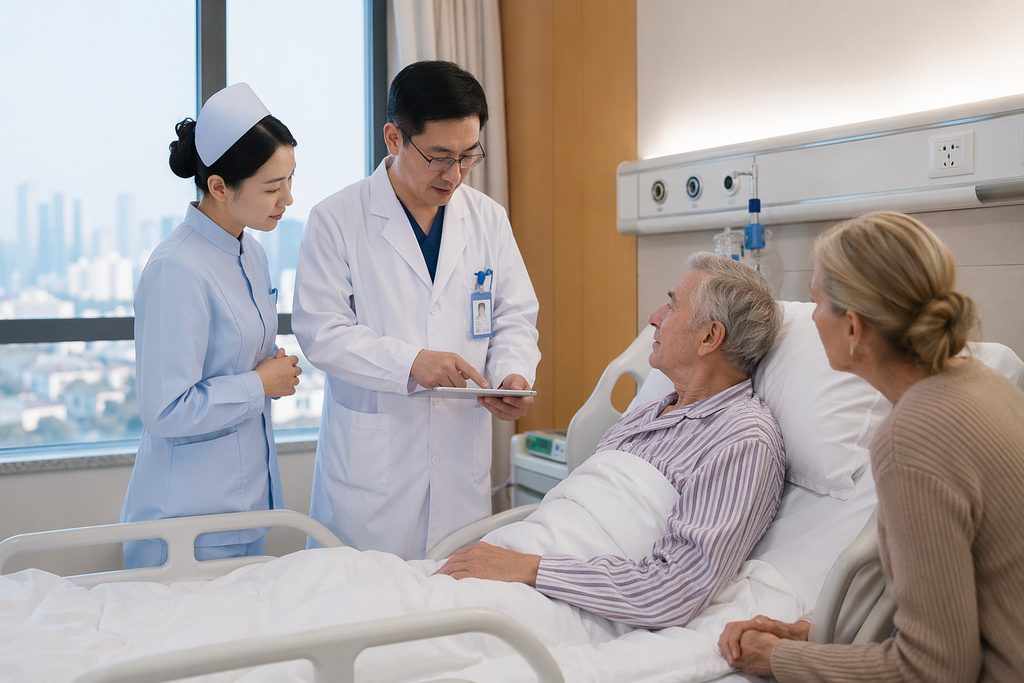
When 54-year-old Margaret from Manchester first heard the words “deep brain stimulation,” she had been living with Parkinson’s disease for nine years. Her tremor had stopped responding fully to levodopa. She was taking medication five times a day. Her neurologist mentioned DBS almost in passing, then added the number that made her stomach drop: £40,000 to £60,000 privately in the UK, with an NHS wait that could stretch past 18 months.
Margaret’s question was not “what is DBS.” She had already done that research. Her real question — the one that brought her to our site — was simpler and harder: “Am I actually a candidate? And if I am, can I afford to do something about it?”
That is the question this article answers.
Key Takeaways
- Deep brain stimulation cost China typically ranges from $35,000 to $55,000 for the full procedure, including the device, compared to $120,000–$250,000 in the United States or £40,000–£60,000 in the UK.
- China’s top neurosurgery centers now perform thousands of DBS implantations annually, with several hospitals running dedicated functional neurosurgery programs using the same Medtronic, Abbott, and Boston Scientific devices used in Western centers.
- Candidacy is strict — roughly 10–15% of Parkinson’s patients qualify. DBS is not a cure, and it does not help everyone. Understanding the criteria before you spend a dollar on travel is essential.
- If you are considering treatment in China, you need a clear understanding of how the public hospital system actually works — you cannot simply book a surgery slot online from overseas.
The Problem: DBS Is Life-Changing, But Most Patients Never Get a Straight Answer on Eligibility
Parkinson’s disease affects approximately 1 in 500 people in Western countries, and roughly 10 million people worldwide. Among those, a significant subset — often cited as 10–15% — may eventually become candidates for deep brain stimulation. But the gap between “may benefit” and “actually gets referred” is enormous.
In the UK, the National Institute for Health and Care Excellence (NICE) estimates that fewer than 5% of eligible patients are ever referred for DBS assessment. In the United States, studies have shown similar under-referral rates, particularly among patients treated outside major academic medical centers. The reasons are structural: DBS requires a multidisciplinary team — a movement disorder neurologist, a functional neurosurgeon, a neuropsychologist, and a specialized programming team. Most community hospitals simply do not have that infrastructure.
So patients like Margaret are left in limbo. They hear about a therapy that could reduce tremor by 60–80% and cut medication needs by half. But they cannot get a clear answer on whether they qualify, how long they would wait, or what it would cost. And while they wait, their disease progresses.
Why China Has Become a Serious Option for DBS Surgery
This is not about medical tourism in the old sense — flying somewhere cheap for a quick procedure. DBS is brain surgery. It requires precision, experience, and long-term programming support. The reason patients increasingly look at Chinese neurosurgery centers is structural, not promotional.
Clinical Volume Creates Competence No Small Center Can Match
China’s top functional neurosurgery departments operate at a scale that is hard to comprehend from a Western perspective. A leading center like Beijing Tiantan Hospital or Huashan Hospital in Shanghai performs hundreds of DBS implantations per year. Some programs exceed 500 annually. By comparison, a well-regarded US academic center might perform 100–150 DBS surgeries per year, and many community hospitals perform fewer than 20.
Volume matters in DBS specifically because electrode placement accuracy is the single biggest determinant of outcome. A surgeon who has placed 2,000 leads has seen anatomical variations that a surgeon with 200 has not. Chinese centers were early adopters of intraoperative MRI and CT-guided placement, and many now use robot-assisted targeting systems as standard practice. The technology is not experimental — it is routine.
Device Costs Are Lower, But the Hardware Is the Same
This is the question every international patient asks: is the device itself the same? The answer is yes. Chinese hospitals implant the same FDA-approved and CE-marked systems from Medtronic, Abbott (formerly St. Jude Medical), and Boston Scientific that you would receive in the US or Europe. There is also a domestic Chinese manufacturer, PINS Medical, whose systems are used widely within China and have published clinical data, but most international patients opt for the international brands they recognize.
The deep brain stimulation cost China advantage comes from three sources: lower hospital facility fees, lower surgeon and anesthesiologist professional fees, and lower device pricing negotiated through China’s centralized procurement system. The result is a total procedure cost of roughly $35,000–$55,000, depending on the hospital tier and whether you choose a rechargeable or non-rechargeable pulse generator. That compares to $120,000–$250,000 in the US for the same procedure with the same device.
Safety Data From Chinese Centers Is Published and Peer-Reviewed
The honest concern — is DBS safe for Parkinson’s in China — deserves an honest answer. Chinese neurosurgery programs publish their complication rates in international journals. A 2021 review in the journal Stereotactic and Functional Neurosurgery examining DBS outcomes at major Chinese centers reported infection rates of 1.5–4%, hemorrhage rates below 1%, and hardware complication rates under 5% — figures consistent with international benchmarks. No surgical procedure is without risk, and DBS carries real risks including infection, stroke, seizure, and hardware malfunction. But the data do not show elevated risk at high-volume Chinese centers compared to Western equivalents.
Am I a Candidate for Deep Brain Stimulation? The Criteria That Actually Matter
This is the section Margaret needed. DBS candidacy is not a matter of how severe your symptoms are. It is a matter of whether your specific disease profile matches what DBS can actually treat. The core criteria, based on guidelines from the International Parkinson and Movement Disorder Society and the American Academy of Neurology, are:
- Confirmed diagnosis of idiopathic Parkinson’s disease of at least 4–5 years duration. Atypical parkinsonian syndromes (multiple system atrophy, progressive supranuclear palsy, corticobasal degeneration) respond poorly to DBS and are generally excluded.
- Clear, robust response to levodopa. If your symptoms improve significantly when you take levodopa — typically 30% or more improvement on a standardized motor exam — you are more likely to benefit from DBS. If levodopa does not help, DBS probably will not either.
- Motor fluctuations or dyskinesias that medication can no longer control. DBS treats the motor complications of Parkinson’s, not the non-motor symptoms. Tremor, rigidity, bradykinesia, and levodopa-induced dyskinesias respond well. Balance problems, speech difficulties, cognitive decline, and freezing of gait respond less predictably.
- No significant dementia or untreated major depression. Cognitive impairment is a contraindication because DBS can worsen cognitive function in some patients. A neuropsychological evaluation is mandatory before surgery.
- Age under 75 in most programs, though exceptions exist for otherwise healthy patients.
- Realistic expectations. DBS does not stop disease progression. It treats symptoms. Patients who expect a cure are not good candidates.
If you check most of these boxes, the next step is a formal evaluation at a specialized center. That evaluation typically includes an on-medication and off-medication motor exam, brain MRI, neuropsychological testing, and a detailed discussion of risks and expected outcomes.
DBS Surgery Price Shanghai and Beijing: What You Actually Pay
Cost varies significantly by city, hospital tier, and device choice. Here is a realistic breakdown based on published hospital pricing and our experience coordinating international patients:
| Cost Component | Shanghai (Top Public Hospital, International Department) | Beijing (Top Public Hospital, International Department) | US Benchmark |
|---|---|---|---|
| Neurostimulator (pulse generator) | $18,000–$28,000 | $18,000–$28,000 | $35,000–$50,000 |
| Leads and extension wires | $6,000–$9,000 | $6,000–$9,000 | $10,000–$15,000 |
| Surgical fees, anesthesia, hospital stay (5–7 days) | $8,000–$12,000 | $8,000–$12,000 | $40,000–$80,000 |
| Pre-op evaluation (MRI, neuropsych, labs) | $1,500–$2,500 | $1,500–$2,500 | $5,000–$10,000 |
| Total (approximate) | $35,000–$50,000 | $35,000–$50,000 | $120,000–$250,000 |
These figures assume you are going through a hospital’s international department or VIP channel, which is the only realistic route for a foreign patient who wants to secure a specific surgeon and a scheduled surgery date. The standard public outpatient route is cheaper, but you cannot book it from overseas, and you would need to navigate the system in Mandarin. The DBS surgery price Shanghai and Beijing are broadly comparable; the choice of city depends more on which surgeon you want and where you can get the earliest evaluation.
Practical tip: Device choice affects cost more than hospital choice. Rechargeable pulse generators cost more upfront but last 15–20 years. Non-rechargeable models are cheaper initially but require surgical replacement every 3–5 years. For a patient in their 50s or 60s, the rechargeable option is usually the better long-term value.
How the Process Actually Works for International Patients in China
Here is the part most websites gloss over. You cannot simply email a Chinese hospital and book deep brain stimulation surgery China the way you would book a hotel room. The public hospital system in China operates on a face-to-face model. A surgeon will not schedule a DBS operation without first seeing you in person, reviewing your records, and conducting their own evaluation.
The realistic pathway looks like this:
- Step 1: Remote pre-evaluation. You send your medical records — neurology notes, medication history, brain MRI, and any prior levodopa challenge test results — to the hospital’s international department or to a coordination service like ours. A movement disorder specialist reviews them and gives a preliminary opinion on whether you are likely to be a DBS candidate. This step costs $300–$800 depending on whether it is a written review or a video consultation.
- Step 2: In-person evaluation in China. You travel to China for 3–5 days of testing: on/off medication motor exams, neuropsychological assessment, and surgical planning MRI. This is not a surgery trip yet. It is a decision trip.
- Step 3: Surgical scheduling. If the team confirms candidacy, you schedule surgery. At top centers, the wait is typically 2–6 weeks, not 18 months.
- Step 4: Surgery and initial programming. You are admitted for 5–7 days. Surgery itself takes 3–6 hours, often performed awake for part of the procedure so the team can test electrode placement in real time. Initial programming happens before discharge.
- Step 5: Follow-up programming. DBS programming is iterative. You will need adjustments at 1 month, 3 months, and 6 months. Some of this can be done remotely if your device supports it; otherwise, you return to China or work with a local neurologist who understands DBS programming.
Important: DBS is not a one-time procedure. The surgery is the beginning of a long-term relationship with a programming team. Before you choose any center — in China or elsewhere — ask how they handle follow-up programming for international patients. A center that implants the device but cannot support you afterward is not doing you a favor.
Deep Brain Stimulation Medical Tourism Packages Beijing: What to Look For
Several facilitators now advertise deep brain stimulation medical tourism packages Beijing and Shanghai. Some are legitimate; some are not. The legitimate ones offer coordination services: hospital matching, record translation, appointment scheduling, visa support documentation, airport pickup, bilingual accompaniment during hospital visits, and help with post-operative logistics. They charge a coordination fee — not a fee for access to a surgeon.
The red flags are easy to spot. Any service that promises a specific surgery date before a surgeon has evaluated you is lying. Any service that guarantees a specific surgeon by name without a prior consultation is overpromising. Any service that charges a large upfront fee before any medical evaluation has taken place should be avoided.
What a good coordination service actually does is reduce the friction: translating your records accurately, booking the right tests in the right order, arranging an interpreter who understands medical terminology, and making sure you do not waste days sitting in hospital waiting rooms trying to figure out where to go. That is the value. The medical decisions remain with the medical team.
If you want to understand which hospitals in Beijing and Shanghai run the strongest functional neurosurgery programs, our department rankings are built on the Fudan University hospital reputation rankings, which is the most authoritative public ranking system in China. You can also browse top-ranked hospitals by city to see which centers are in the Fudan Top 100.
Practical Considerations: Visas, Payment, and What Happens After You Go Home
These are the logistics that actually determine whether treatment in China is feasible for you.
Visa. Foreign nationals traveling to China for medical treatment apply for an S2 visa, which is the short-stay category used for private affairs including medical treatment. Your accompanying family members also apply for S2 visas. You will need supporting documents from the hospital — typically an invitation letter or treatment confirmation from the international department. The S2 visa does not guarantee approval, and requirements vary by embassy, so check with the Chinese embassy or consulate in your country before booking flights. The M visa is for commercial and trade activities and is not the correct category for medical travel.
Payment. Chinese public hospitals require prepayment for scheduled surgeries. Expect to pay a deposit covering the estimated procedure cost before admission. International credit cards are accepted at international departments, but wire transfer is often more practical for large amounts. Private international hospitals in China may offer direct insurance billing; public hospital international departments generally do not, meaning you pay out of pocket and seek reimbursement from your insurer afterward.
Insurance. Most Western insurance plans do not cover elective DBS surgery in China. Some international health insurance policies with global coverage may reimburse you, but you must confirm this before committing. If your insurance does not cover it, the cost is entirely out of pocket — which is why the deep brain stimulation cost China differential matters so much.
Language. Top Chinese hospitals have international departments with English-speaking coordinators, but the depth of English support varies. In the operating room and during programming sessions, having a medical interpreter who understands both the language and the clinical context makes a real difference. This is not a luxury; it is a safety issue when you are discussing electrode settings and medication adjustments.
Follow-up. The hardest part of having DBS in China is not the surgery. It is the programming afterward. You need a plan for who will adjust your stimulation settings when you are back home. Some patients find a local neurologist willing to learn their device. Others schedule follow-up video consultations with their Chinese programming team. Some return to China annually for a programming tune-up. None of these are perfect solutions, and you should think through this before you commit.
Frequently Asked Questions
You do not need to travel to get a preliminary answer. Send your medical records — including a detailed medication history and any levodopa challenge test results — to a DBS center for a remote review. A movement disorder specialist can usually tell you within a few weeks whether you meet the basic criteria and whether an in-person evaluation is worth pursuing. This remote step costs a few hundred dollars and can save you thousands.
Is it safe to have brain surgery in China?
At
For more medical information and treatment options in China, visit chinamedservices.com (China Medical Services).
