Tooth Extraction Healing Time: What to Expect Day by Day
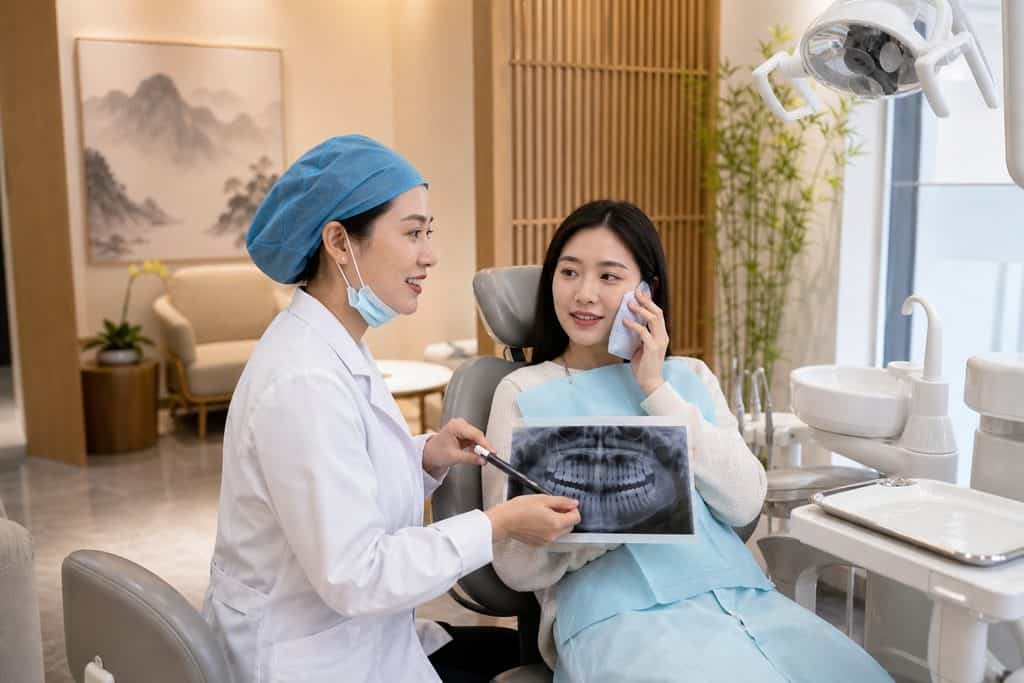
Have you ever found yourself staring at a mirror two days after a dental procedure, wondering if that throbbing sensation is normal? You are not alone. The question of tooth extraction healing time China patients ask us most often is not about the surgery itself — it is about the days that follow. The direct answer: soft tissue healing takes roughly 7 to 10 days, while complete bone remodeling continues for 3 to 6 months. Most people feel substantially better within 72 hours.
But that one-line answer hides a lot of variation. A simple incisor extraction heals differently than a surgical wisdom tooth removal. Age, smoking status, and whether you develop a dry socket all shift the timeline. The real question is not just how long — it is what each phase feels like and when you can resume normal life.
Tooth Extraction Healing Time: The Short Answer
For a straightforward, non-surgical extraction, the gum tissue closes over the socket within 7 to 10 days. Pain typically peaks at 24 to 48 hours, then drops sharply. By day 3, most patients manage with over-the-counter pain relief or nothing at all. By day 7, eating on the opposite side feels comfortable. By day 14, the socket is well on its way, though a soft indentation may remain for weeks.
Surgical extractions — impacted wisdom teeth, fractured roots, or teeth requiring bone removal — stretch the timeline. Expect 2 to 3 weeks before the gum tissue fully seals. Swelling may peak at day 3 and linger for a week. Complete bone healing underneath takes months, but you will not feel that process happening.
What complicates the picture? Dry socket, infection, and smoking. Each can double or triple your recovery time. We will cover those below.
Who This Is Right For — and Who It Isn’t
An extraction is not a lifestyle choice. It is a treatment with clear indications and clear contraindications. Here is who typically benefits from having a tooth removed, and who should push for alternatives.
Good candidates for extraction:
- Teeth with extensive decay that cannot support a crown or filling
- Advanced periodontal disease causing severe bone loss and mobility
- Impacted wisdom teeth causing recurrent infection or damaging adjacent molars
- Teeth fractured below the gum line
- Overcrowding requiring orthodontic space
Who should not rush into extraction:
- Patients with uncontrolled diabetes — healing is significantly impaired
- Anyone on blood thinners without prior medical clearance
- Patients with active infection at the extraction site (antibiotics may be needed first)
- Those with bisphosphonate-related osteonecrosis risk
- Pregnant women in the first trimester, except in emergencies
If you fall into the second group, that does not mean extraction is off the table. It means coordination matters. A dentist who reviews your full medical history before scheduling is the minimum standard.
The Options, Compared
Where you have the extraction done changes the experience — and the cost. Here is a realistic comparison for international patients considering treatment in China versus other destinations.
| Factor | China (Top-Tier Public Hospital) | China (Private International Clinic) | United States | Thailand |
|---|---|---|---|---|
| Simple extraction cost | $40–$120 | $120–$300 | $200–$600 | $30–$80 |
| Surgical extraction cost | $150–$400 | $300–$800 | $400–$1,500 | $100–$300 |
| English-speaking staff | Limited; interpreter often needed | Standard | Standard | Common in tourist clinics |
| Same-week appointment | Usually possible | Usually possible | Often 2–4 week wait | Usually possible |
| Post-op follow-up included | Rarely | Sometimes | Sometimes | Sometimes |
Which column fits you? If budget is the primary concern and you have a bilingual companion to navigate the public system, a top-tier Chinese hospital offers excellent clinical quality at a fraction of Western prices. If you want zero language friction and direct insurance billing, a private international clinic in Shanghai or Beijing is the closer match. For most international patients, the sweet spot is a private clinic with JCI accreditation — higher than public pricing, but still below US rates.
Can I Fly After Tooth Extraction Abroad?
This is the question that separates dental tourism from dental regret. The short answer: wait at least 48 hours after a simple extraction before flying. For surgical extractions, wait 5 to 7 days. Here is why.
Cabin pressure changes during ascent and descent can dislodge the blood clot protecting your socket. Lose that clot and you get dry socket — an intensely painful condition that requires professional treatment. Also, if you develop bleeding mid-flight, a commercial airplane is a terrible place to manage it.
What about flying to China for the extraction? That is safer than flying home immediately after. Arrive, rest for a day, have the procedure, then stay locally for the recommended recovery window before departing. Shanghai and Beijing both have excellent dental clinics near international hotels, which makes the logistics manageable. If you are combining dental work with other medical care, our team at China Medical Services can help coordinate the full itinerary.
Dental Extraction Recovery: Day-by-Day Markers
Recovery is not linear. Some days feel like progress, others feel static. Here is what a typical uncomplicated extraction looks like.
Day 0 (procedure day): Local anesthesia wears off after 2–4 hours. Expect oozing for the first few hours. Bite on gauze as directed. Apply ice packs to the cheek in 20-minute intervals. Eat nothing until numbness fades.
Day 1–2: Pain peaks. Swelling may increase. This is the highest-risk window for dry socket. Stick to soft foods — yogurt, congee, mashed potatoes. Avoid spitting forcefully, using straws, or rinsing aggressively. Sleep with your head elevated.
Day 3–4: Swelling starts to subside. Pain drops noticeably. You can usually resume light work and non-strenuous activity. Continue avoiding hard, crunchy, or spicy foods.
Day 5–7: Gum tissue begins closing. Eating on the opposite side feels normal. Most patients stop all pain medication by now. Gentle saltwater rinses help keep the area clean.
Day 10–14: The socket is substantially healed. You can eat most foods, though you may still notice the indentation. Stitches, if placed, dissolve or are removed.
Week 3–8: Soft tissue fully closed. Bone remodeling continues invisibly. No special care needed beyond normal oral hygiene.
What Tooth Extraction Recovery Costs in Shanghai
Let us talk numbers, because dental extraction recovery price Shanghai patients actually pay often includes more than the extraction fee. Here is the breakdown.
A simple extraction at a top-tier public hospital in Shanghai runs $40 to $120. A surgical extraction costs $150 to $400. At a private international clinic like Parkway or Jiahui, expect $120 to $300 for simple and $300 to $800 for surgical. These figures exclude consultation fees ($20–$80), X-rays ($15–$50), and medication ($10–$40).
What drives the variance? Tooth position, whether bone removal is needed, and the clinic tier. A wisdom tooth that is fully erupted costs less than one that is buried in the jawbone. Also, if you need a sedation option beyond local anesthesia, that adds $100–$400 depending on the method.
Is it worth paying more for a private clinic? For international patients, often yes. English-speaking staff, shorter wait times, and direct insurance billing eliminate three of the biggest friction points. But the clinical quality at Shanghai’s top public dental departments — like Shanghai Ninth People’s Hospital — is outstanding. The choice is about experience, not safety.
Practical Considerations: Records, Payment, and Follow-Up
If you are traveling to China for dental care, a few logistics deserve attention before you book anything.
Records: Bring recent X-rays if you have them. A panoramic X-ray taken within the last 6 months saves time and money. If you do not have one, any clinic can take it on-site for $15–$50.
Visa: Dental treatment falls under medical travel. The applicable short-stay category is the S2 visa, processed with supporting documents from the treating hospital or clinic. Our team can advise on the latest consulate requirements, but approval is never guaranteed.
Payment: Public hospitals require upfront payment — cash, Chinese bank cards, or major credit cards at larger facilities. Private international clinics usually accept international credit cards and may bill insurers directly. Confirm before you arrive.
Language: Public hospital dental departments rarely have English-speaking front-desk staff. A bilingual medical companion removes this barrier. Private clinics handle English in-house.
Follow-up after returning home: Most extractions need no follow-up beyond the initial healing check at day 7–10. If you fly home before that, see a local dentist for a quick socket inspection. Bring your discharge summary — it should note the procedure, medications, and any specific aftercare instructions.
Frequently Asked Questions
Soft tissue healing takes 7 to 10 days for simple extractions and 2 to 3 weeks for surgical ones. Complete bone healing takes 3 to 6 months. You will feel normal long before the bone finishes remodeling — the later phase is silent.
The best dental clinic for extraction Beijing cost depends on your priorities. Public hospitals like Peking University School of Stomatology offer excellent quality at $40–$150 for simple extractions. Private international clinics like United Family charge $150–$400 but provide English service and direct insurance billing. Neither is objectively better — one optimizes for cost, the other for convenience.
Some private clinics and medical tourism agencies offer dental surgery package China options that bundle the procedure with airport transfers, hotel booking, and a bilingual escort. Prices vary widely — from $800 for a single extraction with basic coordination to $3,000+ for multiple extractions with premium accommodation. These packages do not include the surgery fee itself in most cases. Read the inclusions carefully before committing.
Dry socket occurs in roughly 2–5% of routine extractions and up to 20% of surgical wisdom tooth removals. Symptoms include intense pain starting 2–4 days after surgery, bad breath, and visible empty socket. Treatment is straightforward — a dentist packs the socket with medicated dressing. In China, this costs $20–$60 and takes 10 minutes. Do not wait until you fly home.
Yes, with the right preparation. China’s top dental hospitals perform thousands of extractions daily. The clinical standard at Fudan-ranked stomatology departments is on par with Western teaching hospitals. The real risks are logistical — language barriers, payment friction, and navigating a large public hospital without Chinese. Those are manageable with a bilingual companion or by choosing a private international clinic.
Your Next Step
Tooth extraction healing is predictable when you understand the timeline and respect the aftercare. Most complications come from rushing — flying too soon, smoking too early, or ignoring pain that signals dry socket. Give yourself the 7 to 10 days the tissue needs, and the rest follows.
We are China Medical Services, a coordination team that connects international patients with top-tier Chinese hospitals and clinics. We are not a hospital and we do not diagnose or treat. What we do is handle the logistics — finding the right dental department, scheduling, arranging a bilingual companion, and advising on visa and recovery planning. If you are considering dental care in China, a free consultation with our team is the lowest-pressure way to understand your options. Reach out through our patient consultation page and tell us what you need.
Healing takes time. Planning should not.
For more medical information and treatment options in China, visit chinamedservices.com (China Medical Services).
