Nerve Transfer Surgery: Real Costs, Recovery, and Whether It Restores Function
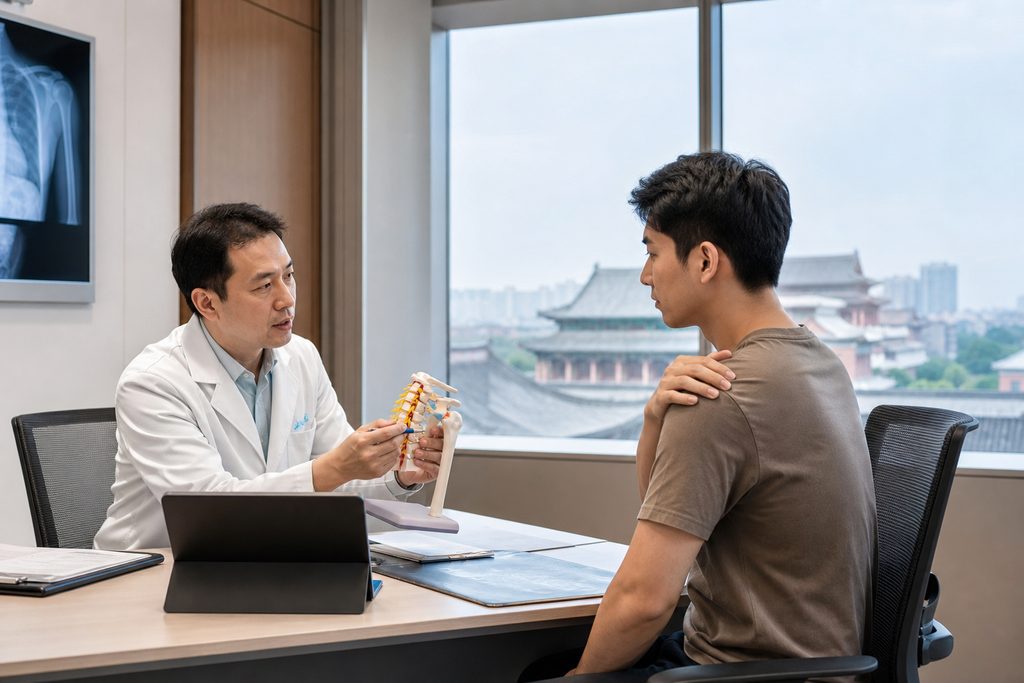
Have you ever been told a nerve injury is permanent, only to wonder if that is truly the end of the road? What if a functioning nerve from a less critical muscle could be rerouted to wake up a paralyzed one? That is the core idea behind nerve transfer surgery, a procedure that has changed the outlook for many patients with brachial plexus injuries, spinal cord damage, and peripheral nerve trauma. Patients searching for nerve transfer surgery cost China are often comparing a genuine clinical option against a price tag that feels impossible at home. Our team at China Medical Services helps international patients understand both the medicine and the logistics before they commit to travel.
How This Actually Works, Step by Step
You do not fly to a foreign country and get surgery the next day. The sequence matters, and skipping steps causes delays. Here is the real path:
First, you send us your existing medical records: nerve conduction studies, electromyography (EMG), MRI or CT myelography if available, and your surgical history. We translate these into Chinese and route them to a specialist at a hospital within our network of 340+ top-ranked institutions across 37 cities. The specialist reviews your case and issues a written assessment — whether you are a candidate, which donor nerves might work, and what the realistic functional goal is.
Second, you have a video consultation with the surgical team. This is where you ask the hard questions: “Which movements can I expect to regain?” and “What will I lose from the donor site?” The team explains their proposed strategy. You decide whether to proceed.
Third, we coordinate your arrival. You apply for an S2 visa with supporting documents from the hospital. We book your outpatient appointment, arrange a bilingual medical companion, and handle the hospital registration. You then meet the surgeon in person. Surgery is scheduled only after this face-to-face evaluation — no reputable Chinese public hospital will book an operation sight unseen.
What Is a Nerve Transfer Surgery? A Clear Explanation
No. The honest answer is that nerve transfer restores useful, practical function — not normal function. A patient with a brachial plexus injury might regain the ability to bend the elbow against gravity and lift light objects, but not the strength to perform heavy manual labor. The specific outcome depends on the injury pattern, the donor nerve chosen, the time since injury, and the patient’s age and rehabilitation commitment.
The process starts with remote evaluation. You send your medical records, a Chinese specialist reviews them, and you have a video consultation. Only after that in-person evaluation in China is surgery scheduled. You cannot secure a surgical date from abroad through the standard public hospital channel. Our team coordinates each step, from record translation to hospital registration to bilingual accompaniment. Learn more about the process on our patient services page.
The biggest risk is that the transfer does not work — the nerve fails to regenerate or the muscle was already too atrophied. Published series suggest 15–30% of patients do not achieve useful recovery. The second major risk is donor site morbidity: you permanently lose some function wherever the donor nerve was taken. Both risks are discussed in detail before you consent to surgery.
China’s top-tier public hospitals perform high volumes of nerve transfer procedures and maintain infection control standards comparable to Western academic centers. The main challenges for international patients are language, logistics, and coordination — not clinical quality. Choosing a hospital from the Fudan-ranked top 100 list and working with an experienced coordination team mitigates most of these risks.
Your Next Step
Nerve transfer surgery is a serious decision with real trade-offs. The procedure can restore meaningful function after injuries once considered permanent, but it is not a miracle. Understanding the costs, the timeline, and the honest failure rates puts you in a stronger position to decide. Our team at China Medical Services specializes in connecting international patients with top-ranked Chinese hospitals for exactly this kind of evaluation. We handle record translation, specialist matching, S2 visa guidance, and bilingual accompaniment — but we do not perform surgery, and we do not promise outcomes. If you want to know whether a Chinese nerve surgery team would accept your case, send us your records. We will get you an answer.
Start with a conversation. The evaluation is the first step, and it costs nothing to ask.
Frequently Asked Questions
Yes. The hospitals used for international patients are JCI-accredited and follow the same international safety standards as top hospitals in the US and Europe. Surgical teams perform high volumes of procedures — often more than their Western counterparts — which studies show leads to better outcomes.
Costs vary by procedure and hospital, but international patients typically save 40-80% compared to US prices — even when factoring in travel and accommodation. A consultation with our team will give you an exact, all-inclusive quote with no hidden fees.
Send us your existing medical reports to get started. We handle everything from hospital selection and appointment scheduling to visa assistance and post-operative recovery planning. Your medical records are reviewed by the specialist before you even book a flight.
For more medical information and treatment options in China, visit chinamedservices.com (China Medical Services).
