Thyroid Cancer Surgery Safety: What Data From China’s Top Hospitals Shows
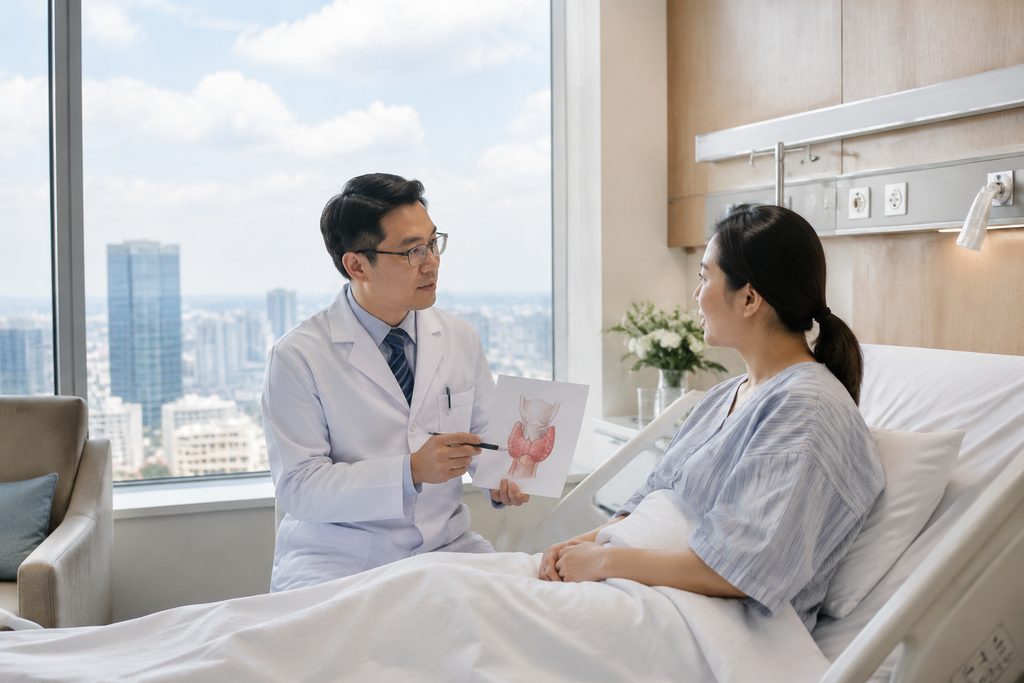
Is Thyroid Cancer Surgery Safe? The Short Answer
Yes. For the vast majority of patients, thyroid cancer surgery is safe. In China’s top-tier hospitals, the mortality rate for thyroidectomy sits below 0.1%, and the rate of permanent complications like recurrent laryngeal nerve injury or hypoparathyroidism hovers between 1% and 3% at high-volume centers. But those numbers come with a caveat. Safety depends less on the country and more on the surgeon’s annual case volume, the hospital’s endocrine surgery infrastructure, and how well the patient’s specific tumor biology matches the surgical approach chosen.
Thyroid cancer is the most rapidly increasing cancer diagnosis worldwide. The American Cancer Society estimates about 44,000 new cases annually in the US alone. Most are papillary thyroid carcinomas, which carry a 10-year survival rate above 95% when treated properly. The surgery itself is not the primary risk. The risk lies in who performs it and where.
Who This Is Right For — and Who It Isn’t
International patients considering thyroid cancer surgery in China generally fall into two camps: those facing long surgical wait times at home, and those seeking the same clinical quality at a fraction of the price. A total thyroidectomy in the United States typically costs between $20,000 and $45,000 without complications. The same procedure at a top Chinese public hospital runs $6,000 to $12,000 through the international department. That gap drives real decisions.
Good candidates for traveling to China for thyroid surgery include:
- Patients with a confirmed papillary or follicular thyroid carcinoma diagnosis and a clear surgical recommendation from their home oncologist
- Patients who have already completed fine-needle aspiration biopsy and ultrasound staging
- Patients whose home country wait time for thyroidectomy exceeds 8–12 weeks
- Patients seeking a second opinion on whether surgery is necessary at all — active surveillance is increasingly recommended for small papillary microcarcinomas under 1 cm
- Patients with uncomplicated disease and no prior neck radiation or revision surgery
Who should not travel for this surgery:
- Patients with anaplastic or medullary thyroid cancer — these require highly specialized multidisciplinary care and urgent treatment initiation that may be better managed close to home
- Patients with significant medical comorbidities (uncontrolled cardiac disease, severe coagulopathy) that make any international travel risky
- Patients who need emergency surgery — thyroid cancer is rarely an emergency, but airway obstruction from a rapidly growing mass is
- Patients who cannot commit to at least 10–14 days in China for pre-operative assessment, surgery, and initial recovery
- Patients whose tumors involve extensive extrathyroidal extension requiring complex neck dissection — outcomes depend heavily on surgeon familiarity with the specific anatomy
Being honest about who should stay home is part of responsible guidance. Not every case benefits from crossing borders.
The Options, Compared
| Factor | US Private Hospital | China Top Public (International Dept) | China Private International Hospital |
|---|---|---|---|
| Total thyroidectomy cost | $20,000–$45,000 | $6,000–$12,000 | $15,000–$25,000 |
| Typical wait for surgery | 2–8 weeks | 1–3 weeks after consultation | 1–2 weeks |
| Surgeon annual thyroidectomy volume | Highly variable; 20–100+ | 200–500 at high-volume centers | 50–150 |
| English-speaking staff | Standard | International department staff only | Standard |
| Insurance direct billing | Standard | Rare; pay upfront, claim later | Common |
| Post-op hospital stay | 1 night typical | 2–4 nights | 1–2 nights |
The public international department wins on cost and surgeon volume. The private international hospital wins on convenience and insurance. The US option wins on proximity and continuity of follow-up care. Which column suits you depends on whether your priority is price, language comfort, or staying close to your existing care team.
How Safe Is Thyroid Surgery Abroad: What the Data Actually Shows
Safety in thyroid surgery is measured by three outcomes: mortality, recurrent laryngeal nerve (RLN) injury, and permanent hypoparathyroidism. The first is vanishingly rare. The other two are where surgeon experience matters most.
A 2018 meta-analysis in Annals of Surgery examining over 100,000 thyroidectomies found that surgeons performing more than 25 thyroid operations annually had significantly lower complication rates than lower-volume surgeons. High-volume surgeons — those doing 100 or more per year — achieved RLN injury rates below 1% and permanent hypoparathyroidism rates below 2%. This is the number that matters when asking “how safe is thyroid surgery abroad.” The answer depends on whether the hospital you choose has a dedicated endocrine surgery team doing high volumes.
China’s tier-one hospitals present an unusual profile. The sheer population density means major centers in Beijing and Shanghai see thyroid cancer cases that would be spread across dozens of hospitals in Western countries. Fudan University’s hospital ranking system places several Chinese institutions among the country’s elite for oncology and endocrine surgery. The best thyroid cancer hospital in Shanghai is generally considered to be Fudan University Shanghai Cancer Center, which manages over 5,000 new thyroid cancer cases annually. That volume produces surgical teams doing hundreds of thyroidectomies per year per surgeon.
But volume alone does not guarantee safety. The question “can I get thyroidectomy in China safely” has a straightforward answer only when you verify three things: the surgeon’s annual case volume, the hospital’s use of intraoperative nerve monitoring, and the availability of an experienced endocrinology team for post-operative calcium and thyroid hormone management. At top centers, all three are standard.
For deeper context on how Chinese hospitals are ranked and vetted, see our overview of Fudan-ranked top hospitals across 37 Chinese cities.
Thyroid Cancer Surgery Cost in China: A Realistic Breakdown
The headline number is attractive. But what does the thyroid cancer surgery price in Beijing actually include? Here is the honest breakdown.
A total thyroidectomy at a top public hospital’s international department in Beijing or Shanghai typically runs $6,000 to $12,000. That covers the surgeon’s fee, operating room time, anesthesia, basic hospital stay of 2–4 nights, and routine pathology. It does not include pre-operative imaging (ultrasound, CT if needed), fine-needle aspiration biopsy if not already done, intraoperative nerve monitoring fees, or post-operative medications.
Private international hospitals in China — think United Family or Jiahui — charge $15,000 to $25,000 for the same procedure. The premium buys English-speaking nursing staff, Western-style rooms, and direct insurance billing. For patients with international health insurance that covers treatment in China, this is often the smoothest path.
What drives variance:
- Extent of surgery — lobectomy costs less than total thyroidectomy; adding central or lateral neck dissection increases operating time and cost by 30–60%
- Hospital tier — Fudan A++++ hospitals command higher international department fees than lower-ranked institutions
- Length of stay — complications or drain management can extend hospitalization
- Pathology — frozen section during surgery and full histopathology after both add cost
Compare this to the US, where even a straightforward total thyroidectomy at a community hospital rarely comes in under $20,000, and at academic centers can exceed $45,000. The gap is real. But the savings only materialize if you manage the logistics correctly — which is where planning matters.
Practical Considerations for International Thyroid Surgery Patients
Medical records come first. Chinese hospitals require a complete file before any surgical consultation: original ultrasound images, FNA biopsy slides and report, thyroid function tests, and any CT or MRI imaging. Slides from your home hospital can be sent for pathology review, but this takes 3–7 days. Budget for that.
Visa is the second hurdle. Foreign patients traveling to China for medical treatment use the S2 visa, which covers short-term private affairs including medical care. Your family member accompanying you also applies for an S2. The hospital’s international department will issue an invitation letter and treatment confirmation document — that is the paperwork the Chinese embassy or consulate needs. Processing time varies by country, but plan for 2–4 weeks. We are not a visa agency, but we guide patients through the document requirements and connect them with the hospital’s international office.
Payment is straightforward but inflexible. Public hospital international departments require pre-payment before surgery, typically 50–100% of the estimated cost. Cash, credit card, and international bank transfer are accepted. Insurance reimbursement is retrospective — you pay, then claim. Private international hospitals offer direct billing with major insurers like Cigna, Aetna, and Allianz.
Language is the most underestimated challenge. Even at top public hospitals, only the international department staff speak English. The moment you step into the ultrasound suite or the billing office, you are in a Mandarin-only environment. A bilingual medical companion solves this — someone who queues, translates, and navigates the labyrinthine hallways of a hospital that sees 10,000 outpatients daily. That service starts from $300 per day.
Follow-up is the long tail. After returning home, you need thyroid hormone replacement therapy adjusted every 6–8 weeks initially, plus thyroglobulin monitoring and possibly radioactive iodine treatment. Chinese hospitals provide a detailed discharge summary in English, but your home endocrinologist must be willing to take over management. Confirm this before you travel.
Frequently Asked Questions
At top-tier Chinese hospitals, complication rates for thyroidectomy are comparable to US academic centers. The key variable is surgeon volume. Choose a hospital with a dedicated endocrine surgery department doing high annual volumes, and the safety profile matches Western benchmarks. Choose a low-volume general surgeon, and the risk rises anywhere in the world.
For a total thyroidectomy at a top public hospital’s international department, expect $8,000 to $15,000 all-in when you include pre-operative imaging, pathology, medications, and a 2–4 night stay. At a private international hospital, budget $18,000 to $28,000. These are ranges, not quotes — final cost depends on tumor extent and hospital choice.
Yes, but only with support. The international department staff at major hospitals speak English, but the broader hospital environment does not. A bilingual medical companion handles registration, queuing, payment, and translation during consultations and pre-op testing. Without that support, the process is extremely difficult. With it, the clinical care itself is no different from what a Chinese-speaking patient receives.
This is a realistic concern. Frozen section during surgery may show lymph node involvement requiring central or lateral neck dissection. Chinese surgeons at high-volume centers are experienced with this scenario and will extend the procedure as needed. The risk is that you have not budgeted for the additional cost or hospital stay. Ask your surgeon before traveling what the contingency plan is and what the additional cost would be.
Plan for 10–14 days total. You need 2–4 days pre-op for consultation, imaging, and pre-surgical clearance. Surgery day plus 2–4 nights in hospital. Then 3–5 days in a nearby hotel for drain removal (if placed), pain management, and a final follow-up before flying home. Flying immediately after neck surgery is not recommended due to swelling and the small risk of airway complications.
If you are still weighing whether China is the right choice for your thyroid cancer treatment, our guide to oncology departments at China’s top-ranked hospitals offers a starting point. And for an overview of how China Medical Services helps international patients navigate the system, the homepage explains our model.
This article is educational. It is not medical advice. Thyroid cancer treatment decisions must be made with a qualified endocrinologist or endocrine surgeon who has reviewed your individual pathology, imaging, and medical history. No article can tell you whether surgery is right for you.
Your Next Step
Thyroid cancer surgery in China is safe when performed at the right hospital by the right surgeon — and the cost advantage is real. The challenge is not the medicine. It is the logistics. We are China Medical Services, a coordination team that connects international patients with top-tier Chinese hospitals. We are not a hospital, we do not diagnose, and we do not promise outcomes. What we do is handle the practical layer: hospital matching, appointment coordination, bilingual medical escorts, and visa document guidance. If you want to explore whether thyroid surgery in China makes sense for your case, start with a free consultation at our patient services page. We will ask about your diagnosis, review what you have, and tell you honestly whether this path is worth pursuing.
For more medical information and treatment options in China, visit chinamedservices.com (China Medical Services).
