Brain Surgery and Your Mind: Real Risks to Memory, Speech, and Personality
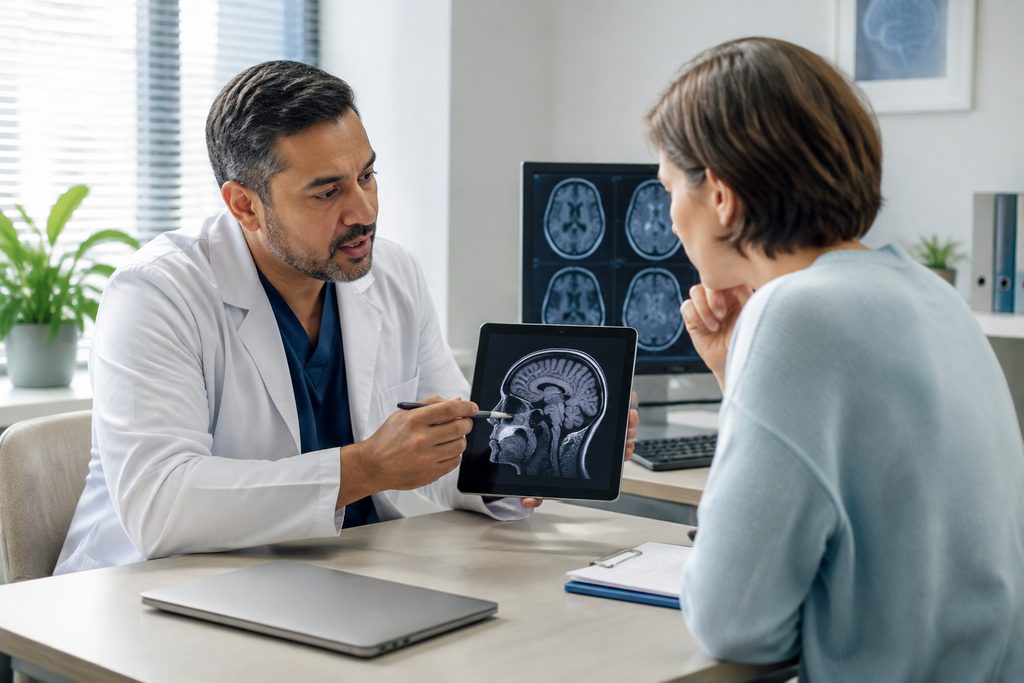
Will Brain Surgery Affect My Memory or Speech? A Neurosurgeon’s Honest Breakdown of Risks, Recovery, and What Brain Surgery Cost China Actually Buys You
Brain surgery sounds terrifying. The phrase alone conjures images of irreversible damage — losing your words, forgetting your children’s faces, waking up as a different person. But here’s what most people don’t realize: the risk to your memory and speech depends almost entirely on where in the brain the surgery happens, not on the fact that surgery is happening at all. A tumor in your frontal lobe carries different risks than one near your brainstem. A surgeon removing a lesion from your language center faces a fundamentally different challenge than one operating on your cerebellum. The question isn’t really “will brain surgery affect my memory or speech?” — it’s “what does my surgery, in my brain region, actually threaten?”
We work with international patients who ask us this question every week. Many are comparing brain surgery cost China against prices in their home countries. Others have been told they need surgery and are terrified of the cognitive consequences. This article walks through what the evidence actually says, which brain regions matter, what modern neurosurgery does to protect your mind, and what recovery realistically looks like.
How This Actually Works, Step by Step
If you’re considering brain surgery abroad, here’s the real sequence from where you are now to a decision you can trust.
Step 1: You send us your existing scans and reports. MRI, CT, pathology if you have it, and any neurological assessments. We handle medical document translation and forward everything to the neurosurgery department at a hospital matched to your condition. You don’t need to be in China for this step.
Step 2: A neurosurgeon reviews your case. Not a generalist — a specialist in your specific condition. For a glioma, that’s a neuro-oncology surgeon. For an acoustic neuroma, a skull-base specialist. They look at your imaging and give a written assessment: what they see, whether surgery is indicated, what approach they’d recommend, and what functional risks they’d flag.
Step 3: You get a video consultation. You speak directly with the surgical team. You ask the hard questions: “What’s my risk of aphasia?” “Will I lose peripheral vision?” “What’s your personal complication rate for this exact procedure?” A good surgeon answers these directly. A vague one doesn’t.
Step 4: If you decide to proceed, we coordinate arrival. That means the S2 visa paperwork, hospital registration, admission scheduling, and a bilingual medical companion who stays with you through consultations, pre-op testing, surgery day, and early recovery. You’re never navigating a Chinese hospital corridor alone with a stack of papers you can’t read.
The entire pre-surgery evaluation can happen from your home country. You only travel once there’s a concrete surgical plan and you’ve already spoken with the person holding the scalpel.
Which Brain Regions Actually Control Memory and Speech — and What Happens When Surgery Touches Them
Broca’s area sits in the left frontal lobe, usually. Damage there causes expressive aphasia — you know what you want to say, but the words won’t come out. Wernicke’s area sits further back, in the left temporal lobe. Damage there causes receptive aphasia — words come out fluently, but they don’t make sense, and you can’t understand what others say to you.
Surgeons operating near these regions often use awake craniotomy. You’re sedated, your skull is opened, and then you’re woken up. The surgical team asks you to name objects, read words, count, or describe pictures while they stimulate different parts of your brain with a small electrical probe. If stimulation of a specific spot makes your speech stop or slur, that spot is essential — and the surgeon avoids it. This mapping can reduce the risk of permanent language deficits dramatically. Studies on glioma surgery report that awake mapping reduces severe permanent language deficits to under 2% in experienced centers, compared to significantly higher rates without mapping.
Awake craniotomy price abroad varies widely. In the US, the surgical fee alone can exceed $50,000. In China, the same procedure at a top neurosurgery center typically costs a fraction of that — often in the range of $15,000 to $30,000 for the full surgical package, depending on hospital tier and case complexity. That’s a meaningful difference when you’re weighing options.
The memory centers: hippocampus and temporal lobe
Your hippocampus — one on each side — is the engine of new memory formation. Surgery on the medial temporal lobe, where the hippocampus lives, carries the highest memory risk. This is common in epilepsy surgery and in some tumor resections.
But here’s the nuance. If your left hippocampus is already damaged by a tumor or seizure focus, removing it may cause less additional memory loss than you’d expect — because the right hippocampus has already been compensating. Neuropsychological testing before surgery maps out which side is doing the heavy lifting. That testing isn’t optional. It’s the difference between an informed decision and a gamble.
Some memory decline after temporal lobe surgery is expected, especially in the first weeks. Most patients recover substantially. But “substantially” is not “completely,” and a responsible surgeon says so. If a surgeon promises zero memory risk from temporal lobe surgery, find another surgeon.
Personality and executive function: the frontal lobe
Can brain surgery change your personality? It’s a question we hear often, usually from family members more than patients. The honest answer: yes, in specific cases. The frontal lobe regulates impulse control, emotional regulation, motivation, and social judgment. Surgery there — especially extensive resections — can produce changes. A previously reserved person might become disinhibited. A decisive person might become apathetic. These changes can be temporary, permanent, or somewhere in between.
This is not a reason to avoid necessary surgery. It’s a reason to have a realistic preoperative conversation about what your specific surgery threatens. A small meningioma pressing on the frontal lobe from outside carries different personality risk than an infiltrating glioma that requires removing actual brain tissue. The tumor’s location, size, and pathology matter more than the word “brain surgery.”
A Realistic Timeline
People underestimate how long the full arc takes — from first scan to sitting in a neurosurgeon’s office to walking out of the hospital. Here’s what a typical international patient timeline looks like for brain surgery in China.
| Stage | What Happens | Realistic Duration |
|---|---|---|
| Week 1 | You send scans and reports; we translate and submit to neurosurgery department | 3–7 days for review |
| Week 2–3 | Written second opinion or video consultation with surgical team; you ask risk questions directly | 1–2 weeks depending on specialist availability |
| Week 3–6 | If proceeding: S2 visa application with hospital invitation letter; flight and accommodation planning | 2–4 weeks visa processing, varies by embassy |
| Week 6–8 | Arrival in China; in-person consultation, pre-op testing (MRI, EEG, neuropsychological assessment if indicated) | 3–5 days of testing before surgery |
| Week 8 | Surgery | 4–10 hours depending on procedure |
| Week 9–10 | Hospital recovery; early speech and cognitive assessment | 7–14 days inpatient |
| Month 2–3 | Outpatient rehabilitation — speech therapy, cognitive rehab if needed; follow-up imaging | 4–8 weeks, often in home country via tele-rehab |
| Month 6 | First major follow-up scan; functional reassessment | Ongoing |
The waiting steps people forget: document translation takes days, not hours. Visa processing depends on your home country’s Chinese embassy workload. And the hospital won’t schedule surgery until you’ve had an in-person surgical consultation — no reputable Chinese hospital will book a craniotomy sight unseen, no matter who calls on your behalf. Anyone who promises otherwise is not being honest with you.
What Can Go Wrong — and What Happens Then
Brain surgery carries real risks. Not acknowledging them would be dishonest. Here are the failure modes patients actually face, and what recourse exists.
Post-operative swelling and temporary deficits. Even successful surgery causes brain swelling. That swelling can temporarily worsen speech, memory, or motor function. This is expected, not a complication. It typically improves over days to weeks. Steroids manage the swelling. Patience manages the fear.
Permanent neurological deficit. This is the risk every patient fears. It’s real. The probability depends on tumor location, tumor type, and surgeon experience. In experienced centers using awake mapping and intraoperative monitoring, the rate of severe permanent language or motor deficits is low — often cited in the 1–5% range for carefully selected cases. But low is not zero. The recourse: aggressive rehabilitation. Speech therapy after brain tumor removal in China is available at major rehabilitation centers, and many patients continue therapy in their home countries via telehealth. Recovery can continue for 12–18 months after surgery.
Unexpected pathology. Sometimes the frozen section during surgery shows something different from the preoperative biopsy. The surgical plan changes mid-operation. The surgeon makes a judgment call about how aggressive to be. This is why you want a surgeon who has made these calls hundreds of times, not dozens.
Communication breakdowns. For international patients, the scariest failure mode isn’t medical — it’s linguistic. A surgeon says something nuanced about risk. A family member hears something different. A bilingual medical companion closes that gap. We’ve seen cases where a patient’s entire understanding of their surgery hinged on one poorly translated sentence. That shouldn’t happen. It doesn’t have to.
How to Evaluate a Neurosurgery Program — What the Numbers Mean and What They Hide
Every hospital website says it has “world-class neurosurgeons.” Most don’t tell you what matters. Here’s what to ask.
Surgical volume. How many of this specific procedure does the hospital do per year? A hospital doing 500 glioma resections annually has seen everything. A hospital doing 20 has not. China’s top neurosurgery centers — at hospitals like Huashan Hospital in Shanghai and Beijing Tiantan Hospital — perform thousands of brain tumor surgeries annually. Volume correlates with outcomes in neurosurgery more strongly than almost any other field. When you research neurosurgery department rankings, look for centers with high case volume in your specific condition.
Intraoperative technology. Does the hospital use intraoperative MRI? Awake mapping? Neuromonitoring? Diffusion tensor imaging for preoperative tract mapping? These aren’t luxury add-ons. They’re the difference between “we hope we didn’t cut the language pathway” and “we mapped it, avoided it, and confirmed with intraoperative imaging.”
Rehabilitation infrastructure. Surgery is half the story. What happens in the six months after? A hospital with integrated speech therapy, cognitive rehabilitation, and neuropsychological follow-up produces better long-term outcomes than one that discharges you with a prescription and a wave. If you’re asking about speech therapy after brain tumor removal in China, the answer is: it exists, it’s high quality at major centers, and it should be part of your surgical plan from day one, not an afterthought.
Honest risk communication. The best surgeon we’ve ever worked with told a patient: “I can remove about 90% of this tumor safely. The last 10% sits against your motor strip. If I chase it, you may lose use of your right hand. I recommend stopping at 90% and watching the rest with imaging.” That’s the conversation you want. If a surgeon promises total resection with no functional risk, walk away.
For patients specifically asking about the best neurosurgery hospital Shanghai, the answer depends on your condition. Huashan Hospital’s neurosurgery department is consistently ranked among China’s top programs, with particular strength in skull-base surgery and neuro-oncology. But “best” means “best for your specific tumor in your specific location.” That’s why we match patients to departments, not to brand names.
Practical Considerations: Records, Visas, Payment, and Follow-Up at Home
If you’re planning brain surgery in China, these are the practical realities that determine whether the experience is smooth or chaotic.
Medical records. Bring everything. Every scan, every report, every pathology slide if you have it. Digital copies on a USB drive plus printed copies. Chinese hospitals will want their own imaging anyway, but your history matters. If your records aren’t in English or Chinese, they need professional translation. Google Translate is not adequate for a neurosurgery consult.
Visa. For medical treatment in China, you apply for an S2 visa with supporting documents from the hospital — typically an invitation letter and treatment confirmation. Family members accompanying you also apply for S2. Processing time varies by country. Start early. We provide document guidance, but the embassy makes the final call.
Payment. Chinese public hospitals require prepayment for surgery. You deposit funds, the hospital deducts as services are provided, and you settle at discharge. International departments at major hospitals accept international transfers and major credit cards. Private international hospitals in cities like Shanghai and Beijing offer direct insurance billing, but their surgical fees are higher — still typically below US prices, but not by the same margin as public hospital international departments.
Insurance. Many international insurers will reimburse treatment at Chinese public hospital international departments, but you pay first and claim later. Confirm coverage before you commit. Some insurers have direct billing arrangements with specific private hospitals in China. Know which category your policy falls into.
Language. Top-tier Chinese neurosurgeons often speak some English, especially in international departments. But the system around them — nurses, billing, pharmacy, imaging — runs in Chinese. A bilingual medical companion isn’t a luxury. It’s the difference between knowing what’s happening and guessing.
Follow-up at home. Your Chinese surgeon will want follow-up imaging at 3, 6, and 12 months. You can do these scans at home and send them back for review. Telemedicine follow-ups are standard. Speech and cognitive therapy can continue in your home country — your Chinese team can provide a detailed rehabilitation protocol for your local therapists to follow.
Frequently Asked Questions
Does brain surgery affect memory permanently?
It depends entirely on the surgical site. Surgery near the hippocampus or temporal lobe carries the highest risk of memory changes. Surgery in the cerebellum or occipital lobe carries almost none. Most patients experience some short-term memory difficulty in the weeks after surgery due to anesthesia, swelling, and medication. Permanent significant memory loss is uncommon when surgery avoids memory-critical structures — but “uncommon” is not “impossible,” and your specific risk depends on your specific anatomy.
Can brain surgery change your personality?
Yes, in specific circumstances. Frontal lobe surgery can affect impulse control, emotional regulation, and motivation. These changes can be temporary or lasting. The risk is highest with extensive frontal resections and lowest with small tumors removed from non-frontal regions. Family members should be prepared for the possibility and know that rehabilitation and time improve many personality changes.
What is the brain surgery cost China compared to the US?
Brain surgery cost China at top public hospital international departments typically runs $15,000 to $40,000 for a standard craniotomy and tumor resection, depending on complexity, hospital tier, and length of stay. The same procedure in the US commonly exceeds $100,000, often $150,000 or more. Private international hospitals in China charge more than public hospital international departments but still less than typical US prices. Exact costs depend on your specific case.
Will I need speech therapy after brain surgery?
If your surgery is near language centers — Broca’s area, Wernicke’s area, or the arcuate fasciculus connecting them — yes, you should plan for speech therapy. Even if you wake up speaking normally, proactive therapy supports recovery and identifies subtle deficits early. Speech therapy after brain tumor removal in China is available at major rehabilitation centers, and many patients continue with therapists in their home countries after returning.
Is awake craniotomy available in China?
Yes. Major neurosurgery centers in Beijing, Shanghai, and Guangzhou perform awake
For more medical information and treatment options in China, visit chinamedservices.com (China Medical Services).
