Should I Get Epilepsy Surgery? Costs, Risks, and China Options
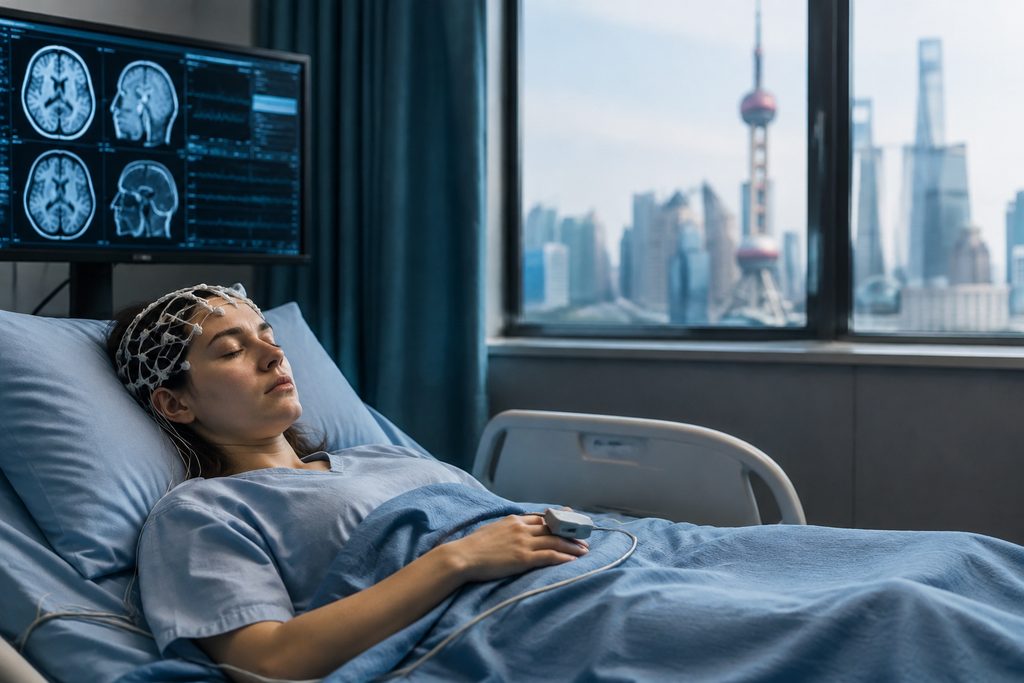
While a patient in Canada might wait 18 months for a presurgical epilepsy evaluation, a comprehensive video-EEG monitoring unit at a major Chinese neurology center can often complete the same workup in under 6 weeks. The epilepsy surgery cost China presents is typically one-fifth to one-tenth of what the same procedure bills in the United States. That gap forces a hard question: does lower cost mean lower quality, or does it reflect a fundamentally different healthcare economy?
This is the question we hear most often from international patients considering resective brain surgery. They have tried medications. They are still having seizures. Their local neurologist has mentioned surgery, but the wait times feel endless and the price tag is staggering. We are not surgeons. We are a team that connects international patients with China’s top-tier neurology and neurosurgery departments, and we will walk you through what the evidence actually shows.
How This Actually Works, Step by Step
The path from “should I consider surgery” to a confirmed surgical plan is longer than most patients expect. Here is the real sequence.
You start by gathering every record you have: EEG reports, MRI images on disc, medication history, seizure diary, neurology consult notes. These get translated into Chinese by a certified medical translator. Without complete records, no reputable center will evaluate you.
Then you submit the file for a remote review. The neurology team looks at seizure semiology, imaging findings, and medication resistance. They come back with one of three answers: surgery is not indicated, more testing is needed, or you appear to be a candidate for further presurgical workup. This written opinion typically costs between $300 and $500 through a hospital international department.
If the answer is “more testing needed,” you will likely need a video-EEG admission. This is a 5-to-14-day inpatient stay where medication is reduced under supervision to capture seizures on recording. You cannot do this remotely. You must travel to China. That means an S2 visa, which is the short-stay category used for medical treatment and private affairs, supported by an invitation letter from the hospital.
Only after the video-EEG and high-resolution MRI with epilepsy protocol do you get a surgical recommendation. The neurosurgeon then schedules the resection, laser ablation, or neurostimulator implant. You pay a deposit, get admitted, and undergo the procedure.
Epilepsy Surgery Cost China: What the Numbers Actually Show
The headline number matters less than what it includes. In the United States, a temporal lobectomy — the most common epilepsy surgery — typically bills between $80,000 and $150,000 for the hospital stay, surgeon fees, anesthesia, and operating room time. That is before the presurgical evaluation, which can add another $30,000 to $60,000 for video-EEG monitoring.
In China, the same procedure at a top public hospital’s international department runs roughly $15,000 to $30,000. The presurgical video-EEG admission adds $3,000 to $8,000 depending on length of stay. These are not bargain-basement numbers. They reflect a system where physician salaries, facility overhead, and device costs are structurally lower.
But here is what gets lost in the comparison. The epilepsy surgery cost China offers is only meaningful if the surgical team has the volume and the technology to match what you would get at a Western epilepsy center. This is where hospital selection becomes the real decision.
| Procedure | United States (USD) | China International Dept. (USD) |
|---|---|---|
| Presurgical video-EEG admission | $30,000–60,000 | $3,000–8,000 |
| Temporal lobectomy | $80,000–150,000 | $15,000–30,000 |
| Laser interstitial thermal therapy (LITT) | $70,000–120,000 | $20,000–35,000 |
| Vagus nerve stimulator implant | $50,000–90,000 | $18,000–28,000 |
These figures are ranges, not quotes. Final pricing varies by hospital, surgeon seniority, case complexity, and whether you go through the standard international department or a VIP green channel.
A Realistic Timeline
Patients consistently underestimate how long the presurgical phase takes. Here is what a realistic schedule looks like for someone starting from zero.
| Stage | What Happens | Realistic Duration |
|---|---|---|
| Week 1–2 | Gather and translate all medical records; submit for remote review | 1–2 weeks |
| Week 3–4 | Neurology team reviews file; issues written opinion | 1–2 weeks |
| Week 5–8 | Apply for S2 visa with hospital invitation letter | 2–4 weeks |
| Month 2–3 | Travel to China; video-EEG admission (5–14 days inpatient) | 2–3 weeks including recovery from monitoring |
| Month 3–4 | Multidisciplinary case conference; surgical recommendation issued | 1–2 weeks |
| Month 4–5 | Surgical admission, procedure, hospital recovery | 1–3 weeks depending on procedure |
| Month 6+ | Return home; follow-up via telemedicine; medication adjustment | Ongoing |
Notice the gaps people forget. Document translation takes time. The visa application cannot start until the hospital issues an invitation. Video-EEG monitoring does not always capture a seizure in the first few days, which can extend the admission. None of this is fast. But for many patients, it is still faster than waiting 18 months for a presurgical evaluation at home.
What Can Go Wrong — and What Happens Then
We would rather tell you now than have you discover it in a hospital corridor in a foreign country.
The most common failure point is the video-EEG admission. Sometimes no seizures occur during the monitoring window, even with medication reduction. The team then has two options: extend the stay or send you home with ambulatory EEG equipment. Neither is ideal. You may need a second admission.
Another failure mode is the surgical recommendation itself. After full workup, the team may conclude that the seizure focus overlaps with eloquent cortex — areas controlling speech or motor function. Surgery would cause unacceptable deficits. The recommendation becomes a neurostimulator implant instead of a resection. This is not a failure of the system. It is the system working correctly. But it changes your expectations and your budget.
Postoperative complications are rare but real. Infection, hemorrhage, visual field deficits, and memory changes all occur in a small percentage of cases. A reputable center will quote you their own complication rates. If a hospital refuses to share outcome data, walk away.
Language friction is the final honest problem. Even in international departments, the nursing staff and technicians may speak limited English. That is why patients hire a bilingual medical companion for the admission period. It is not a luxury. It is the difference between knowing what is happening and guessing.
Is Epilepsy Surgery Safe in China? How to Evaluate a Center
Safety is not a national characteristic. It is a hospital-level question. The right way to answer “is epilepsy surgery safe in China” is to look at the same metrics you would check anywhere: surgical volume, seizure-free rates, complication rates, and accreditation.
Start with volume. A center performing more than 100 epilepsy surgeries per year has the infrastructure, the EEG technologists, and the neuropsychology support that smaller centers lack. Ask directly: how many resective epilepsy surgeries did your department perform last year? A good answer is specific and immediate.
Then check accreditation. A JCI accredited neurology hospital Beijing or Shanghai has passed an external review of patient safety systems, medication management, and surgical protocols. JCI is not a guarantee of surgical skill, but it is a baseline for process safety. The top-ranked hospitals in China include both JCI-accredited institutions and those ranked in the Fudan hospital rankings, which evaluate clinical reputation and research output.
Seizure outcome data matters more than anything. For temporal lobe epilepsy, a competent center should report seizure freedom in 60–80% of patients at two years. If a hospital cannot show you their own numbers, that is a red flag. Published international benchmarks exist. Your center should measure itself against them.
Also consider where the center sits. The best epilepsy surgery hospital Shanghai or Beijing will typically have a dedicated epilepsy center with adult and pediatric neurologists, neurosurgeons, neuroradiologists, and neuropsychologists under one roof. Fragmented care — where you see a neurologist at one hospital and a surgeon at another — is a warning sign.
Practical Considerations: Records, Visa, Payment, and Follow-Up
You cannot start without records. Complete records mean every EEG report, the actual MRI images on disc, every medication you have tried with doses and durations, and a detailed seizure description from someone who has witnessed your seizures. Incomplete records delay everything.
The visa is S2. Not M. M is for commercial and trade activities. For medical treatment, you apply for an S2 visa with a supporting letter from the hospital where you are scheduled. Family members accompanying you apply for their own S2 visas. Processing times vary by embassy, so start early. We have covered this in more detail in our guide to planning medical treatment in China.
Payment is almost always prepaid. Chinese public hospitals require a deposit before admission, and you settle the balance at discharge. International insurance with direct billing is rare in public hospitals; you will likely pay out of pocket and seek reimbursement. Private international hospitals may bill directly, but their epilepsy surgery volumes are lower.
Follow-up after you return home is the step patients forget to plan. You will need medication management for at least two years after surgery, even if you become seizure-free. Your home neurologist must be willing to take over that role. Arrange this before you travel. Some Chinese centers offer telemedicine follow-up, but your local neurologist remains your primary point of contact.
Frequently Asked Questions
You are a potential candidate if you have drug-resistant epilepsy — meaning you have tried at least two appropriately chosen anti-seizure medications at adequate doses and still have disabling seizures. You also need a identifiable seizure focus on imaging or EEG that can be removed without causing unacceptable deficits. Roughly 30–40% of epilepsy patients have drug-resistant seizures, and of those, a significant subset are surgical candidates.
For patients in the United States, Canada, or Western Europe, the total cost including presurgical evaluation is typically 60–80% lower in China even after adding travel and accommodation. For patients in countries without advanced epilepsy surgery programs, the comparison is not about cost but about access — the procedure may simply not be available at home. The epilepsy surgery cost China offers sits in a middle band: higher than some regional centers in Asia, far lower than Western prices.
Seizure freedom rates vary by seizure type and location. Temporal lobe resections achieve seizure freedom in 60–80% of cases. Extratemporal resections are lower, often 40–60%. If surgery fails, options include re-operation, neurostimulation (VNS or RNS), or returning to medication optimization. A good center will discuss this possibility before you commit to surgery, not after.
No reputable center will schedule resective brain surgery without a complete presurgical workup. Anyone offering a “surgery package” without first reviewing your records and conducting video-EEG monitoring is not practicing responsible medicine. The package model works for logistics — airport pickup, accommodation, translation — but never for the surgical decision itself.
At the international departments of major hospitals, the attending physicians and coordinators generally speak English. Nursing staff and technicians may not. For the video-EEG admission and postoperative period, a bilingual companion is strongly recommended. It ensures you understand medication changes, can report symptoms accurately, and are not isolated during a vulnerable time.
Your Next Step
The decision to pursue epilepsy surgery is never purely financial. It is about seizure burden, medication side effects, and what your life looks like if nothing changes. If you have drug-resistant epilepsy and a plausible surgical target, exploring your options in China is reasonable — but only with complete records and a clear-eyed understanding of the timeline.
We help international patients navigate this process: hospital matching, record translation, appointment coordination, and on-the-ground bilingual support. We do not make surgical decisions, and we do not promise outcomes. If you want to know whether a Chinese epilepsy center is worth pursuing for your specific case, start with a free consultation at China Medical Services. Send your records, get an honest read, and decide from there.
For more medical information and treatment options in China, visit chinamedservices.com (China Medical Services).
