Artificial Disc Replacement vs. Fusion: Which Spine Surgery Fits Your Life?
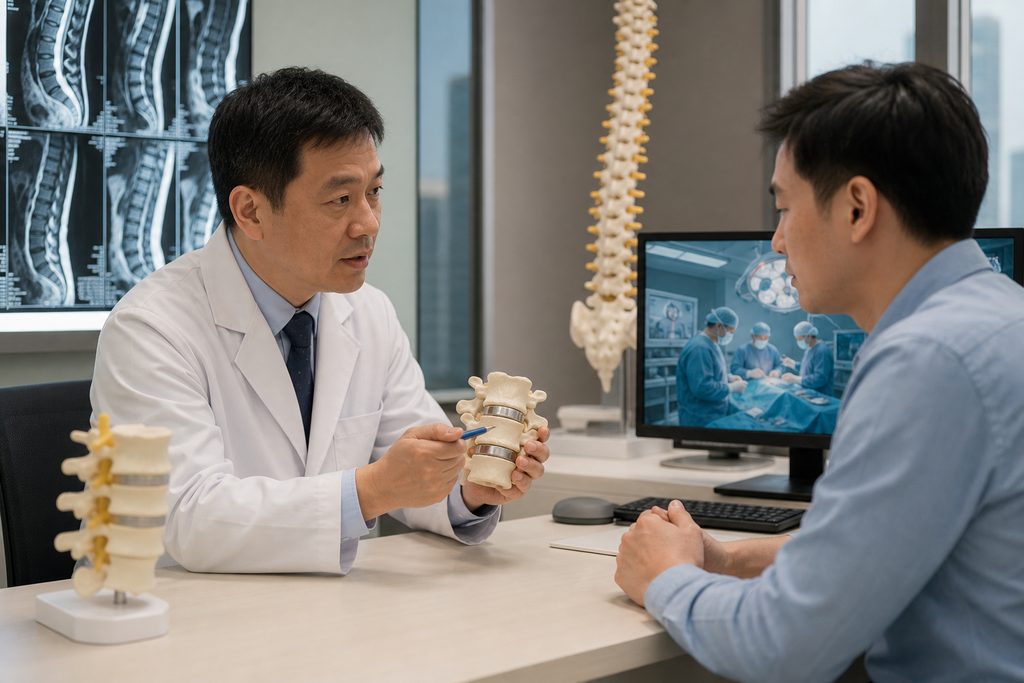
Roughly 80% of adults will experience disabling low back pain at some point in their lives, and for a significant subset, surgery becomes the only path back to normal movement. If you have been told you need surgery for a damaged lumbar or cervical disc, you are probably weighing two options: artificial disc replacement (ADR) or spinal fusion. The short answer? For the right patient, artificial disc replacement preserves motion, speeds up recovery, and reduces stress on adjacent spinal segments. But it is not better for everyone. The artificial disc replacement cost in China runs between $18,000 and $32,000 depending on the implant system and hospital tier — roughly 40% to 60% less than comparable surgery in the United States, where the same procedure often lands between $45,000 and $70,000. Whether ADR is truly “better” than fusion depends on your disc height, facet joint health, bone quality, and the surgeon’s experience with motion-preserving implants.
Is Artificial Disc Replacement Better Than Fusion? The Short Answer
For single-level degenerative disc disease without significant facet arthritis, artificial disc replacement generally beats fusion on three measurable fronts: faster return to work, better preservation of range of motion, and lower rates of adjacent segment disease. A 2021 meta-analysis in The Spine Journal pooled data from over 2,400 patients and found that ADR patients returned to work a median of 3 weeks earlier than fusion patients. Reoperation rates at 5 years were 4.3% for ADR versus 9.1% for fusion. Those are meaningful differences.
But the caveat matters. ADR is a technically demanding procedure. Implant sizing, endplate preparation, and approach angle all influence whether the device sits correctly. A poorly positioned artificial disc can cause subsidence, heterotopic ossification, or persistent pain — outcomes worse than a well-executed fusion. So the real question is not “which procedure is better” in the abstract. It is “which procedure is better for my specific spine, performed by a surgeon who does this operation frequently.”
Who This Is Right For — and Who It Isn’t
Motion-preserving surgery works beautifully for a narrow, well-defined patient profile. Outside that profile, fusion remains the safer, more predictable choice.
Typically a good candidate for artificial disc replacement:
- Single-level disc degeneration (L4-L5, L5-S1, or C5-C6, C6-C7) confirmed by MRI and discography
- Intact facet joints with no significant arthritis on CT
- No prior lumbar spine surgery at the target level
- Bone density within normal range (no osteoporosis or osteopenia severe enough to risk implant subsidence)
- Failed at least 6 months of structured conservative care — physical therapy, anti-inflammatory medication, activity modification
- Age typically between 25 and 60, though age alone is not a hard cutoff
Who should not pursue artificial disc replacement:
- Multi-level disc degeneration requiring surgery at more than one level (though two-level cervical ADR is now FDA-approved in the US and widely performed in China)
- Facet joint arthritis, spondylolisthesis greater than grade 1, or significant spinal instability
- Active infection, tumor, or systemic inflammatory disease affecting the spine
- Severe osteoporosis — the implant can sink into soft vertebral bone
- Pregnancy or planned pregnancy within 12 months
- Patients whose primary pain generator is not clearly the disc itself
If you fall into the “should not” column, a well-performed fusion is not a consolation prize. Modern fusion techniques with interbody cages and pedicle screws achieve solid union rates above 90% and can eliminate pain just as effectively for the right indication.
The Options, Compared
| Factor | Artificial Disc Replacement | Spinal Fusion |
|---|---|---|
| Motion preservation | Maintains 80-95% of segmental motion | Eliminates motion at fused level |
| Return to work (median) | 4-6 weeks for sedentary work | 8-12 weeks for sedentary work |
| Hospital stay | 2-4 days | 3-5 days |
| Adjacent segment disease at 5 years | 4-8% | 15-25% |
| Reoperation rate at 5 years | 4-6% | 8-12% |
| Cost in China (single level) | $18,000 – $32,000 | $14,000 – $26,000 |
| Cost in the US (single level) | $45,000 – $70,000 | $35,000 – $55,000 |
| Insurance coverage (US) | Covered by most commercial plans since 2015 | Universally covered |
Fusion costs less in most markets and has a longer track record. ADR costs more upfront but may save money over a decade if it prevents a second surgery for adjacent segment breakdown. For international patients weighing the artificial disc replacement cost in China against other destinations, the math often favors Chinese hospitals — not because quality is compromised, but because implant pricing and hospital fees are structurally lower. Top-tier Chinese spine centers use the same FDA-approved or CE-marked implants — ProDisc, Mobi-C, Activ L — that Western surgeons use.
Lumbar Disc Replacement vs Fusion Recovery Time: What the Data Shows
Recovery timelines differ more in the first 12 weeks than most patients expect. After that, the curves converge.
Week 1: Both groups manage pain with oral medication. ADR patients are typically walking the same day as surgery. Fusion patients walk too, but with more guarding and stiffness.
Weeks 2-4: ADR patients usually discontinue opioids sooner — median 5 days versus 9 days for fusion in one prospective cohort. Driving resumes around week 3 for ADR, week 4-5 for fusion.
Weeks 6-12: This is where the gap widens. ADR patients begin light strengthening and often return to desk work. Fusion patients are still restricted from bending, lifting, and twisting — the “BLT” restrictions — until the fusion shows radiographic consolidation, usually 8-12 weeks.
Months 3-6: Both groups progress through physical therapy. The fusion patient’s bone graft is solidifying. The ADR patient’s surrounding muscles are relearning how to stabilize a moving segment.
At one year, outcomes on pain and function scores (Oswestry Disability Index, VAS) are statistically equivalent between the two procedures. The difference is not where you end up. It is how you get there and what happens at the levels above and below over the following 10 to 20 years.
Best Spine Surgery Hospital in Shanghai: Where ADR Is Performed at Volume
Shanghai is home to several hospitals that perform artificial disc replacement at genuinely high volume. That matters. The learning curve for ADR is real — studies suggest surgical outcomes stabilize after roughly 30 to 50 cases per surgeon. At a high-volume center, you are more likely to be operated on by a surgeon who has passed that threshold years ago.
When international patients ask us about the best spine surgery hospital in Shanghai, we point them to the orthopedic and neurosurgery departments at institutions ranked among China’s top 10 for orthopedics in the Fudan University hospital rankings. These are public tertiary hospitals with dedicated international medical departments — not boutique clinics. They handle thousands of spine cases annually, including complex revision surgeries that smaller centers refer out. You can review specialty rankings and hospital profiles in our department rankings for orthopedics and neurosurgery.
What these hospitals offer that Western patients often find surprising: same-week imaging (MRI, CT, standing X-rays in flexion and extension), same-week surgical consultation, and surgery scheduled within 2 to 4 weeks of consultation — not months. The tradeoff is that public hospital systems in China operate differently from Western private hospitals. Registration, payment, and pre-operative testing require navigation. That is where a bilingual coordinator earns their fee.
Artificial Disc Replacement Cost China: What the Price Actually Includes
The headline price for ADR in China — $18,000 to $32,000 — typically covers the implant, surgeon’s fee, anesthesiology, operating room time, standard hospital room for 3 to 5 days, and routine post-operative imaging. It does not include international airfare, visa fees, accommodation for a companion, or extended rehabilitation stays.
What drives the variance:
- Implant choice: Mobi-C and ProDisc cost more than domestic Chinese implants that have equivalent mechanical testing but shorter Western track records
- Hospital tier: private international hospitals in Shanghai charge 1.5 to 2 times public hospital international department rates
- Surgeon seniority: chief physicians with international fellowship training command higher fees
- Case complexity: revision ADR or ADR combined with another procedure increases cost
For comparison, the same procedure in Germany runs $35,000 to $50,000. In South Korea, $28,000 to $40,000. In India, $15,000 to $25,000 — though implant availability and surgeon volume vary more widely. China’s positioning is strong: top-tier implant access, high surgical volume, and a cost point that undercuts most Western destinations without sacrificing implant quality.
Disc replacement surgery packages in China are increasingly common through international medical departments. These packages bundle the surgery, hospital stay, and sometimes a hotel room for a companion. But read the fine print. A “package” price may exclude the surgeon you actually want, or it may lock you into a specific implant. Always ask for a line-item breakdown before committing.
Practical Considerations: Records, Visa, and Follow-Up After You Fly Home
Booking artificial disc replacement abroad is not like booking a hotel. The logistics are manageable, but they require sequencing.
Medical records first. You need a recent MRI (within 3 months), standing X-rays with flexion and extension views, a CT scan if facet arthritis is suspected, and a full surgical history including any prior abdominal or spine surgeries. Send these for a written second opinion before you book any flights. A written second opinion from a top-tier Chinese spine specialist typically costs $300 to $500 and tells you whether you are even a candidate for ADR. That is the cheapest insurance you will ever buy against flying 7,000 miles for a surgical rejection.
Visa category. Foreign nationals traveling to China for medical treatment apply for an S2 visa, which covers short-term private affairs including medical care. Accompanying family members also apply for S2. The hospital’s international department will issue an invitation letter and treatment confirmation — documents the Chinese embassy or consulate will want to see. Processing time varies by country, but plan for 2 to 4 weeks.
Payment. Chinese public hospitals require pre-payment before surgery. Most international departments accept wire transfer or major credit cards. US insurance rarely covers surgery performed in China directly — you pay upfront and seek reimbursement afterward, and reimbursement is far from guaranteed. Check your policy’s out-of-network and international coverage clauses before you commit.
Follow-up after returning home. You will need X-rays at 6 weeks, 3 months, 6 months, and 12 months to check implant position and bone integration. Any spine surgeon in your home country can read these films. The Chinese surgical team should provide a written discharge summary in English and be reachable by email or video consultation for questions during the first year.
Language barrier is the single biggest failure point. China’s top public hospitals see over 10,000 outpatient visits per day at major centers. Registration counters, payment windows, imaging departments, and nursing stations operate in Mandarin. Even the international department will have gaps in English coverage during evening and weekend shifts. A bilingual medical companion who handles registration, queueing, translation, and discharge paperwork is not a luxury — it is the difference between a smooth surgical trip and a stressful one.
Frequently Asked Questions
For single-level disease in a properly selected patient, yes — on the specific metric of adjacent segment disease. ADR reduces stress on the discs above and below the surgical level because it preserves motion. Fusion transfers that stress to adjacent levels. At 10-year follow-up, ADR patients show lower rates of symptomatic adjacent segment degeneration. But if you have facet arthritis or instability, fusion is the better operation. “Better” depends entirely on your anatomy.
Expect $18,000 to $32,000 in China versus $45,000 to $70,000 in the United States for a single-level lumbar ADR. The gap is smaller for cervical ADR. The cost difference comes from lower hospital fees, lower implant markups, and lower professional fees — not from inferior implants or less experienced surgeons. Top Chinese spine centers use the same FDA-approved devices used in American operating rooms.
Revision of a failed ADR is more complex than revision of a failed fusion. The implant must be removed through the same anterior approach, which means navigating scar tissue around major blood vessels. Conversion to fusion is the usual salvage operation. This is why patient selection matters so much — the best way to avoid a difficult revision is to never place an ADR in a spine that was not a good candidate in the first place. Choose a surgeon who does this operation weekly, not occasionally.
Yes, but the sequence matters. You cannot simply book a surgery date from overseas. Chinese public hospitals require an in-person consultation before scheduling surgery. What you can do remotely is send your imaging for a written second opinion, confirm you are a candidate, and then have a coordinator arrange your consultation appointment, imaging, and surgical scheduling once you arrive. Attempting to bypass this process by contacting hospitals directly usually results in language barriers and missed steps.
Plan for 2 to 3 weeks total. That allows time for pre-operative testing (2 to 3 days), the surgery and hospital stay (3 to 5 days), and early post-operative observation (7 to 10 days). You should not fly long-haul within the first 10 days after lumbar surgery due to thrombosis risk and the physical demands of airport navigation. Some patients stay 4 weeks to begin structured physical therapy before flying home.
Your Next Step
Artificial disc replacement is not universally better than fusion — it is better for a specific patient profile, performed by a surgeon who does it frequently. If you fit that profile, the motion preservation and faster recovery are real advantages. If you do not, fusion remains an excellent operation with decades of data behind it.
Our team at China Medical Services helps international patients navigate Chinese spine surgery logistics — hospital matching, record translation, S2 visa documentation, and bilingual accompaniment. We are not a hospital and we do not provide medical advice or diagnoses. What we do is make sure you see the right specialist with the right records in hand. If you are considering ADR abroad, start with a written second opinion. You can learn more about how we coordinate care on our patient services page.
Get the imaging reviewed before you book the flight. That single step answers the question no article can: whether your spine is actually a candidate for motion preservation.
For more medical information and treatment options in China, visit chinamedservices.com (China Medical Services).
