Joint Replacement Beyond Arthritis: 5 Other Reasons Surgery Happens
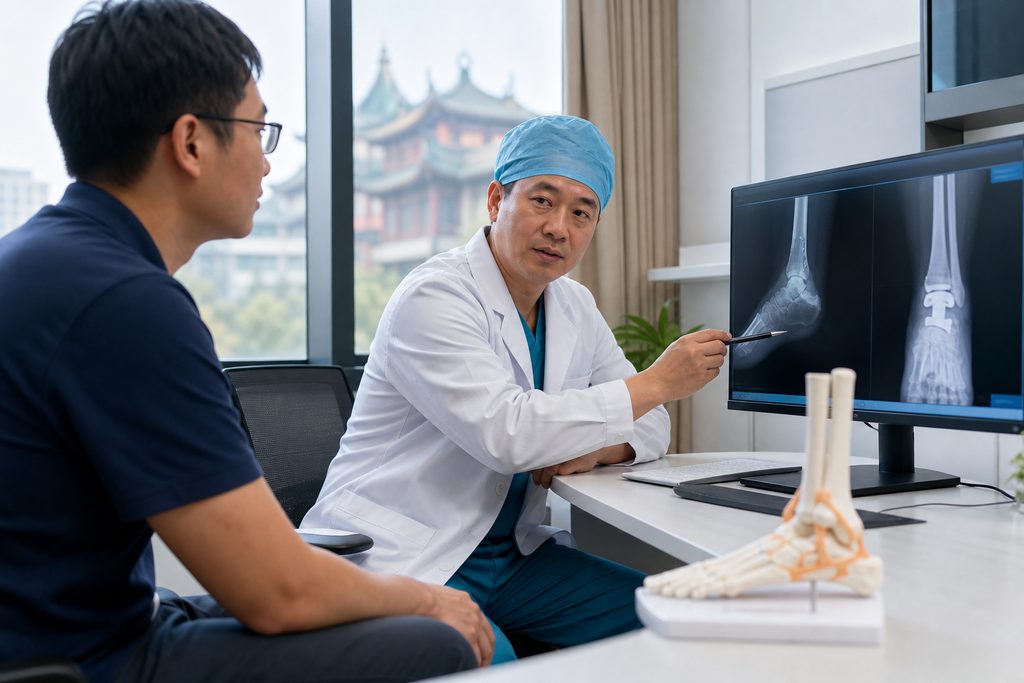
When 54-year-old Daniel from Manchester finally saw the orthopedic surgeon, he expected to hear the word “arthritis.” His knee had ached for years. The scans, though, told a different story. The cartilage was intact. The problem was a section of bone that had quietly died after a fracture he’d forgotten about. His question — the same one that brings thousands of patients to search engines every month — was simple: is arthritis the only reason for joint replacement? The answer is no. And understanding the other reasons matters because it changes how you plan, where you go, and what you pay. The joint replacement cost China hospitals quote often surprises Western patients, but the real conversation starts with the diagnosis itself.
How This Actually Works, Step by Step
You start with records you already have. X-rays, MRI reports, blood work, a physician’s note describing symptoms and failed conservative treatments. You send them to a qualified orthopedic review team. They examine the imaging, assess bone quality, joint alignment, and any underlying conditions. Within days, you get a written assessment: whether surgery is indicated, what procedure fits, and what a realistic recovery looks like.
Then comes the decision point. If surgery makes sense, you choose between staying local or looking abroad. For many Western patients, the arithmetic is stark. A total knee replacement in the United States runs $35,000 to $70,000 without complications. The joint replacement cost China at top-tier public hospitals typically lands between $12,000 and $20,000, including the implant. That’s a meaningful difference, but it’s not the only factor. You also need to think about implant brand, surgeon volume, and follow-up logistics.
What happens after you decide on a destination? You submit a formal inquiry with your records. The hospital’s international department reviews everything. They confirm whether they’ll accept your case. If yes, you receive a treatment plan and a cost estimate. Then you apply for the visa. For medical treatment in China, the appropriate short-stay category is the S2 visa, annotated for medical purposes. Processing typically takes one to three weeks depending on your home country’s Chinese embassy or consulate.
You fly in, attend the pre-operative consultation in person, undergo final imaging and blood tests, and schedule the surgery. The hospital admits you. After discharge, you’ll need somewhere to stay for initial rehabilitation before flying home. Total time in China for an uncomplicated joint replacement: usually three to five weeks.
Is Arthritis the Only Reason for Joint Replacement? No — Five Other Causes
Osteoarthritis is the most common driver of hip and knee replacement. But it’s far from the only one. Orthopedic surgeons replace joints for several distinct reasons, and knowing which one applies to you shapes everything from implant choice to recovery expectations.
1. Avascular necrosis (osteonecrosis). Bone tissue dies when its blood supply is cut off. This happens after trauma, long-term steroid use, or excessive alcohol consumption. The femoral head — the ball of the hip joint — is especially vulnerable. Once the bone collapses, pain becomes constant. No amount of physical therapy restores dead bone. A hip replacement becomes the definitive fix. This condition affects roughly 10,000 to 20,000 new patients annually in the United States alone, and many are under 50.
2. Post-traumatic arthritis. A fracture that damages the joint surface can accelerate cartilage wear, even if the bone heals. A tibial plateau fracture in the knee or an acetabular fracture in the hip often leads to joint replacement within five to ten years. The original injury might have happened decades ago. Patients sometimes forget about it until a surgeon connects the dots on imaging.
3. Rheumatoid arthritis and other inflammatory diseases. Rheumatoid arthritis is an autoimmune condition, not wear-and-tear. It attacks the synovial lining of joints. Psoriatic arthritis, lupus, and ankylosing spondylitis do similar damage. In these cases, joint replacement addresses the destruction caused by inflammation, not mechanical degeneration. Disease-modifying drugs help, but once the joint architecture is destroyed, surgery is often the only way to restore function.
4. Severe deformity or dysplasia. Some people are born with hip dysplasia — a shallow socket that never properly holds the femoral head. Over years, abnormal mechanics destroy the cartilage. This is a leading reason for hip replacement in younger adults, particularly women. The question “can you have knee replacement without arthritis” often comes from patients with deformity-driven pain who assume arthritis is the only surgical trigger. The answer: yes, when alignment problems have destroyed the joint regardless of cartilage status.
5. Tumors, infection, or failed prior surgery. Bone tumors — benign or malignant — sometimes require removing a section of bone and replacing it with a prosthesis. Severe joint infection that resists antibiotics may require a two-stage revision: remove the joint, treat the infection, then implant a new one. Failed prior replacements also account for a growing share of procedures. Revision surgery is more complex and more expensive than primary replacement.
A Realistic Timeline
Here’s what the journey looks like when you’re traveling from abroad for joint replacement. These are ranges, not promises. Every case moves at its own speed.
| Stage | What Happens | Typical Duration |
|---|---|---|
| Day 1–7 | You gather records: imaging, reports, medication list, physician summary | 1 week |
| Week 1–2 | Remote review by orthopedic team; written second opinion or video consultation | 3–10 days |
| Week 2–4 | Hospital confirms acceptance; cost estimate issued; you decide | 1–2 weeks |
| Week 4–7 | S2 visa application with hospital invitation documents | 1–3 weeks |
| Week 7–8 | Travel to China; in-person consultation; final pre-op testing | 2–4 days |
| Week 8–9 | Surgery and hospital stay | 3–7 days inpatient |
| Week 9–12 | Post-discharge rehabilitation in China; wound checks; mobility milestones | 2–3 weeks |
| Month 3–6 | Return home; continued physiotherapy; follow-up via telemedicine | Ongoing |
People forget the document translation step. If your records are not in English or Chinese, they need certified translation before any hospital will review them. That adds three to five days. And appointment lead times at high-volume orthopedic centers can stretch to two or three weeks for a specific senior surgeon. Plan for it.
What Can Go Wrong — and What Happens Then
Honest talk: joint replacement is major surgery. Complications happen. The overall rate of serious complications after primary hip or knee replacement is low — around 2% to 5% for infection, blood clots, or implant issues — but it’s not zero.
Infection is the one surgeons fear most. A deep infection around the implant may require washout surgery, weeks of IV antibiotics, and sometimes full implant removal and staged revision. If this happens abroad, you’re looking at an extended stay and significantly higher costs. Ask before surgery: what is the hospital’s infection rate for joint replacement, and what does their revision protocol look like?
Blood clots are another real risk. Pulmonary embolism kills a small number of joint replacement patients every year. Chinese hospitals follow international prophylaxis guidelines — compression devices, early mobilization, anticoagulant medication — but you should confirm this is standard protocol where you’re going.
Implant failure or loosening can surface years later. If you had surgery in another country, your home orthopedic surgeon may be reluctant to manage complications from an unfamiliar implant system. Before choosing a destination, ask which implant brands the hospital uses. Stick to globally recognized systems — Zimmer Biomet, Stryker, DePuy Synthes, Smith+Nephew — so your records transfer cleanly and parts are available worldwide.
And the visa question. No one can guarantee approval. The S2 visa for medical treatment requires supporting documents from the hospital. If the visa is delayed or denied, you lose time but generally not money — reputable coordinators and hospitals refund deposits when treatment never starts. Confirm that policy in writing before you pay anything.
How to Evaluate a Hospital for Joint Replacement Abroad
Volume matters more than rankings. A surgeon who performs 300 knee replacements a year has better outcomes than one who does 30. Ask directly: how many primary total knee and hip replacements does this department perform annually? At major Chinese orthopedic centers, that number often exceeds 1,000. That’s the kind of repetition that builds skill.
Implant choice matters too. Some patients search for total knee arthroplasty price abroad and fixate on the lowest number. But a bargain implant that fails in seven years costs far more than a mid-range implant that lasts twenty. Discuss implant options with the surgeon. Understand the difference between cemented and cementless fixation, cruciate-retaining and posterior-stabilized designs, and standard versus high-flex options.
For patients specifically looking at Shanghai, the question of the best orthopedic hospital Shanghai for joint surgery comes up constantly. Shanghai has several high-volume public hospitals with dedicated joint replacement units and international departments that handle foreign patients regularly. The key is matching your case complexity to the right center. A straightforward primary knee replacement needs a competent, high-volume department. A complex revision or a case involving severe deformity needs a sub-specialist who does that specific work weekly.
Consider the full cost picture, not just the surgery line item. The joint replacement cost China hospitals advertise often includes the implant, surgeon fee, anesthesia, and a standard hospital stay. It usually does not include pre-operative imaging, post-discharge rehabilitation, accommodation, food, or your flight. A realistic all-in budget for international patients: surgery cost plus $3,000 to $6,000 for travel, lodging, and rehab support.
Practical Considerations: Records, Visa, Payment, Follow-Up
Get your records in order first. Complete medical history, current medication list, allergies, prior surgeries, and all imaging from the last 12 months. Digital files in DICOM format are ideal. If you’re considering a medical tourism joint replacement China packages search, understand that reputable packages include coordination services, not discounted surgery. Anyone promising a “cheap package” with no medical review should be avoided.
Payment works differently in Chinese public hospitals. You pay upfront or in staged deposits, then claim reimbursement from your insurer afterward. Private international hospitals in China often bill insurers directly. Check your policy’s international coverage before you commit.
Language is the practical hurdle patients underestimate. Top Chinese hospitals are enormous — single-day outpatient volumes exceed 10,000 at the largest centers. Signage, queue systems, pharmacy interactions, and discharge instructions are all in Chinese. A bilingual medical companion who handles registration, payment, translation, and navigation changes the experience entirely. This is not a luxury. It’s the difference between a smooth episode of care and a disorienting ordeal.
Follow-up at home requires planning. Your surgeon in China will provide a discharge summary, operative notes, implant stickers, and a rehabilitation protocol. Bring these to your local orthopedic surgeon or physiotherapist. Schedule that first local follow-up before you travel, so there’s no gap in care when you return.
Frequently Asked Questions
Yes. Severe deformity, avascular necrosis, post-traumatic damage, or failed prior surgery can all destroy a knee joint without classic osteoarthritis. The surgical decision rests on pain, functional loss, and imaging evidence of joint destruction — not on a single diagnosis label.
Avascular necrosis of the femoral head is the most common non-arthritis reason, especially in younger patients and those with a history of steroid use. Hip dysplasia, post-traumatic arthritis after acetabular fracture, and inflammatory diseases like rheumatoid arthritis are the other frequent drivers.
The joint replacement cost China at top public hospitals typically ranges from $12,000 to $20,000 for a primary knee or hip replacement, including the implant. Comparable surgery in the United States runs $35,000 to $70,000. Final cost varies by hospital, implant brand, surgeon seniority, and case complexity.
Most surgeons advise waiting two to three weeks after surgery before a long-haul flight. This reduces the risk of blood clots and allows initial wound healing. Wear compression stockings, move your ankles frequently during the flight, and follow your surgeon’s anticoagulation instructions exactly.
Choose a hospital that uses globally recognized implant systems and provides complete operative records. Bring those records to a local orthopedic surgeon promptly. Most complications — infection, stiffness, implant issues — can be managed by any competent joint replacement specialist, regardless of where the original surgery happened.
Your Next Step
You now know that arthritis is not the only road to joint replacement — and that the decision involves diagnosis, implant choice, surgeon volume, and a clear-eyed look at costs and risks. Our team at China Medical Services helps international patients navigate hospital selection, document review, and on-the-ground coordination in China. We do not perform surgery, and we do not promise outcomes. We connect you with qualified orthopedic departments and make the logistics manageable. When you’re ready to explore whether joint replacement in China makes sense for your specific case, start with a free consultation — send your records, ask your questions, and get an honest assessment before you commit to anything.
For more medical information and treatment options in China, visit chinamedservices.com (China Medical Services).
