How Is Ovarian Cancer Diagnosed Early? Screening Methods and Costs in China
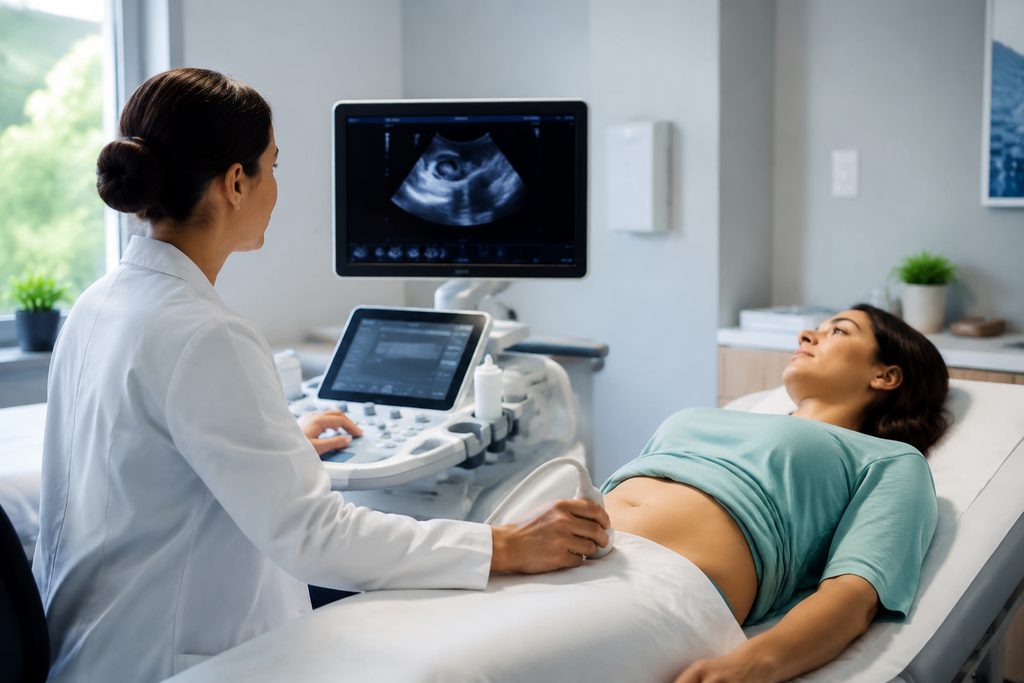
How Is Ovarian Cancer Diagnosed Early?: The Short Answer
Early diagnosis of ovarian cancer typically combines a transvaginal ultrasound with a CA-125 blood test. Neither test is perfect on its own. Together, they catch roughly 80–90% of ovarian cancers in postmenopausal women, though the false-positive rate remains stubbornly high. The ovarian cancer screening cost China ranges from $150 to $500 for a basic combined package at top-tier public hospitals, depending on whether you use the standard outpatient route or the international VIP department.
That is the direct answer. Here is the caveat that makes every gynecologic oncologist pause: there is still no population-wide screening protocol for ovarian cancer that has been proven to reduce mortality. Unlike cervical cancer with its Pap smear, or breast cancer with mammography, ovarian cancer screening remains controversial. The UK Collaborative Trial of Ovarian Cancer Screening, which followed over 200,000 women for up to two decades, found that multimodal screening did not significantly reduce deaths from the disease. What screening does achieve is earlier detection in individual cases — often months before symptoms become obvious. That distinction matters.
Who This Is Right For — and Who It Isn’t
Ovarian cancer screening is not for everyone. The decision hinges on your individual risk profile, and being honest about who should skip this is part of responsible guidance.
Typically good candidates for ovarian cancer screening:
- Women with a confirmed BRCA1 or BRCA2 mutation — lifetime ovarian cancer risk climbs to 40–60% for BRCA1 carriers and 10–30% for BRCA2 carriers
- Women with Lynch syndrome (hereditary nonpolyposis colorectal cancer), which raises lifetime ovarian cancer risk to roughly 10–12%
- First-degree relatives (mother, sister, daughter) diagnosed with ovarian cancer, especially before age 50
- Postmenopausal women with persistent, unexplained bloating, early satiety, pelvic pain, or urinary urgency lasting more than two weeks
- Women with a personal history of breast cancer diagnosed before age 40
Who should not pursue routine screening:
- Average-risk women under 50 with no family history and no symptoms — the false-positive rate leads to unnecessary surgeries
- Women who have had both ovaries and fallopian tubes removed (bilateral salpingo-oophorectomy) for non-cancer reasons — the target organ is gone
- Anyone unwilling to act on an abnormal result. A screening test that you will not follow up on has no medical value and can cause real anxiety
- Women with active pelvic inflammatory disease — inflammation can skew CA-125 results and make ultrasound interpretation unreliable
About 1 in 78 women will develop ovarian cancer in her lifetime. That is a real number. But screening the entire population has never been shown to save lives. Targeted screening for high-risk women is where the evidence points.
The Options, Compared
When you ask how early can ovarian cancer be detected, the honest answer depends on which tool you use. Each has its own detection threshold, sensitivity, and cost. Here is how the main diagnostic approaches stack up at Chinese hospitals:
| Method | What It Detects | Sensitivity | Typical Cost in China (USD) | Turnaround Time |
|---|---|---|---|---|
| Transvaginal Ultrasound | Ovarian mass size, morphology, blood flow | 75–85% for stage I–II | $80–200 | Same day |
| CA-125 Blood Test | Protein marker elevated in ~80% of advanced cases, but only ~50% of stage I | 50% for early stage; 80%+ for advanced | $40–120 | 24–48 hours |
| Combined Ultrasound + CA-125 | Structural and biochemical markers together | 80–90% in postmenopausal women | $150–500 | 2–3 days |
| Pelvic MRI with Contrast | Detailed tissue characterization when ultrasound is inconclusive | 85–95% for malignancy | $500–1,200 | 3–5 days |
| ROMA Index (HE4 + CA-125) | Algorithm-based risk stratification | 89% specificity at 75% sensitivity | $200–400 | 3–5 days |
For a woman with no symptoms but elevated genetic risk, the combined ultrasound plus CA-125 is the standard starting point. If something looks suspicious on ultrasound, MRI becomes the next step. The ROMA index adds HE4, a newer marker that is less likely to spike from benign conditions like endometriosis. Which column fits you depends on why you are screening in the first place — routine high-risk surveillance versus investigating a symptom.
What “Early” Actually Means: The Biology Behind Detection Limits
Ovarian cancer does not announce itself. The ovaries sit deep in the pelvis, and a tumor can grow to 10 centimeters before producing noticeable pressure. That is why the question how early can ovarian cancer be detected has no satisfying single answer. Stage I ovarian cancer — still confined to the ovary — is detectable by transvaginal ultrasound in many cases. The problem is that most women are not scanned at that point, because no symptom has driven them to a doctor.
CA-125 alone is a poor early detector. In stage I disease, only about half of women show an elevated level. And CA-125 rises for plenty of non-cancerous reasons: menstruation, uterine fibroids, endometriosis, pregnancy, even recent abdominal surgery. That is the false-positive trap. A 45-year-old woman with an elevated CA-125 has a far higher chance of it being a benign cyst than cancer. But she will still need follow-up imaging and possibly surgery to rule it out.
What has changed in recent years is the recognition that most high-grade serous ovarian cancers — the deadliest subtype — actually originate in the fallopian tubes, not the ovarian surface. This has shifted thinking about early detection. Some centers now offer opportunistic salpingectomy (fallopian tube removal) during unrelated pelvic surgery as a preventive measure. It is not a screening test, but it is the closest thing to early intervention that exists for high-risk women.
In practical terms, “early” detection in China’s top gynecologic oncology departments means catching the disease at stage I or II, when five-year survival runs 70–90%. By stage III, that number drops below 40%. The gap between those figures is what screening attempts to close.
What It Costs: Ovarian Cancer Screening Cost China and What Drives It
The ovarian cancer screening cost China varies widely by hospital tier and service channel. A basic combined package — transvaginal ultrasound plus CA-125 — at a top-tier public hospital’s standard outpatient clinic typically runs $150 to $300. The same tests through an international VIP department at a hospital like Peking Union Medical College Hospital or Fudan University Shanghai Cancer Center range from $300 to $500, with English-speaking coordination and same-day scheduling.
What drives the variance:
- Hospital tier and location. Shanghai and Beijing flagship hospitals charge more than provincial centers. A screening at a major oncology hospital in Guangzhou might cost 20–30% less than the equivalent in Shanghai.
- Service channel. Standard outpatient requires in-person registration and Chinese-language navigation. International departments add coordination, translation, and faster appointment slots — at roughly 1.5 to 2 times the standard price.
- Additional markers. Adding HE4 or the full ROMA index to the CA-125 test adds $80 to $200. Some women opt for this upfront to reduce false-positive anxiety.
- Imaging escalation. If the ultrasound shows anything ambiguous, a pelvic MRI with contrast adds $500 to $1,200. That is not part of the base screening package.
For comparison, the same combined screening in the United States typically costs $800 to $1,500 without insurance, and $200 to $500 with insurance copays. The ovarian cancer blood test price abroad — specifically CA-125 — runs $100 to $250 in the US and €60 to €150 in Western Europe. In China, that same blood test costs $40 to $120. The gap widens when imaging enters the picture.
None of these prices include travel, accommodation, or translation services. A woman flying from the Middle East or Southeast Asia for a two-day screening visit should budget an additional $500 to $1,000 for logistics, depending on the city.
Practical Considerations: Booking, Records, and What to Bring
If you are considering booking an ovarian cancer screening package in China, a few logistical realities shape the experience. Public hospital outpatient departments do not accept advance reservations from overseas. You register on the day of your visit, queue for a number, and wait. That works if you speak Mandarin and have time to spare. It does not work if you are flying in for a two-day trip.
The alternative is the international department or VIP channel. These departments handle overseas patients routinely. You can schedule ahead, receive English-language coordination, and complete ultrasound plus blood work in a single morning. The trade-off is price — typically 1.5 to 2 times the standard outpatient rate.
What to bring:
- Previous imaging reports (ultrasound, CT, MRI) on CD or as DICOM files, not just printed films
- Prior CA-125 or HE4 lab results with dates
- Family history documentation, especially any genetic testing results for BRCA1, BRCA2, or Lynch syndrome mutations
- Passport and, if applicable, your S2 visa documentation — the S2 is the standard short-stay visa category used for medical treatment and private affairs in China, issued at the discretion of the relevant embassy or consulate based on supporting hospital documents
- A list of current medications, including hormonal therapies, which can affect CA-125 levels
Payment is generally upfront. Public hospitals require prepayment at registration. International departments may accept international credit cards; standard outpatient clinics often require cash, WeChat Pay, or a Chinese bank card. Insurance reimbursement is retrospective — you pay first, then file with your insurer. Some private international hospitals in China, such as United Family or Jiahui, offer direct billing with major international insurers, but their screening packages cost more.
Language is the other practical hurdle. A top-tier public hospital may see 10,000 outpatient visits per day. Signage is often bilingual, but the staff at registration desks, phlebotomy stations, and ultrasound rooms typically speak Mandarin only. A bilingual medical companion — from $300 per day — handles queueing, form-filling, and translation. Whether that is worth it depends on your comfort navigating a high-volume Chinese hospital alone.
After returning home, follow-up is straightforward. Ultrasound images and lab results are provided digitally and in English at international departments. Bring those to your local gynecologist for interpretation. If anything requires further investigation, the next step is usually a repeat CA-125 in 4–6 weeks or a pelvic MRI, both of which can be done in your home country.
Is Ovarian Cancer Screening Accurate in China?
The short answer is yes — at the right hospital. The best hospital for ovarian cancer diagnosis in Shanghai, for instance, is Fudan University Shanghai Cancer Center, whose gynecologic oncology department is ranked among China’s top 10 for oncology in the Fudan specialty reputation rankings. Its pathology and imaging protocols match international standards. The same holds for Peking Union Medical College Hospital in Beijing and Sun Yat-sen University Cancer Center in Guangzhou.
Accuracy depends less on the country and more on three factors: the ultrasound operator’s experience, the lab’s quality control for CA-125, and the radiologist’s interpretation. Top-tier Chinese oncology hospitals perform thousands of pelvic ultrasounds annually. Their gynecologic sonographers see more ovarian pathology in a month than a general radiologist in a Western community hospital sees in a year. That volume translates into sharper pattern recognition.
But accuracy has limits everywhere. No screening protocol catches 100% of early ovarian cancers. False positives happen. False negatives happen — particularly with mucinous and low-grade serous subtypes, which often do not elevate CA-125. If you are asking is ovarian cancer screening accurate in China, the fair answer is that the equipment, protocols, and expertise at the top 5% of Chinese hospitals — the 340+ institutions in our database, ranked by Fudan and JCI — are comparable to leading Western centers. The difference is cost and process, not diagnostic quality.
For a deeper look at how Chinese hospitals are ranked and which ones lead in oncology, see our guide to top-ranked hospitals in China and the oncology department rankings.
Frequently Asked Questions
Stage I ovarian cancer — still confined to the ovary — can be detected by transvaginal ultrasound in many cases, often before any symptoms appear. But most women are not scanned at that stage because nothing prompts them to seek care. The real limitation is not the technology; it is that no symptom or routine screening program brings average-risk women in for early-stage imaging. For high-risk women under surveillance, detection at stage I or II is realistic and common.
A CA-125 blood test costs roughly $100 to $250 in the United States and €60 to €150 in Western Europe. In China, the same test at a top-tier public hospital costs $40 to $120. Adding HE4 or the ROMA index raises the price to $200 to $400 in China. The savings are real, but they only matter if you are already traveling to China for other reasons or combining the test with a broader medical visit.
Standard public hospital outpatient departments do not accept overseas advance booking. You register in person on the day of your visit. International departments and VIP channels at major hospitals do accept advance scheduling for overseas patients, with English coordination and same-day completion of ultrasound and blood work. That convenience costs 1.5 to 2 times the standard outpatient rate. A third option is a private international hospital, which offers direct booking and English-speaking staff at a higher price point.
An abnormal CA-125 or suspicious ultrasound finding triggers further imaging — typically a pelvic MRI with contrast — and possibly referral to a gynecologic oncologist. Not every abnormal result means cancer. Many are benign cysts, endometriomas, or fibroids. But the follow-up path is the same: characterize the mass, assess risk, and decide whether surgery is warranted. If you are in China when results come back, the hospital can arrange specialist consultation. If you have returned home, you will need to bring the results to your local gynecologist.
At top-tier hospitals, yes. The 340+ hospitals in our database — the top 5% of China’s 35,000+ hospitals, ranked by Fudan and JCI — follow international diagnostic protocols for ovarian cancer. Ultrasound equipment is current-generation. Pathology labs participate in external quality assurance. The main difference is process: Chinese public hospitals are high-volume and fast-moving, which means less hand-holding and more need for self-advocacy or a bilingual companion. The diagnostic quality itself is not the weak point.
Your Next Step
Ovarian cancer screening is a targeted tool, not a universal one. For high-risk women, the combined ultrasound and CA-125 approach at a top Chinese hospital offers real diagnostic value at a fraction of Western prices. For average-risk women, the evidence says screening causes more harm than good — and the responsible advice is to skip it unless symptoms or family history change that calculus.
We are China Medical Services, a patient coordination team that connects international patients with China’s top-tier hospitals. We are not a hospital, and we do not offer diagnoses or medical advice. What we do is handle the logistics: hospital matching, appointment coordination, bilingual companionship, and visa guidance. If you are considering ovarian cancer screening in China and want to understand your options without pressure, start with a free consultation. We will help you figure out whether this makes sense for your situation — and if it does, how to arrange it properly.
For more medical information and treatment options in China, visit chinamedservices.com (China Medical Services).
