Knee Replacement Recovery: What It Actually Feels Like Week by Week
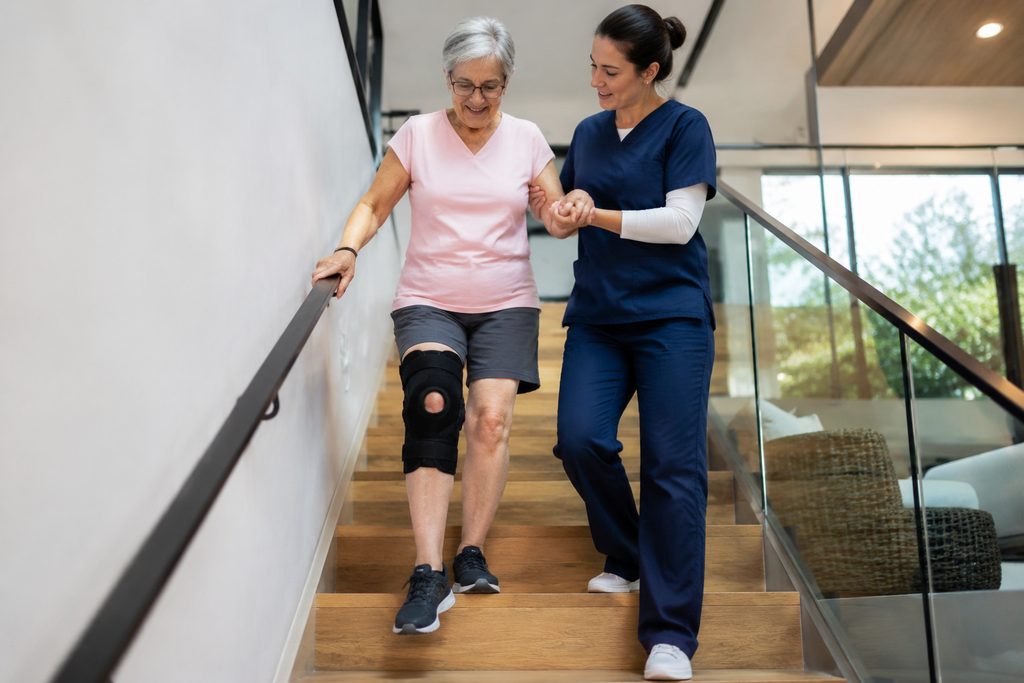
A total knee replacement sounds dramatic. In plain terms, the surgeon removes the worn, damaged surfaces of your thighbone, shinbone, and kneecap, then caps them with smooth metal and medical-grade plastic. Your knee stops grinding bone-on-bone. What you feel afterward is not the old arthritic ache. It is a different sensation entirely — surgical soreness, swelling, tightness, and a strange stiffness that slowly gives way to something better.
Most patients searching for knee replacement cost China are already past the point of wondering if they need surgery. They are asking what the weeks after surgery will demand of them. Fair question. Recovery is not passive. It asks for daily effort, patience with your own body, and a clear-eyed view of what “better” means at day 10 versus day 90.
Our team at China Medical Services has walked this road with patients from the United States, the UK, Australia, and the Gulf states. We do not perform surgery. We handle the logistics — hospital matching, appointment coordination, bilingual companions, visa guidance — so you can focus on the actual healing. This article explains what that healing feels like, honestly.
How This Actually Works, Step by Step
You have imaging and a diagnosis. Maybe your orthopedist at home has already said the words “bone-on-bone” and “you’ll know when it’s time.” Here is the sequence most international patients follow when they contact us about knee replacement in China.
First, you send your existing records — X-rays, MRI reports, any prior surgical notes, and a short summary of your symptoms and mobility limits. We have these translated into Chinese by medical translators, not generalists. A senior orthopedic team at one of the hospitals in our network reviews the file.
Second, you get a written second opinion. This typically costs between $300 and $500 for a top-tier specialist review. It tells you whether the Chinese team agrees with the surgical recommendation, what implant approach they would use, and whether they see any reason to delay. This opinion is for reference only — it is not a prescription and not a binding treatment plan.
Third, if you decide to proceed, we coordinate a video consultation. You speak directly with the orthopedic team. You ask about their volume, their complication rates, their rehabilitation protocol. The cost for a top-specialist video consultation runs $500 to $800.
Fourth, if both sides agree, we move to scheduling. This is where the Chinese public hospital system shows its particular character. Regular outpatient clinics cannot be booked from overseas months in advance. You cannot lock a surgery date without being seen in person. The realistic path for international patients goes through the hospital’s international department or VIP channel. That costs roughly 1.5 to 2 times the standard rate, but it gives you English-speaking coordination, senior surgeons, and a defined admission pathway.
Fifth, you travel. You will need an S2 visa with a note stating the purpose of your visit is medical treatment. Family members accompanying you also apply for S2 visas. We provide the hospital invitation letter and supporting documents. Visa processing time depends on your home country’s Chinese embassy or consulate.
Sixth, you have your pre-operative assessment in person, then surgery, then a hospital stay of typically three to seven days, then rehabilitation. Some patients stay in China for two to four weeks after surgery. Others transfer to a rehabilitation facility or return home with a structured physiotherapy plan.
What Knee Replacement Recovery Feels Like: The First Six Weeks
Nobody drifts through the first two weeks. You will feel surgical pain — a deep, hot soreness around the incision and inside the joint. Most hospitals manage this with a combination of nerve blocks, oral pain medication, and early movement. The nerve block wears off after 12 to 24 hours. That is often the hardest moment, because the knee suddenly announces itself.
Swelling is immediate and significant. Your knee may look twice its normal size. The skin feels tight, almost shiny. Ice and elevation become your close companions. Bruising can spread down the shin and up the thigh. It looks worse than it is. It fades over two to three weeks.
Stiffness is the surprise most patients are not prepared for. The joint itself is new. The soft tissues around it — muscles, tendons, the capsule — have been stretched and traumatized. Your knee will not want to bend. It will feel like a hinge wrapped in wet cement. Bending it to 90 degrees in the first week takes real effort. Many patients describe a pulling, burning sensation when they push flexion. That is normal. It is also the single most important thing to work on early.
And then there is a strange sensation many patients mention: the knee feels foreign. Not painful, exactly. Just not quite yours. You may hear a soft clicking when you move. The implant surfaces can make a subtle sound. This fades from awareness over months, but it unsettles people at first.
By week three, the acute surgical pain drops noticeably. You sleep better. You may transition from a walker to a cane. By week six, many patients walk without support for short distances, climb stairs with a rail, and return to driving if the left knee was replaced and the car is automatic. But the knee still swells by evening. It still stiffens after sitting too long. Recovery is not linear.
A Realistic Timeline
| Stage | What Happens | What You Feel |
|---|---|---|
| Day 1–2 | Surgery, nerve block, first standing with physio | Numbness from block, then deep soreness; heavy, swollen knee |
| Day 3–7 | Hospital rehab: walking with walker, knee flexion exercises | Tightness, fatigue, pain peaks when block fully clears; progress feels slow |
| Week 2–4 | Discharge, home or hotel rehab, wound healing | Swelling persists; stiffness in morning; bruising fades; sleep still disrupted |
| Week 6 | First major follow-up, X-ray check | Walking without cane indoors; knee still stiff after rest; energy returning |
| Month 3 | Return to most daily activities, light exercise | Knee feels functional but not normal; occasional swelling after long days |
| Month 6–12 | Full soft-tissue remodeling, strength rebuilding | Most patients say the knee finally feels like “theirs”; kneeling may still feel odd |
What this table does not show is the waiting before surgery. Document translation takes two to four days. Specialist review takes three to seven days. Video consultation scheduling depends on the surgeon’s clinic calendar — usually one to two weeks. Visa processing commonly takes one to three weeks, sometimes longer during peak embassy periods. Then the hospital’s international department needs to confirm an admission window. Realistically, plan for six to ten weeks between first contact and a surgery date. Some patients move faster. Do not build your plans around the fastest possible case.
What Can Go Wrong — and What Happens Then
Knee replacement is a common, mature procedure. It also carries real risks. Infection occurs in roughly 1% of primary knee replacements. If it happens, treatment means antibiotics, sometimes a washout surgery, and in severe cases removal of the implant, a spacer placed for weeks, then a revision. That is a long road. It is also rare.
Stiffness is more common than infection. Around 5% of patients develop arthrofibrosis — excessive scar tissue that limits flexion. If aggressive physiotherapy does not restore motion by roughly three months, a manipulation under anesthesia may be recommended. The surgeon bends the knee forcefully while you are asleep to break up scar tissue. It sounds brutal. It is often effective.
Blood clots are the other serious concern. Without prophylaxis, the risk of deep vein thrombosis after knee replacement is significant. Chinese hospitals routinely use mechanical compression devices and anticoagulant medication after surgery. You will likely continue blood thinners for two to four weeks after discharge. The key is to move early and often — the calf muscles act as a pump.
What about implant failure? Modern knee implants have survivorship above 90% at 15 to 20 years. But no implant lasts forever. Younger, heavier, more active patients wear them out faster. If you are 55 and love tennis, have an honest conversation about expectations.
And one failure mode specific to international patients: showing up without the right paperwork. If your imaging is incomplete, or your referral letters are not translated, or your visa category is wrong, you lose days or weeks. This is exactly the friction a bilingual coordinator removes.
Is Knee Replacement in China Safe? Evaluating Hospitals and Surgeons
The short answer: in the right hospital, yes. China’s top orthopedic centers perform knee replacements at volumes that few Western hospitals match. A large public hospital in Shanghai or Beijing may do several thousand joint replacements per year. Surgical volume correlates with lower complication rates — this is one of the most consistent findings in orthopedic outcomes research.
But “China” is not one standard of care. The country has more than 35,000 hospitals. The top 5% are ranked by the Fudan University hospital rankings and accredited by JCI or equivalent bodies. That top tier is where international patients belong. Our database covers 340+ top-ranked hospitals across 37 cities, with Beijing, Shanghai, and Guangzhou holding the largest concentrations.
When evaluating a hospital for knee replacement, look at three things. First, annual joint replacement volume — ask for the number, not a vague “we do many.” Second, the orthopedic department’s Fudan specialty ranking; several Chinese hospitals are ranked among China’s top 10 for orthopedics. Third, the infection control infrastructure — laminar flow operating theaters, dedicated joint replacement wards, and a formal surgical site infection surveillance program.
For patients specifically asking about best knee replacement hospital Shanghai, the answer depends on whether you want a public hospital’s international department or a private international hospital. Public options like the orthopedic departments at major Fudan-affiliated hospitals offer deep surgical experience. Private options like Jiahui or United Family offer English-first care, direct insurance billing, and hotel-like comfort — at a higher price. Neither is automatically better. They serve different priorities.
The cost question deserves honest framing. Knee replacement cost China typically ranges from $15,000 to $35,000 for a primary total knee replacement at an international department or private hospital. That includes the implant, hospital stay, surgeon fees, and basic rehabilitation. The same procedure in the United States often bills at $35,000 to $70,000 or more, depending on the hospital and insurance. The gap is real. It is also narrowing as Chinese private hospitals invest in newer implants and robotic-assisted systems. Prices vary by hospital tier, implant brand, and case complexity — there is no single fixed price.
Some patients ask about knee surgery medical tourism package China. Packages exist, but read the fine print. A legitimate package should itemize: pre-operative assessment, implant cost, surgeon fee, anesthesia, hospital days, basic physiotherapy, and interpreter support. It should also state clearly what is excluded — extended rehab, complications, revision surgery, accommodation. If a package promises a specific surgery date before a surgeon has reviewed your films, walk away.
Practical Considerations: Records, Visa, Payment, and Follow-Up
Before you book anything, gather your records. Recent weight-bearing X-rays of the knee, an MRI if you have one, any prior arthroscopy reports, and a list of current medications — including blood thinners. Bring a letter from your home orthopedist stating the diagnosis and surgical recommendation. All of this gets translated before any Chinese specialist reviews it.
Visa category matters. For medical treatment, you apply for an S2 visa, not an M visa — the M visa is for commercial and trade activities, not healthcare. The S2 visa is the short-stay category used for private affairs including medical treatment. Your accompanying family members apply for S2 visas as well. The hospital’s international department provides an invitation letter and treatment confirmation. Approval is never guaranteed; embassies review each case individually.
Payment in Chinese public hospitals is prepaid. You deposit funds at admission, and the hospital deducts as services are provided. International departments accept wire transfers and major credit cards. Private international hospitals often bill insurers directly — if your policy covers overseas elective surgery, this simplifies things enormously. Check your policy’s fine print on “planned treatment abroad.”
Language is the friction most patients underestimate. Even in top public hospitals, ward nurses and physiotherapists may speak limited English. A bilingual medical companion — from $300 per day — handles registration, queueing, payment, translation during ward rounds, and communication with your family back home. It is not a luxury. It is the difference between knowing what is happening and guessing.
Follow-up after you fly home is the piece most often forgotten. Your Chinese surgeon will want X-rays at six weeks, three months, and one year. You can send those digitally for review. Your home physiotherapist needs the rehabilitation protocol in English before you leave China. We arrange that translation as part of the discharge process.
Frequently Asked Questions
The first 48 to 72 hours are genuinely difficult. After that, pain drops in steps. Most patients describe the worst part not as sharp pain but as deep aching combined with stiffness and fatigue. By week three, many are using only occasional pain medication. By week six, most say the surgical pain is gone, replaced by muscle soreness from rebuilding strength.
Harder than most people expect. Around the second week, many patients hit a low point. Progress feels invisible. The knee swells, sleep is broken, and you wonder if you made a mistake. This is common enough to be predictable. It passes. By month three, most patients say they are glad they did it. That said, recovery is not a straight line — good days and bad days alternate for months.
At top-tier hospitals, yes. The best Chinese orthopedic departments perform high volumes, use modern implants, and follow international infection-control protocols. The risk is choosing the wrong hospital. Stick to Fudan-ranked public hospitals or JCI-accredited private hospitals. Avoid any facility that cannot show you its annual joint replacement volume and infection rates.
Plan for at least two to three weeks after surgery. That covers the hospital stay, early rehabilitation, suture removal, and a first follow-up. Some patients stay four to six weeks to complete more intensive physiotherapy before flying. Long-haul flights increase clot risk — your surgeon will advise on timing and may recommend compression stockings and possibly a short course of anticoagulation for the flight.
Some international insurance policies cover planned treatment abroad, including in China. Others do not. You need to check your policy’s terms before committing. Public hospitals in China require prepayment; you then claim reimbursement from your insurer. Private international hospitals with direct billing arrangements can reduce your out-of-pocket exposure. We help patients prepare the documentation insurers typically require.
Your Next Step
Knee replacement recovery asks for patience, daily physiotherapy, and a realistic picture of the first six weeks. It also rewards preparation — the right hospital, the right visa, the right support on the ground.
We are China Medical Services. We do not perform surgery and we do not promise outcomes. What we do is connect international patients with top-tier Chinese orthopedic departments, coordinate second opinions and video consultations, and provide bilingual companions who make the hospital experience navigable. If you are weighing knee replacement in China, start with a conversation. Send your records. Get an honest assessment. No pressure, no obligation.
That is the core message: recovery is hard but predictable, and the difference between a difficult recovery and a derailed one is usually preparation. If China is on your list, prepare properly.
For more medical information and treatment options in China, visit chinamedservices.com (China Medical Services).
