How Soon Can I Run After ACL Surgery: A Realistic Timeline
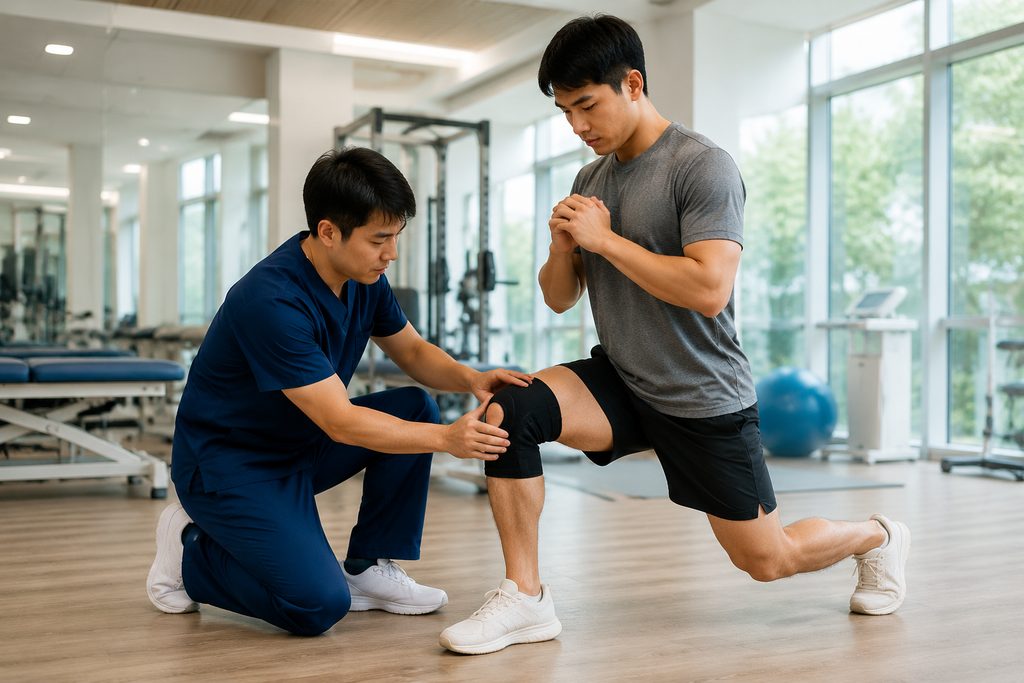
When 34-year-old Daniel tore his ACL during a weekend soccer match in Manchester, the first question he asked the orthopedic surgeon wasn’t about the operation itself. It was about the road back. “How soon can I run again?” The surgeon gave him a cautious answer: nine to twelve months for full return to sport, with jogging perhaps earlier. Daniel, an engineer who travels frequently for work, found that timeline hard to swallow. He started looking at options abroad, comparing recovery protocols and acl surgery cost China clinics advertise alongside facilities in Turkey, Thailand, and Spain. What he discovered was a landscape of conflicting claims, some clinics promising accelerated returns that no responsible surgeon would endorse.
The honest answer is that running after ACL reconstruction is a milestone reached through graft healing and neuromuscular control, not through a calendar date. Most patients can begin a structured return-to-running program around 3 to 4 months after surgery. Full, unrestricted running—sprinting, cutting, and returning to competitive pivoting sports—typically takes 9 to 12 months. Anyone promising a faster return to full sport is ignoring the biology of graft incorporation, also known as ligamentization.
ACL Recovery: The Short Answer
You can usually start a light jog around 12 to 16 weeks after surgery. That assumes your quadriceps strength has returned to at least 70% of the uninjured leg and you have no significant swelling or pain. But jogging in a straight line is not “running” in the way most athletes mean it. The graft—whether a hamstring autograft, patellar tendon autograft, or allograft—goes through a vulnerable phase between 6 and 12 weeks where it is actually weakening before it strengthens. Pushing too hard in this window is how re-tears happen.
The more useful question is: what has to be true before you can run safely? That checklist matters more than the number of weeks since your operation.
Who This Is Right For — and Who It Isn’t
Returning to running on a 3-to-4-month timeline is realistic for a specific profile of patient. It is not universal.
You are more likely to hit that window if:
- You had an isolated ACL tear with no meniscus repair or other ligament damage
- You are under 35 and were physically active before the injury
- You follow a supervised rehabilitation program at least three days per week
- Your surgeon used an autograft (your own tissue) rather than an allograft
- You have access to a physical therapist who can do objective strength testing
You should expect a longer timeline if:
- You had a meniscus repair alongside the ACL reconstruction—weight-bearing restrictions alone can delay everything by 6 weeks
- You are over 40, as graft maturation tends to be slower
- You have significant preoperative muscle atrophy from delaying surgery
- You smoke or have poorly controlled diabetes
- You plan to return to a sport involving cutting, jumping, or pivoting—the 9-to-12-month mark applies here more strictly
Being honest about which group you fall into will save you frustration later.
The Options, Compared
When patients look at acl surgery cost China and other destinations, they are often really asking two questions: what will this cost, and will the care be as good as what I can get at home? The table below compares typical price ranges and key characteristics across several common choices for international patients.
| Destination | Typical ACL Reconstruction Cost (USD) | Graft Type Commonly Used | Typical Return-to-Run Timeline | Notes for International Patients |
|---|---|---|---|---|
| United States | $20,000 – $50,000 | Autograft (hamstring, patellar, quadriceps) | 3-4 months to jogging | High cost, familiar system, insurance-dependent |
| United Kingdom (private) | $12,000 – $18,000 | Autograft (hamstring) | 3-4 months to jogging | NHS wait times push many to private care |
| China (top-tier public hospital, international department) | $8,000 – $15,000 | Autograft (hamstring, patellar) | 3-4 months to jogging, protocol-dependent | High surgical volume, Fudan-ranked orthopedic departments |
| Thailand | $9,000 – $14,000 | Autograft or allograft | 3-4 months to jogging | Well-established medical tourism infrastructure |
| Turkey | $6,000 – $10,000 | Autograft (hamstring) | Varies widely by clinic | Lowest cost, but quality control varies significantly |
Prices vary by hospital and case complexity. The China figure reflects international department pricing at large public hospitals, which is higher than the local standard rate but includes English-language coordination and faster access to senior surgeons. If you are weighing acl reconstruction price abroad, the total cost of travel, accommodation, and follow-up care matters as much as the surgical fee itself.
What Actually Determines When You Can Run
Yes, most patients can run in a straight line at 6 months. That does not mean you are ready for soccer, basketball, or skiing. Those sports require cutting and pivoting, which demand higher strength symmetry and neuromuscular control. Running in a straight line and running in a game are different activities.
At top-tier public hospitals, the $8,000 to $15,000 range typically covers the surgeon’s fee, operating room, anesthesia, implant hardware, and a short inpatient stay of 2 to 4 days. It does not usually include preoperative imaging if you need new scans, postoperative rehabilitation sessions, or your travel and accommodation. Private international hospitals cost more but bundle more services. Always ask for an itemized quote.
It can be, if you choose a hospital with a high-volume sports medicine department and a documented protocol for international patients. The risk is not the surgery itself—ACL reconstruction is a common, well-standardized procedure. The risk is the rehabilitation gap. If you fly home and have no structured PT plan, your outcome will suffer regardless of how good the surgeon was. Plan your rehab before you book the surgery.
Revision ACL surgery is more complex than primary reconstruction and has lower success rates. Before choosing any surgeon, ask how many revisions they perform annually and what their failure rate is. A surgeon who does 200 ACLs a year sees failures. A surgeon who does 20 a year may not have enough experience with complications. High-volume centers—including several Fudan-ranked orthopedic departments in China—tend to have more experience with revisions simply because they see more cases.
Your Next Step
Returning to running after ACL surgery is a process measured in months, not weeks. The 3-to-4-month mark for jogging and the 9-to-12-month mark for full sport are realistic targets for patients who commit to rehabilitation. If you are comparing acl surgery cost China against other destinations, the surgical fee is only one variable—surgeon volume, rehabilitation support, and follow-up access matter just as much.
We are China Medical Services, a coordination team that connects international patients with top-ranked Chinese hospitals and bilingual medical companions. We are not a hospital and we do not provide diagnoses or treatment recommendations. If you want to understand your options, request a free consultation and our team will help you sort through hospital choices, visa requirements, and realistic cost estimates.
Take the time to get the decision right. Your knee will thank you for the patience.
Frequently Asked Questions
Yes. The hospitals used for international patients are JCI-accredited and follow the same international safety standards as top hospitals in the US and Europe. Surgical teams perform high volumes of procedures — often more than their Western counterparts — which studies show leads to better outcomes.
Costs vary by procedure and hospital, but international patients typically save 40-80% compared to US prices — even when factoring in travel and accommodation. A consultation with our team will give you an exact, all-inclusive quote with no hidden fees.
Send us your existing medical reports to get started. We handle everything from hospital selection and appointment scheduling to visa assistance and post-operative recovery planning. Your medical records are reviewed by the specialist before you even book a flight.
For more medical information and treatment options in China, visit chinamedservices.com (China Medical Services).
