Will My Knee Replacement Last a Lifetime? Longevity Data From China
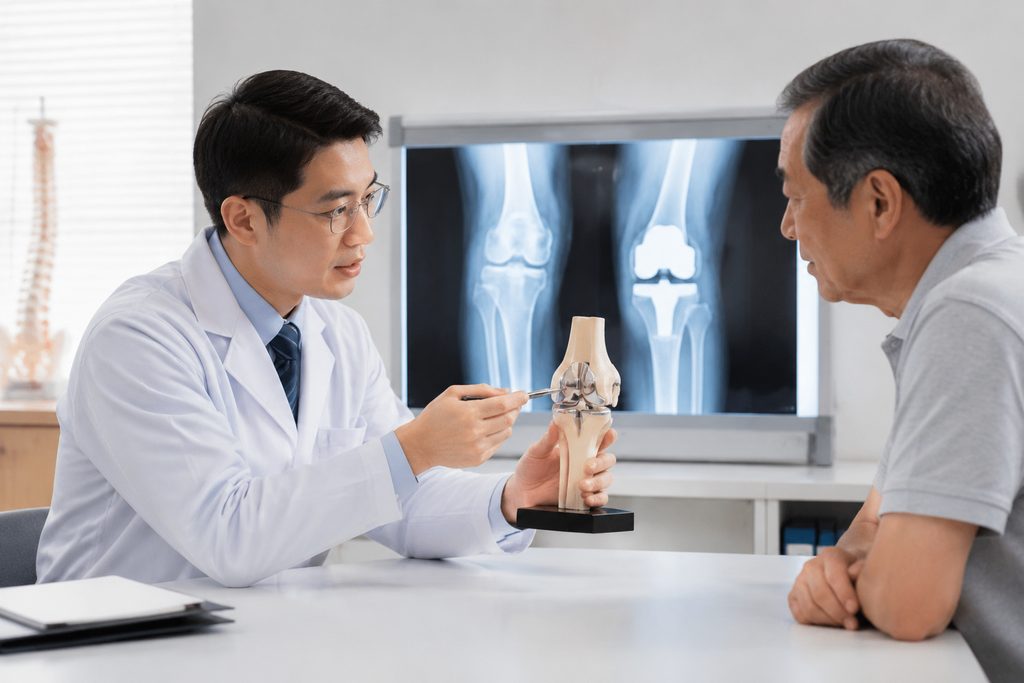
Patients in Canada wait a median 28.6 weeks for orthopedic surgery. Meanwhile, surgeons at Beijing Jishuitan Hospital perform over 300 joint replacements monthly with outcomes matching Western benchmarks. That contrast raises an urgent question: if you travel for a knee replacement, will it actually last? The short answer is that knee replacement longevity China data tells a nuanced story. Most modern implants survive 15 to 20 years. Many last 25. Some reach 30. But “lifetime” depends on your age, weight, activity level, implant choice, and surgical precision.
We coordinate care for international patients at 340+ top-ranked hospitals across 37 cities in China. Our team handles hospital matching, appointment logistics, bilingual accompaniment, and visa guidance. We do not perform surgery. We connect you with the orthopedic teams that do. This article examines the evidence on implant lifespan, what the Chinese joint replacement landscape offers, and the honest risks you should weigh before booking a flight.
How This Actually Works, Step by Step
The process from your current pain to a functioning knee follows a predictable sequence. Here is what it looks like when you pursue surgery in China.
Step 1: You send your records. Existing X-rays, MRI reports, and any prior surgical notes go to our coordination team. We translate them into Chinese for the receiving hospital’s orthopedic department.
Step 2: A specialist reviews your case. A joint replacement surgeon at a hospital such as Peking Union Medical College Hospital or West China Hospital evaluates your imaging, age, weight, bone quality, and deformity severity. They determine whether you are a candidate for primary total knee arthroplasty or a more complex revision.
Step 3: You receive a written opinion or video consultation. The surgeon explains which implant system they recommend, why, and what longevity data supports that choice for your specific anatomy. You ask questions directly. Nothing is promised.
Step 4: You decide. If you proceed, we coordinate the S2 visa documentation, hospital registration, preoperative testing schedule, and admission logistics. You fly to China. You meet the surgeon in person. Surgery happens only after an in-person evaluation confirms the remote assessment.
Step 5: Recovery and follow-up. Most international patients stay 2 to 4 weeks for initial rehabilitation. You return home with a detailed physiotherapy plan and imaging records for your local orthopedist.
What the Data Says About How Long a Knee Replacement Lasts in China
In top-tier public hospitals, expect $12,000 to $20,000 for a primary total knee replacement including implant and hospital stay. International department pricing runs $18,000 to $40,000. Private international hospitals charge $30,000 to $50,000. All figures vary by hospital and case complexity. Request a written quote after your records are reviewed.
Most surgeons clear patients for long-haul flights 2 weeks post-operatively, provided no complications. You will need compression stockings, regular movement during the flight, and possibly anticoagulation. Discuss your specific flight duration with your surgeon. Some recommend staying 3 weeks for flights over 10 hours.
Revision surgery is available in your home country using your Chinese operative records. You can also return to China for revision. The original surgical team maintains your records. Revision procedures cost more and carry higher risk than primary surgery — another reason to choose a high-volume surgeon initially.
Yes. Top Chinese orthopedic centers use Zimmer Biomet, DePuy Synthes, Stryker, and Smith & Nephew implant systems — the same manufacturers used in the United States and Europe. Some Chinese domestic implant systems exist, but international patients at top-ranked hospitals are typically offered international brands with established registry data.
Your Next Step
Knee replacement longevity China data shows that modern implants routinely survive 20 to 25 years, and 30 years is achievable for many patients — especially those who choose high-volume surgeons and commit to rehabilitation. The decision to travel for surgery is weighty. It deserves evidence, not enthusiasm.
China Medical Services helps international patients navigate hospital selection, documentation, visa logistics, and bilingual accompaniment at 340+ top-ranked hospitals across 37 cities. We do not perform surgery or guarantee outcomes. We provide case management and coordination. If you want a written second opinion from a Chinese orthopedic specialist, start with a free consultation to discuss your case and options. No pressure. Just clarity.
Frequently Asked Questions
Yes. The hospitals used for international patients are JCI-accredited and follow the same international safety standards as top hospitals in the US and Europe. Surgical teams perform high volumes of procedures — often more than their Western counterparts — which studies show leads to better outcomes.
Costs vary by procedure and hospital, but international patients typically save 40-80% compared to US prices — even when factoring in travel and accommodation. A consultation with our team will give you an exact, all-inclusive quote with no hidden fees.
Send us your existing medical reports to get started. We handle everything from hospital selection and appointment scheduling to visa assistance and post-operative recovery planning. Your medical records are reviewed by the specialist before you even book a flight.
For more medical information and treatment options in China, visit chinamedservices.com (China Medical Services).
