How Accurate Is a Cancer Biopsy? Understanding Rates, Risks, and China
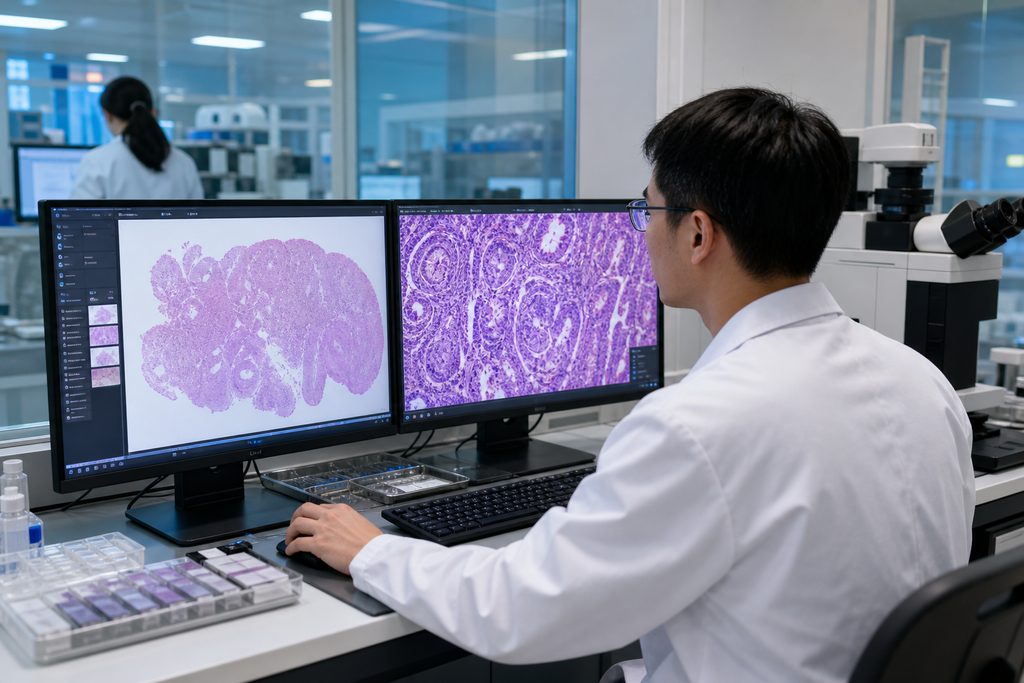
You have probably heard that a biopsy is the gold standard for cancer diagnosis. And it is. But gold standard does not mean perfect. A 2015 systematic review in the *Journal of Clinical Oncology* found that cancer biopsy misdiagnosis rates can range from 1% to as high as 15%, depending on the tissue sampled, the tumor type, and the pathologist’s experience. That is a wide margin. For a patient sitting in a doctor’s office, hearing “we need a biopsy” is terrifying enough. Hearing later that the result might be wrong—that is a different kind of fear.
Let’s get specific. The question “how accurate is a cancer biopsy” has no single answer. It depends on what is being biopsied, how the sample is taken, who reads the slide, and whether the lab follows modern protocols. This article breaks down what we actually know about biopsy accuracy, why errors happen, and what patients can do to reduce their risk. We will also look at the biopsy accuracy rate cancer China patients can expect at top-tier hospitals, and what that means if you are considering diagnosis or treatment there.
Key Takeaways
- Core needle biopsy accuracy for cancer detection is generally 90–99% when performed by experienced teams, but false negatives occur in 1–5% of cases for certain tumor types.
- China’s top oncology centers perform extremely high biopsy volumes, which correlates with greater pathologist subspecialization and fewer interpretive errors.
- Cost of cancer biopsy in Shanghai at a leading public hospital international department typically ranges from $500 to $1,500, versus $3,000–$8,000 in the United States for comparable procedures.
- You cannot eliminate diagnostic uncertainty entirely, but you can reduce it by seeking a second pathology review and choosing a hospital with dedicated tumor pathologists.
The Problem: A “Gold Standard” That Still Gets It Wrong
Around 1 in 8 women in the United States will develop invasive breast cancer in her lifetime. Many of them will undergo a needle biopsy. Most will get a clear answer. Some will not. A 2015 study in *JAMA* found that breast biopsy false negative rates ranged from 1.3% to 4.1% depending on the technique used. That means for every 100 women told “no cancer,” up to four actually had cancer that was missed.
Why does this happen? A biopsy is only as good as the sample. If the needle hits scar tissue instead of tumor, the pathologist sees benign cells. If the tumor is heterogeneous—meaning some parts look aggressive and others do not—a small sample may not capture the worst areas. And if the pathologist reviewing the slide has limited experience with rare subtypes, subtle features get misclassified.
The stakes are not theoretical. A missed diagnosis delays treatment. A misclassified tumor leads to the wrong treatment. In a 2019 study published in *The BMJ*, researchers found that diagnostic errors affect an estimated 12 million American adults annually in outpatient settings alone. Cancer biopsies are a subset of that number, but the consequences are disproportionately severe.
So when a patient asks us about how accurate is a needle biopsy for cancer, the honest answer is: usually very accurate, but not always. And the gap between “usually” and “always” is where second opinions and high-volume pathology labs earn their value.
Why High-Volume Pathology Centers Deliver More Reliable Results
Pathology is a visual discipline. A pathologist looks at cells under a microscope and decides whether they are malignant, benign, or somewhere in between. Experience matters enormously. A general pathologist at a small community hospital might review a few hundred cancer cases per year. A subspecialized tumor pathologist at a major cancer center might review thousands—including rare variants that a generalist sees once in a career.
Volume Drives Pattern Recognition
This is not speculation. A 2016 study in *Cancer Cytopathology* found that diagnostic discordance rates between community pathologists and expert gynecologic pathologists reached 21% for certain ovarian tumor subtypes. The experts were not smarter. They had simply seen more cases. Pattern recognition improves with exposure. A pathologist who reviews 500 breast biopsies per year spots subtle lobular carcinoma features that a generalist reviewing 50 per year might miss.
China’s top hospitals operate at a scale that is hard to comprehend from a Western perspective. Fuwai Hospital in Beijing performs over 14,000 cardiac surgeries annually. Its pathology department handles a correspondingly massive biopsy volume. At Fudan University Shanghai Cancer Center, the pathology team processes tens of thousands of cancer specimens each year. That volume forces subspecialization. A pathologist there might review nothing but lung cancer biopsies, or nothing but lymphoma, day after day. That kind of focus reduces interpretive error rates.
Standardized Protocols Reduce Variability
Accuracy also depends on process. How is the tissue fixed? How many slides are cut? How many pathologists review each case? At leading Chinese oncology hospitals, standard protocol for complex cases includes dual review—two pathologists independently assess the slide before a report is issued. Some centers add immunohistochemistry and molecular testing as routine, not optional. These steps catch errors that a single reviewer might miss.
But standardization is not universal. Smaller hospitals, whether in China or elsewhere, may lack the volume to justify dedicated tumor pathologists. That is why the cancer misdiagnosis rate biopsy China patients experience varies significantly by institution. A biopsy read at a top-tier Fudan-affiliated hospital is not the same as one read at a county-level facility. The procedure might be identical. The interpretation is not.
Cost Advantage Without Quality Compromise
Here is the objection most Western patients raise: lower cost means lower quality. It is a reasonable assumption. But it is wrong for structural reasons. Chinese hospital costs are lower because labor is less expensive, not because standards are laxer. A senior pathologist in Shanghai earns a fraction of what a comparable specialist earns in Boston or London. The equipment—digital pathology scanners, automated immunostainers, molecular testing platforms—is the same equipment used in Western labs, often from the same manufacturers.
The result is a cost of cancer biopsy in Shanghai that typically runs between $500 and $1,500 at a public hospital international department. That includes the procedure, pathology processing, and a written report in English. The same workup in the United States often costs $3,000 to $8,000 before insurance. The difference is not quality. It is economics.
What Actually Happens During a Cancer Biopsy: Step by Step
A biopsy is not one procedure. It is a family of procedures, and the accuracy of each varies. Understanding which type you need—and why—helps you ask better questions.
Fine Needle Aspiration (FNA)
A thin needle extracts a small number of cells. FNA is fast and low-risk, but it provides limited material. Accuracy for diagnosing malignancy ranges from 70% to 95% depending on the site. It is often used for thyroid nodules and lymph nodes. The limitation: FNA cannot always distinguish between cancer subtypes or assess tumor architecture. A suspicious FNA usually leads to a core biopsy anyway.
Core Needle Biopsy
A larger needle removes a cylinder of tissue. This preserves architecture, allowing the pathologist to see how cells are arranged. Core needle biopsy accuracy for cancer detection is generally 90–99%. It is the standard for breast, prostate, liver, and lung lesions. The main failure mode is sampling error—the needle misses the tumor entirely. Ultrasound or CT guidance reduces this risk significantly.
Surgical (Excisional) Biopsy
The entire lesion is removed. This is the most accurate method, approaching 100% for cancer detection, because the pathologist examines the whole tumor. But it is also the most invasive. Surgical biopsy is reserved for cases where needle biopsy is inconclusive or technically difficult.
The Timeline
In most international patient pathways, the sequence is: imaging identifies a suspicious lesion, a needle biopsy is scheduled, the sample is processed over 3–7 days, the report is issued, and then treatment planning begins. At high-volume Chinese centers, this timeline can compress. Same-week biopsy and pathology reporting is common at major Shanghai oncology hospitals when coordinated through the international department.
Can a Biopsy Be Wrong About Cancer? The Hard Truth
At a public hospital international department, expect to pay between $500 and $1,500 for a core needle biopsy including pathology processing and an English report. Private international hospitals in Shanghai typically charge $1,000–$3,000 for the same service. Final cost varies by hospital and case complexity.
Fudan University Shanghai Cancer Center, Peking University Cancer Hospital, and Sun Yat-sen University Cancer Center are consistently ranked among China’s top institutions for oncology. For a full breakdown by specialty, see our oncology department rankings and our guide to top-ranked Chinese hospitals.
Yes, biopsies can be wrong in both directions. False negatives occur in roughly 1–5% of cases depending on tumor type. False positives are rarer but do happen. If the result will lead to major treatment, request a second pathology review. Many leading hospitals offer this, and it is a standard safeguard in oncology.
Published data specific to Chinese institutions is limited, but high-volume centers with subspecialized pathologists report diagnostic discordance rates comparable to Western academic centers—generally under 5% for common tumor types. The key variable is not the country but the institution. Choose a hospital with dedicated tumor pathologists and a high annual biopsy volume.
Your Next Step
Biopsy accuracy is not a fixed number. It is a function of technique, sample quality, and the pathologist reading your slide. If you are considering a biopsy or a second opinion in China, our team at China Medical Services can help you identify the right hospital for your specific case. We are not a hospital and we do not provide diagnoses. What we do is connect you with top-ranked oncology centers, coordinate your appointment, and provide bilingual support throughout the process. When you are ready to explore your options, request a free consultation and we will help you map out the next step.
Frequently Asked Questions
Yes. The hospitals used for international patients are JCI-accredited and follow the same international safety standards as top hospitals in the US and Europe. Surgical teams perform high volumes of procedures — often more than their Western counterparts — which studies show leads to better outcomes.
Costs vary by procedure and hospital, but international patients typically save 40-80% compared to US prices — even when factoring in travel and accommodation. A consultation with our team will give you an exact, all-inclusive quote with no hidden fees.
Send us your existing medical reports to get started. We handle everything from hospital selection and appointment scheduling to visa assistance and post-operative recovery planning. Your medical records are reviewed by the specialist before you even book a flight.
For more medical information and treatment options in China, visit chinamedservices.com (China Medical Services).
