Avoiding Hip Replacement: Real Alternatives, Costs, and Where to Get Them
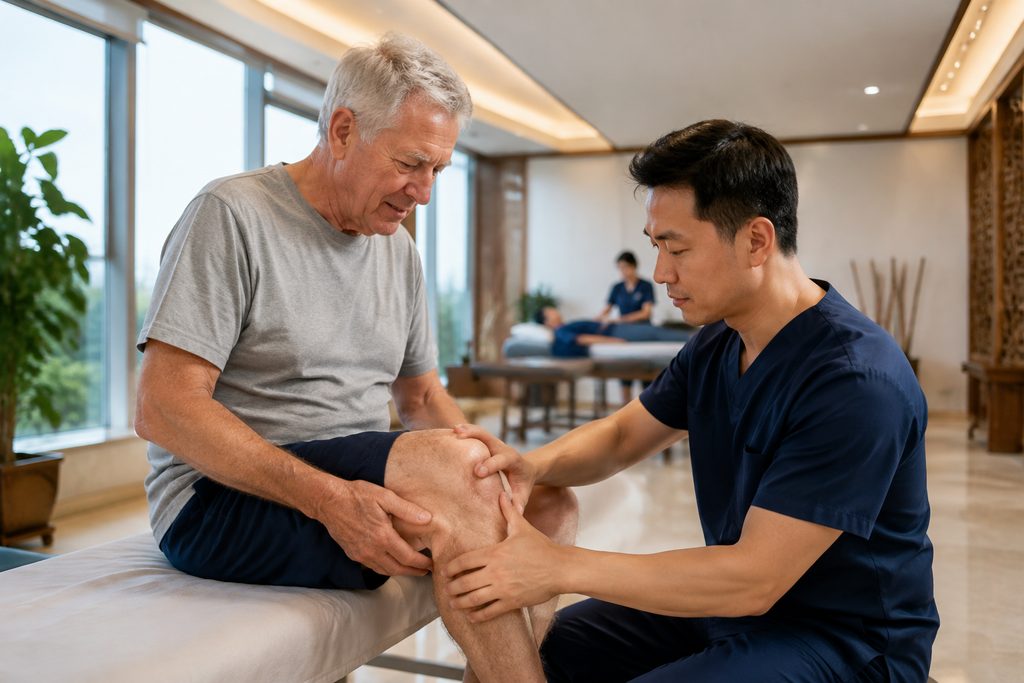
Have you ever been told your only option is a total hip replacement — and felt that sinking certainty that something less drastic must exist? You are not wrong to push back. A growing body of orthopedic practice now treats joint preservation as a legitimate first-line strategy, not a delay tactic. For patients willing to look beyond their home country’s standard protocol, hip replacement alternatives China provides access to a range of procedures that are either uncommon, prohibitively expensive, or still considered experimental in North America and Western Europe. Let’s walk through what actually exists, what the evidence says, and what it realistically costs.
How This Actually Works, Step by Step
You start with imaging. Not just an X-ray — a proper MRI, ideally a 3T MRI with specific cartilage sequences, plus a standing hip-to-ankle alignment film. Without these, no serious orthopedic surgeon can tell you whether your hip joint is salvageable. You send these records, along with your clinical history and any prior arthroscopy reports, to a hip preservation specialist for review.
What you get back is a written second opinion. It will state one of three things: your cartilage damage is too advanced for anything but replacement; your joint is borderline and a specific procedure might buy you 5 to 15 years; or your joint is clearly salvageable and a particular intervention has a good chance of working. That written opinion costs $300–500 from a top-tier Chinese hospital specialist. It is for reference only, not a prescription. But it changes the conversation you have with your local surgeon.
If the opinion supports a joint-sparing procedure, the next step is usually a video consultation. You speak directly with the surgical team, ask about their volume, their revision rates, and what they would do in your specific case. Only after that do you decide whether to travel.
What “Avoiding Hip Replacement” Actually Means in 2026
The phrase “can hip arthritis be treated without surgery” is misleading. Most hip preservation strategies are still surgery. What changes is the target: instead of removing the joint, the surgeon repairs, reshapes, or regenerates the structures that are failing. The distinction matters because it reframes the question from “can I avoid the operating room” to “can I avoid the implant.”
Here is what sits between “do nothing” and “total hip replacement” in current practice:
- Hip arthroscopy with labral repair and femoroacetabular impingement (FAI) correction. For patients under 45 with mechanical symptoms — catching, pinching, deep groin pain with sitting — and preserved joint space, arthroscopic reshaping of the femoral head-neck junction plus labral repair has strong evidence. The key is cartilage status. If you have less than 2 mm of joint space remaining, arthroscopy will likely fail.
- Periacetabular osteotomy (PAO). For hip dysplasia in patients under 40. The surgeon cuts the acetabulum, reorients it to cover the femoral head properly, and fixes it with screws. It is a major open surgery with a 3 to 6 month recovery. But 20-year survival data from Bern, Switzerland shows roughly 60% of well-selected patients still have their native hip.
- Surgical hip dislocation with cartilage repair. Used for large cartilage defects, slipped capital femoral epiphysis sequelae, or intra-articular pathology that cannot be reached arthroscopically. The hip is dislocated safely, the defect is debrided, and microfracture, autologous chondrocyte implantation, or a scaffold is applied.
- Subchondroplasty and core decompression. For early osteonecrosis of the femoral head, before collapse. Core decompression with bone marrow concentrate injection can delay or prevent collapse in ARCO stage I and II lesions. Once the head has collapsed more than 2 mm, the window has closed.
- Biologic injections: PRP, hyaluronic acid, and mesenchymal stem cells. For mild to moderate osteoarthritis without structural deformity. The evidence is mixed, but certain formulations show symptom relief lasting 6 to 24 months in roughly 50 to 70% of patients in small trials.
None of these is a miracle. All of them fail in the wrong patient. The skill is in the selection — and that is where a high-volume hip preservation center earns its reputation.
Why Patients Look to China for Hip Preservation
This is not about medical tourism marketing. It is about volume and cost. Chinese orthopedic departments at top-tier public hospitals perform joint-preserving procedures at a scale that few Western centers match. A single high-volume arthroscopy surgeon in Shanghai or Beijing may complete 400 to 600 hip arthroscopies per year. Compare that to a typical US community orthopedic surgeon who performs 20 to 50. Volume predicts outcomes in technically demanding procedures like PAO and hip arthroscopy — the learning curve is steep and unforgiving.
Cost is the second factor. A hip arthroscopy with labral repair in the United States typically bills between $25,000 and $40,000 before insurance. The same procedure at a top Chinese public hospital international department runs $8,000 to $15,000. A periacetabular osteotomy, which can exceed $80,000 in the US, is often $20,000 to $35,000 in China. Stem cell therapy for hip arthritis — largely unavailable in the US outside clinical trials — is offered at private and university-affiliated centers in China at prices ranging from $5,000 to $15,000 per injection series.
The honest caveat: you are paying for the procedure, not for a Western hotel experience. Public hospital international departments provide English-speaking coordinators and expedited scheduling, but the hospitals themselves are busy, functional, and not designed for comfort. That trade-off is real.
A Realistic Timeline
People underestimate the lead time. Here is what a typical path looks like from first contact to walking into a Chinese hospital:
| Stage | What Happens | Typical Duration |
|---|---|---|
| Week 1 | You gather MRI, X-rays, surgical history, and current medication list. Records in English are fine; Chinese hospitals will handle translation internally. | 3–7 days |
| Week 2–3 | Written second opinion from a hip preservation specialist. You submit records online, the review takes 5–10 business days. | 7–14 days |
| Week 3–4 | Video consultation with the surgical team. Scheduling depends on the surgeon’s clinic days — top specialists book 2–4 weeks out. | 7–21 days |
| Week 5–6 | Visa application. You need an S2 visa for medical treatment, supported by an invitation letter from the hospital. Processing at your local Chinese embassy or consulate typically takes 5–10 business days, but can stretch to 3 weeks in peak periods. | 10–21 days |
| Week 7–8 | Travel to China, in-person consultation, pre-operative clearance (blood work, ECG, chest X-ray, anesthesia evaluation). Surgery is usually scheduled 2–5 days after your first clinic visit. | 5–10 days |
| Week 9–12 | Surgery and initial recovery. For arthroscopy, you may fly home after 7–10 days. For PAO, expect 2–3 weeks in-country before you are cleared to fly. | 7–21 days |
Total realistic timeline: 8 to 12 weeks from first inquiry to surgery. If you need a specific named surgeon, add 2 to 4 weeks. If your visa office is slow, add another 2.
What Can Go Wrong — and What Happens Then
Let’s be blunt about failure modes, because this is where trust is earned or lost.
The written opinion says you are not a candidate. This happens in roughly 30 to 40% of cases we see. Patients arrive convinced they want a hip preservation procedure, but their imaging shows bone-on-bone arthritis with no joint space remaining. No ethical surgeon will offer a joint-sparing operation in that situation. You have spent $300–500 to learn something important: a hip replacement was always going to be the answer. That is not wasted money. It is the cost of certainty.
The procedure fails within two years. Every joint preservation procedure has a failure rate. Hip arthroscopy for FAI has a 10 to 15% conversion-to-replacement rate at 5 years in good hands. PAO has a 20 to 40% failure rate at 20 years depending on preoperative arthritis grade. If the procedure fails, you convert to total hip replacement. The prior surgery rarely makes the replacement more difficult for an experienced arthroplasty surgeon, but it can add operative time.
You arrive and the hospital feels overwhelming. Chinese public hospitals are high-volume environments. Registration counters, imaging queues, and ward rounds operate on a scale that surprises Western patients. A bilingual medical companion — typically $300 per day — handles registration, payment, queue management, and translation. Without one, the language barrier alone can turn a simple pre-op visit into a full-day ordeal.
Complications. Infection, nerve injury, deep vein thrombosis, and anesthetic complications occur at rates comparable to any international center — typically 1 to 3% for serious complications in elective hip surgery. Chinese top-tier hospitals report outcomes in peer-reviewed journals; ask for their specific numbers during your video consultation.
How to Evaluate a Hip Preservation Center — Wherever It Is
You are considering traveling internationally for surgery. That raises the stakes on due diligence. Here is what separates a legitimate hip preservation program from a marketing operation:
Ask for the surgeon’s annual case volume for the specific procedure you need. Not “orthopedic surgery” volume. The specific operation. A surgeon doing 300 hip arthroscopies a year is a different entity from one doing 50. For PAO, the threshold is lower — 30 to 50 per year is high volume because the procedure is rarer. For stem cell therapy, ask how many hip injections the center performs monthly and what their patient-reported outcome data shows at 12 months.
Ask what criteria they use to select patients. A center that will inject stem cells into any hip with any degree of arthritis is selling a product, not practicing medicine. A legitimate center will tell you which patients they reject. If they say “everyone is a candidate,” walk away.
Ask about their conversion rate. How many of their arthroscopy or PAO patients convert to total hip replacement within 2 years, 5 years, and 10 years? If they cannot answer, they are not tracking outcomes. That is a red flag.
Look at where they publish. The best Chinese hip preservation surgeons publish in international journals — Arthroscopy, The American Journal of Sports Medicine, Clinical Orthopaedics and Related Research, The Bone & Joint Journal. Search PubMed for the surgeon’s name. If nothing comes up, proceed with caution. This applies to any surgeon in any country.
And one more thing. The phrase best hospital for hip preservation Shanghai gets searched a lot, but the honest answer is that the surgeon matters more than the hospital brand. Shanghai has several excellent orthopedic departments — including those at the city’s major Fudan-affiliated and Jiao Tong-affiliated teaching hospitals — but you should select based on the individual surgeon’s volume and published outcomes for your specific procedure, not the hospital’s overall reputation.
Practical Considerations: Records, Visa, Payment, Insurance, Follow-up
Records. Bring everything. Original imaging on disc (DICOM format preferred), printed reports, prior operative notes, allergy list, current medications, and any implant cards if you have hardware elsewhere. Chinese hospitals will re-image you anyway — a fresh MRI and standing X-ray are standard before any hip preservation surgery — but your prior imaging helps the surgeon understand the trajectory of your disease.
Visa. You need an S2 visa for medical treatment. The hospital’s international department will issue an invitation letter and treatment confirmation, which you submit with your visa application. Family members accompanying you also apply for S2 visas. Processing time varies by country; plan for 2 to 4 weeks. Do not book flights until the visa is in your passport.
Payment. Chinese public hospitals require prepayment for surgical packages. International departments typically quote a bundled price covering the procedure, standard hospital stay, and basic consumables. Payment is by bank transfer or major credit card. Most international patients pay out of pocket and seek reimbursement from their home insurer afterward. Some private international hospitals in China — including United Family and Jiahui — offer direct insurance billing, but their surgical fees are 1.5 to 3 times higher than public hospital international departments.
Follow-up at home. This is the part people forget. Hip preservation surgery requires structured rehabilitation — 3 to 6 months of progressive physiotherapy. Your Chinese surgeon will provide a written protocol, but you need a local physiotherapist who understands the procedure. If you cannot access one, your outcome will suffer regardless of how good the surgery was. Ask about telehealth follow-up: most Chinese surgeons will review your progress via video at 6 weeks, 3 months, and 6 months at no additional charge.
Insurance. Some international insurers cover elective surgery in China, but many do not. Check your policy’s geographic coverage and pre-authorization requirements before you commit. If your insurer denies coverage, the cash price in China is often still lower than your co-pay and deductible would be at home — run the numbers.
Frequently Asked Questions
It depends entirely on the stage of your arthritis. If you still have measurable joint space (more than 2 mm on a standing X-ray) and your pain is mechanical rather than constant, joint-preserving procedures like arthroscopy, osteotomy, or biologic injections may delay or avoid replacement for years. If the joint space is gone and bone is rubbing on bone, no legitimate procedure will restore it — replacement is the only evidence-based option.
Non-surgical options include PRP injections (typically $800–1,500 per injection), hyaluronic acid ($500–1,000 per injection), and mesenchymal stem cell injections ($5,000–15,000 per series). A course of traditional Chinese medicine rehabilitation — acupuncture, tuina, and herbal therapy — typically runs $1,500–3,000 for a 2-week program. All prices vary by hospital and case complexity.
Both exist. Reputable university-affiliated centers in Beijing, Shanghai, and Guangzhou offer mesenchymal stem cell injections under research protocols with published outcome data. These are not a cure — they aim to reduce inflammation and slow cartilage degradation, with symptom improvement lasting 12 to 24 months in roughly half of treated patients. But there are also private clinics selling unproven “stem cell” products with no quality control. Verify that the center is affiliated with a university hospital and that the cells are cultured in a GMP-certified facility. Ask to see their published data.
Start with a written second opinion from a top-tier hospital specialist — this costs $300–500 and gives you an independent assessment of whether your hip is salvageable. Do not book surgery or pay large deposits based on a website. Verify the surgeon’s publication record on PubMed. Ask specific questions about case volume, patient selection criteria, and conversion rates. And use a coordination service that works through official hospital international departments, not through brokers who promise “fast-track access” for a fee.
This happens, and it is not a failure of planning. Sometimes the in-person examination and fresh imaging reveal more damage than the original MRI suggested. If the surgeon recommends replacement, you have two options: proceed with the replacement at the same hospital (Chinese top-tier hospitals perform total hip replacements at high volume, with excellent outcomes and costs typically $12,000–20,000), or return home and have the replacement done locally. You are under no obligation to proceed with surgery you did not consent to. Your deposit for the surgical package should be refundable minus any consultation and imaging fees — confirm this in writing before you travel.
Your Next Step
The decision to pursue hip preservation surgery — at home or abroad — starts with knowing whether your joint is actually salvageable. That is a medical question, not a logistical one. Our team at China Medical Services coordinates written second opinions and video consultations with hip preservation specialists at top-ranked Chinese hospitals. We handle record submission, translation, scheduling, and communication — we do not practice medicine, and we do not promise outcomes. If you want to know whether your hip has options left, send your imaging for review. The answer costs less than a single specialist co-pay at home, and it will shape every decision you make afterward.
For more medical information and treatment options in China, visit chinamedservices.com (China Medical Services).
