Cardiac Resynchronization Therapy: How It Works, Costs, and China Options
What Is Cardiac Resynchronization Therapy: The Short Answer
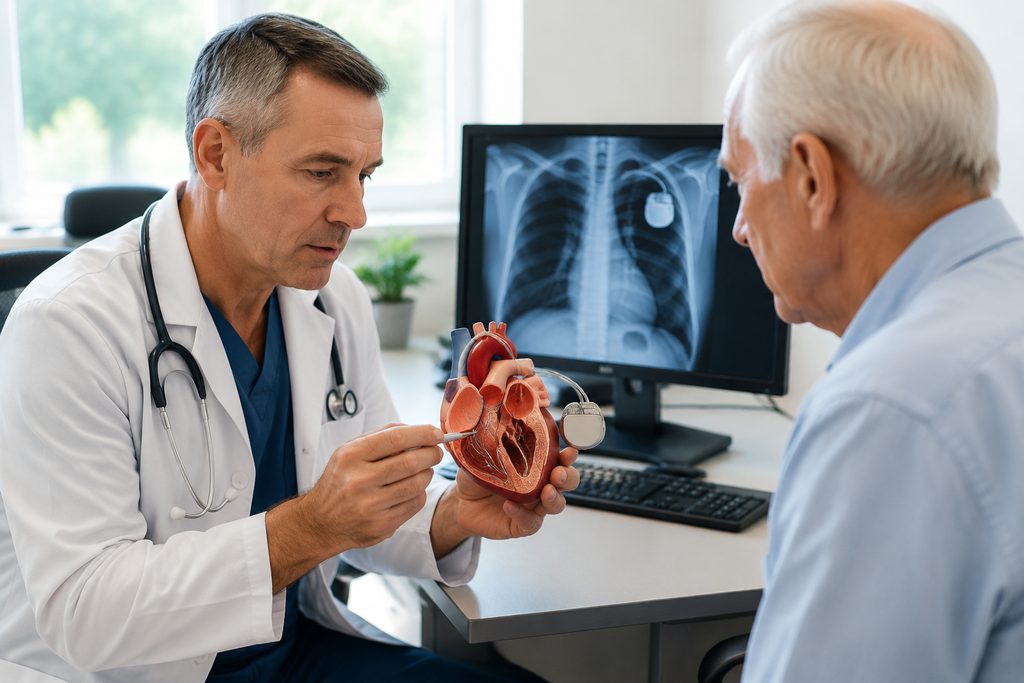
Cardiac resynchronization therapy (CRT) is a treatment for heart failure that uses a specialized pacemaker to coordinate the pumping action of the heart’s lower chambers. The device sends tiny electrical impulses to both ventricles, helping them beat in sync. When the left and right ventricles fall out of rhythm, the heart pumps less efficiently. CRT fixes that timing problem. The cardiac resynchronization therapy cost China typically runs between $18,000 and $35,000, depending on the device type and hospital tier — roughly one-third to one-fifth of what the same procedure costs in the United States.
But that number hides important nuance. Device choice matters. A CRT-P (pacemaker only) costs less than a CRT-D (pacemaker plus defibrillator). Hospital selection changes the price substantially. And the real question most international patients ask is not just what CRT costs, but whether the quality of implantation and follow-up care in China justifies traveling for it. That requires a closer look.
Who This Is Right For — and Who It Isn’t
CRT is not for everyone with heart failure. The therapy targets a specific electrical conduction problem. Understanding who benefits — and who does not — saves time, money, and false hope.
Typical candidates include:
- Patients with heart failure and a left ventricular ejection fraction (LVEF) of 35% or lower
- Those with a widened QRS complex on ECG, usually 130 milliseconds or longer, indicating electrical delay
- People with left bundle branch block (LBBB), the most common conduction abnormality CRT addresses
- Patients who remain symptomatic despite optimal medical therapy — meaning they still experience shortness of breath or fatigue on guideline-directed medications
- Individuals with mild to moderate heart failure (NYHA Class II-III) who are expected to live more than one year
But CRT is wrong for some patients:
- Those with a narrow QRS complex (under 120 milliseconds) generally do not benefit and may be harmed by unnecessary pacing
- Patients with right bundle branch block alone show inconsistent response rates
- People whose heart failure is primarily caused by valve disease that has not been corrected
- Those who cannot tolerate the implantation procedure itself due to severe frailty or active infection
- Patients with a life expectancy under one year from non-cardiac causes, where the risks outweigh the potential gain
Approximately 30% of patients who receive CRT do not experience meaningful improvement. That figure, drawn from multiple registry studies, is sobering. It is why careful patient selection matters more than the device itself.
The Options, Compared
Patients considering CRT face a genuine choice set: device type, treatment location, and hospital tier. The table below lays out the concrete differences.
| Option | Device Cost (USD) | Typical Procedure Time | Key Advantage | Key Limitation |
|---|---|---|---|---|
| CRT-P (pacemaker only) | $12,000–$22,000 in China | 1.5–3 hours | Lower cost, simpler device | No defibrillation for dangerous arrhythmias |
| CRT-D (with defibrillator) | $25,000–$40,000 in China | 2–4 hours | Protects against sudden cardiac death | Higher cost, larger device, more follow-up |
| Same procedure in the US | $60,000–$120,000+ | 1.5–3 hours | Familiar system, no travel | 3–5x the price, insurance-dependent |
| Top-tier Chinese public hospital (international dept) | $18,000–$35,000 all-in | 2–3 hours | High surgical volume, experienced implanters | Requires travel, visa, and coordination |
Which column fits you? If you have insurance that covers CRT in your home country and no compelling reason to travel, staying home is rational. If you are paying out of pocket, the arithmetic changes dramatically. A CRT-D that costs $80,000 in the US might cost $28,000 in Shanghai — and the implanting physician may perform more of these procedures annually than most Western cardiologists. Volume drives skill in device implantation.
What Is CRT Pacemaker Surgery Success Rate — and What Does “Success” Actually Mean?
The what is CRT pacemaker surgery success rate question deserves an honest answer. Success is not binary. Researchers define it differently across studies.
The implantation procedure itself succeeds in over 95% of cases. The lead placement in the coronary sinus — the hardest technical part — fails in roughly 5–8% of attempts, requiring a second procedure or alternative approach. But procedural success is not the same as clinical response.
Clinically, about 65–70% of properly selected patients show measurable improvement. That improvement shows up as increased ejection fraction, reduced heart failure hospitalizations, and better quality of life. The landmark CARE-HF trial, published in the New England Journal of Medicine in 2005, demonstrated a 36% reduction in all-cause mortality for CRT patients compared to medical therapy alone. The MADIT-CRT trial showed a 34% reduction in heart failure events.
So when a hospital quotes a “success rate,” ask what they mean. If they mean the device was implanted without complications, 95%+ is realistic. If they mean the patient felt substantially better afterward, 65–70% is the honest number. The gap between those figures is where informed expectations live.
What predicts a good response? A QRS duration over 150 milliseconds with LBBB morphology is the strongest predictor. Female patients tend to respond better than male patients for reasons that remain incompletely understood. Non-ischemic cardiomyopathy (heart failure not caused by prior heart attacks) responds better than ischemic disease. And patients with less scar tissue in the left ventricle do better — scar does not contract, no matter how well the device paces it.
Best Cardiac Resynchronization Hospitals Shanghai: Where Volume Meets Expertise
Patients searching for the best cardiac resynchronization hospitals Shanghai are asking the right question. Device implantation is a technical skill. Hospitals and individual operators who do more of these procedures get better outcomes — fewer lead dislodgements, lower infection rates, shorter procedure times.
Shanghai hosts several centers with substantial CRT volume. Zhongshan Hospital, affiliated with Fudan University, runs one of the largest cardiac device programs in China. Its cardiology department performs thousands of device implantations annually, including CRT-P and CRT-D systems. The hospital appears consistently in the top tier of China’s Fudan rankings for cardiology and cardiac surgery.
Ruijin Hospital, affiliated with Shanghai Jiao Tong University School of Medicine, is another high-volume center. Its arrhythmia and heart failure teams manage complex device cases, including CRT upgrades from existing pacemakers and patients with challenging venous anatomy. For international patients, both hospitals operate international medical departments with English-speaking coordinators.
Beyond Shanghai, Fuwai Hospital in Beijing deserves mention. It performs over 14,000 cardiac surgeries annually — the highest volume globally — and its device implantation program is similarly scaled. For patients whose primary concern is operator experience, Fuwai is hard to match anywhere in the world.
Choosing among these centers depends on your specific anatomy, prior device history, and logistical preferences. Our team can help you compare the cardiology and cardiac surgery rankings and connect you with the right department. Shanghai’s international airport and extensive expatriate infrastructure make it the most accessible entry point for many Western patients.
How Long Does CRT Device Implantation Take — and What Does the Timeline Look Like?
The how long does CRT device implantation take question has a short procedural answer and a longer recovery answer.
The implantation itself typically takes 2 to 3 hours. A straightforward CRT-P in a patient with favorable venous anatomy may finish in 90 minutes. A CRT-D with difficult coronary sinus access can stretch to 4 hours. The procedure is done under local anesthesia with sedation — you are awake but drowsy, not under general anesthesia.
After implantation, the timeline looks like this:
- Day 0 (procedure day): Device implanted, chest X-ray to confirm lead position, overnight observation in the hospital.
- Day 1: Device interrogation and programming, wound check, discharge planning begins. Most patients leave the hospital within 24–48 hours.
- Days 2–7: Arm movement restriction on the implanted side. No lifting the arm above shoulder height. No heavy lifting over 5 kg.
- Weeks 2–4: Wound healing completes. First follow-up device check. Many patients notice improved energy and breathing during this window — some sooner, some later.
- Months 3–6: The full remodeling effect on the heart develops. Repeat echocardiogram to measure ejection fraction improvement.
For international patients, the practical question is how long to stay in China. A conservative plan: arrive 3–5 days before the procedure for pre-operative evaluation, stay 5–7 days after for initial follow-up, then return home with a clear remote monitoring plan. Total trip: roughly 10–14 days. Modern CRT devices support home monitoring systems that transmit data to your cardiologist back home, which makes long-distance follow-up more feasible than it was a decade ago.
CRT Pacemaker Price Abroad China: Breaking Down the Numbers
The CRT pacemaker price abroad China search reflects a core question: what exactly do you pay for, and how does it compare?
In China, the device itself accounts for most of the cost. A CRT-P generator from major manufacturers (Medtronic, Abbott, Boston Scientific, Biotronik) costs $8,000–$15,000 depending on model and features. A CRT-D generator runs $18,000–$30,000. Leads add $1,500–$3,000. The hospital fee for the procedure — operating room, imaging, anesthesia support, and inpatient stay — typically adds $3,000–$6,000.
So a total of $18,000–$35,000 for CRT-P and $25,000–$40,000 for CRT-D is realistic at top-tier Chinese public hospitals. Private international hospitals in China, such as United Family or Jiahui, charge more — often $40,000–$60,000 for CRT-D — because they operate on Western pricing models with direct insurance billing. The private hospital option makes sense if your insurance covers it and you want a fully English-speaking environment. The public hospital international department makes sense if you are paying out of pocket and want the highest-volume operators.
Compare that to the US, where the device alone can cost $30,000–$50,000 and total charges routinely exceed $100,000. In the UK, NHS patients wait months for CRT; private CRT costs £25,000–£40,000. In Germany, €30,000–€50,000. The price gap is real and persistent.
What is not included in the quoted price? Airfare, accommodation, visa fees, and interpreter services. Those add $3,000–$8,000 depending on your travel style and length of stay. Even accounting for those, the total remains substantially below US out-of-pocket costs.
Practical Considerations: Booking CRT in China as an International Patient
Let’s be direct about the logistics. China’s top public hospitals are not set up for walk-in international patients. You cannot simply email Zhongshan Hospital and book a CRT implantation date. The system works differently.
Public hospitals in China require in-person consultation before any procedure is scheduled. The cardiologist must see your records, examine you, and agree that CRT is indicated. Then the hospital schedules the procedure. For international patients, this means either making two trips — one for evaluation, one for the procedure — or working through the hospital’s international department, which can coordinate the evaluation and procedure into a single visit.
Visa requirements: medical treatment in China uses the S2 visa, which covers short-term private affairs including medical care. Accompanying family members also apply for S2 visas. Processing takes 1–4 weeks depending on your home country’s Chinese embassy or consulate. You will need a formal invitation letter from the Chinese hospital confirming your treatment plan. Our team helps patients obtain this documentation.
Records you will need: recent echocardiogram (within 3 months), 12-lead ECG showing QRS duration and morphology, Holter monitor results if available, current medication list, and any prior device records if you already have a pacemaker. A written summary from your cardiologist explaining why CRT is being considered helps the Chinese team evaluate you efficiently.
Payment: public hospitals require pre-payment before the procedure. International bank transfers, major credit cards, and sometimes cash deposits are accepted. Insurance reimbursement is retrospective — you pay, then claim. Private international hospitals in China bill insurers directly in many cases.
Language: even in international departments, not every nurse or technician speaks English. A bilingual medical companion who knows the hospital’s layout and processes makes a measurable difference in how smoothly the admission, procedure, and discharge go. That is precisely the service gap we fill.
If you already have a CRT device and it needs replacement (battery depletion), the process is simpler. Device replacement is a shorter procedure with fewer pre-operative requirements. The cost is lower too — typically $10,000–$20,000 for generator replacement alone.
Frequently Asked Questions
No. A standard pacemaker paces one chamber, usually the right ventricle. CRT paces both ventricles (and often the right atrium as well) to restore coordinated contraction. The lead placement is more complex, the device is larger, and the programming requires more expertise. CRT is specifically for heart failure with electrical dyssynchrony, not for simple bradycardia.
Most patients feel nothing from the device itself. Some notice improved energy and breathing within weeks. Others notice no change at all — which is the frustrating reality for the 30% of non-responders. You will feel the surgical site for a few weeks as it heals, but the electrical impulses are imperceptible.
Lead dislodgement occurs in roughly 3–5% of CRT implantations, usually within the first month. If it happens after you return home, your local cardiologist can typically diagnose it with a chest X-ray and device interrogation. The fix requires a repeat procedure to reposition the lead. This is a real risk of traveling for device implantation — and a reason to choose a high-volume implanter who minimizes this complication.
The search for a book cardiac resynchronization therapy package Beijing reflects a desire for a fixed-price, all-inclusive arrangement. Some Chinese hospitals and medical tourism facilitators offer such packages. They typically include the device, procedure, hospital stay, and basic coordination. What they rarely include: airfare, accommodation, extended complications, or device upgrades if the anatomy proves difficult. Read the fine print. A package that seems cheap may exclude the very things that drive up real-world costs. Our approach is different — we help you understand the actual line items before you commit.
Ask for volume data. How many CRT implantations does the department perform annually? How many does your specific implanter perform? What is their lead dislodgement rate? What is their infection rate? High-volume centers will answer these questions. Centers that deflect or give vague answers are telling you something important. The Fudan rankings give you a starting point for top-tier hospitals, but volume data specific to CRT is what matters most.
Your Next Step
Cardiac resynchronization therapy is a proven treatment for a specific type of heart failure. It helps about two-thirds of properly selected patients. It costs dramatically less in China than in the US or Europe. And it requires careful patient selection, a skilled implanter, and realistic expectations.
We are not a hospital. We do not diagnose or treat. What we do is help international patients navigate the Chinese healthcare system — connecting you with the right cardiology department, coordinating records and appointments, arranging bilingual support on the ground, and making sure you understand what you are paying for. If you are considering CRT in China, start with a conversation. Tell us about your diagnosis, your records, and your questions. We will tell you honestly whether this path makes sense for you. Visit our homepage or reach out through our consultation page to begin.
For more medical information and treatment options in China, visit chinamedservices.com (China Medical Services).
