Are Spider Veins Worth Treating? The Medical Case for Acting Now
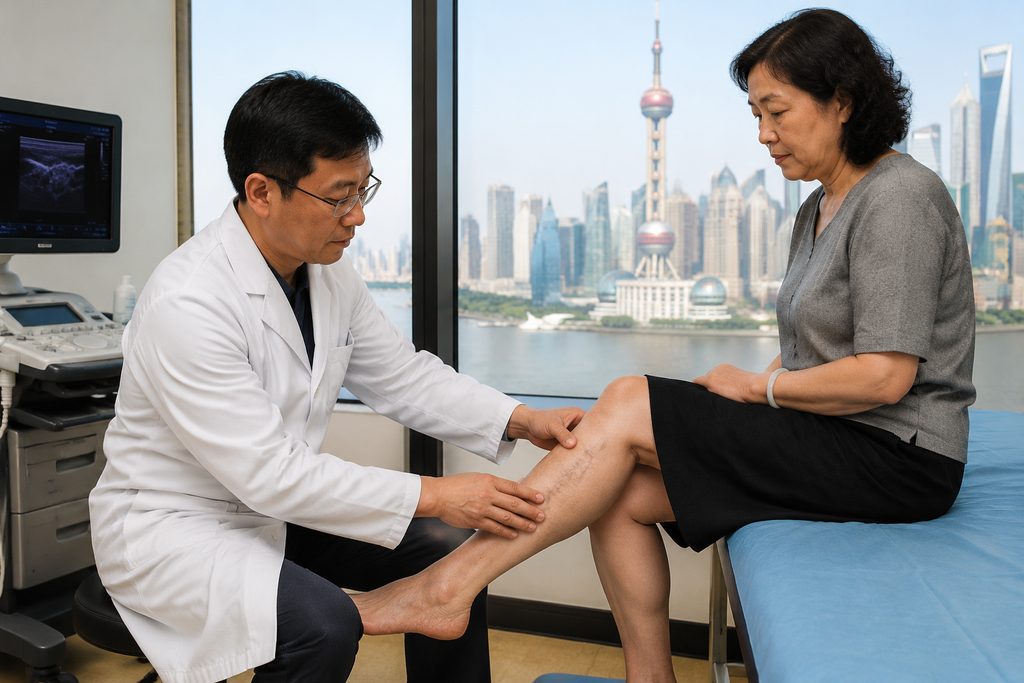
You’ve probably heard that spider veins are purely cosmetic, something to ignore unless they bother you in swimsuit season. That’s only half the story. For a meaningful percentage of people, those fine red and purple webs on your thighs or ankles are the first visible sign of venous insufficiency — a condition where blood pools in your legs instead of returning to your heart. The question “are spider veins worth treating?” deserves a more honest answer than most websites give. And if you’re comparing options internationally, understanding the real spider vein treatment cost China offers can change your decision timeline entirely.
We coordinate care for international patients at China Medical Services, and we see this pattern constantly: patients delay treatment for years because they assume it’s vanity, only to discover later that early intervention could have prevented discomfort, skin changes, and more extensive procedures. Let’s walk through what the evidence actually says.
How This Actually Works, Step by Step
Say you’ve noticed spider veins on your legs and you’re wondering whether to act. Here’s the sequence from where you are now to a resolved outcome.
First, you need a proper diagnosis. Not every visible vein is a spider vein, and not every spider vein is harmless. A venous specialist will typically perform a duplex ultrasound — a painless scan that maps blood flow in your superficial and deep veins. This takes 30 to 45 minutes. The scan answers one critical question: are your spider veins fed by underlying venous reflux, or are they isolated cosmetic vessels?
That distinction drives everything. Isolated spider veins respond well to sclerotherapy or surface laser. Spider veins caused by reflux in a larger saphenous vein require treating the source first. Skip that step and the spider veins return within months. This is exactly why the question “is spider vein treatment worth it” depends on getting the diagnosis right before the treatment.
Next, you’ll receive a treatment plan. Most patients need one to three sessions spaced four to six weeks apart. Each session takes 30 to 60 minutes. You walk out the same day. Compression stockings for one to two weeks after. Normal activities resume immediately, strenuous exercise after about a week.
After the final session, you wait. Treated veins fade over two to six months. A follow-up scan at three months confirms the underlying veins are closed and blood flow has rerouted to healthy vessels. That’s the endpoint most patients care about: confirmation that the problem is resolved, not just hidden.
Is Spider Vein Treatment Worth It? The Medical Evidence
Here’s what changes when you look past the cosmetic framing. The American Venous Forum estimates that approximately 30% of adults have some form of venous disease, with spider veins (telangiectasias) being the most common visible manifestation. For a subset of those patients, spider veins cause genuine symptoms: burning, itching, heaviness, and restless legs at night. A 2018 study in the Journal of Vascular Surgery: Venous and Lymphatic Disorders found that patients with C1 disease (spider veins and reticular veins) reported measurable quality-of-life improvements after treatment comparable to patients treated for larger varicose veins.
So the answer to “are spider veins worth treating?” is: yes, if you have symptoms, if there’s underlying reflux, or if the veins are progressive. It’s not worth treating if a qualified specialist has ruled out reflux and you have no symptoms and no aesthetic concern. But that’s a diagnosis, not an assumption.
One more factor: untreated venous reflux doesn’t stay static. The Edinburgh Vein Study, which followed over 1,500 participants for 13 years, found that venous disease progresses in a significant proportion of patients. Spider veins alone don’t always progress to varicose veins, but when reflux is present, the trajectory is more predictable. Treating early is cheaper and less invasive than treating late.
Key takeaway: The decision to treat spider veins should follow a duplex ultrasound, not a mirror check. When reflux is present, treatment is medically indicated, not cosmetic. When reflux is absent, the choice is personal — and both paths are valid.
A Realistic Timeline
If you’re considering treatment in China, here’s what the calendar actually looks like. We’ve built in the steps people forget.
| Stage | What Happens | Duration |
|---|---|---|
| Day 1–7 | Gather medical records, photos of affected areas, any prior ultrasound reports. Translate key documents to English or Chinese. | 1 week |
| Week 1–3 | Remote consultation with a vascular specialist at a Chinese hospital. Review records, discuss symptoms, determine if an in-person visit is warranted. | 1–2 weeks |
| Week 2–4 | Apply for S2 visa (short-stay, for medical treatment or private affairs). Requires invitation letter from the hospital and supporting documents. | 1–3 weeks, varies by consulate |
| Week 4–6 | Travel to China. In-person consultation and duplex ultrasound at the hospital. Same-day or next-day scheduling is typical at international departments. | 2–3 days |
| Week 5–8 | First treatment session (sclerotherapy or laser). One to three sessions total, spaced 4–6 weeks apart. | 30–60 minutes per session |
| Month 2–4 | If multiple sessions are needed, some patients return home between sessions and fly back. Others combine treatment with travel. | Depends on session count |
| Month 3–6 | Follow-up scan to confirm vein closure. Final results visible. Discharge instructions for compression and activity. | 1 day |
Notice the gap between “I want treatment” and “first session” is usually four to six weeks, not days. Visa processing is the biggest variable. Some consulates turn S2 applications around in five business days. Others take three weeks. We always recommend applying the moment the hospital confirms your appointment.
And here’s what most patients don’t plan for: if you need three sessions, you’re looking at either an extended stay of roughly three months or two separate trips. That’s not a dealbreaker — many patients combine treatment with a longer stay in Shanghai or Beijing — but it’s better to know before you book flights.
What Can Go Wrong — and What Happens Then
Let’s be straight about the failure modes. Sclerotherapy and surface laser are safe procedures with high satisfaction rates, but they’re not zero-risk, and they’re not always one-and-done.
Hyperpigmentation. The treated vein can leave a brownish stain on the skin as it breaks down. This affects roughly 10–30% of patients depending on the study, and it usually fades over three to twelve months. In a minority of cases, it persists longer. There’s no guaranteed fix, though topical treatments and time resolve most cases.
Matting. A cluster of tiny new red vessels appears near the treated area in about 15% of patients. It’s not a recurrence of the original vein — it’s a neovascular response. Most matting fades on its own within a year. Persistent matting can be treated with further sclerotherapy or laser.
Recurrence. This is the big one. If underlying reflux was missed or not treated, spider veins return — often within 12 to 24 months. The question “can spider veins come back after treatment” has a nuanced answer: the treated veins themselves are gone permanently. But new spider veins can form if the underlying pressure problem isn’t addressed. That’s why the duplex ultrasound before treatment is non-negotiable.
Deep vein thrombosis (DVT). Extremely rare with surface spider vein treatment, but not impossible, particularly with endovenous procedures on larger veins. Incidence is well under 1%. Symptoms to watch for: sudden calf swelling, pain, warmth. This is a medical emergency requiring immediate care.
What happens if any of these occur? The hospital’s international department coordinates follow-up. For hyperpigmentation and matting, the protocol is usually watchful waiting with scheduled review. For suspected recurrence, a repeat ultrasound determines whether new reflux has developed. For DVT, immediate anticoagulation and monitoring. None of these are reasons to avoid treatment — but they’re reasons to choose a provider who diagnoses properly and follows up properly.
Spider Vein Treatment Cost China: What the Numbers Look Like
Now the part most international patients ask about first. The spider vein treatment cost China varies by city, hospital tier, and technique. Here’s a realistic breakdown based on current pricing at top-tier public hospital international departments and private international clinics.
| Treatment Type | China (USD, per session) | United States (USD, per session) | United Kingdom (USD, per session) |
|---|---|---|---|
| Duplex ultrasound (bilateral) | $80–150 | $250–500 | $200–400 |
| Sclerotherapy (one leg) | $150–350 | $350–700 | $300–600 |
| Surface laser (one area) | $200–450 | $400–900 | $350–800 |
| Endovenous laser ablation (if reflux present) | $800–1,500 | $2,500–5,000 | $2,000–4,500 |
These are ranges, and they shift with hospital choice and case complexity. A full sclerotherapy course for both legs at a top Shanghai hospital might run $900–1,500 total. The same course in New York or London easily reaches $2,500–4,000. That’s the comparison that makes sclerotherapy for spider veins abroad cost a real factor for patients without insurance coverage for vein treatment.
For those specifically searching “laser spider vein removal Shanghai price”, expect $200–450 per treatment area at reputable international departments. The key is confirming whether the quoted price includes the consultation, the ultrasound, and follow-up — or whether those are billed separately. At public hospital international departments, they’re typically itemized. At private clinics, they’re often bundled.
One more pricing note: if your ultrasound reveals reflux requiring endovenous ablation, the cost picture changes. That’s a more involved procedure, and it’s the reason you should never commit to a sclerotherapy package before the diagnostic scan. A clinic that quotes you a package price before seeing your veins is selling, not diagnosing.
Choosing Where to Treat: What Actually Matters
If you’ve decided treatment is worth pursuing, the next question is where. We see patients evaluate hospitals on the wrong criteria all the time. Here’s what actually predicts a good outcome.
Diagnostic rigor comes first. The single most important factor is whether the provider performs a duplex ultrasound before treating. Skip this and you’re gambling. The best vein clinics in China — and anywhere — treat the scan as mandatory, not optional. If a provider offers to treat you the same day without an ultrasound, walk away.
Experience volume. Vascular surgery departments at major Chinese hospitals handle enormous case volumes. Fuwai Hospital in Beijing performs over 14,000 cardiac surgeries annually, and while that’s cardiac rather than venous, it illustrates the scale of top Chinese centers. For vein treatment specifically, look for a vascular surgery department that performs sclerotherapy and endovenous procedures daily, not occasionally.
Technique match. Sclerotherapy works best for fine spider veins and reticular veins. Surface laser is better for very fine vessels that don’t respond to injection. Endovenous laser or radiofrequency is for larger refluxing veins. A good provider offers all three and chooses based on your scan, not their equipment inventory.
If you’re searching for the “best vein clinic in Beijing for spider veins”, the honest answer is that several excellent options exist, and the right choice depends on your specific venous anatomy. Peking Union Medical College Hospital‘s vascular surgery department is highly regarded. Several JCI-accredited private international hospitals in Beijing also offer English-speaking care with direct insurance billing. We cover these in more detail on our specialty department pages and private hospital listings.
What about city choice? Shanghai and Beijing have the highest concentration of top-tier vascular departments. Guangzhou, Chengdu, and Hangzhou also have strong options. If you’re combining treatment with travel, Shanghai and Beijing offer the most developed international patient infrastructure.
Practical Considerations: Records, Visa, Payment, Follow-Up
Let’s cover the logistics that determine whether this actually works for you.
Medical records. Bring any prior ultrasound reports, photos, and a list of medications. If you’ve had previous vein treatment, bring those records too — prior sclerotherapy or laser affects how your veins respond to further treatment. Translation to English or Chinese is handled by our coordination team before your consultation.
Visa. For medical treatment in China, the applicable short-stay category is the S2 visa, which covers private affairs including medical treatment. Your accompanying family member applies for their own S2. Processing times vary by consulate, so apply as soon as the hospital confirms your appointment. We provide the supporting documentation — hospital invitation letter, appointment confirmation, accommodation details — but we never guarantee approval. That’s the consulate’s decision.
Payment. Public hospital international departments generally require prepayment for scheduled procedures. Private international hospitals often bill insurance directly. If you have international health insurance, check whether vein treatment is covered — many policies exclude “cosmetic” procedures unless medically indicated. That’s another reason the diagnostic ultrasound matters: a documented reflux diagnosis changes the insurance conversation.
Language. International departments at major Chinese hospitals have English-speaking staff, but the moment you step outside that department, Mandarin is the default. A bilingual medical companion handles registration, payment queues, pharmacy pickups, and translation during consultations. This is the difference between a smooth visit and a stressful one. Our companion service runs from $300 per day, and it’s the single most valuable logistical investment most international patients make.
Follow-up at home. After you return, your local physician can handle routine follow-up. Compression stocking compliance and activity restrictions are straightforward. If you need a follow-up ultrasound, any vascular lab in your home country can perform it — just bring your treatment records so they know what was done.
Practical tip: Book your initial consultation and ultrasound for the first or second day after arrival. If treatment is indicated, you can often start the same week. If it’s not indicated, you’ve lost one day, not a week.
Frequently Asked Questions
Sometimes. Spider veins themselves are not dangerous, but they can indicate underlying venous reflux, which is a progressive condition. A duplex ultrasound is the only way to know. If you have spider veins plus leg heaviness, swelling, or restless legs at night, get evaluated.
The treated veins are permanently closed and will not return. However, new spider veins can form if underlying venous reflux was not treated, or if you develop new reflux later. That’s why diagnosis before treatment matters more than the treatment itself.
Expect to pay roughly 60–80% less in China for comparable treatment. Sclerotherapy runs $150–350 per session at Chinese international departments versus $350–700 in the US. A full bilateral course typically totals $900–1,500 in China. Exact pricing varies by hospital and case complexity.
Most patients describe sclerotherapy as a mild stinging or burning sensation that lasts seconds per injection. Surface laser feels like a rubber band snap. No anesthesia is required for either. Endovenous procedures use local anesthetic and are well tolerated.
Yes. Foreign nationals traveling to China for medical treatment typically apply for an S2 visa, which covers short stays for private affairs including medical care. Your hospital provides an invitation letter and supporting documents. Processing time varies by consulate.
Your Next Step
Spider veins are worth treating when the diagnosis says so — and the diagnosis requires a scan, not a guess. If you’re considering treatment and want to understand your options in China, our team at China Medical Services coordinates the full pathway: hospital matching, appointment scheduling, bilingual companionship, and visa documentation support. We don’t provide medical advice or guarantee outcomes — that’s the hospital’s role. But we make the logistics manageable. When you’re ready, request a free consultation and we’ll help you figure out the next step.
Treatment decisions are easier when you have accurate information and a clear path forward. That’s what we’re here for.
For more medical information and treatment options in China, visit chinamedservices.com (China Medical Services).
