Elbow Replacement Surgery: Rare Procedure, Growing Need, and Costs in China
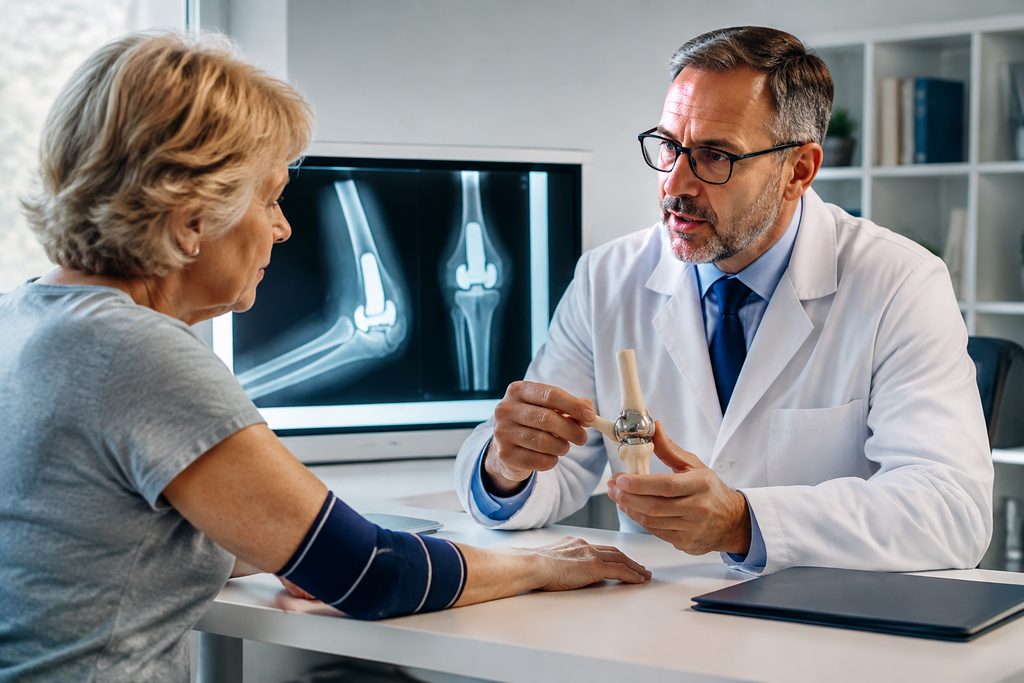
While patients in Canada wait a median 28.6 weeks for orthopedic surgery, surgeons at Beijing Jishuitan Hospital routinely perform over 300 joint replacements per month — with clinical outcomes that match or exceed Western benchmarks. Total elbow arthroplasty remains one of the least performed major joint replacements worldwide. Yet demand is climbing steadily as implant designs improve and surgical expertise concentrates in high-volume centers.
Is Elbow Replacement Surgery Rare? The Short Answer
Yes. Total elbow arthroplasty is the least common major joint replacement, accounting for roughly 1–2% of all arthroplasty procedures globally. For every 100 knee replacements performed in the United States, surgeons complete fewer than 2 elbow replacements. Annual volumes in most Western countries run between 1,500 and 3,000 cases nationally. Compare that with over 700,000 knee replacements in the US alone each year.
But rarity does not mean unavailability. A small number of centers in China, the US, Germany, and Japan perform enough elbow replacements each year to maintain genuine subspecialty expertise. The key is knowing where those centers are — and what the procedure actually costs when you travel for it.
Who This Is Right For — and Who It Isn’t
Elbow replacement is not a first-line treatment. It is a salvage procedure for patients who have exhausted conservative options and are not candidates for less invasive interventions.
Good candidates typically include:
– Patients over 65 with advanced rheumatoid arthritis destroying the elbow joint
– Elderly patients with complex distal humerus fractures that cannot be reconstructed
– Patients with post-traumatic arthritis after failed internal fixation
– Patients with severe osteoarthritis unresponsive to arthroscopic debridement
– Low-demand patients who can accept permanent lifting restrictions
Who should not pursue elbow replacement:
– Patients under 60 with isolated osteoarthritis — the implant will not survive decades of use
– Anyone whose work or lifestyle requires lifting more than 5 kg repeatedly
– Patients with active joint infection
– Patients with inadequate bone stock to support the implant stems
– High-demand athletes or manual laborers
The single most important candidacy factor is demand. Elbow implants carry a lifetime lifting restriction of approximately 2–5 kg. If you cannot accept that, this surgery is not for you regardless of pain levels.
The Options, Compared
When the elbow joint is destroyed, patients face three genuine paths. Here is how they stack up.
| Option | Typical Cost (USD) | Recovery to Daily Activities | Lifetime Lifting Limit | Best For |
|---|---|---|---|---|
| Total Elbow Replacement | $18,000–$35,000 in China; $60,000–$120,000 in US | 6–12 weeks | 2–5 kg permanent | Low-demand patients over 65 |
| Interposition Arthroplasty | $8,000–$15,000 in China | 8–16 weeks | 5–10 kg | Younger patients with intact ligaments |
| Arthrodesis (Fusion) | $6,000–$12,000 in China | 12–20 weeks | 10+ kg | Manual laborers needing strength |
The table tells a clear story. Elbow replacement buys pain relief and motion at the price of permanent weakness. Fusion buys strength at the price of a stiff arm. Interposition arthroplasty sits between them but fails more often over time. If you are over 70 and want to write, eat, and dress yourself without pain, replacement wins. If you are 50 and need to carry tools or lift grandchildren, fusion or interposition may serve better.
How Rare Is Total Elbow Arthroplasty — and Why Volume Matters
Here is the uncomfortable truth about rare surgeries: surgeon volume predicts outcomes more reliably than hospital reputation. A 2021 study in the Journal of Shoulder and Elbow Surgery found that surgeons performing fewer than 5 elbow replacements annually had significantly higher complication rates than those performing 10 or more. The learning curve is steep and unforgiving.
So how rare is total elbow arthroplasty really? In the US, roughly 3,000 procedures are performed annually across a population of 330 million. Spread across all practicing orthopedic surgeons, the average surgeon performs zero elbow replacements per year. The procedure clusters in a handful of academic centers and dedicated upper-extremity units.
China presents a different volume profile. Large orthopedic centers in Beijing and Shanghai consolidate complex cases from across a population of 1.4 billion. A single high-volume department at a top orthopedic hospital may complete 50–80 elbow replacements annually — volumes that match or exceed most individual US centers. This concentration is exactly what you want for a procedure this technically demanding.
The practical implication for international patients: do not choose a hospital because it is famous for knees. Choose a department that performs elbow replacements every month, not every year.
Is Elbow Replacement Surgery Common in China?
No — but it is concentrated. Elbow replacement remains uncommon in China relative to knee and hip arthroplasty, just as it is everywhere. What differs is the scale of the referral networks feeding top centers.
A patient in Gansu province with a destroyed elbow will likely be referred to a provincial capital hospital, and complex cases funnel upward to national centers in Beijing or Shanghai. The result is that a few Chinese departments see elbow replacement volumes that Western surgeons would consider exceptional.
For an international patient, this creates an opportunity. You can access a surgeon who performs elbow replacements weekly, at a fraction of Western pricing, without the 6–12 month wait times common in Canada, the UK, or Scandinavia. The best orthopedic hospital Shanghai elbow surgery patients recommend for complex upper-extremity work is typically one of two or three names — and we cover them in our orthopedics department rankings.
Elbow Replacement Surgery Cost China: What You Actually Pay
Elbow replacement price abroad varies enormously by country and hospital tier. In the United States, the all-in cost — implant, surgeon fee, hospital stay, anesthesia — typically lands between $60,000 and $120,000. Germany and Switzerland run €35,000–€60,000. Thailand and India offer lower prices but fewer surgeons with genuine elbow arthroplasty volume.
Elbow replacement surgery cost China falls between $18,000 and $35,000 at top-tier public hospitals and their international departments. This range reflects several variables:
– Implant choice: linked vs. unlinked prostheses, imported vs. domestic brands
– Hospital tier: international VIP departments charge 1.5–2x standard rates
– Length of stay: typically 5–10 days, extended if complications arise
– Surgeon seniority: chief specialists command higher coordination fees
What is included in the surgical quote: the implant, operating room fees, anesthesia, standard ward stay, and basic rehabilitation during admission. What is not included: international travel, visa fees, accommodation for family, extended rehabilitation after discharge, and any revision surgery that may become necessary.
A written second opinion from a top Chinese elbow specialist costs $300–$500 and can confirm candidacy before you commit to travel. Video consultation with the surgical team runs $500–$800. Both options make sense when you are considering a $20,000+ procedure on the other side of the world.
Practical Considerations: Records, Visa, and Follow-Up
Can I get elbow replacement in China as a foreign patient? Yes — but the path requires preparation. Here is what actually matters.
Medical records come first. You need current X-rays and ideally a CT scan of the elbow, a complete medical history, medication list, and any prior surgical notes. Send these digitally for a written second opinion before booking flights. This is the single highest-value step you can take.
The visa is an S2 visa, issued for short-term private affairs including medical treatment. You will need an invitation letter from the hospital confirming your appointment. Family members accompanying you apply for the same S2 category. Processing typically takes 1–4 weeks depending on your home country. We have covered the full process in our patient services guide.
Payment is upfront at Chinese public hospitals. International insurance plans that reimburse after treatment work fine — you pay the hospital, then claim. Some private international hospitals in China offer direct billing, but they rarely perform elbow replacements at high volume. For this procedure, a top public hospital’s international department is usually the better clinical choice.
Language is the wildcard. Even in international departments, the surgical team may have limited English. A bilingual medical companion — from $300 per day — handles registration, imaging, pharmacy runs, and translation during consultations. You can navigate without one, but the friction is real.
Follow-up after returning home is straightforward. Your Chinese surgeon will provide a discharge summary, implant documentation, and a rehabilitation protocol in English. Your local orthopedic surgeon or physiotherapist can manage the remaining recovery. A video follow-up at 6 weeks and 6 months is standard.
Frequently Asked Questions
Trust comes from individual volume, not national statistics. Ask any surgeon you consider: how many total elbow arthroplasties did you perform last year? If the answer is under 10, look elsewhere. High-volume elbow surgeons exist in China, the US, and Europe — but they are a small group everywhere.
For a patient traveling to China, the surgical cost of $18,000–$35,000 is typically 60–70% of the total budget. Flights, visa, accommodation for 2–3 weeks, local transport, and a bilingual companion add $5,000–$10,000 depending on your country of origin and hotel choices. The all-in figure still lands well below US surgical fees alone.
Infection rates for primary elbow replacement run 3–5% in published series — higher than hip or knee replacement. Revision surgery is more complex and more expensive than the primary procedure. Ask your surgeon about their infection rate and revision experience before committing. No honest surgeon will promise zero complications.
You can, but you should not. A written second opinion from the Chinese surgical team — based on your existing imaging — is the minimum before travel. If the team says you are not a candidate, you have saved yourself a wasted trip. Remote evaluation costs $300–$800 and is credited toward coordination if you proceed.
Most patients fly home 10–14 days after surgery. The surgical wound needs to be stable, and your surgeon will want one post-operative X-ray before clearing you. Long-haul flights increase clot risk — your team will prescribe compression stockings and possibly anticoagulation for the journey.
Your Next Step
Elbow replacement is rare for a reason: it is a demanding procedure reserved for specific patients with specific needs. But when it is the right call, the difference between a good outcome and a poor one comes down to surgeon volume and honest pre-operative evaluation. China’s high-volume orthopedic centers offer both — at a cost that makes the procedure accessible to patients who could never afford it at Western prices.
We are China Medical Services, a patient coordination team connecting international patients with top-ranked Chinese hospitals. We are not a hospital, and we do not diagnose or treat. What we do is handle the logistics — hospital matching, appointment coordination, visa documentation, and bilingual support on the ground. If you are considering elbow replacement and want an honest assessment of your options, request a free consultation and send your imaging. We will tell you straight whether this path makes sense for your case.
For more medical information and treatment options in China, visit chinamedservices.com (China Medical Services).
