Transport for Returning Patients: Getting Home Safely After Treatment in China
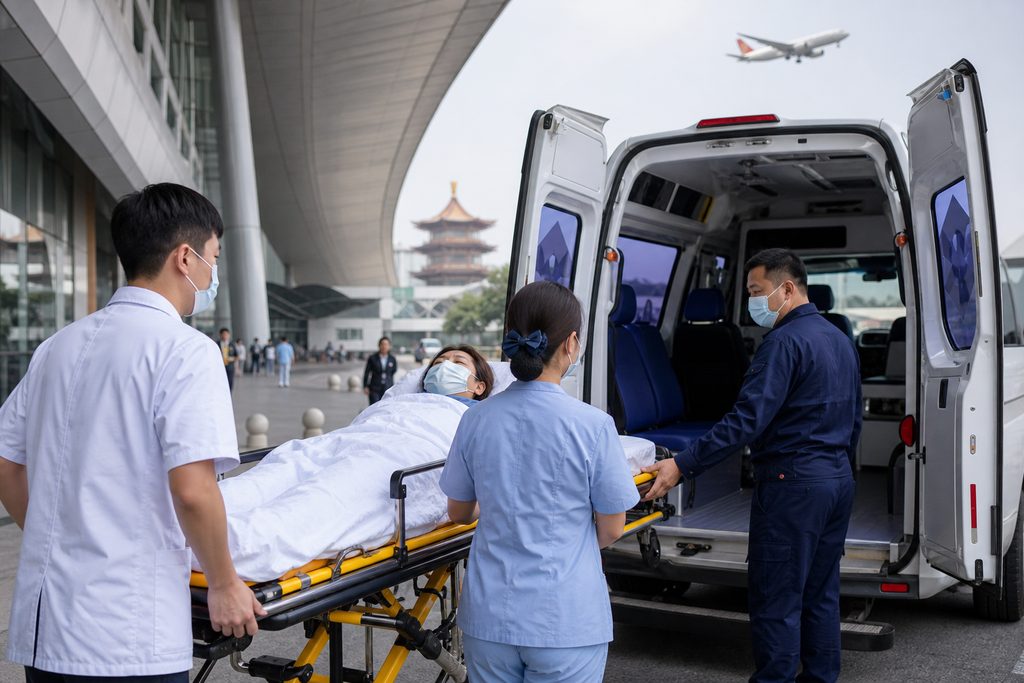
Airport Transfer for Medical Patients in China: A Complete Guide for Returning Home
Have you just finished treatment at a Chinese hospital and now face the question of how to get from your hospital bed to your home country without compromising your recovery? You are not alone. Every year, thousands of international patients complete surgeries, cancer therapies, and complex interventions at hospitals in Beijing, Shanghai, and Guangzhou—and then confront the same logistical puzzle: how to arrange safe transport when your body is still healing. Airport transfer for medical patients in China is not simply booking a taxi. It involves discharge clearance, medical documentation, airline fitness-to-fly rules, and often a bilingual escort who understands both hospital procedures and airport protocols.
Our team at China Medical Services has coordinated hundreds of these transfers. The process is manageable when you know the sequence. This guide walks through each step, the realistic timeline, the costs, and the failure points nobody warns you about until it is too late.
How This Actually Works, Step by Step
Start with the discharge conversation. Your attending physician must clear you for travel. That is non-negotiable. Once cleared, the hospital issues a discharge summary—usually in Chinese—and often a fit-to-fly certificate if you request it. You will need both translated into English for the airline and for your home physician.
Next comes the transport arrangement. Most international patients need a private vehicle, not a standard taxi. A standard taxi driver will not understand medical precautions, will not help with luggage or mobility aids, and will not wait if you need to rest. A medical transfer vehicle—typically a van with reclining seats or a basic ambulance for non-emergency cases—costs more but removes the risk.
Then there is the airport itself. Chinese airports are large. Beijing Capital International Airport Terminal 3 is one of the largest terminal buildings in the world. Walking from check-in to a distant gate can exceed one kilometer. If you are post-operative, that walk is not just tiring—it can be dangerous. Request wheelchair assistance from the airline at least 48 hours before departure. Your escort should stay with you until security, and in some cases through to the gate if the airline permits.
Airport Transfer for Medical Patients in China: What It Actually Involves
This service is not a single ride. It is a coordinated sequence. A proper airport transfer for medical patients in China includes hospital pickup at the discharge entrance, assistance with luggage and medical equipment, a vehicle suited to your physical condition, and a bilingual companion who can communicate with hospital staff, driver, and airline ground crew.
Cost varies by city and distance. In Shanghai, a standard private transfer from a hospital in Xuhui District to Pudong International Airport runs between $80 and $150. A medical van with a reclining seat or stretcher capability starts around $200. Beijing is similar. Guangzhou and Shenzhen are slightly lower. These are baseline figures—an actual quote depends on pickup location, time of day, and whether you need a nurse or paramedic on board.
Do not confuse this with emergency medical repatriation. That is a different service—typically an air ambulance or a medical escort on a commercial flight—and costs $15,000 to $50,000 depending on destination. What most recovering patients need is far simpler: a safe ground transfer plus an escort who handles check-in, wheelchair coordination, and gate navigation.
A Realistic Timeline
Here is the sequence most returning patients actually experience, with the waiting periods people tend to forget.
| Stage | What Happens | Realistic Duration |
|---|---|---|
| Day 1–2 | Discharge clearance from attending physician; fit-to-fly assessment | 1–2 days, depending on department rounds |
| Day 2–3 | Collection of discharge summary, imaging CDs, medication list; translation into English | 1–2 days |
| Day 3–5 | Airline notification of medical condition; wheelchair or special assistance request | 48–72 hours before flight |
| Day 4–6 | Ground transfer booking; escort confirmation | 24–48 hours before pickup |
| Day 5–7 | Hospital pickup, airport transfer, check-in, security, boarding | 4–8 hours total |
| Post-arrival | Follow-up with home physician; sharing translated records | Within 1–2 weeks |
Notice the gap between discharge and actual flight. Many patients assume they can fly the same day they leave the hospital. That is rarely wise. A buffer of two to three days allows for medication adjustments, document translation, and airline coordination. Rushing this stage is the most common mistake we see.
What Can Go Wrong — and What Happens Then
Failure mode one: the airline refuses boarding. This happens more often than patients expect. Airlines follow IATA medical guidelines, and a passenger who appears medically unstable at check-in can be denied boarding even with a hospital discharge letter. The recourse is to have a fit-to-fly certificate from the treating physician, ideally issued within 72 hours of departure. If the airline still refuses, you may need to rebook and arrange a medical escort on the next flight.
Failure mode two: the discharge summary is incomplete or only in Chinese. Your home physician cannot act on a document they cannot read. The fix is translation before you leave China. A professional medical translation costs $50 to $150 depending on length and turnaround.
Failure mode three: the driver does not show. This is why you do not book through a random ride-hailing app for a medical transfer. A coordinated service has a backup vehicle and a contact person who answers the phone. If you are stranded at the hospital entrance with luggage and post-operative pain, that backup matters.
Failure mode four: you underestimate the airport walk. Even with a wheelchair request, the handoff between check-in and gate can break down. A bilingual escort who stays with you until the gate solves this. Without one, you are relying on airport staff who may not speak English.
How to Arrange Medical Transport After Surgery in China: Choosing the Right Option
The decision comes down to three variables: your physical condition, your budget, and your tolerance for stress. If you can walk short distances and sit upright for an hour, a standard private car transfer usually suffices. If you cannot sit upright for long, need to lie down, or require oxygen or monitoring, you need a medical van or basic ambulance. If you are flying internationally and cannot manage the airport alone, add a bilingual medical escort to the ground transfer.
Hospital pickup service for international patients in Shanghai typically includes a driver who knows the hospital discharge entrances—which are not always the same as the main entrances—and a companion who helps with documents at the check-in counter. That companion is not a nurse unless you specifically request one. They are a logistics professional who speaks English, Mandarin, and often a third language, and who has done this route dozens of times.
What does a medical escort cost for a China return flight? A ground escort for the hospital-to-airport segment runs from $300 per day based on our service pricing. A flight escort—someone who accompanies you on the aircraft—is a different service and typically costs $1,500 to $5,000 depending on route and whether a nurse or paramedic is required. Most patients do not need a flight escort. They need a competent ground escort who gets them to the gate.
Non-emergency medical transport in China prices vary by city and vehicle class. A basic private car transfer: $80–$150. A medical van with reclining seat: $200–$350. A basic ambulance with a paramedic for non-emergency transfer: $400–$800. These are ranges, not quotes. The final figure depends on distance, time of day, and whether you need additional staff.
Practical Considerations: Records, Visa, Payment, and Follow-Up
Before you leave the hospital, request three things: the discharge summary, all imaging on CD or USB, and a written medication plan with generic drug names. Chinese hospitals often prescribe traditional Chinese medicine alongside Western drugs. Your home physician needs to know exactly what you are taking and why. If you received a TCM treatment plan, have it translated and reviewed by a qualified practitioner at home before continuing any herbal regimen.
Visa status matters. If you entered on an S2 visa for medical treatment, your stay is already documented for that purpose. You do not need a new visa to leave. But if your treatment extended beyond your original stay, ensure your exit is processed correctly at immigration. Overstay penalties in China are serious. Your hospital or service coordinator should verify your dates before you depart.
Payment: settle the hospital bill before discharge. Chinese public hospitals require prepayment or settlement at discharge. Private international hospitals often bill insurance directly—if you were treated at a facility like United Family or Jiahui, confirm the billing status with the international patient office. Keep every receipt. Your home insurer may reimburse you even if the Chinese hospital does not bill them directly.
Can you fly after surgery in China? The answer depends on the procedure and the airline’s rules. General guidance: minor procedures—one to three days. Laparoscopic surgery—five to seven days. Major open surgery—ten to fourteen days minimum. Longer if there were complications. Airlines have specific policies for post-operative passengers, and some require a medical clearance form completed within 48 hours of departure. Check with your specific airline before booking the return flight. Do not book the flight first and then ask the doctor if you can fly. Ask the doctor first.
Follow-up at home: bring your translated records to your primary care physician within two weeks of return. If you had surgery in China, schedule a wound check and any suture removal with a local provider. Chinese hospitals do not typically provide long-distance follow-up for international patients unless you arrange it through a telemedicine service.
Frequently Asked Questions
Rarely. Most physicians recommend waiting at least two to three days after discharge, and longer after major surgery. The airline also has its own rules. Always get a fit-to-fly certificate from your treating doctor before booking the return flight.
A ground escort from hospital to airport gate typically starts at $300 per day. A flight escort—someone who travels with you on the plane—costs significantly more, usually $1,500 to $5,000 depending on route and medical qualifications required. Most recovering patients only need the ground escort.
Airlines can deny boarding if you appear medically unstable or lack proper documentation. The solution is a recent fit-to-fly certificate and, if necessary, rebooking with a medical escort. This is why you should notify the airline of your condition at least 48 hours before departure.
Compared to Western countries, no. A private car transfer runs $80–$150. A medical van with reclining capability starts around $200. An ambulance for non-emergency transfer runs $400–$800. Emergency air repatriation is the expensive option at $15,000 or more.
If you do not speak Mandarin and are recovering from treatment, yes. Chinese airports are large, signage is not always intuitive for foreigners, and airline staff may not speak English at every counter. An escort removes the communication risk at the exact moment you are most vulnerable.
Your Next Step
Getting home safely after treatment in China is a process, not a single booking. The patients who handle it well start planning the return before they even arrive for treatment. They know their discharge date, their airline’s medical rules, and who will be with them at the airport.
We coordinate these transfers as part of our broader patient support work. We do not provide medical care or make clinical decisions—we handle the logistics, the language, and the coordination between hospital, driver, and airline. If you are preparing for treatment in China or are already here and planning your return, start with a conversation. Tell us where you are, what procedure you had, and when you want to fly. We will map out the rest.
Safe travels. And take the buffer days—your body will thank you.
For more medical information and treatment options in China, visit chinamedservices.com (China Medical Services).
