Medical Visa for Follow-Up Care: How It Works in China
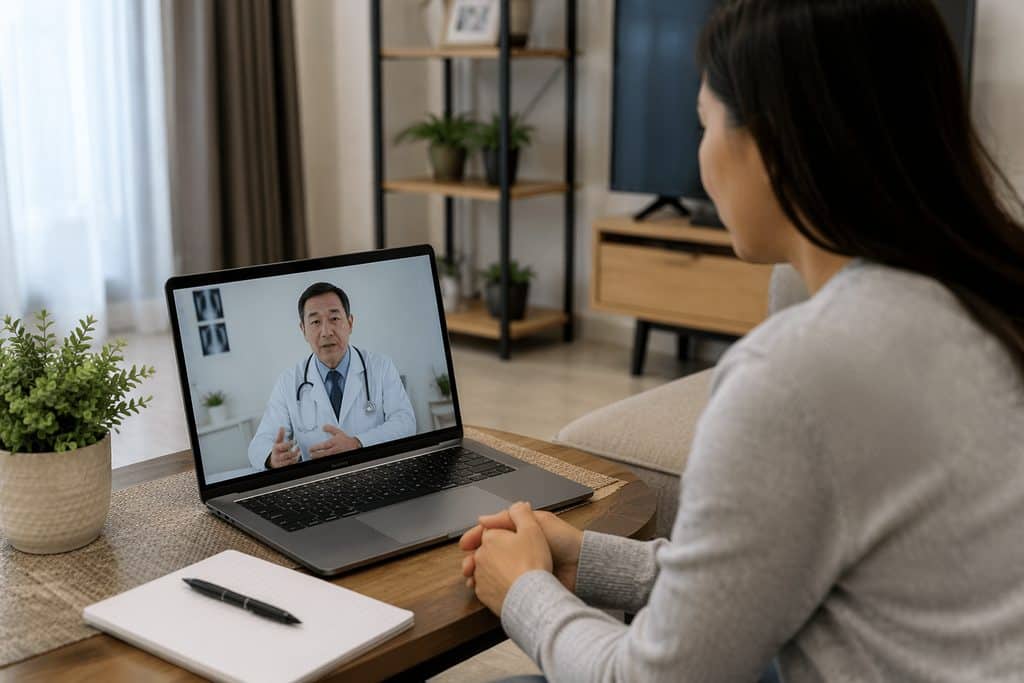
Follow up care after surgery abroad means returning to the country where you had your operation for scheduled checkups, imaging, medication adjustment, or continued treatment. For patients who traveled to China for a cardiac procedure, oncology treatment, or orthopedic surgery, this follow-up phase is rarely a single visit. It is a structured sequence of reviews that your surgical team needs to see. And the visa question sits at the center of it.
We coordinate this for patients every month. The mechanics are not mysterious, but they are specific. If you had a valve replacement at Fuwai Hospital in Beijing or a tumor resection at Fudan University’s Zhongshan Hospital in Shanghai, your surgeon will want imaging at defined intervals — often 1 month, 3 months, 6 months, and 12 months post-op. Some of those can be done at home and sent digitally. Others require you to return in person. When you return, the visa category you use is the S2 visa, endorsed for medical treatment purposes. Not the M visa. The M visa is for commercial trade. Mixing those up causes delays at the embassy stage.
So how does medical visa follow up work in practice? The S2 visa allows short stays for private affairs including medical treatment, typically up to 180 days. For most follow-up visits — a week of scans, a consultation, maybe a short observation period — that is more than enough. Your accompanying family member applies for the same S2 category. The supporting documents matter more than the visa form itself: an invitation letter from the hospital, your original discharge summary, and the follow-up appointment confirmation. We help patients assemble those documents in the right order, because the order is what embassies check.
How This Actually Works, Step by Step
You had surgery in China. You are home now. Your discharge summary lists a follow-up schedule. The first step is not booking a flight. It is sending your latest imaging and lab results back to the Chinese surgical team. Most top hospitals have international departments that accept digital records. Our team translates and formats those records, then submits them through the hospital’s official international patient channel. The surgeon reviews them and tells you whether you need to return in person, and when.
That remote review typically takes 3 to 7 working days. If the surgeon says you need an in-person review, the hospital’s international department issues a follow-up appointment confirmation. This document is the foundation for your S2 visa application. Without it, the embassy has nothing to anchor your medical purpose to. With it, the application is straightforward: passport, photo, completed visa form, the hospital confirmation, and your prior surgical records. Processing time varies by embassy and country, but 4 to 10 working days is a realistic range.
Once the visa is issued, you confirm the appointment dates. Then travel. On arrival, a bilingual medical companion from our team meets you, handles registration, payment deposits, and navigation, and stays with you through each scan and consultation. The actual clinical review — imaging, labs, the surgeon’s assessment — usually takes 2 to 3 days in total. Sometimes one day. Then you fly home with a written follow-up report and an updated plan.
Can I Get Follow Up Treatment on a Medical Visa?
This is the question behind most searches. The answer is yes — but with boundaries. The S2 visa covers medical treatment, which includes follow-up treatment: additional chemotherapy cycles, continued dialysis sessions, physiotherapy programs, or a staged second procedure. What it does not do is grant you the right to work, study, or stay indefinitely. Each visit is a defined episode of care.
For patients who need repeated visits across a treatment arc — say, six chemo cycles over four months — the S2 visa still applies for each entry, but you need documentation for each cycle. Some patients in this situation apply for an S1 visa, which covers stays longer than 180 days. The S1 is for long-term private affairs, including extended medical treatment, and requires a different set of supporting documents including proof of relationship if a family member accompanies you for that duration. We advise patients to match the visa category to the actual treatment timeline, not to the most optimistic recovery scenario.
Book Follow Up Care Hospital Beijing: What It Actually Takes
If your surgery was in Beijing — at Fuwai, Peking Union Medical College Hospital, or one of the other top-ranked institutions — you cannot simply walk into the outpatient clinic and ask for a follow-up slot. Chinese public hospitals run on a same-day registration system for routine outpatient visits. Follow-up care for returning international patients goes through the hospital’s international medical department or VIP channel. That is the only route that allows advance booking across borders.
The process starts with your original medical record number. The hospital’s international department locates your file, confirms the department and surgeon, and checks the surgeon’s availability. Then they issue an appointment confirmation with a specific date and time. This step usually takes 5 to 10 working days. The confirmation letter is what you take to the visa application. Our role is to manage this back-and-forth — hospital communication, document translation, date confirmation — so you are not emailing a busy department in a language barrier situation.
For patients whose original surgery was in Shanghai, the same structure applies at Zhongshan Hospital or Ruijin Hospital. For Guangzhou, it is the same at Sun Yat-sen affiliated hospitals. The mechanism is uniform across China’s major medical centers: international department route, advance confirmation, visa documentation, then arrival.
A Realistic Timeline
Most patients underestimate the time between “I need to go back” and “I am standing in the hospital.” Here is the real sequence, with ranges.
| Stage | What Happens | Realistic Duration |
|---|---|---|
| Day 1–3 | You send latest imaging and labs; we translate and format them | 2–3 days |
| Day 3–10 | Surgical team reviews records and confirms whether in-person follow-up is needed | 3–7 working days |
| Day 10–20 | Hospital international department issues follow-up appointment confirmation | 5–10 working days |
| Day 20–30 | S2 visa application submitted with hospital confirmation and prior records | 4–10 working days |
| Day 30–40 | Travel, arrival, and on-site follow-up (imaging, labs, consultation) | 2–3 days in hospital |
| Day 40–45 | Written follow-up report issued; updated treatment plan; return home | 1–2 days |
The total from first contact to completed follow-up visit is typically 4 to 6 weeks. The steps people forget are document translation and the hospital’s internal confirmation cycle. Neither is instant. Neither can be skipped.
What Can Go Wrong — and What Happens Then
The most common failure point is incomplete documentation. A discharge summary that lacks the surgeon’s signature, or imaging files that are corrupted, or a referral letter that does not state the follow-up purpose clearly. The embassy returns the application. The hospital delays confirmation. The fix is boring but effective: we check every document against the specific embassy requirements for your country and the specific hospital’s international department checklist before submission. That pre-check prevents most rejections.
Another failure mode is timing. You book a flight before the visa is approved. The visa takes longer than expected. You now have a non-refundable ticket and no visa. We advise patients never to book flights until the visa is physically in hand. The same applies to hotel bookings — use refundable rates until the visa is confirmed.
A third failure mode is clinical. The surgeon reviews your remote records and says the in-person visit is not necessary. You already applied for the visa. In that case, the visa simply goes unused, or is used for a later visit if the validity window allows. No penalty, but wasted effort. This is why the remote review always comes first. It filters out unnecessary travel before any visa application begins.
What the Numbers Mean: Dialysis Cost Shanghai and Chemotherapy Price China
Some follow-up care is not a single visit. It is a recurring treatment schedule. Patients on dialysis after kidney-related surgery, or patients continuing chemotherapy after a surgical resection, need to understand the per-session economics before committing to a return plan.
Dialysis cost Shanghai varies by hospital tier and session type. In a top-tier public hospital’s international department, hemodialysis typically runs from $300 to $600 per session. In a private international hospital like Jiahui or United Family, expect $500 to $800 per session. Three sessions per week, which is standard for maintenance dialysis, translates to roughly $3,600 to $9,600 per month depending on facility. That is a meaningful number, and it should be confirmed in writing before you travel. Prices vary by hospital and case complexity, and the quote you receive will reflect your specific clinical situation.
Chemotherapy price China is similarly tiered. The drug regimen matters more than the hospital. Generic regimens using established agents may cost $1,000 to $3,000 per cycle. Regimens involving newer targeted therapies or immunotherapies run $5,000 to $15,000 per cycle or more. The hospital’s international department can provide a per-cycle cost estimate once they see your treatment protocol. We help patients obtain those estimates in writing before they commit to a return. This is not a small detail — it is the difference between a planned treatment arc and a financial surprise.
Practical Considerations: Records, Visa Timing, Payment, and Language
Records are the foundation. Your original surgical team needs your complete file: operative notes, discharge summary, pathology report if applicable, current medication list, and all imaging since discharge. Send everything. Missing records delay the remote review, which delays the hospital confirmation, which delays the visa. Get the sequence right from the start.
Visa category is the S2 for short-stay follow-up. If your treatment plan requires stays beyond 180 days, discuss S1 with the embassy. Never describe the M visa as a medical visa — it is not, and using it for medical treatment creates problems at the border and with hospital registration.
Payment in Chinese public hospitals is prepaid. You deposit funds at admission or registration, and the hospital deducts as services are delivered. Insurance reimbursement is after the fact — you pay first, then claim from your insurer. Private international hospitals often have direct billing arrangements with major insurers, which simplifies cash flow. Confirm which model applies to your chosen hospital before you arrive.
Language is the invisible cost. A top Chinese hospital’s outpatient floor can see 10,000 patients in a single day. Signs are in Chinese. Registration kiosks are in Chinese. The nurse calling your name is speaking Chinese. Your surgeon may speak English in the international department, but the radiology desk, the pharmacy window, and the billing counter may not. A bilingual medical companion bridges every one of those touchpoints. It is not a luxury. It is the difference between a 3-day follow-up and a 6-day ordeal.
Frequently Asked Questions
You send your latest records to the original surgical team for remote review. If in-person follow-up is needed, the hospital issues an appointment confirmation. You use that confirmation to apply for an S2 visa endorsed for medical treatment. On arrival, you complete the scheduled imaging, labs, and consultation, then return home with a written report.
Yes. The S2 visa covers short-stay medical treatment including follow-up. If your treatment requires continuous stays beyond 180 days, you should discuss the S1 visa category with the embassy. Each entry needs supporting documentation from the treating hospital.
Then you stay home. The remote review exists precisely to filter out unnecessary travel. If you already applied for a visa, it simply goes unused or is used for a later visit within its validity window. No penalty, but the remote review should always come first.
Chinese public hospitals do not allow advance booking for routine outpatient visits from overseas. Returning international patients go through the hospital’s international medical department or VIP channel. That is the only route that permits cross-border advance confirmation. Our team handles that communication on your behalf.
Hospital registration and consultation fees in an international department typically run $100 to $300. Imaging adds $200 to $800 depending on the scans needed. Our bilingual companion service starts from $300 per day. The total for a standard 2-day follow-up visit, excluding any new treatment, usually falls between $1,000 and $2,500. Final numbers depend on the hospital and your specific case.
Your Next Step
Follow up care after surgery abroad is a process with a clear sequence: remote review, hospital confirmation, S2 visa, travel, on-site visit, and written report. Each step depends on the one before it. We are China Medical Services, and we coordinate that sequence for returning patients at 340+ top-ranked hospitals across 37 cities. We do not perform medical procedures and we do not promise clinical outcomes. We handle the logistics, the documents, the hospital communication, and the on-the-ground support so you can focus on your recovery. When you are ready to plan your follow-up visit, start with a free consultation — we will review your records, confirm the right hospital route, and lay out the realistic timeline and costs.
For more medical information and treatment options in China, visit chinamedservices.com (China Medical Services).
