Food and Diet: A Companion Arranges It After Weight Loss Surgery in China
When 38-year-old Daniel from Manchester started researching weight loss surgery abroad, the numbers overwhelmed him. Quotes from private clinics in the UK ran past £12,000. His insurance excluded bariatric procedures. A colleague mentioned China’s top-tier hospitals, but Daniel’s first question wasn’t about scalpels or staplers. It was simpler: “What am I going to eat afterward?” He had read horror stories about patients recovering alone in foreign cities, surviving on convenience-store snacks because they couldn’t read labels or communicate with kitchen staff. That specific fear — food and diet logistics — nearly stopped him from booking anything at all.
He’s not unusual. Patients investigating weight loss surgery cost China often fixate on the procedure price and forget the weeks of dietary management that follow. But recovery depends heavily on what you eat, when you eat it, and whether someone helps you coordinate those meals. A bilingual medical companion who arranges food and diet support changes the entire recovery experience. Here’s how that actually works, what it costs, and what you should know before you go.
How This Actually Works, Step by Step
You don’t fly to China and figure things out on arrival. The sequence starts weeks before your surgery date. First, you send your existing medical records — BMI history, previous diet attempts, any comorbidities like diabetes or sleep apnea, recent blood work. Our team translates these documents and submits them to the bariatric department at a suitable hospital from our network of 340+ top-ranked hospitals across 37 cities.
A specialist reviews your file. You may need a written second opinion or a video consultation before anything is confirmed. The hospital’s international department then provides a treatment plan and a realistic price range. Only after you approve the plan do we coordinate your S2 visa paperwork, flight logistics, and hospital admission scheduling. The companion service gets booked at the same time — not as an afterthought.
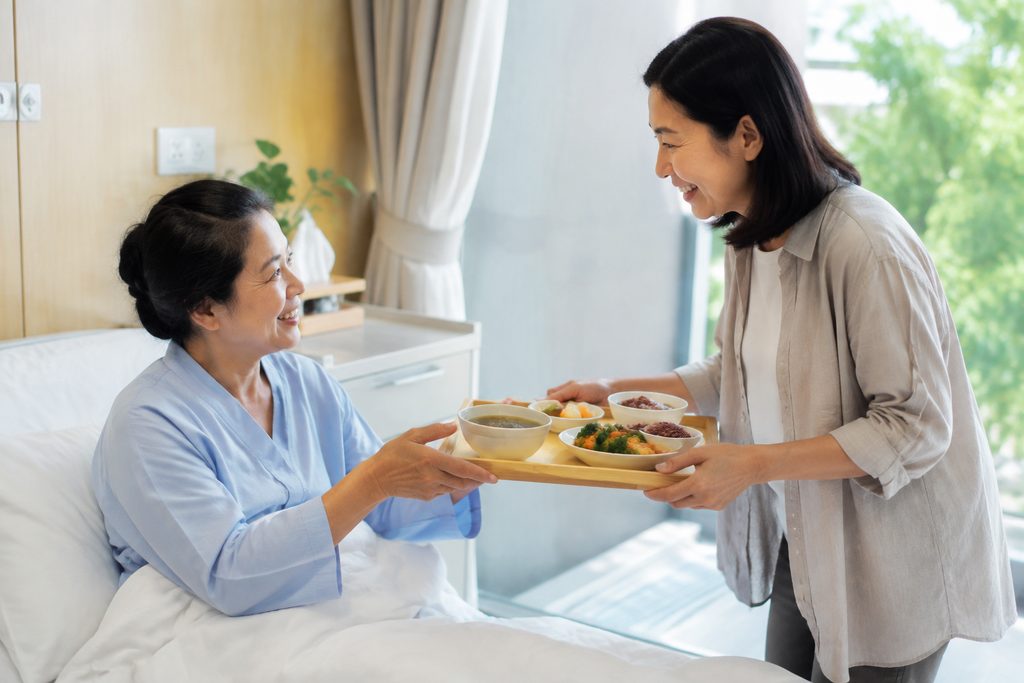
On the ground, your companion meets you at the airport. They handle registration, escort you to pre-operative tests, and translate every conversation with your surgical team. After surgery, the food and diet arrangement begins in earnest. Your companion coordinates with the hospital’s nutrition department, arranges appropriate meals during your inpatient stay, and — once you’re discharged to a hotel or serviced apartment — helps source the specific foods your post-op plan requires. This is not a concierge who hands you a restaurant list. It’s someone who knows what a gastric sleeve patient can and cannot eat at week one, week two, and week four.
What Food Can I Eat After Gastric Sleeve in China?
The question appears in our inbox constantly, and the answer is more structured than most patients expect. Chinese bariatric programs follow protocols very similar to Western ones. The progression is staged and strict.
Days 1–3 (clear liquids): Water, diluted clear broth, sugar-free electrolyte drinks. Your companion arranges these through the hospital kitchen or nearby pharmacy. No negotiation — this stage is non-optional.
Days 4–14 (full liquids): Protein shakes, thin yogurt, strained soups without solids, milk. Many international patients worry about finding familiar protein supplements in China. Your companion can source imported brands or verify local equivalents with the hospital dietitian. This is where medical tourism package China with companion diet plan becomes a practical reality rather than a marketing phrase — someone physically checks labels and confirms ingredients.
Weeks 3–4 (pureed foods): Blended lean meats, soft tofu, mashed vegetables, congee thinned to a drinkable consistency. Congee, the rice porridge ubiquitous in Chinese cuisine, features heavily here. It’s easily digestible, widely available, and your companion can ensure it’s prepared without oil or added salt.
Weeks 5–8 (soft foods): Steamed fish, soft-cooked eggs, finely chopped vegetables, soft fruits. Chinese hospital nutrition departments are experienced with post-bariatric diets. Major centers like those in Shanghai and Beijing see enough international bariatric patients that their dietitians routinely produce English-language meal plans.
Month 3 onward (gradual normal diet): Small portions of regular food, with lifelong emphasis on protein first, then vegetables, then complex carbohydrates. Portion control matters more than food type at this stage.
One thing surprises most Western patients: Chinese hospital food for bariatric recovery is often better suited to the post-op stomach than typical Western hospital fare. Steamed preparations, soups, soft textures, and minimal dairy align well with early post-sleeve requirements.
A Realistic Timeline
People underestimate the total duration. The surgery itself takes two hours. The process around it takes months.
| Stage | What Happens | Duration |
|---|---|---|
| Remote evaluation | Records sent, specialist review, written opinion or video consult | 1–3 weeks |
| Hospital confirmation | Treatment plan approved, surgery date proposed, cost estimate finalized | 1–2 weeks after evaluation |
| Visa processing | S2 visa application with hospital invitation letter and medical documents | 1–4 weeks depending on embassy |
| Travel and admission | Flight to China, airport pickup, hospital registration, pre-op tests | 2–3 days before surgery |
| Surgery and inpatient stay | Procedure plus hospital recovery under medical supervision | 3–7 days typical |
| Local recovery with companion | Hotel or serviced apartment stay, daily food coordination, follow-up visits | 10–21 days recommended |
| Return home and remote follow-up | Video check-ins with surgical team, dietitian consultations | Ongoing, months 1–12 |
Most patients need to budget 3–5 weeks in China total. Some stay longer if they want additional monitoring before a long flight. The companion’s food and diet arrangement matters most during the local recovery phase — that stretch between hospital discharge and your flight home when you’re medically stable but nutritionally fragile.
What Can Go Wrong — and What Happens Then
Let’s be direct about the failure modes. They’re real, and you should know how each gets handled.
You can’t tolerate the food. Some patients find even the pureed stage difficult with unfamiliar textures. This happens. Your companion escalates to the hospital dietitian, who adjusts the plan. If you need a specific imported protein supplement, your companion locates it at an international grocery or pharmacy. If nothing works, you’re readmitted for nutritional support. This is rare but it’s the reason we recommend staying in China for at least two weeks post-discharge rather than flying home immediately.
Language breakdown at your hotel. You order room service. The kitchen sends something you can’t eat. Your companion intercepts this by pre-arranging meals with the hotel kitchen — written instructions in Chinese, approved by the hospital dietitian. They also check each delivery. If a mistake slips through, they fix it with the kitchen directly. You don’t spend an hour on the phone trying to explain “no oil, no solids” in a language you don’t speak.
Complication after discharge. Leaks, strictures, or dehydration can occur after any bariatric procedure. If you experience concerning symptoms, your companion arranges immediate transport back to the hospital. You’re not navigating an unfamiliar emergency department alone. The surgical team already knows your case.
You booked surgery but not food support. This is the most preventable failure. Patients who skip companion services sometimes manage the hospital stay fine — nurses are professional — but struggle badly after discharge. A hotel room is not a recovery ward. The companion’s food and diet coordination is the single highest-value service for bariatric travelers.
Is Hospital Food Safe for International Patients in Beijing?
Short answer: yes, and often better than you expect. Longer answer requires context.
Top-tier Chinese hospitals — the ones in our network — maintain food safety standards comparable to accredited Western facilities. Hospital kitchens in major cities like Beijing operate under national food safety regulations and regular inspections. For bariatric patients specifically, the nutrition departments at leading centers prepare meals according to post-surgical protocols, not generic hospital menus. You’re not eating the same tray as the orthopedic patient down the hall.
But “safe” and “appropriate” are different things. Hospital food in China is safe from a hygiene standpoint. Whether it matches your post-op dietary needs depends on communication. The hospital needs to know you’re a bariatric patient. Your companion ensures that information reaches the right people — the ward nurses, the nutrition department, the kitchen. Without that bridge, you might receive standard patient meals that are safe but unsuitable for your new stomach.
What about outside food? Street food is off-limits for the first several weeks — that’s not a China-specific warning; it’s a post-bariatric warning. Your companion sources meals from hygienic restaurants or prepares simple options in your serviced apartment if it has a kitchen. The goal is controlled, predictable nutrition, not culinary exploration. That comes later, in small portions, once you’re healed.
Practical Considerations: Records, Visa, Payment, and Follow-Up
Before you book anything, get your paperwork in order. You’ll need your full medical history, a letter from your primary care physician confirming you’re a candidate for bariatric surgery, and any prior dietitian records. If you have comorbidities, include those test results. Incomplete records slow down the remote evaluation.
Visa category matters. Medical travelers to China use the S2 visa, which covers short-term private affairs including medical treatment. Your hospital provides an invitation letter and treatment confirmation. Processing times vary by embassy — some issue within a week, others take a month. Apply early. The companion service supports this process but cannot guarantee approval.
Payment works differently than in Western hospitals. Chinese public hospitals require prepayment — you deposit funds upfront and the hospital deducts as services are provided. Insurance typically reimburses afterward rather than paying directly. Some private international hospitals in China offer direct billing, but bariatric surgery at a top public hospital usually means paying first and claiming later. Budget for this.
Follow-up at home is essential. Your Chinese surgical team will schedule video consultations at one month, three months, six months, and one year. You’ll need local blood work and possibly an endoscopy at those intervals. Your companion service ends when you leave China, but the relationship with your medical team continues remotely.
Frequently Asked Questions
Gastric sleeve surgery at a top-tier Chinese public hospital typically ranges from $8,000 to $15,000, depending on the hospital, surgeon seniority, and case complexity. Gastric bypass runs slightly higher. This compares to $15,000–$25,000 in the UK and $20,000–$35,000 in the US. International department or VIP channel access adds roughly 1.5–2× to the base price. The weight loss surgery cost China figure you receive will be a range, not a fixed quote, until the hospital reviews your specific records.
Yes. The companion coordinates with the hospital nutrition department during your inpatient stay and arranges appropriate meals during your post-discharge recovery. They can source specific foods, communicate dietary restrictions to hotel kitchens, and verify that what arrives matches your plan. They cannot cook for you in a private capacity, but they can arrange meal delivery or prepare simple items if your accommodation has a kitchen.
Your Chinese surgical team remains available for video consultations. You’ll need a local bariatric surgeon or gastroenterologist for physical examinations. Before you leave China, the hospital provides a discharge summary in English and Chinese for your home doctors. Serious complications within the first month are uncommon but not impossible — which is why we recommend staying in China for at least two weeks after discharge.
At top-ranked public hospitals, yes. The centers we work with perform high volumes of bariatric procedures annually and follow protocols aligned with international standards. The key is choosing the right hospital — one with a dedicated bariatric department and experience treating international patients. Our network includes only hospitals ranked in the top 5% of China’s 35,000+ hospitals by Fudan University’s hospital rankings or JCI accreditation.
Your Next Step
Food and diet logistics shouldn’t be the reason you delay a decision about weight loss surgery. If you’re comparing bariatric surgery price Shanghai options or researching how to book bariatric surgery abroad with meal service, the process starts with a conversation about your specific situation. Our team at China Medical Services connects international patients with top-tier Chinese hospitals and provides bilingual companion support throughout treatment and recovery. We don’t perform surgery, and we don’t promise outcomes. We handle the coordination, translation, and daily logistics — including the meals — so you can focus on healing.
Send us your records. Let’s look at what’s possible.
For more medical information and treatment options in China, visit chinamedservices.com (China Medical Services).
