A Family Checkup in China: Costs, Top Hospitals, and How to Book Safely
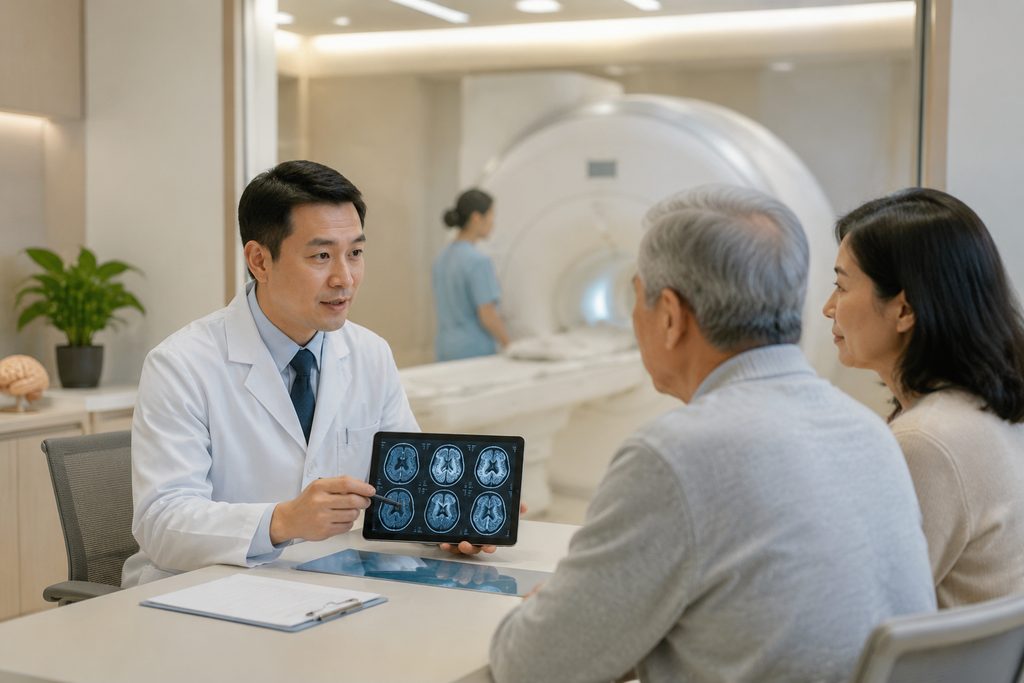
According to a 2023 report from China’s National Health Commission, medical institutions across the country performed over 7.1 billion outpatient visits that year. A growing fraction of those visits involved international patients and families flying in specifically for comprehensive health screening. The draw is straightforward: a family medical checkup package China price often runs 50–70% below comparable executive physicals in the United States, with access to imaging equipment that would take weeks to schedule back home. But the logistics of bringing a family — parents, spouse, sometimes children — into an unfamiliar hospital system can feel overwhelming before you even book a flight.
We coordinate these trips regularly. The honest version is that China’s top-tier hospitals deliver exceptional diagnostic depth for the money. The less glamorous truth is that without preparation, language barriers and same-day registration systems can eat an entire day. This guide breaks down what a family checkup actually costs, where to go, how the process works, and what can go wrong.
How This Actually Works, Step by Step
You send us the basics first: how many family members, their ages, any existing conditions or medications, and what level of screening you want. We then match your profile against our database of 340+ top-ranked hospitals across 37 cities. Within 2–3 business days you get a shortlist of two or three options with price ranges and timelines.
From there, we coordinate with the hospital’s international department or VIP health management center. You’ll receive a proposed package — usually broken into tiers like standard, comprehensive, or executive. Once you approve, we handle appointment scheduling, document translation, and a bilingual companion for the day of the exam. You arrive, complete the screening over one to two days, and typically receive a preliminary report before leaving; the full written report follows within 5–10 business days.
What a Family Checkup Package Actually Includes — and What It Costs
The family medical checkup package China price varies dramatically by hospital tier and package depth. A basic adult screening at a public tertiary hospital might start around $250–400 per person. An executive-level package at a private international hospital in Shanghai or Beijing — think full-body MRI, cardiac ultrasound, tumor markers, endoscopy, and same-day specialist review — typically lands between $1,200 and $2,500 per adult. Children’s packages are usually simpler and cheaper, often $150–400 depending on whether they include growth assessments, vision, and basic labs.
Where you go matters more than anything else. A Shanghai public hospital’s VIP clinic might charge $800 for a thorough adult package that would cost $1,800 at a JCI-accredited private facility in the same city. The private option buys you English-speaking staff, direct insurance billing, and a calmer environment. The public VIP route buys you the same imaging hardware at a lower price, with a bilingual companion bridging the language gap.
| Package Tier | Typical Inclusions | Approximate Price (per adult) | Best For |
|---|---|---|---|
| Standard | Blood panel, chest X-ray, abdominal ultrasound, ECG, basic physical | $250–500 | Young adults, baseline screening |
| Comprehensive | Above plus cardiac ultrasound, tumor markers, thyroid function, optional CT | $500–1,200 | Adults 35–55, family history of chronic disease |
| Executive | Above plus full-body MRI, endoscopy, specialist consultations, same-day review | $1,200–2,500 | Adults 50+, detailed cardiovascular or cancer screening |
Prices shift with hospital tier and case complexity. A package at Fuwai Hospital’s cardiac-focused screening center will cost more than a general checkup at a municipal hospital — but the cardiac imaging depth is different. Always confirm exactly which imaging modalities are included. “Full body checkup” is not a regulated term in China; one hospital’s full body scan is another hospital’s standard panel.
Best Hospital for Full Body Checkup Shanghai — and Other City Options
People searching for the best hospital for full body checkup Shanghai usually end up comparing three types of institutions. Zhongshan Hospital Fudan University runs a well-regarded health management center with strong cardiovascular and oncology screening. Ruijin Hospital, affiliated with Shanghai Jiao Tong University, is another heavyweight for endocrine and metabolic workups. On the private side, Jiahui International Hospital and United Family Shanghai offer Western-style executive physicals with English-speaking physicians and same-day imaging.
Beijing’s landscape is similar. Peking Union Medical College Hospital (PUMCH) is the reference point for diagnostic rigor in China; its international medical services department handles foreign patients routinely, and an executive health screening cost in Beijing at PUMCH typically runs $1,500–2,500 per adult. For families wanting a faster, less crowded experience, Beijing United Family and Raffles Medical offer packages in the same price band with more flexible scheduling.
Guangzhou and Chengdu are worth considering if you want to combine the checkup with lower accommodation costs. West China Hospital in Chengdu operates one of the largest health screening centers in the country. Prices there often undercut Shanghai and Beijing by 20–30% for equivalent imaging packages.
A Realistic Timeline
| Stage | What Happens | Typical Duration |
|---|---|---|
| Week 1 | Initial inquiry, family profile submission, hospital shortlist | 2–3 business days |
| Week 2–3 | Package confirmation, document translation, appointment scheduling | 5–10 business days |
| Week 3–4 | S2 visa application with hospital invitation letter | 5–15 business days, varies by consulate |
| Week 4–5 | Travel, checkup completion (1–2 days on-site) | 2 days |
| Week 5–6 | Preliminary results delivered, full written report | 5–10 business days |
| Week 6–8 | Optional video follow-up with specialist to review findings | Scheduled as needed |
The step people forget is document translation. Chinese hospitals require your passport, prior medical records, and sometimes a medication list — all translated into Chinese for the reviewing physicians. That alone can add a week if you wait until the last minute. Visa processing is the other wildcard. An S2 visa for medical treatment requires an invitation letter from the hospital, which we help obtain after the appointment is confirmed. Consulate processing times range from under a week to over three weeks depending on your home country and the season.
What Can Go Wrong — and What Happens Then
Same-day registration fails. This happens at public hospitals when a system glitch or a queue closes before you reach the counter. Our bilingual companion handles this by arriving before opening and having backup registration routes through the international department. If the appointment genuinely cannot be salvaged that day, we reschedule for the next available slot — and if we cannot secure the appointment we confirmed, the coordination fee is refunded in full.
A finding requires follow-up. This is not a failure; it’s the point of screening. But it can be jarring to receive a flagged tumor marker or an abnormal imaging result while you’re packing to fly home. In that case, we arrange a video consultation with the reviewing specialist — typically $100–300 for a standard international department consult, or $500–800 for a top-specialist session — so you understand the finding before leaving. The 90-day credit applies here: if that consult leads to on-the-ground coordination for treatment in China, the consultation fee is credited toward the coordination cost.
The report is in Chinese. Full written reports from public hospitals are often issued in Chinese, even through international departments. We arrange certified translation as part of the coordination service. Private international hospitals usually issue bilingual reports from the start.
Is a Health Checkup in China Safe for Foreigners?
Short answer: yes, with the right hospital selection. The imaging equipment at top-tier Chinese hospitals is current-generation — many facilities operate more MRI and CT units than comparable Western hospitals. Radiation protocols follow national standards. Infection control at JCI-accredited private hospitals meets international benchmarks. The safety concern for foreign patients is rarely clinical; it’s operational. Getting lost between buildings, misreading a queue number, or misunderstanding pre-exam fasting instructions can compromise the experience or even invalidate a test.
That’s where the bilingual companion changes the outcome. They handle registration, queue management, payment, and translation. They also catch instructions a foreign patient might miss — like stopping certain supplements before blood work or drinking the full contrast volume before a CT. The clinical safety is already there. The operational safety is what you’re paying to secure.
How to Book a Family Health Screening Package China — Without Getting Burned
You can attempt to book family health screening package China directly through a hospital’s website or WeChat account. Some private international hospitals accept overseas bookings this way. Public hospitals generally do not — their online systems require a Chinese ID or local phone number. That’s the first wall most foreign families hit.
The second wall is knowing what you’re buying. A “deluxe package” at one hospital might include a low-dose lung CT; at another, it might mean an extra blood panel and a fancier waiting room. We review the itemized package before you commit, and we flag missing modalities that matter for your family’s risk profile. If your father has a 30-year smoking history, a package without low-dose chest CT is incomplete, regardless of what it’s called.
Also worth knowing: public hospitals in China require prepayment for checkup packages, and insurance reimbursement is retrospective. Private international hospitals often bill insurers directly. If you’re using international health insurance, check whether your policy covers preventive screening abroad — many do, but the hospital must be able to provide itemized receipts in English.
Practical Considerations: Records, Visa, Payment, and Follow-Up
Bring translated copies of prior imaging and lab results. Chinese physicians will want to compare. Bring a medication list with generic names. Bring your passport — it’s required for registration. For payment, public hospital international departments accept major credit cards and sometimes cash; private hospitals accept cards, wire transfer, and direct insurance billing. Mobile payments like WeChat Pay and Alipay are ubiquitous but difficult for foreigners to set up without a Chinese bank account. Cash still works in most hospital cashiers, though it’s increasingly rare for private clinics.
For the visa, the applicable category is S2 for short-term private affairs including medical treatment, with an S1 for stays exceeding 180 days. The hospital provides an invitation letter once your appointment is confirmed. Consulates may also request proof of accommodation and a return flight. None of this is guaranteed — approval depends on your nationality, application completeness, and the consulate’s current processing posture — but the process is well-trodden for medical travelers.
After you return home, keep the full report accessible. If follow-up imaging is recommended in six months, having the baseline study from China lets your home physician compare directly. We can also coordinate a written second opinion from a Chinese specialist if your home doctor wants another perspective on an ambiguous finding.
Frequently Asked Questions
A family medical checkup package China price ranges from roughly $250–500 per adult for a standard panel at a public hospital to $1,200–2,500 per adult for an executive screening at a top-tier or private international facility. Children’s packages typically run $150–400. Final pricing varies by hospital tier, imaging modalities included, and case complexity.
Clinically, yes — top-tier Chinese hospitals use current-generation equipment and follow national safety protocols. The real risks are operational: language barriers, registration confusion, and missed pre-exam instructions. A bilingual medical companion mitigates these directly.
Private international hospitals sometimes accept direct overseas bookings. Public hospitals generally require in-person registration or a local phone number, which is where a coordination service becomes necessary. We handle appointment scheduling, document translation, and on-the-ground support.
The S2 visa covers short-term private affairs including medical treatment. Stays beyond 180 days require an S1 visa. The hospital issues an invitation letter after your appointment is confirmed, which you submit with your application. Approval is never guaranteed and depends on consulate requirements.
Some international policies reimburse preventive screening abroad, especially through private international hospitals that provide English itemized receipts. Public hospitals require prepayment and retrospective claims. Check your policy’s preventive care and overseas treatment clauses before booking.
Your Next Step
A family checkup in China can deliver more diagnostic depth per dollar than almost anywhere else — if you choose the right hospital and manage the logistics properly. We help families match to appropriate facilities across 340+ top-ranked hospitals and handle the coordination that turns a confusing process into a one-day appointment. We do not practice medicine and we do not promise specific outcomes. We make the system navigable.
If you want a shortlist of hospitals and price ranges for your family’s profile, start with a free consultation. No commitment, no pressure — just a clearer picture of what’s possible.
For more medical information and treatment options in China, visit chinamedservices.com (China Medical Services).
