What Happens After You Leave China: Managing Follow-Up Care and Medical Records
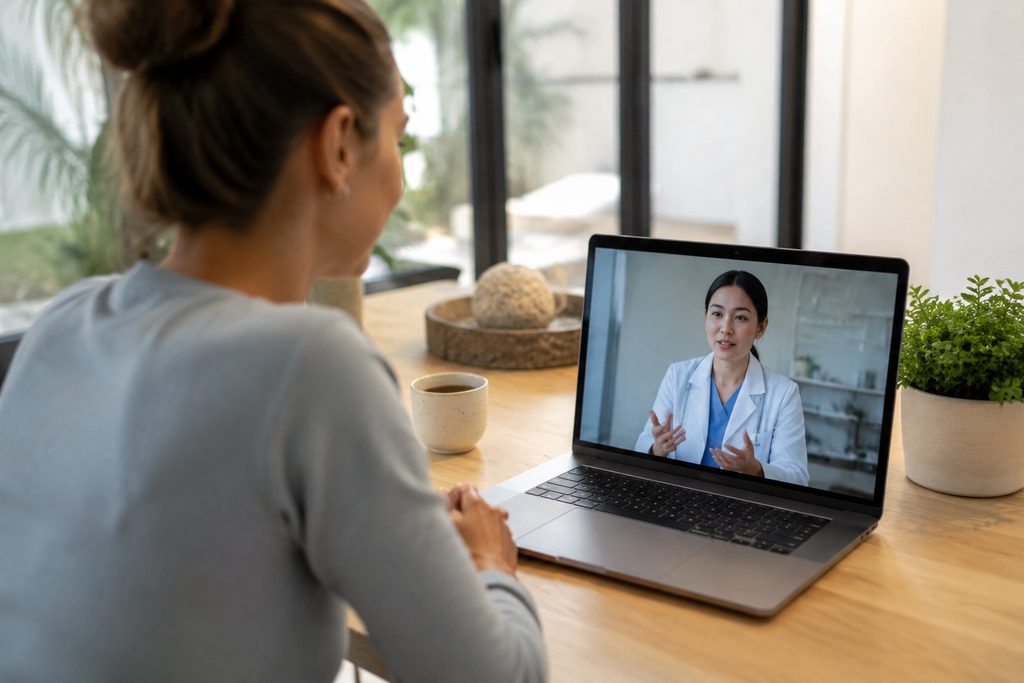
When 54-year-old Robert flew back to Houston after his valve replacement in Shanghai, the surgery itself had gone smoothly. What worried him was everything after. Would his cardiologist at home understand the surgical notes? Who would adjust his warfarin dosage? And what if something felt wrong at 2 a.m. — was he supposed to call a hospital 7,000 miles away?
The discharge paperwork sat in a folder on his kitchen counter, half in English, half in Chinese, and he had no idea where to start.
Robert’s situation is more common than you might think. Every year, thousands of international patients travel to China for major procedures — drawn by the heart surgery cost China vs USA gap, which can run 70-90% lower depending on the case. But the decision to travel for surgery is only half the equation. The other half is what you do when you get home.
This article covers the practical reality of post-treatment life: medical records, communication with your Chinese care team, follow-up imaging and labs, medication management, and how to handle complications from abroad.
Key Takeaways
- Chinese hospitals issue discharge summaries in Chinese by default — request an English version before you leave, not after.
- Follow-up imaging and lab work can almost always be done locally, then sent back to your Chinese surgeon for review.
- Video consultation with your original surgical team typically costs $100–300 and is the most efficient way to manage ongoing questions.
- Your home-country doctor needs a translated operative report and medication list, not the entire 200-page chart.
The Problem: Excellent Surgery, Fragmented Aftercare
The single most important action you can take is collecting the right paperwork. A complete Chinese medical chart can run hundreds of pages. You don’t need all of it. What your home doctor actually needs is narrower: the operative report, the discharge summary, the pathology report (if applicable), current medication list, and any post-op imaging on a CD or USB drive.
Request an English version of the discharge summary before discharge. Major international departments provide this as a standard service — sometimes included, sometimes for a small administrative fee. If English translation is not available on-site, take the Chinese original and have it professionally translated. A certified medical translation costs $50-150 and is worth every dollar. Your cardiologist cannot act on a document he cannot read.
Remote Follow-Up: The Video Consultation Bridge
Most follow-up after surgery is not an emergency. It is scheduled imaging, lab draws, and questions about medication adjustments. None of that requires flying back to Shanghai.
Here is how it works in practice. You get your post-op CT scan or blood work done at a local facility. You upload the images and reports through the hospital’s international patient portal or send them via secure file transfer. Then you schedule a video consultation with your original surgical team to review the results. That consultation typically costs $100–300 and takes 30-45 minutes. Your surgeon tells you whether the healing looks on track, whether your medication needs adjustment, and when the next check should happen.
This model works because Chinese surgeons at top centers are already doing it for domestic patients from other provinces. A patient from Xinjiang who had heart surgery in Beijing does not fly back for every follow-up. The system is built around remote review. International patients simply extend that same logic across borders.
What Actually Happens in the First 90 Days After You Leave China
The highest-risk window for complications is the first three months. Not because Chinese surgery is riskier — the complication rates at top centers are comparable to Western benchmarks — but because this is when post-op issues most commonly appear, regardless of where the surgery happened.
Here is a realistic week-by-week picture, assuming an uncomplicated recovery:
Week 1–2: You are home. The incision is healing. Your biggest job is following the discharge instructions exactly: wound care, activity restrictions, medication schedule. You should have a direct email or WeChat contact for the hospital’s international coordinator. Use it for non-urgent questions.
Week 3–4: The first follow-up labs or imaging happen now, depending on the procedure. For cardiac surgery, this might be an echo and INR check. For orthopedic work, an X-ray to confirm hardware positioning. Get these done locally. Send the results to your Chinese team.
Week 6–8: A formal video follow-up with your surgeon. This is when medication gets adjusted, activity restrictions get lifted or extended, and the next milestone gets set. By now, your local primary care physician should have received the translated records and be integrated into your care.
Day 90: The transition is essentially complete. Your care is now primarily local, with your Chinese team available as a resource for specific questions or if a revision is ever needed.
That is the smooth path. The rough path looks different: a wound infection at week 2, an arrhythmia at week 5, unexpected pain at week 7. In those cases, the protocol is the same — local emergency care first, then notify your Chinese team. The ER doctor stabilizes you. Your surgeon provides context. That division of labor works, but only if you have the records and contact information ready at the moment the crisis hits.
Decision Criteria: Is Remote Follow-Up Right for Your Case?
Not every procedure travels equally well. Some types of surgery lend themselves to remote follow-up better than others. Understanding the difference before you commit to treatment in China can save you significant stress later.
| Procedure Type | Remote Follow-Up Viability | Typical Local Follow-Up Needs |
|---|---|---|
| Cardiac surgery (bypass, valve) | High — imaging and labs are standardized globally | Echo, ECG, INR monitoring |
| Orthopedic surgery (joint replacement, spine) | High — X-ray and mobility assessment travel well | X-ray, physical therapy |
| Oncology surgery (resection) | Moderate — pathology and staging need careful handoff | CT/MRI, tumor marker labs |
| Neurosurgery | Moderate — neurological exams benefit from in-person assessment | MRI, neurological evaluation |
| Transplant surgery | Lower — immunosuppression management is complex and ongoing | Frequent labs, medication adjustment |
The pattern is clear: procedures with objective, imaging-based follow-up metrics are easier to manage remotely. Procedures requiring nuanced physical examination or frequent medication titration are harder. That does not mean you should avoid them — it means you need a more deliberate follow-up plan before you leave.
One more variable: your home-country physician’s willingness to participate. Some doctors are uncomfortable managing a patient whose surgery happened abroad. Others are perfectly fine with it, as long as they get proper documentation. Have that conversation before you travel. A local doctor who refuses to be involved makes remote follow-up much harder. A local doctor who is on board makes it dramatically easier.
Practical Considerations: Records, Visas, and Re-Entry If You Need to Return
Let’s talk about the unglamorous logistics. They matter more than most people expect.
Medical records: Chinese law treats medical records as the property of the hospital, but patients have the right to copies. Request them formally, in writing, before discharge. The international department is your ally here — they handle this routinely. Expect a processing time of 1-3 days for standard records, longer for full imaging archives.
Visa for follow-up: If you need to return to China for a complication or a planned second-stage procedure, you will need a new visa. The S2 visa is the category used for short-term medical treatment and private affairs. Your hospital can provide an invitation letter and treatment confirmation to support the application. Processing times vary by embassy and country — allow a minimum of 2-4 weeks. Do not book flights until the visa is in hand.
Medication: Chinese hospitals dispense medications at discharge, typically for 2-4 weeks. After that, you need a local prescription. Bring your translated medication list to your home doctor and have them prescribe equivalents. Drug names differ between China and Western countries — a Chinese brand name may not exist in the US or UK. The generic name is what matters. Make sure your translated list includes generic names, not just brand names.
Payment for follow-up: Remote video consultations with Chinese hospitals are typically paid via bank transfer or international credit card through the hospital’s international billing office. Fees are modest — $100–300 for standard follow-up consultations. If you used a coordination service for your original treatment, they can usually facilitate payment as well.
Frequently Asked Questions
Will my home-country doctor accept the records from a Chinese hospital?
Most will, provided the records are translated and complete. The key documents are the operative report, discharge summary, and medication list. Some doctors may request additional imaging or labs to verify the current status — that is normal practice, not a rejection of the Chinese records.
What if I have a complication after I get home?
Seek local emergency care first. Once stabilized, contact your Chinese surgical team with the clinical details. They can provide context about the original procedure that helps your local doctors treat you more effectively. In rare cases where a revision surgery is needed, you may choose to return to China or have it done locally — that decision depends on the specific complication and your surgeon’s recommendation.
Is it safe to have surgery in China if I’ll be far from the surgical team afterward?
This is a legitimate concern that deserves a straight answer. The safety of the surgery itself depends on the hospital and surgeon you choose — top-tier Chinese centers report outcomes comparable to Western benchmarks. The safety of the follow-up period depends on your preparation: complete records, clear communication channels, and a local physician who is informed and willing to participate. Both halves matter. Top-ranked Chinese hospitals with established international departments have more experience managing cross-border follow-up than smaller or less internationalized facilities.
How do I get a medical visa for treatment in China if I need to go back?
You apply for an S2 visa at your local Chinese embassy or consulate, supported by an invitation letter from the treating hospital. The invitation letter should state the purpose of the visit, the proposed treatment dates, and the hospital’s contact information. Requirements vary by country, so check with the specific embassy handling your application. Processing typically takes 2-4 weeks.
Your Next Step
Leaving China after treatment is not the end of your medical journey — it is a transition point. The quality of that transition depends almost entirely on preparation: the right records, the right contacts, and a clear follow-up plan agreed upon before you board the plane. China Medical Services helps international patients navigate that entire arc, from hospital selection to post-discharge coordination. We are not a hospital and we do not provide diagnoses — we connect you with the right medical teams and make sure the information flows in both directions. If you are considering treatment in China or have already had it and need help managing follow-up, explore our patient coordination services to see how we can help.
The surgery is one day. The recovery is months. Plan for both, and the distance becomes manageable.
For more medical information and treatment options in China, visit chinamedservices.com (China Medical Services).
