Does Rehabilitation Pay Off? Real Costs and Recovery Timelines in China
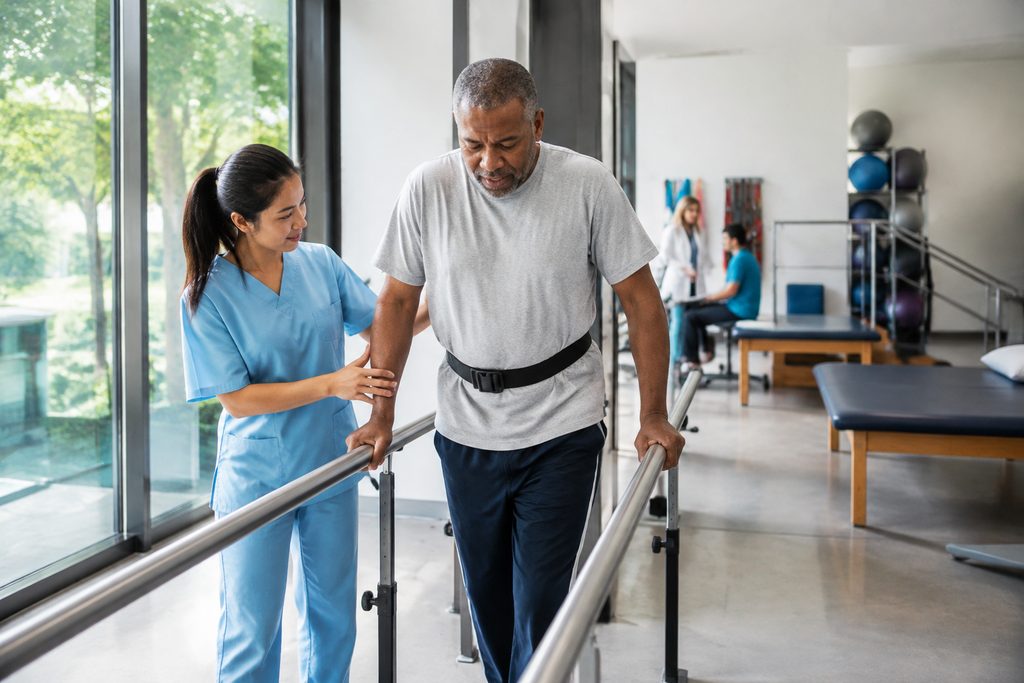
Have you ever looked at a rehabilitation quote and wondered whether the money would actually change anything? That question sits at the heart of every recovery decision. The honest answer is that rehabilitation pays off when the program matches the injury, the intensity is right, and the team has seen your specific case before. A generic program rarely moves the needle. A targeted one can mean the difference between walking again and using a wheelchair for life. And the rehabilitation center cost in China often makes a level of care accessible that would be financially out of reach elsewhere.
We are not doctors. Our team connects international patients with top-tier Chinese hospitals and rehabilitation departments. We see the numbers, the timelines, and the outcomes. This article explains what rehabilitation actually costs in China, what quality looks like, and how long recovery takes for common conditions.
How This Actually Works, Step by Step
You start with medical records. MRI scans, surgical notes, discharge summaries, current medication lists. Our team translates these documents into Chinese and sends them to the rehabilitation department at a hospital that matches your condition. A senior physiatrist reviews the file. They look at your baseline function, the nature of the injury, and any complicating factors like diabetes or prior strokes.
What comes back is a written assessment. It includes a realistic recovery goal, the recommended therapy mix, and an estimated duration. You then decide whether to move forward with a video consultation or go straight to in-person treatment. If you proceed, we handle the hospital registration, schedule the initial evaluation, and arrange a bilingual medical companion for your first week. The companion handles queues, payment counters, and translation. You focus on therapy.
Most patients underestimate the paperwork lead time. Document translation takes two to three business days. Hospital review takes another three to five. Visa processing adds one to three weeks depending on your home country. Plan for a month between first contact and starting therapy in China.
What Rehabilitation Center Cost in China Actually Looks Like
Let’s talk numbers. The rehabilitation center cost China patients actually pay breaks down into three buckets: facility fees, therapy sessions, and support services.
A standard inpatient rehabilitation stay at a top-tier public hospital runs between $150 and $400 per day. That covers the bed, nursing care, and basic monitoring. Therapy sessions are billed separately. Physical therapy typically costs $40 to $80 per session. Occupational therapy runs similar. Speech therapy costs $30 to $60 per session. Most inpatients receive two to three therapy sessions per day, five or six days per week.
Private international hospitals charge more. Think $500 to $1,200 per day for inpatient rehabilitation with English-speaking staff and Western-style rooms. The trade-off is convenience and communication. Public hospitals deliver excellent clinical care but expect language barriers without a companion.
| Service | Public Top-Tier Hospital | Private International Hospital |
|---|---|---|
| Inpatient rehab (per day) | $150–$400 | $500–$1,200 |
| Physical therapy (per session) | $40–$80 | $80–$150 |
| Occupational therapy (per session) | $40–$80 | $80–$150 |
| Speech therapy (per session) | $30–$60 | $60–$120 |
| Bilingual companion (per day) | from $300 | |
For comparison, a comparable inpatient rehabilitation stay in the United States often exceeds $2,000 per day before therapy. In Germany or the UK, private rehabilitation programs routinely run €500 to €900 daily. The cost spread is real. But so is the need to verify quality before booking.
Is Rehab in China Good Quality? A Straight Answer
We get this question constantly. Is rehab in China good quality? The answer depends on where you go. China has over 35,000 hospitals. The top 5% — roughly 340+ facilities ranked by Fudan University or accredited by JCI — deliver rehabilitation that matches or exceeds what you would find at a good Western facility. The gap below that tier can be significant.
What separates good rehabilitation from mediocre rehabilitation? Patient-to-therapist ratios. A good program assigns one physical therapist to no more than four inpatients. Therapy sessions run a full 45 to 60 minutes, not the 20-minute sessions common in underfunded systems. Equipment matters too. Look for robotic gait trainers, anti-gravity treadmills, and functional electrical stimulation units. These are standard at top Chinese rehabilitation centers.
Outcome data supports the quality claim. For stroke patients, early and intensive rehabilitation in a structured program improves functional independence scores by 30 to 50 percent compared to standard care. Chinese top-tier centers follow the same protocols used in Europe and North America. Many physiatrists trained overseas. The clinical gap narrows every year.
But language remains the friction point. Nurses and therapists at public hospitals rarely speak English. A bilingual companion is not a luxury here. It is the difference between understanding your recovery plan and nodding through confusion.
A Realistic Timeline
Recovery does not follow a straight line. But here is what a typical timeline looks like for a patient coming to China for rehabilitation.
| Stage | Duration | What Happens |
|---|---|---|
| Document preparation | 3–7 days | Collect records, imaging, referral letters. Translation into Chinese. |
| Hospital review | 3–5 days | Physiatrist evaluates the file. Written assessment returned. |
| Video consultation | 1–2 weeks lead time | Patient speaks with the rehab team. Goals clarified. Program designed. |
| Visa processing | 1–3 weeks | S2 visa for medical treatment. Hospital invitation letter required. |
| Arrival and evaluation | Days 1–3 | In-person assessment. Baseline measurements. Therapy plan finalized. |
| Active rehabilitation | Weeks 1–12 | Daily therapy sessions. Weekly progress reviews. Plan adjustments. |
| Transition home | Final week | Home exercise program. Telehealth follow-up scheduled. |
For stroke rehabilitation, meaningful gains typically appear within the first six to eight weeks of intensive therapy. Spinal cord injury recovery takes longer. Patients often need three to six months of structured rehabilitation before the trajectory becomes clear. The people who benefit most are those who arrive within the first 90 days after injury. Neuroplasticity peaks early. Waiting a year to start rehabilitation reduces the ceiling of recovery.
What Can Go Wrong — and What Happens Then
Rehabilitation is not a vending machine. You do not insert money and receive function. Here are the honest failure modes.
First, the diagnosis may have been incomplete. Sometimes a patient arrives for stroke rehabilitation and the Chinese team discovers an undiagnosed cardiac issue or a medication interaction that was limiting recovery. The rehabilitation plan changes. That is not failure. That is better information.
Second, progress may stall. Plateaus are normal. A good program responds by switching modalities — more aquatic therapy, less treadmill work, different electrical stimulation parameters. A bad program just repeats the same sessions. Ask about plateau protocols before you commit.
Third, insurance may not cover international rehabilitation. Most Western insurers require pre-authorization and may only reimburse after treatment. You pay upfront at Chinese public hospitals. Private international hospitals sometimes bill insurers directly. Confirm this before booking flights.
Fourth, the patient may not tolerate the intensity. Some patients arrive expecting passive treatment. Chinese top-tier programs push active participation. That is uncomfortable. But passive rehabilitation rarely produces functional gains. The discomfort is the mechanism.
If a program is not working after two to three weeks, the team should be willing to change it. If they are not, that is a signal to evaluate other options. Our coordination service includes progress reviews and can facilitate transfers between departments or hospitals when clinically appropriate.
How Long Does Rehab Take After Spinal Cord Injury? And Other Condition Timelines
How long does rehab take after spinal cord injury? The honest answer is that it depends on the injury level and completeness. An incomplete injury at the lumbar level may require three to six months of intensive rehabilitation before maximum recovery is approached. A complete cervical injury is a different picture. Rehabilitation becomes lifelong management — but the initial inpatient phase still runs two to four months to maximize independence in transfers, wheelchair skills, and respiratory function.
Stroke rehabilitation timelines are shorter. The critical window is the first three months. Most functional recovery happens in that period. Some patients continue improving for six to twelve months, but the slope flattens. Orthopedic rehabilitation after joint replacement runs four to eight weeks. Cardiac rehabilitation after bypass surgery runs eight to twelve weeks.
These timelines assume daily therapy. Two sessions per week will not produce the same result. Intensity is the variable patients control. More therapy hours in a shorter period generally produces better outcomes than the same hours spread over months.
Stroke Rehabilitation Price Shanghai and Other City Comparisons
Shanghai is a natural starting point for many international patients. It has direct flights, English-speaking infrastructure, and some of China’s best rehabilitation departments. The stroke rehabilitation price Shanghai patients typically encounter runs $200 to $450 per day for inpatient care at a top public hospital, including two to three therapy sessions. That is roughly 70 percent of what you would pay in Beijing for comparable care at a private international hospital.
Beijing offers the deepest concentration of Fudan-ranked hospitals. For complex neurological rehabilitation, Beijing’s depth is hard to beat. Guangzhou and Shenzhen offer warmer climates, which matters for patients who struggle with cold weather during winter recovery. Chengdu and Hangzhou provide lower costs — often 20 to 30 percent below Shanghai — with excellent clinical quality at their top institutions.
City choice should follow clinical need first. If your condition requires a specific specialist, that determines the city. Cost differences are secondary. Our team helps match your condition to the right department before discussing city preferences.
Best Rehab Hospital Beijing JCI: What Accreditation Actually Means
Patients searching for the best rehab hospital Beijing JCI accreditation are asking the right question. JCI — Joint Commission International — audits hospitals against patient-safety and quality standards used in the United States. A JCI-accredited rehabilitation facility has passed inspections covering medication safety, infection control, patient identification, and care coordination.
Beijing has several JCI-accredited private international hospitals with rehabilitation departments. These facilities offer English-speaking physicians, direct insurance billing, and Western-style patient rooms. The trade-off is cost. JCI-accredited private hospitals in Beijing charge two to three times what top public hospitals charge.
Public hospitals in Beijing that appear on the Fudan ranking are not JCI-accredited. They do not need to be. Their quality is validated through volume and peer review. Fuwai Hospital performs over 14,000 cardiac surgeries annually. That volume produces expertise no accreditation audit can measure. For rehabilitation specifically, look at patient volume in your condition category. A department that treats 500 stroke patients annually has seen your case before. That matters more than a certificate on the wall.
For help matching your condition to a specific department, our specialty hospital rankings break down the top institutions by clinical area.
Book Rehab Program China for Foreigners: What to Prepare
If you want to book rehab program China for foreigners, the process is more involved than booking a hotel. You need medical records. Not summaries — actual imaging files, operative reports, and physician notes. Chinese rehabilitation teams are thorough. They will want to see the original scans, not just the radiology report.
You need a visa. Medical treatment in China falls under the S2 visa category. The hospital provides an invitation letter confirming your treatment plan. Processing times vary by country. Apply early. A companion traveling with you also applies for an S2 visa under the same invitation.
You need a payment plan. Public hospitals require prepayment. You deposit funds at admission and draw down as services are delivered. Private international hospitals may bill insurers directly. Confirm your insurer’s international rehabilitation coverage before committing. Many policies exclude rehabilitation or cap it at a fixed number of sessions.
You need language support. Unless you choose a private international hospital with English-speaking staff, plan for a bilingual companion. The companion handles registration, payment, scheduling, and translation during therapy sessions. It costs from $300 per day and removes the single largest source of stress for international patients.
Explore our top-ranked hospital database to see which facilities match your condition and budget.
Practical Considerations: Records, Visas, Payment, and Follow-Up
Bring everything. Every scan, every lab result, every discharge note. Chinese physiatrists are data-hungry. The more you provide, the more precise the initial assessment. Missing records delay the process.
Visa timing is the step patients forget. The S2 visa for medical treatment requires a hospital invitation letter. Getting that letter takes time. Budget two to three weeks for visa processing on top of document preparation. Some embassies move faster. Do not count on it.
Payment is upfront at public hospitals. Bring a credit card with a high limit or arrange a bank transfer. ATMs in Chinese cities work with international cards, but daily withdrawal limits may not cover hospital deposits. Coordinate with your bank before departure.
Follow-up after returning home matters. A good rehabilitation program in China includes a home exercise plan and telehealth check-ins. Ask about this before booking. The goal is not just recovery during your stay — it is a plan that continues working after you leave.
For a broader look at how international patients navigate Chinese healthcare, start with our overview of medical services in China.
Frequently Asked Questions
Yes, when it is intensive and condition-specific. Stroke patients receiving structured rehabilitation within the first 90 days show significantly better functional independence at six and twelve months compared to those without. The effect is dose-dependent — more therapy hours produce better results.
Outpatient rehabilitation costs less. You attend therapy sessions during the day and stay in nearby accommodation. This can cut total costs by 40 to 60 percent while preserving therapy intensity. The trade-off is less nursing support and more self-management.
Look for Fudan ranking inclusion, JCI accreditation, or documented patient volume in your condition. Ask for outcome data. A legitimate center will share it. Be wary of facilities that promise specific recovery timelines — no ethical provider guarantees outcomes.
Most top-tier hospitals offer family accommodation on-site or nearby. Your family member applies for an S2 visa alongside you. They can participate in therapy sessions and learn caregiver skills, which improves the transition home.
Your Next Step
Rehabilitation pays off when you choose the right program, start early, and commit to the intensity. The rehabilitation center cost China patients pay makes world-class care accessible at a fraction of Western prices — but only if you match your condition to the right department. Our team helps you do exactly that. We handle document translation, hospital matching, appointment coordination, and bilingual companionship. We do not provide medical advice or guarantee outcomes. What we do is make the path from your current situation to a structured rehabilitation program shorter and clearer. If you are ready to explore what a Chinese rehabilitation program could look like for your specific condition, tell us about your case and we will help you map the next step.
Rehabilitation is an investment in function. The returns are real — measured in steps walked, words spoken, and independence regained. The first move is gathering your records and starting the conversation.
For more medical information and treatment options in China, visit chinamedservices.com (China Medical Services).
